


原田英語の多読ベストジュニア このサイトについてはじめて

Parasites

寄生する虫たち
★★★★☆9分1634語朗読 shibe原文そのまま一致率 96.9%

ハチがせっせと用意した巣と食べ物をねらう、アリバチやセイボウ、小さなハエたち。ちゃっかり者たちの作戦と、ファーブルの考えとは?

PDFで印刷(A4 10まい)

In August or September, let us go into some gorge with bare and sun-scorched sides.8月か9月に、草木のない、日に焼けたがけにはさまれた谷へ行ってみましょう。 When we find a slope well-baked by the summer heat, a quiet corner with the temperature of an oven, we shall call a halt; there is a fine harvest to be gathered here.夏の暑さでよく焼けた坂、オーブンの中のように暑い静かな一角を見つけたら、そこで止まりましょう。ここでは、すばらしい収かくが待っています。 This tropical land is the native soil of a host of Wasps and Bees, some of them busily piling the household provisions in underground warehouses—here a stack of Weevils, Locusts or Spiders, there a whole assortment of Flies, Bees, or Caterpillars,—while others are storing up honey in wallets or clay pots, cottony bags or urns made with pieces of leaves.この熱帯のような土地は、たくさんのハチのふるさとです。あるハチは地下の倉庫に家族の食べ物をせっせと積み上げています。こちらにはゾウムシやバッタやクモの山、あちらにはハエやハチやイモムシのとりあわせ。またあるハチは、小さなかばんのような入れ物や土のつぼ、わたのふくろ、葉っぱのかけらでつくったつぼに、みつをたくわえています。

With the Bees and Wasps who go quietly about their business, mingle others whom we call parasites, prowlers hurrying from one home to the next, lying in wait at the doors, watching for a chance to settle their family at the expense of others.自分の仕事を静かにしているハチたちにまじって、私たちが「寄生者(パラサイト)」とよぶものたちがいます。家から家へとうろつき回り、戸口で待ちぶせして、ほかのもののものをちゃっかり使って自分の家族を住みつかせるチャンスをねらっているのです。

It is something like the struggle that goes on in our world.それは、私たちの世界で起こっている争いに少しにています。 No sooner has a worker by means of hard labor gotten together a fortune for his children than those who have not worked come hurrying up to fight for its possession.働き者が苦労して子どもたちのために財産をたくわえたとたん、働かなかった者たちがかけつけて、それをうばい合おうとします。 To one who saves there are sometimes five, six or more bent upon his ruin; and often it ends not merely in robbery but in black murder!たくわえる者一人に対して、その人をだめにしようとする者が五人、六人、あるいはもっといることもあります。そして、ただのどろぼうでは終わらず、ひどい殺しになることもよくあるのです! The worker’s family, the object of so much care, for whom that home was built and those provisions stored, is devoured by the intruders.働き者の家族、つまりあれほど大切にされ、そのために家が建てられ食べ物がたくわえられた子どもたちが、入りこんだ者に食べられてしまうのです。 Grubs or insect-babies are shut up in cells closed on every side, protected by silken coverings, in order that they may sleep quietly while the changes needed to make them into full-grown insects take place.幼虫、つまり虫の赤ちゃんは、四方をふさがれた部屋にとじこめられ、絹のおおいに守られています。おとなの虫になるために必要な変化が起こるあいだ、静かにねむっていられるようにです。 In vain are all these precautions taken.けれども、こうした用心をどれほどしても、むだなのです。 An enemy will succeed in getting into the impregnable fortress.敵は、せめ落とせないはずのとりでに、まんまと入りこんでしまいます。 Each foe has his special tactics to accomplish this—tactics contrived with the most surprising skill.敵はそれぞれ、入りこむための自分だけの作戦を持っています。それは、おどろくほど見事にくふうされた作戦です。 See, some strange insect inserts her egg by means of a probe beside the torpid grub, the rightful owner; or else a tiny worm, an atom, comes creeping and crawling, slips in and reaches the sleeper, who will never wake again, because the ferocious visitor will eat him up.見てごらんなさい。ある見なれない虫は、細い管(産卵管)を使って、部屋の本当の持ち主である、じっとねむっている幼虫のそばに卵を差しこみます。また、ちりのように小さな虫がはい寄ってきて、すべりこみ、ねむっている幼虫のところへたどり着きます。その幼虫は二度と目をさましません。おそろしい訪問者に食べられてしまうからです。 The interloper makes the victim’s cell and cocoon his own cell and cocoon; and next year, instead of the mistress of the house, there will come from below ground the bandit who stole the dwelling and ate the occupant.入りこんだ者は、ぎせいになった幼虫の部屋とまゆを、自分の部屋とまゆにしてしまいます。そして次の年、家の主人のかわりに地下から出てくるのは、住まいをうばい、住人を食べてしまったどろぼうなのです。
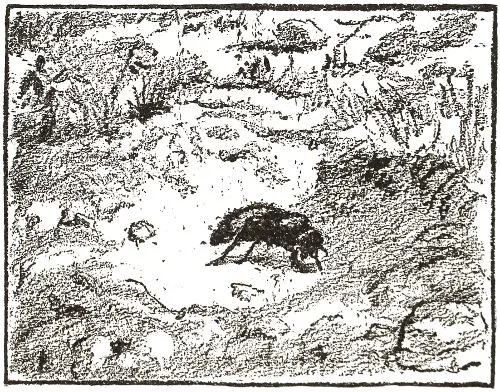
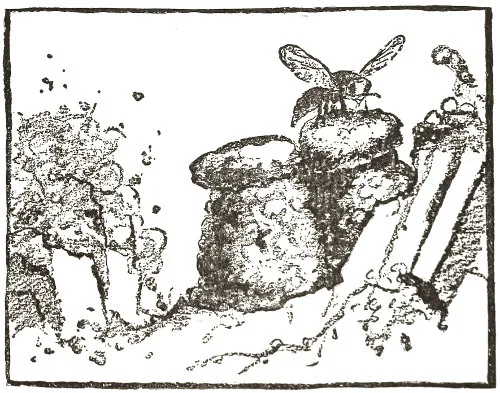
Parasites の挿絵((1919 edition))

Look at this one, striped black, white, and red, with the figure of a clumsy, hairy Ant.この虫を見てごらんなさい。黒と白と赤のしまもようで、ずんぐりした毛深いアリのような姿をしています。 She explores the slope on foot, looks at every nook and corner, sounds the soil with her antennæ.歩いて坂を調べ回り、すみずみまでのぞきこみ、しょっかくで土をたたいて調べます。 She is a kind of Wasp without wings, named Mutilla, the terrible enemy of the other Wasp-grubs sleeping in their cradles.これは羽のないハチのなかまで、アリバチ(ムティラ)といい、ゆりかごでねむるほかのハチの幼虫のおそろしい敵です。 Though the female Mutilla has no wings, she carries a sharp dagger, or sting.アリバチのメスは羽を持っていませんが、するどい短刀、つまり針を持っています。 If you saw her, you might think she was a sort of sturdy Ant, gayer in dress than other Ants.見かけたら、ほかのアリよりはでな服を着た、がんじょうなアリの一種だと思うかもしれません。 If you watched her for some time, you would see her, after trotting about for a bit, stop somewhere and begin to scratch and dig, finally laying bare a burrow underground, of which there was no trace outside; but she can see what we cannot.しばらく見ていると、アリバチはちょこちょこと歩き回ったあと、どこかで止まって土をひっかいてほりはじめ、とうとう地下の巣穴をほり当てます。外には何のあともなかったのに、アリバチには私たちに見えないものが見えるのです。 She goes into the burrow, stays there for a while, and at last reappears to replace the rubbish and close the door as it was at the start.巣穴に入ってしばらくいると、やっと出てきて、土をもとどおりにして入り口を元のようにふさぎます。 The abominable deed is done: the Mutilla’s egg has been laid in another’s cocoon, beside the slumbering grub or larva on which it will feed.ひどいしわざはすみました。アリバチの卵が、ほかのハチのまゆの中、ねむっている幼虫のそばに産みつけられたのです。生まれた子はその幼虫を食べて育ちます。

Here are other insects, all aglitter with gleams of gold, emerald, blue, and purple.こちらには、金やエメラルド、青やむらさきにきらきらかがやく虫たちがいます。 They are the humming-birds of the insect-world, and are called the Golden Wasps.虫の世界のハチドリともいえる虫たちで、「黄金のハチ」とよばれます(日本ではセイボウのなかまです)。 You would never think of them as thieves or murderers; but they, too, feed on the children of other Wasps.どろぼうや人殺しだとはとても思えませんが、この虫たちも、ほかのハチの子どもを食べて生きているのです。 One of them, half emerald and half pale-pink, boldly enters the burrow of a Fly-hunting Wasp at the very moment when the mother is at home, bringing a fresh piece of game to her babies, whom she feeds from day to day.そのうちの一ぴきは、半分がエメラルド色で半分がうすいピンク色をしていて、ハエかりバチの巣穴に大たんにも入っていきます。それも、毎日食べ物をあたえている子どもたちに母バチが新しいえものを運んできて、家にいる、まさにそのときにです。 The elegant criminal, the Golden Wasp who does not know how to dig, takes this moment when the door is open to enter.上品な姿の犯人、穴をほることを知らないセイボウは、戸が開いているこの時をねらって入りこむのです。 If the mother were away, the house would be shut up, and the Golden Wasp, that sneak-thief in royal robes, could not get in.母バチがるすなら家はしまっていて、王さまの服を着たこそどろのセイボウは入ることができないでしょう。 She enters, therefore, dwarf as she is, the house of the giantess whose ruin she is planning; she makes her way right to the back, never bothering about the Wasp, with her sting and her powerful jaws.そこでセイボウは、小さな体で、ほろぼそうとねらっている大きなハチの家に入っていきます。針と強いあごを持つハチのことなど気にもかけず、いちばんおくまで進みます。 The Wasp-mother either does not know the danger or is paralyzed with terror.母バチは危険に気づいていないのか、それともこわくて体がすくんでいるのか、どちらかです。 She lets the strange Wasp have her way.見なれないハチを好きにさせてしまいます。

Next year, if we open the cells of the poor Fly-hunting Wasp, we shall find some which contain a russet-silk cocoon, the shape of a thimble, with its opening closed with a flat lid.次の年、かわいそうなハエかりバチの部屋を開けてみると、いくつかの部屋に、指ぬきの形をした赤茶色の絹のまゆが見つかります。まゆの口は平らなふたでとじてあります。 In this silky covering, which is protected by the hard outer shell, is a grub of the Golden Wasp.かたい外がわのからに守られたこの絹のおおいの中にいるのは、セイボウの幼虫です。 As for the grub of the Fly-hunter, that grub which wove the silk and encrusted the outer casing with sand, it has disappeared entirely, all but a few tattered shreds of skin.ハエかりバチの幼虫、あの絹をつむいで外がわを砂でかためた幼虫はというと、ぼろぼろの皮が少し残っているだけで、すっかり消えてしまっています。 Disappeared how?どうして消えたのでしょう。 The Golden Wasp’s grub has eaten it.セイボウの幼虫が食べてしまったのです。

Parasites の挿絵((1919 edition))

One of these splendid-appearing, criminal Golden Wasps is dressed in lapis-lazuli on the front part of the body and in bronze and gold on the abdomen, with a scarf of blue at the end.このきらびやかな犯人のセイボウのあるものは、体の前のほうがラピスラズリのような青、おなかがブロンズと金色で、おしりの先には青いスカーフをまいています。 When one of the Mason-wasps has built on the rock her heap of dome-shaped cells, with a covering of little pebbles set in the plaster, when the grubs have eaten up their store of Caterpillars and hung their rooms with silk, we see the Golden Wasp settle on the outside of the nest.ドロバチが岩の上に、小石をしっくいにうめこんでおおったドーム形の部屋をいくつもつくり、幼虫たちがたくわえのイモムシを食べつくして部屋に絹を張ったころ、セイボウが巣の外がわにとまるのが見られます。 Probably some tiny crack, some defect in the cement, allows her to insert her probe and lay her egg.たぶん、どこかの小さなひびや、セメントのきずから管を差しこんで、卵を産むのでしょう。 At any rate, about the end of the following May, the Mason-wasp’s chamber holds a cocoon which again is shaped like a thimble.いずれにしても、次の年の5月の終わりごろ、ドロバチの部屋には、またしても指ぬきの形をしたまゆがあります。 From this cocoon comes a Golden Wasp.このまゆから出てくるのはセイボウです。 There is nothing left of the Mason-wasp’s grub; the Golden Wasp has gorged herself upon it.ドロバチの幼虫は何も残っていません。セイボウがおなかいっぱい食べてしまったのです。

Flies, as we have seen, often act the part of robbers.これまで見てきたように、ハエもよくどろぼう役をします。 They are not the least to be dreaded, though they are weak, sometimes so feeble that one cannot take them in his fingers without crushing them.ハエは弱く、ときには指でつまむとつぶれてしまうほどもろいのですが、決してあなどれません。 One species called Bombylii are clad in velvet so delicate that the least touch rubs it off.ツリアブとよばれる種類は、ちょっとさわっただけではげてしまうほど、やわらかいビロードの服を着ています。 They are fluffs of down almost as frail as a snowflake, but they can fly with wonderful quickness.雪のひとひらのようにもろい、ふわふわの毛のかたまりですが、おどろくほどすばやく飛ぶことができます。 See this one, hovering motionless two feet above the ground.ほら、地面から60センチほどの所で、じっと空中にとまっているのがいます。 Her wings vibrate so rapidly one cannot see the motion at all, and they seem to be in repose.羽がとても速くしんどうしているので、動きがまったく見えず、止まっているように見えます。 The insect looks as though it were hung at one point in space by some invisible thread.まるで目に見えない糸で、空中の一点につるされているかのようです。 You make a movement, and your Fly has disappeared.あなたが少し動くと、ハエは消えてしまいます。 You look about for her.あたりをさがします。 There is nothing here, nothing there.ここにもいない、あそこにもいない。 Then where is she?では、どこにいるのでしょう。 Close by you.すぐそばです。 She is back where she started, before you could see where she went to.どこへ行ったのか見えないうちに、もとの場所にもどっているのです。 What is she doing, there in the air?空中で、何をしているのでしょう。 She is up to some mischief; she is watching for a chance to leave her egg where it will feed on some other insect’s provisions.何か悪だくみをしているのです。ほかの虫のたくわえを食べて育つような場所に卵を産もうと、チャンスをうかがっているのです。 I do not know yet what sort of insect she preys upon, nor what she wishes for her children, whether honey, game, or the grubs themselves.このハエがどんな虫をねらうのか、子どもたちのために何をほしがっているのか、みつなのか、えものなのか、それとも幼虫そのものなのか、私にはまだわかりません。

I know more about the actions of certain tiny, pale-gray Flies, called Tachinæ, who, cowering on the sand in the sun, near a burrow, patiently wait for the hour at which to strike the fell blow.それよりも、ヤドリバエとよばれる、ある小さなうす灰色のハエのしわざのほうがよくわかっています。このハエは巣穴の近くの日なたの砂の上にうずくまって、ひどい一手をうつ時をじっと待っているのです。 When the different Wasps return from hunting, one kind with her Gad-fly, another with a Bee, another with a Beetle, another with a Locust, at once the Gray Flies are there, coming and going, turning and twisting with the Wasp, always behind her and never losing her.いろいろなハチが、あるものはアブを、あるものはミツバチを、あるものは甲虫を、あるものはバッタをかかえてかりからもどってくると、すぐに灰色のハエたちがやってきます。ハチといっしょに行ったり来たり、向きを変えたりくねったりして、いつも後ろにつき、決して見うしないません。 At the moment when the Wasp huntress goes indoors, with her captured game between her legs, they fling themselves on her prey, which is on the point of disappearing underground, and quickly lay their eggs upon it.かりをしてきたハチが、つかまえたえものをあしのあいだにかかえて家に入るしゅん間、ハエたちは今にも地下に消えようとするえものにとびついて、すばやく卵を産みつけます。 The thing is done in the twinkling of an eye; before the Wasp has crossed the threshold of her home, the food for her babies holds the germs of a new set of guests, who will feed on it and starve the children of the house to death.それは、まばたきするほどのあいだのできごとです。ハチが家の戸口をまたぐ前に、赤ちゃんのための食べ物には、もう新しいお客たちの卵がついているのです。そのお客たちは食べ物を食べてしまい、家の子どもたちをうえ死にさせてしまいます。

Perhaps, after all, we should not blame too much these insects which feed on others, or on the food of others.でも、もしかすると、ほかの虫や、ほかの虫の食べ物を食べて生きるこれらの虫を、あまり責めるべきではないのかもしれません。 An idle human being who feeds at other people’s tables is contemptible; we call him a parasite because he lives at his neighbor’s expense.なまけ者の人間が他人の食たくで食べさせてもらうのは、なさけないことです。となりの人のおかげで生きているので、そういう人を「寄生者(パラサイト)」とよびます。 The insect never does this; that is to say, it does not live on the food of another of the same species.虫は決してそんなことはしません。つまり、同じ種類のなかまの食べ物を食べて生きることはないのです。 You remember the Mason-bees: not one of the Bees touches another’s honey, unless the owner is dead or has stayed away a long time.ヌリハナバチを覚えているでしょう。持ち主が死んでいるか、長いあいだるすにしているのでなければ、ほかのハチのみつにさわるハチは一ぴきもいません。 The other Bees and Wasps behave in the same way.ほかのハチたちも同じようにふるまいます。

What we call parasitism in insects is really a kind of hunting.私たちが虫の「寄生」とよんでいるものは、じつは一種のかりなのです。 The Mutilla, for instance, is a huntress, and her prey is the grub of another kind of Wasp, just as the game of this other kind of Wasp may be a Caterpillar or a Beetle.たとえばアリバチはかりうどで、そのえものは別の種類のハチの幼虫です。ちょうど、その別のハチのえものがイモムシや甲虫であるのと同じことです。 When it comes to this, we are all hunters, or thieves, whichever way you look at it, and Man the greatest of all.そう考えると、私たちはみんな、見方によってはかりうどでもあり、どろぼうでもあります。そして人間こそ、そのいちばんの大物なのです。 He steals the milk from the Calf, he steals the honey from the children of the Bee, just as the Gray Fly takes the food of the Wasps’ babies.人間は子牛から牛乳をぬすみ、ミツバチの子どもからはちみつをぬすみます。ちょうど灰色のハエがハチの赤ちゃんの食べ物をとるように。 She does it to feed her children; and Man helps himself to everything he can find to feed his.ハエは自分の子どもを育てるためにそうします。そして人間は、自分の子どもを育てるために、見つけられるものは何でも自分のものにするのです。

Parasites の挿絵((1919 edition))

さいごまで よめたね!

「よめた!」をおすと、スタンプがもらえて おはなしの森 に木や動物がふえるよ。

PDFで印刷(A4 10まい)

おうちの方・大人の学習者へ
アリバチやセイボウのように、ほかの虫の幼虫を食べつくして育つ虫は、今では「ほしょく寄生者(パラシトイド)」とよばれます。「寄生もかりの一つ」「人間こそ一番の大どろぼう」というファーブルの見方は、大人にも考えさせられます。

出典台帳 — このページの「本物」の証明

英文
原文そのまま(1語も書きかえていません)。Project Gutenberg 電子書籍 #45812(J. Henri Fabre (adapted by Louise Seymour Hasbrouck)、1919年の本)
挿絵
(1919 edition)(同じ本の初版の挿絵。パブリックドメイン)
朗読
shibe(LibriVox のボランティア。Insect Adventures「Parasites」)。録音はパブリックドメインで、元のファイルをそのまま使っています(音質を落とす加工なし)。
照合
朗読を音声認識(Whisper)で文字起こしし、原文と1語ずつ照らし合わせました。一致率 96.9%
文が光るタイミングはこの照合で決めています。
和訳
和訳はAIと人が作成。AIは3重チェック。人の目でも順次確認しています。英文には一切手を入れていません。