
原田英語の多読ベストジュニア このサイトについてはじめて

My First Pond

はじめての池
★★★★★16分2839語朗読 AnnaLisa Bodtker原文そのまま一致率 77.8%

お金にこまった家で、七さいのアンリはアヒルの番をすることに。池で見つけたのは、オタマジャクシや青い虫、そしてきらきら光る「宝物」でした。

PDFで印刷(A4 18まい)

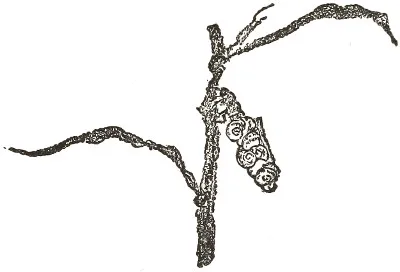
I am never tired of looking in a pond.わたしは、池をながめていると、いつまでたってもあきることがありません。 What busy life there is in that green world!あの緑の世界には、なんといそがしそうな命があふれていることでしょう! On the warm mud of the edges, the Frog’s little Tadpole basks and frisks in its black legions; down in the water, the orange-bellied Newt steers his way slowly with the broad rudder of his flat tail; among the reeds are stationed the little fleets of the Caddis-worms, half-protruding from their tubes, which are now a tiny bit of stick and again a tower of little shells.岸のあたたかいどろの上では、カエルの子のオタマジャクシが黒い大群になって日なたぼっこをしたり、はねまわったりしています。水の中では、おなかがオレンジ色のイモリが、平たいしっぽを広いかじにして、ゆっくりと進んでいきます。アシのあいだには、トビケラの幼虫(ようちゅう)の小さな船団がとまっていて、つつから体を半分のり出しています。そのつつは、小さな木切れでできていることもあれば、小さな貝がらを積み上げたとうのこともあります。

In the deep places, the Water-beetle dives, carrying with him his extra supply of breath, an air-bubble at the tip of the wing-cases and, under the chest, a film of gas that gleams like a silver breast plate; on the surface, the ballet of those shimmering pearls, the Whirligigs, turns and twists about; hard by, there swims the troop of the Pond-skaters, who glide along with side-strokes like those which the cobbler makes when sewing.深い所では、ゲンゴロウがもぐっていきます。ゲンゴロウは、はねの先に空気のあわをつけ、胸の下には銀のむねあてのように光る空気のまくをつけて、息のたくわえを運んでいるのです。水面では、きらきら光る真じゅのようなミズスマシが、くるくるとおどるように回っています。そのすぐそばでは、アメンボのむれが、くつ屋さんがぬいものをするときのような横向きの動きで、すいすいとすべっていきます。

Here are the Water-boatmen, who swim on their backs with two oars spread crosswise, and the flat Water-scorpions; here, clad in mud, is the grub of the largest of our Dragon-flies, so curious because of its manner of moving: it fills its hinder parts, a yawning funnel, with water, spirts it out again and advances just so far as the recoil of its water cannon.ここには、二本のオールを十字に広げて、あおむけで泳ぐマツモムシや、平たいタイコウチもいます。そしてここには、どろをかぶった、いちばん大きなトンボの幼虫(ヤゴ)がいます。このヤゴは進み方がとてもおもしろいのです。体の後ろの、大きく開いたじょうごのような所に水をすいこみ、それをいきおいよくふき出して、その水でっぽうのはね返りの分だけ前へ進むのです。

There are plenty of peaceful Shellfish.おとなしい貝のなかまも、たくさんいます。 At the bottom, the plump River-snails discreetly raise their lid, opening ever so little the shutters of their dwelling; on the level of the water, in the glades of the water-garden, the Pond-snails take the air.水の底では、まるまるとしたタニシが、そっとふたを持ち上げて、家のよろい戸をほんの少しだけ開けています。水面の高さでは、水草の庭のあき地で、モノアラガイが外の空気をすっています。 Dark Leeches writhe upon their prey, a chunk of Earthworm; thousands of tiny, reddish grubs, future Mosquitoes, go spinning around and twist and curve like so many graceful Dolphins.黒っぽいヒルが、えもののミミズの切れはしにからみついて、身をくねらせています。何千びきもの小さな赤っぽい虫、つまり、やがてカになるボウフラが、くるくる回りながら、ゆうがなイルカのように体をねじったり曲げたりしています。

Yes, a stagnant pool, though but a few feet wide, hatched by the sun, is an immense world, a marvel to the child who, tired of his paper boat, amuses himself by noticing what is happening in the water.そうです、はばが一メートルほどしかない、日の光にあたためられたよどんだ水たまりでも、それはとても大きな世界なのです。紙の船にあきて、水の中で起きていることをながめて楽しむ子どもにとっては、おどろきでいっぱいの世界です。 Let me tell what I remember of my first pond, which I explored when I was seven years old.わたしが七さいのときに探検した、はじめての池について、おぼえていることをお話ししましょう。

We had nothing but the little house inherited by my mother, and its patch of garden.わたしの家には、母が受けついだ小さな家と、ほんの少しの庭しかありませんでした。 Our money was almost all gone.お金は、もうほとんどなくなっていました。 What was to be done?どうしたらいいのでしょう? That was the stern question which father and mother sat talking over one evening.ある晩、父と母がすわって話し合っていたのは、そんなきびしい問題でした。

Do you remember Hop-o’-My-Thumb, who hid under the wood-cutter’s stool and listened to his parents overcome by want?木こりのいすの下にかくれて、まずしさにこまりはてた両親の話を聞いていた、「おやゆび小ぞう」をおぼえていますか? I was like him.わたしは、あの子と同じでした。 I also listened, pretending to sleep, with my elbows on the table.わたしもテーブルにひじをついて、ねむったふりをしながら話を聞いていたのです。 It was not blood-curdling designs that I heard but grand plans that set my heart rejoicing.でも、わたしが聞いたのは、ぞっとするような計画ではなく、胸がわくわくするようなすばらしい計画でした。
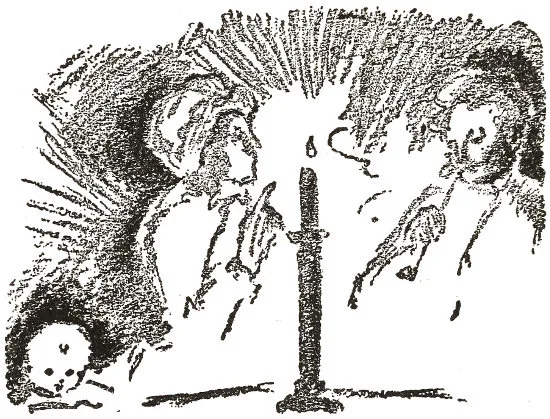
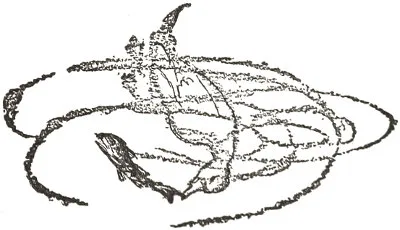
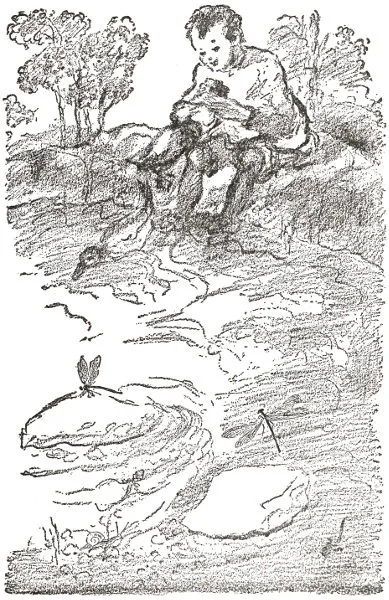
My First Pond の挿絵((1919 edition))

“Suppose we breed some ducks,” says mother.「アヒルを育ててみたらどうかしら」と母が言います。 “They sell very well in town.「町でよく売れるのよ。 Henri would mind them and take them down to the brook.アンリが世話をして、小川へ連れていけばいいわ。 And we could feed them on the grease from the tallow-factory, which they say is excellent for ducks, and which we could buy for a small price.”えさには、ろう工場で出るあぶらかすをやればいいのよ。アヒルにはとてもいいそうだし、安く買えるもの。」

“Very well,” says father, “let’s breed some ducks.「よし」と父が言います。「アヒルを育てよう。 There may be difficulties in the way; but we’ll have a try.”うまくいかないこともあるかもしれないが、やってみよう。」

That night I had dreams of paradise: I was with my ducklings, clad in their yellow suits; I took them to the pond, I watched them have their bath, I brought them back again, carrying the more tired ones in a basket.その夜、わたしは天国のような夢を見ました。黄色い服を着たアヒルの子たちといっしょにいて、池へ連れていき、水あびをするのを見守り、つかれた子はかごに入れて運んで、また連れて帰ってくるのです。

A month or two after the little birds of my dreams were a reality.一、二か月たつと、夢に見た小鳥たちが本当にやってきました。 There were twenty-four of them.ぜんぶで二十四羽いました。 They had been hatched by two hens, of whom one, the big black one, was an inmate of the house, while the other was borrowed from a neighbor.アヒルの子は二羽のニワトリがかえしたもので、一羽は家で飼っている大きな黒いめんどり、もう一羽はとなりの家から借りてきたものでした。

To bring them up, the big, black hen is enough, so careful is she of her adopted family.ひなを育てるのは、大きな黒いめんどり一羽で十分です。それほど、自分の子になったひなたちを、大切に世話するのです。 At first everything goes perfectly: a tub with two fingers’ depth of water serves as a pond.はじめのうちは、何もかもうまくいきます。指二本ぶんの深さに水を入れたたらいが、池の代わりです。 On sunny days the ducklings bathe in it under the anxious eye of the hen.晴れた日には、めんどりが心配そうに見守る中で、アヒルの子たちがその中で水あびをします。

Two weeks later, the tub no longer satisfies.二週間たつと、もうたらいでは満足しなくなります。 It contains neither cresses crammed with tiny Shellfish nor Worms and Tadpoles, dainty morsels both.たらいの中には、小さな貝がいっぱいついたクレソンも、ミミズもオタマジャクシもありません。どれもアヒルの大好物なのに。 The time has come for dives and hunts among the tangle of the water-weeds; and for us the day of trouble has also come.水草のしげみの中で、もぐったり、えものをとったりする時期が来たのです。そして、わたしたちにとっては、こまった日がやってきました。 How are we, right up at the top of the hill, to get water enough for a pond for our broods?おかのてっぺんに住んでいるのに、どうやってひなたちの池になるほどの水を手に入れたらいいのでしょう? In summer, we have hardly water to drink!夏には、飲む水さえろくにないのです!

Near the house there is only a scanty spring from which four or five families besides ourselves draw their water with copper pails.家の近くには、ちょろちょろとしか出ない泉が一つあるだけで、わたしの家のほかに四、五けんの家が、銅のバケツで水をくんでいました。 By the time that the schoolmasters donkey has quenched her thirst and the neighbors have taken their provision for the day, the spring-basin is dry.学校の先生の飼っているロバがのどのかわきをいやし、近所の人たちがその日の分の水をくんでしまうと、泉の水だまりはからっぽになります。 We have to wait four-and-twenty hours for it to fill.またいっぱいになるまで、二十四時間待たなければなりません。 No, there is no place there for ducklings.いいえ、あそこにはアヒルの子の居場所はありません。

There is a brook at the foot of the hill, but to go down to it with the troop of ducklings is dangerous.おかのふもとには小川がありますが、アヒルの子のむれを連れておりていくのは危険です。 On the way through the village we might meet murdering cats, or some surly dog might frighten and scatter the little band; and it would be a puzzling task to collect them all again.村を通るとちゅうで、おそろしいネコに出会うかもしれませんし、意地悪な犬がこの小さなむれをおどかして、ちりぢりにさせてしまうかもしれません。そうなったら、みんなをもう一度集めるのは、たいへんなことです。 But there is still another spot, part way up the hill, where there is a meadow and a pond of some size.でも、もう一か所、おかの中ほどに、草地とかなり大きな池のある場所があります。 It is very quiet there, and the place can be reached by a deserted footpath.そこはとても静かで、人の通らない小道を通って行くことができます。 The ducklings will be well off.アヒルの子たちも、きっと楽しくすごせるでしょう。

What a day it was when I first became a herdsman of ducks!はじめてアヒルの番をした日は、なんとすばらしい日だったことでしょう! Why must there be a drawback to such joys?どうしてこんなうれしいことに、こまったことがついてくるのでしょう? Walking on the hard stones had given me a large and painful blister on the heel.かたい石の上を歩いたせいで、かかとに大きな、いたいまめができてしまったのです。 If I had wanted to put on the shoes stowed away in the cupboard for Sundays and holidays, I could not.戸だなにしまってある、日曜日やお祭りの日のためのくつをはきたくても、はけませんでした。 I had to go barefoot over the broken stones, dragging my leg and carrying high the injured heel.わたしは、くだけた石の上をはだしで、足を引きずり、けがをしたかかとを高く上げて歩かなければなりませんでした。

The ducks, too, poor little things, had sensitive soles to their feet; they limped, they quacked with fatigue.アヒルたちも、かわいそうに、足のうらがいたみやすかったのです。足を引きずり、つかれてガアガア鳴きました。 They would have refused to go any farther towards the pond if I had not, from time to time, called a halt under the shelter of an ash.ときどきトネリコの木かげで休ませてやらなかったら、池のほうへそれ以上進むのをいやがったことでしょう。

My First Pond の挿絵((1919 edition))

We are there at last.ようやく着きました。 The place could not be better for my birdlets: shallow, tepid water, with a few muddy knolls and little green islands.そこは、わたしの小鳥たちにとって、これ以上ないほどいい場所でした。浅くて、なまあたたかい水があり、どろの小さなもり上がりや、緑の小島がいくつかあります。 The pleasures of the bath begin at once.すぐに、楽しい水あびがはじまります。 The ducklings clap their beaks and rummage here, there, and everywhere; they sift each mouthful, throwing out the clear water and swallowing the good bits.アヒルの子たちは、くちばしをパクパクさせて、あちこちをかきまわします。一口ずつこして、きれいな水ははき出し、おいしいものだけを飲みこむのです。 In the deeper parts they point their tails into the air and stick their heads under water.深い所では、しっぽを空につき出して、頭を水の中につっこみます。 They are happy: and it is a blessed thing to see them at work.みんな幸せそうです。その様子を見ているのは、ほんとうにうれしいことです。 I too am enjoying the pond.わたしも池を楽しんでいます。

What is this?これは何でしょう? On the mud lie some loose, knotted, soot-covered cords.どろの上に、すすをかぶったような、ゆるい、結び目だらけのひもが何本か落ちています。 One might take them for threads of wool like those which you pull out of an old ravelly stocking.古い、ほつれたくつ下から引っぱり出した毛糸のように見えます。 Can some shepherdess, knitting a black sock and finding her work turn out badly, have begun all over again and, in her impatience, have thrown down the wool with all the dropped stitches?だれか羊かいの女の人が、黒いくつ下をあんでいて、うまくいかないのでいちからあみ直すことにして、いらいらして、あみ目のほどけた毛糸を投げすてたのでしょうか? It really looks like it.ほんとうに、そんなふうに見えます。

I take up one of those cords in my hand.わたしは、そのひもを一本手に取ってみます。 It is sticky and very loose; the thing slips through my fingers before they can catch hold of it.ねばねばして、とてもやわらかく、つかもうとする前に指のあいだからするりとすべり落ちてしまいます。 A few of the knots burst and shed their contents.結び目がいくつかはじけて、中身が出てきます。 What comes out is a black ball, the size of a pin’s head, followed by a flat tail.出てきたのは、ピンの頭ほどの大きさの黒い玉で、そのあとに平たいしっぽがついています。 I recognize, on a very small scale, a familiar object: the Tadpole, the Frog’s baby.とても小さいけれど、よく知っているものだとわかりました。カエルの赤ちゃん、オタマジャクシです。

Here are some other creatures.ほかにも生き物がいます。 They spin around on the surface of the water and their black backs gleam in the sun.水面でくるくる回っていて、黒いせなかが日の光にきらきら光っています。 If I lift a hand to seize them, that moment they disappear, I do not know where.つかまえようと手を上げると、そのとたんに、どこへともなく消えてしまいます。 It’s a pity; I should have liked much to see them closer and to make them wriggle in a little bowl which I should have put ready for them.ざんねんです。もっと近くで見て、用意しておいた小さなはちの中で、くねくね動くところを見たかったのに。

Let us look at the bottom of the water, pulling aside those bunches of green string from which beads of air are rising and gathering into foam.空気の玉が立ちのぼり、集まってあわになっている、緑のひものような水草のたばをかき分けて、水の底を見てみましょう。 There is something of everything underneath.その下には、なんでもいます。 I see pretty shells with compact whorls, flat as beans; I notice little worms carrying tufts and feathers; I make out some with flabby fins constantly flapping on their backs.豆のように平たい、ぎっしりとうずをまいた、きれいな貝が見えます。ふさや羽かざりをつけた小さな虫もいます。せなかの上で、やわらかいひれをたえずパタパタさせているものもいます。 What are they all doing there?あの生き物たちは、みんなそこで何をしているのでしょう? What are their names?名前は何というのでしょう? I do not know.わたしにはわかりません。 And I stare at them for ever so long, held by the mystery of the waters.そして、水のふしぎにひきつけられて、いつまでもいつまでも見つめているのです。

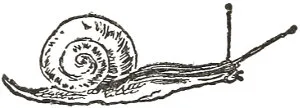
At the place where the pond dribbles into the near-by field, are some alder-trees; and here I make a glorious find.池の水が、近くの畑へちょろちょろ流れ出している所に、ハンノキが何本か立っています。そこでわたしは、すばらしいものを見つけました。 It is a Beetle—not a very large one, oh, no!それはこうちゅうでした。それほど大きくはありません、ええ、ちっとも! He is smaller than a cherry-stone, but of an unutterable blue.サクランボのたねよりも小さいのですが、言葉では言い表せないほどの青い色をしているのです。 The angels in paradise must wear dresses of that color.天国の天使たちは、きっとあの色の服を着ているにちがいありません。 I put the glorious one inside an empty snail-shell, which I plug up with a leaf.わたしはそのすばらしい虫を、からっぽのカタツムリのからに入れ、葉っぱでせんをします。 I shall admire that living jewel at my leisure, when I get back.家に帰ったら、この生きた宝石をゆっくりながめるつもりです。 Other things call me away.でも、ほかのものがわたしをよんでいます。

The spring that feeds the pond trickles from the rock, cold and clear.池に流れこむ泉の水は、岩からしみ出していて、冷たくすんでいます。 The water first collects into a cup, the size of the hollow of one’s two hands, and then runs over in a stream.水はまず、両手を合わせたくぼみほどの大きさの水だまりにたまり、それからあふれて流れになります。 These falls call for a mill: that goes without saying.こんな小さなたきがあれば、水車を作らないわけにはいきません。言うまでもないことです。 I build one with two bits of straw, crossed on an axis, and supported by flat stones set on edge.わたしは、二本のわらをじくの上で十字に組み、平たい石をたてて支えにして、水車を作ります。 The mill is a great success.水車は大成功です。 I am sorry I have no playmates but the ducklings to admire it.ざんねんなのは、見せてあげる遊び友だちが、アヒルの子たちしかいないことです。

Let us contrive a dam to hold back the waters and form a pool.今度は、水をせき止めて水たまりを作るダムを考えてみましょう。 There are plenty of stones for the brickwork.石を積む工事のための石は、たくさんあります。 I pick the most suitable; I break the larger ones.いちばんちょうどいい石をえらび、大きな石は割ります。 And, while collecting these blocks, suddenly I forget all about the dam which I meant to build.ところが、その石を集めているうちに、作るつもりだったダムのことなど、すっかりわすれてしまいました。

On one of the broken stones, in a hole large enough for me to put my fist into, something gleams like glass.割れた石の一つに、げんこつが入るほどの大きさの穴があって、その中で何かがガラスのように光っているのです。 The hollow is lined with facets gathered in sixes which flash and glitter in the sun.穴の内側には、六つずつ集まった面がびっしりとならんでいて、日の光にきらきら、ぴかぴかとかがやいています。 I have seen something like this in church, on the great saints’-days, when the light of the candles in the big chandelier kindles the stars in its hanging crystal.これに似たものを、教会で見たことがあります。大きな聖人のお祭りの日に、大きなシャンデリアのろうそくの光が、ぶらさがったクリスタルの中に星をともすのです。

We children, lying, in summer, on the straw of the threshing-floor, have told one another stories of the treasures which a dragon guards underground.わたしたち子どもは、夏に、こくもつを打つ広場のわらの上にねころんで、地下でりゅうが守っている宝物の話をしあったものでした。 Those treasures now return to my mind: the names of precious stones ring out uncertainly but gloriously in my memory.その宝物のことが、いま思い出されます。宝石の名前が、ぼんやりと、でもきらびやかに、記おくの中にひびきます。 I think of the king’s crown, of the princesses’ necklaces.王様のかんむりや、おひめ様たちの首かざりのことを思いうかべます。 In breaking stones, can I have found, but on a much richer scale, the thing that shines quite small in my mother’s ring?石を割っていて、母の指輪で小さく光っているあのものを、ずっとたくさん見つけたのでしょうか? I want more such.もっとほしくなりました。

The dragon of the subterranean treasures treats me generously.地下の宝物を守るりゅうは、わたしに気前よくしてくれます。 He gives me his diamonds in such quantities that soon I possess a heap of broken stones sparkling with magnificent clusters.りゅうはダイヤモンドをどっさりくれるので、たちまちわたしは、みごとな結しょうのかたまりがきらめく、割れた石の山を手に入れました。 He does more: he gives me his gold.それだけではありません。りゅうは金までくれるのです。 The trickle of water from the rock falls on a bed of fine sand which it swirls into bubbles.岩からちょろちょろと落ちる水は、細かい砂のとこに落ちて、砂をうずまかせ、あわを立てています。 If I bend over towards the light, I see something like gold-filings whirling where the fall touches the bottom.光のほうへ身をかがめると、水の落ちる所の底で、金のこなのようなものがくるくる回っているのが見えます。 Is it really the famous metal of which twenty-franc pieces, so rare with us at home, are made?これは本当に、あの有名な金、わたしの家ではめったに見られない二十フラン金貨の材料なのでしょうか? One would think so, from the glitter.このかがやきからすると、そう思えます。

My First Pond の挿絵((1919 edition))

“I think of the king’s crown, of the princesses’ necklace.”「王様のかんむりや、おひめ様の首かざりのことを思いうかべます。」

I take a pinch of sand and place it in my palm.ひとつまみの砂を取って、手のひらにのせます。 The brilliant particles are numerous, but so small that I have to pick them up with a straw moistened in my mouth.光るつぶはたくさんありますが、とても小さいので、口でしめらせたわらで拾い上げなければなりません。 Let us drop this: they are too tiny and too bothersome to collect.これはやめておきましょう。小さすぎて、集めるのがめんどうです。 The big, valuable lumps must be farther on, in the thickness of the rock.大きな、ねうちのあるかたまりは、もっと先の、岩のおくにあるにちがいありません。 We’ll come back later; we’ll blast the mountain.あとでまた来ましょう。山をばくはするのです。

I break more stones.わたしは、もっと石を割ります。 Oh, what a queer thing has just come loose, all in one piece!おや、なんともふしぎなものが、そっくりそのまま一つ取れました! It is turned spiral-wise, like certain flat Snails that come out of the cracks of old walls in rainy weather.それはうずまきの形にまいていて、雨の日に古いかべのすき間から出てくる平たいカタツムリのようです。 With its gnarled sides, it looks like a little ram’s-horn.ごつごつしたわきのところが、小さなヒツジの角のように見えます。 How do things like that find their way into the stone?どうしてこんなものが、石の中に入りこむのでしょう?

Treasures and curiosities make my pockets bulge with pebbles.宝物やめずらしいもので、ポケットは小石でぱんぱんにふくらみました。 It is late and the little ducklings have had all they want to eat.もうおそい時間になり、アヒルの子たちも、おなかいっぱい食べました。 “Come along, youngsters,” I say to them, “let’s go home.”「さあ、みんな、帰ろう」とわたしはアヒルたちに言います。 My blistered heel is forgotten in my excitement.こうふんして、かかとのまめのことはすっかりわすれています。

The walk back is a delight, as I think of all the wonderful things I have found.見つけたすばらしいものを思いうかべると、帰り道は楽しくてたまりません。 But a sad disappointment is waiting for me when I reach home.ところが、家に着くと、悲しいがっかりがわたしを待っていました。 My parents catch sight of my bulging pockets, with their disgraceful load of stones.両親は、とんでもない石の重みでふくらんだわたしのポケットに気づきます。 The cloth has given way under the rough and heavy burden.ざらざらした重い荷物のせいで、布がやぶれてしまっていたのです。

“You rascal!” says father, at sight of the damage.「このいたずら者め!」と、やぶれたポケットを見て、父が言います。 “I send you to mind the ducks and you amuse yourself picking up stones, as though there weren’t enough of them all round the house!「アヒルの番に行かせたのに、石なんか拾って遊んでいたのか。家のまわりにいくらでもあるだろうに! Make haste and throw them away!”さっさと捨ててきなさい!」

Broken-hearted, I obey.わたしは、胸がはりさけそうな思いで言われたとおりにします。 Diamonds, gold-dust, petrified ram’s-horn, heavenly Beetle, are all flung on a rubbish-heap outside the door.ダイヤモンドも、金のこなも、石になったヒツジの角も、天国の色のこうちゅうも、みんな戸口の外のごみの山に投げ捨てられてしまいました。

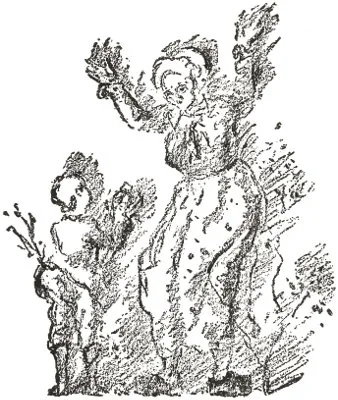
My First Pond の挿絵((1919 edition))

Mother bewails her lot:母は、自分の身の上をなげきます。

“A nice thing, bringing up children to see them turn out so badly!「子どもを育てたって、こんなにだめになるなんて、ほんとうにいやになるわ! You’ll bring me to my grave.おまえのせいで、母さんは死んでしまうよ。 Green stuff I don’t mind: it does for the rabbits.草なら、まあいいわ。ウサギのえさになるから。 But stones, which ruin your pockets; poisonous animals, which’ll sting your hand: what good are they to you, silly?でも、ポケットをだめにする石や、手をさすかもしれない毒のある虫なんか、いったい何の役に立つっていうの、おばかさん? There’s no doubt about it; some one has thrown a spell over you!”まちがいないわ。だれかにまほうをかけられたのよ!」

Poor mother!かわいそうな母! She was right.母の言うとおりでした。 A spell had been cast upon me—a spell which Nature herself had woven.わたしにはまほうがかけられていたのです。それは、自然そのものがかけたまほうでした。 In later years I found out that the diamonds of the duck-pool were rock-crystal, the gold-dust, mica; but the fascination of the pond held good for all that.何年もたってから、アヒルの池のダイヤモンドはすいしょう、金のこなは雲母(うんも)だったとわかりました。それでも、池のみりょくは、少しも消えませんでした。 It was full of secrets that were worth more to me than diamonds or gold.池は、わたしにとってダイヤモンドや金よりもねうちのあるひみつで、いっぱいだったのです。

My First Pond の挿絵((1919 edition))

THE GLASS PONDガラスの池

Have you ever had an indoor pond?みなさんは、家の中に池を持ったことがありますか? Such a pond is easy to make and one can watch the life of the water in it even better than outdoors, where the ponds are too large and have too much in them.そういう池は作るのがかんたんで、外の池よりも、水の中の生き物の暮らしをもっとよく見ることができます。外の池は大きすぎて、いろいろなものが入りすぎているからです。 Besides, when out-of-doors, one is likely to be disturbed by passers-by.それに外では、通りがかりの人にじゃまされがちです。

For my indoor pond, the blacksmith made me a framework of iron rods.わたしの家の中の池のために、かじ屋さんが鉄のぼうでわくを作ってくれました。 The carpenter, who is also a glazier, set the framework on a wooden base and supplied it with a movable board as a lid; he then fixed thick panes of glass in the four sides.ガラス屋もかねている大工さんが、そのわくを木の台にのせ、ふたにする取り外しのできる板をつけてくれました。それから、四方に厚いガラスの板をはめこんでくれました。 The bottom of the pond was made of tarred sheet iron, and had a trap to let the water out.池の底は、タールをぬった鉄板でできていて、水をぬくためのせんがついていました。 The contrivance looked very well, standing on a little table in front of a sunny window.このしかけは、日当たりのいい窓の前の小さなテーブルの上に置くと、なかなかりっぱに見えました。 It held about ten or twelve gallons.十〜十二ガロン(四十五〜五十五リットルくらい)の水が入りました。

I put in it first some limy incrustations with which certain springs in my neighborhood cover the dead clumps of rushes.まず中に入れたのは、わたしの家の近くのある泉が、かれたイグサのかぶにかぶせてできる、石灰(せっかい)のかたまりです。 It is light, full of holes, and looks a little like a coral reef.それは軽くて、穴だらけで、少しサンゴしょうのように見えます。 Moreover, it is covered with a short, green, velvety moss of tiny pond-weed.しかも、小さな水草が、短い緑のビロードのようなこけになって、表面をおおっているのです。 I count upon this pond-weed to keep the water healthy.この水草が、水をきれいにたもってくれるだろうと、わたしは期待しています。 How?どうやって? Let us see.見てみましょう。

The living creatures in the pond fill the water, just as living people fill the air, with gases unfit to breathe.生きている人が空気を、息をするのにむかないガスでよごすのと同じように、池の生き物たちも水をそういうガスでいっぱいにします。 Somehow the pond must get rid of these gases, or its inhabitants will die.池は何とかしてこのガスを取りのぞかなければなりません。そうしないと、池に住む生き物は死んでしまいます。 This is what the pond-weed does; it breathes in and burns up the unwholesome gases, changing them into a life-giving gas.それをするのが水草です。水草は、体に悪いガスをすいこんで燃やし、命をささえるガスに変えるのです。

If you will look at the pond when the sun is shining on it, you will see this change take place.日の光が池にあたっているときに見れば、この変化が起きるところが見られます。 How beautiful the water-weeds are!水草は、なんと美しいのでしょう! The green-carpeted reef is lit up with countless sparkling points and looks like a fairy lawn of velvet, studded with thousands of diamond pin-heads.緑のじゅうたんをしいた岩が、数えきれないほどのきらめく点で照らされ、何千ものダイヤモンドのピンの頭をちりばめた、ビロードのようせいのしばふのように見えます。 From this exquisite jewelry pearls constantly break loose and are at once replaced by others; slowly they rise, like tiny globes of light.このすばらしい宝石から、真じゅがたえず次々にはなれていき、すぐにまた別の真じゅが代わりにできます。真じゅは、小さな光の玉のように、ゆっくりとのぼっていきます。 They spread on every side.真じゅは四方八方に広がっていきます。 It is a constant display of fireworks in the depth of the water.まるで、水の底でずっと花火大会をしているようです。

This is what is really happening: The weeds are decomposing—that is, separating into its elements—the unwholesome carbonic acid gas with which the water is filled; they keep the carbon to use in their own cells; they breathe out the oxygen in tiny bubbles, the pearls that you have seen.本当に起きていることは、こうです。水草は、水の中にいっぱいとけている、体に悪い炭酸ガス(二酸化炭素)を分解しているのです。分解とは、もとの成分に分けることです。水草は炭素を取っておいて自分の細ぼうに使い、酸素を小さなあわにしてはき出します。それが、みなさんが見た真じゅなのです。 These partly dissolve in the water, making it healthful for the little water-creatures to breathe, and partly reach the surface, where they vanish in the air, making it good for us to breathe.このあわの一部は水にとけて、小さな水の生き物たちが息をするのに役立つ水にします。残りは水面までのぼって空気の中に消え、わたしたちが息をするのによい空気にするのです。

No matter how often I see it, I cannot help being interested in this everyday marvel of a bundle of weeds purifying a stagnant pool; I look with a delighted eye upon the ceaseless spray of spreading bubbles; I see in imagination the prehistoric times when seaweed, the first-born of plants, produced the first atmosphere for living things to breathe at the time when the land of the continents was beginning to rise out of the oceans.何度見ても、ひとたばの水草がよどんだ水たまりをきれいにするという、この毎日のふしぎに、わたしは心をひかれずにはいられません。広がっていくあわのしぶきが休みなくつづくのを、うっとりとながめます。そして、大昔、大きなりく地が海から持ち上がりはじめたころ、植物の中でいちばんはじめに生まれた海そうが、生き物が息をするためのはじめての空気を作り出したようすを、心にえがくのです。 What I see before my eyes, between the glass panes of my pond, tells me the story of the planet surrounding itself with pure air.わたしの池のガラス板のあいだで、目の前に見えていることは、地球がきれいな空気で自分をつつんでいった物語を、わたしに語ってくれるのです。

My First Pond の挿絵((1919 edition))

さいごまで よめたね!

「よめた!」をおすと、スタンプがもらえて おはなしの森 に木や動物がふえるよ。

PDFで印刷(A4 18まい)

おうちの方・大人の学習者へ
『ファーブル昆虫記』の作者の子ども時代の思い出。水晶や雲母を宝物と信じた少年の心が、のちの大博物学者を生みました。後半の水草が出す「酸素のあわ」は、今でいう光合成です。

出典台帳 — このページの「本物」の証明

英文
原文そのまま(1語も書きかえていません)。Project Gutenberg 電子書籍 #45812(J. Henri Fabre (adapted by Louise Seymour Hasbrouck)、1919年の本)
挿絵
(1919 edition)(同じ本の初版の挿絵。パブリックドメイン)
朗読
AnnaLisa Bodtker(LibriVox のボランティア。Insect Adventures「My First Pond」)。録音はパブリックドメインで、元のファイルをそのまま使っています(音質を落とす加工なし)。
照合
朗読を音声認識(Whisper)で文字起こしし、原文と1語ずつ照らし合わせました。一致率 77.8%
文が光るタイミングはこの照合で決めています。
和訳
和訳はAIと人が作成。AIは3重チェック。人の目でも順次確認しています。英文には一切手を入れていません。