

原田英語の多読ベストジュニア このサイトについてはじめて

the Fly-Hunting Wasp

ハエをかるハチ
★★★★★13分2571語朗読 shibe原文そのまま一致率 97.5%

ハナダカバチ(ハエかりバチ)の母親は、毎日新しいハエをとってきて子どもに食べさせます。ところが、その巣をねらう小さなハエがいて……。

PDFで印刷(A4 14まい)

You have read about the Wasps who store up paralyzed Caterpillars and Crickets for their babies’ food, then close up the cells and fly away; now you shall hear about a Wasp who feeds her children with fresh food from day to day.えものにするイモムシやコオロギをまひさせてたくわえ、部屋をふさいで飛び去ってしまうハチたちのことは、もう読みましたね。こんどは、毎日毎日、新しい食べ物を子どもにあたえるハチのお話です。 This is the Bembex, or the Fly-hunting Wasp, as I shall call her.それはベンベクス(ハナダカバチ)というハチで、ここでは「ハエかりバチ」とよぶことにします。

This Wasp digs her burrows in very soft, light sand, under a blazing sun and a blue sky.このハチは、照りつける太陽と青空の下、とてもやわらかくて軽い砂に巣穴をほります。 I go out and watch her sometimes on an unshaded plain where it is so hot that the only way to avoid sunstroke is to lie down at full length behind some sandy knoll, put one’s head down a rabbit-burrow, or provide one’s self with a large umbrella.私はときどき、日かげのまったくない野原へ見に出かけます。そこはとても暑く、日射病にならないためには、砂の小山のかげに長々とねそべるか、ウサギの穴に頭をつっこむか、大きなかさを用意するしかありません。 The latter is what I did.私はかさを使いました。 If the reader will sit with me under the umbrella at the end of July, he will see the following sight.7月の終わりに、みなさんが私といっしょにかさの下にすわれば、こんなようすが見られるでしょう。

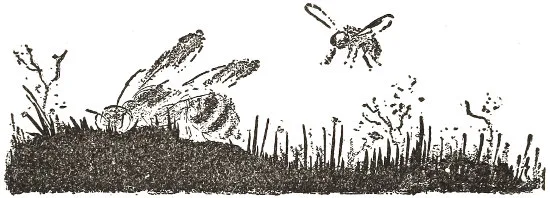
A Fly-hunting Wasp arrives suddenly and alights, without any hesitation, at a spot which to my eyes looks exactly like the rest of the sandy surface.ハエかりバチが一ぴき、ふいにやってきて、少しもまよわずにある場所におり立ちます。私の目には、まわりの砂地とまったく同じに見える場所です。 With her front feet, which are armed with rows of stiff hairs and remind one at the same time of a broom, a brush, and a rake, she works at clearing her underground dwelling.前足には、かたい毛がずらりと並んでいて、ほうきとブラシとくま手をいっしょにしたようです。この前足で、地下の住まいのそうじをします。 The insect stands on her four hind-legs, while the front ones first scratch and then sweep the shifting sand.ハチは後ろの4本のあしで立ち、前足でまず砂をひっかき、それから流れやすい砂をはき出します。 She shoots the sand backwards so fast that it gushes in a curve like a stream of water, falling to the ground seven or eight inches away.砂をものすごい速さで後ろへとばすので、砂は水がふき出すように弓なりに飛び、20センチほどはなれた地面に落ちます。 This spray of dust is kept up evenly for five or ten minutes at a time by the swift, graceful Wasp.すばやく、身のこなしの美しいハチは、この砂けむりを一度に5分から10分も、むらなく続けます。

Mingled with this dust are tiny bits of wood, decayed leaf stalks, particles of grit and other rubbish.その砂にまじって、小さな木切れや、くさった葉のくき、小石のつぶ、そのほかのごみがあります。 The Wasp picks them up in her mouth and carries them away.ハチはそれを口でくわえて運び去ります。 This is really the purpose of her digging.じつは、これこそがハチがほっている目的なのです。 She is sifting out the sand at the entrance to her home, which is all ready underground, having been dug some time before.ハチは家の入り口の砂をふるいにかけているのです。家そのものは地下にもうできあがっていて、少し前にほってあったのです。 The Wasp wishes to make the sand at the entrance to her burrow fine, light, and free from any obstacle, so that when she alights suddenly with a Fly for her children, she can dig an entrance to her home quickly.ハチは巣穴の入り口の砂を細かく軽くして、じゃまなものがないようにしておきたいのです。そうすれば、子どものためにハエをかかえてふいにおり立ったとき、すばやく入り口をほって家に入れるからです。 She does this work in her spare time, when her larva has enough food to last it for a while, so that she does not need to go hunting.この仕事は、幼虫にしばらく足りるだけの食べ物があって、かりに行かなくてもよいときの、ひまな時間にします。 She seems happy as she works so fast and eagerly, and who knows that she is not expressing in this way her mother’s satisfaction in watching over the roof of her house where her baby lives?とても速く、熱心に働くハチは楽しそうに見えます。もしかすると、こうして、わが子のいる家の屋根を見守る母親の満足をあらわしているのかもしれません。

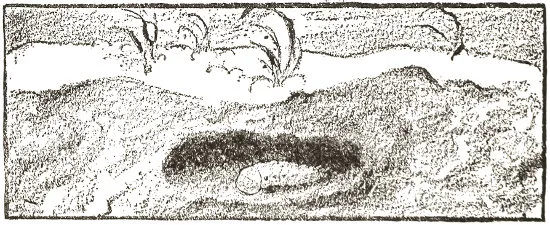
If we should take a knife and dig down into the sand where the Wasp-mother is scratching, we should find, first, an entrance corridor, as wide as one’s finger, and perhaps eight to twelve inches long, and then a room, hollowed out down below where the sand is damper and firmer.ハチの母親が砂をひっかいている所をナイフでほってみると、まず指くらいの太さで、20〜30センチほどの長さの入り口の通路があり、その先の下のほう、砂がもっとしめってかたい所に、部屋がほってあります。 It is large enough to contain two or three walnuts; but all it does hold at present is a Fly, a golden-green Greenbottle, with a tiny white egg laid on the side.部屋はクルミが二つか三つ入るくらいの大きさですが、今そこにあるのはハエが一ぴきだけです。金色がかった緑色のキンバエで、その横に小さな白い卵が産みつけてあります。 This is the Wasp’s egg.これがハチの卵です。 It will hatch out in about twenty-four hours, into a little worm, which will feed on the dead Fly.卵は24時間ほどでかえって小さな虫(幼虫)になり、死んだハエを食べて育ちます。 For the Fly is dead, and not paralyzed, as the food of other Wasp-babies often is.というのも、このハエは死んでいるのです。ほかのハチの赤ちゃんの食べ物によくあるように、まひしているのではありません。
the Fly-Hunting Wasp の挿絵((1919 edition))

At the end of two or three days the Wasp-grub will have eaten up the little Fly.2、3日たつと、ハチの幼虫は小さなハエを食べつくしてしまいます。 Meanwhile the mother Wasp remains in the neighborhood and you see her sometimes feeding herself by sipping the honey of the field flowers, sometimes settling happily on the burning sand, no doubt watching the outside of the house.そのあいだ、母バチは近くにいて、野の花のみつをすって自分の食事をしたり、焼けるような砂の上にのんびりととまったりしています。きっと家の外を見張っているのでしょう。 Every now and then she sifts the sand at the entrance; then she flies away for a while.ときどき入り口の砂をふるい、それからしばらく飛び去ります。 But, however long she may stay away, she never forgets the young larva who has food enough to last only a short time; her mother’s instinct tells her the hour when the grub has finished its food and wants more.けれども、どんなに長く出かけていても、少しのあいだの分しか食べ物のない幼い幼虫のことを決して忘れません。母親の本能が、幼虫が食べ終わってもっとほしがる時を教えてくれるのです。 She therefore returns to the nest, which, you must remember, does not show in the least from the surface of the ground, as the shifting sand has filled in the entrance; she knows, however, exactly where to look for it; she goes down into the earth, this time carrying a larger piece of game.そこで母バチは巣にもどります。思い出してください、巣は地面の上からはまったくわかりません。流れる砂が入り口をうめてしまっているからです。それでも母バチは、どこをさがせばよいかちゃんと知っています。こんどはもっと大きなえものをかかえて地面にもぐります。 After leaving this in the underground room she again leaves the house and waits outside until the time comes to serve a third course.えものを地下の部屋に置くと、ふたたび家を出て、三皿目の料理を出す時が来るまで外で待ちます。 This is not long, for the little worm is getting a larger appetite all the time.それは長くはかかりません。小さな幼虫は、どんどん食欲が大きくなっていくからです。 Again the mother appears with another Fly.母バチはまた別のハエを持ってあらわれます。

For nearly two weeks, while the larva is growing up, the meals thus follow in succession, one by one, as needed, and coming closer together as the infant grows larger.幼虫が育つ2週間近くのあいだ、こうして食事は必要なだけ一つずつ続き、子どもが大きくなるにつれて、間かくはだんだんせまくなります。 Towards the end of the two weeks, the mother is kept as busy as she can be satisfying her hungry child, now a large, fat grub.2週間が終わりに近づくころには、母バチは、いまでは大きく太った幼虫になったはらぺこの子をまんぞくさせるために、目が回るほどいそがしくなります。 You see her at every moment coming back with a fresh capture, at every moment setting out again upon the chase.いつ見ても、新しいえものを持って帰ってきては、またすぐかりに出かけていきます。 She does not cease her efforts until the grub is stuffed full and refuses its food.幼虫がおなかいっぱいになって、もう食べ物をいらないというまで、母バチは働くのをやめません。 I have counted and found that sometimes the grub will eat as many as eighty-two Flies.数えてみたところ、幼虫がハエを82ひきも食べることがありました。

I have wondered sometimes why this Wasp does not lay up a store of food, as the other Wasps do, close the door of her burrow and fly away, instead of waiting about, as she does so patiently.私はときどきふしぎに思いました。このハチは、なぜほかのハチのように食べ物をたくわえ、巣穴の戸をしめて飛び去らずに、こんなにしんぼう強く近くで待っているのだろう、と。 I realize that she does not do so because her Flies would not keep; they would spoil and be unfit for eating.そうしないのは、ハエが長もちしないからだとわかりました。いたんで、食べられなくなってしまうのです。 But why does she kill the Fly instead of paralyzing it?では、なぜハエをまひさせずに殺すのでしょうか。 Possibly because the Fly would not make a satisfactory preserved food; it is so slight and frail, it would shrivel up and there would be nothing of it; it must be eaten fresh to be worth anything.たぶん、ハエはたくわえておく食べ物には向いていないからでしょう。とても小さくてもろいので、ひからびて何も残らなくなってしまいます。新しいうちに食べなければ、ねうちがないのです。 Another reason almost certainly is that the Fly has to be captured very quickly, on the wing.もう一つの理由は、まずまちがいなく、ハエは飛んでいるところを、とてもすばやくつかまえなければならないということです。 There is not time for the Wasp to aim her sting, as the Wasps do who are killing clumsy Worms or fat Crickets on the ground.地面の上で、のろまなイモムシや太ったコオロギを仕留めるハチのように、ねらいをつけて針をさすひまはありません。 She must attack with claws, mouth or sting wherever she can, and this method of attack kills at once.つめでも口でも針でも、とにかく使える所でおそうしかなく、このおそい方だと、えものはすぐに死んでしまうのです。

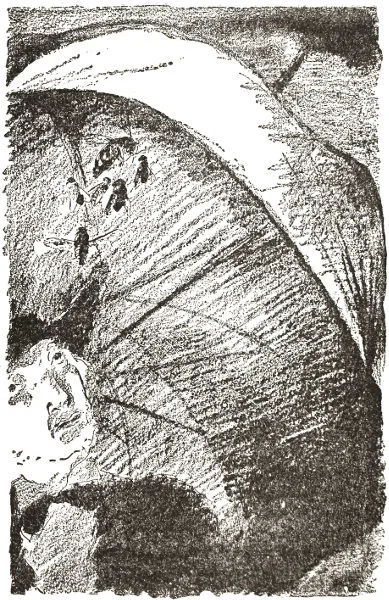
It is not easy to surprise a Wasp hunting, as she flies far away from where her burrow lies; but one day I had a quite unexpected experience as I was sitting in the hot sun under my umbrella.ハチは巣穴からずっと遠くまで飛んでいってかりをするので、かりのところを見るのはかんたんではありません。でもある日、暑い日ざしの中、かさの下にすわっていると、思いがけないことが起こりました。 I was not the only one to enjoy the shade of the umbrella.かさの日かげを楽しんでいたのは、私だけではありませんでした。 Gad-flies of various kinds would take refuge under the silken dome and sit peacefully on every part of the tightly stretched cover.いろいろな種類のアブが、絹のまるい屋根の下ににげこんできて、ぴんと張った布のあちこちにおとなしくとまっていたのです。 To while away the hours when I had nothing to do, it amused me to watch their great gold eyes, which shone like carbuncles under my umbrella; I loved to follow their solemn progress when some part of the ceiling became too hot and obliged them to move a little way on.何もすることがないときのひまつぶしに、私はアブの大きな金色の目をながめて楽しみました。その目は、かさの下で赤い宝石のようにかがやいていました。天井のどこかが熱くなりすぎて、アブたちが少しずつ場所を移していく、そのおごそかな行進を目で追うのも好きでした。

One day, bang!ある日、パン! The tight cover resounded like the skin of a drum.ぴんと張った布が、たいこの皮のように鳴りひびきました。 Perhaps an oak had dropped an acorn on the umbrella.カシの木がドングリを落としたのかもしれません。 Presently, one after the other, bang, bang, bang!まもなく、続けざまに、パン、パン、パン! Can some practical joker be flinging acorns or little pebbles at my umbrella?だれかいたずら好きが、ドングリや小石を私のかさに投げつけているのでしょうか。 I leave my tent and look around: nothing!テントを出て見回します。だれもいません! I hear the same sharp sounds again.また同じするどい音が聞こえます。 I look up at the ceiling and the mystery is explained.天井を見上げると、なぞがとけました。 The Fly-hunting Wasps of the neighborhood, who all eat Gad-flies, had discovered the rich game that was keeping me company and were impudently coming into my shelter to seize the Flies on the ceiling.このあたりのハエかりバチたちは、みんなアブを食べるのですが、私といっしょにいるたくさんのごちそうを見つけて、あつかましくも私の日よけの中に入ってきて、天井のアブをつかまえていたのです。 Things were going to perfection: I had only to sit still and look.何もかも思いどおりでした。私はただじっとすわって見ていればよいのです。

Every moment a Wasp would enter, swift as lightning, and dart up to the silken ceiling, which resounded with a sharp thud.ひっきりなしにハチが一ぴき、いなずまのように速く入ってきて、絹の天井にさっととびかかります。天井はドンとするどく鳴ります。 Some rumpus was going on aloft, where so lively was the fray that one could not tell which was attacker, which attacked.頭の上ではひとさわぎが起こり、取っ組み合いがはげしすぎて、どちらがおそっているのか、おそわれているのかわかりません。 The struggle did not last long: the Wasp would soon retire with a victim between her legs.たたかいは長くは続きません。ハチはまもなく、あしのあいだにえものをかかえて引き上げていきます。 The dull herd of Gad-flies would not leave the dangerous shelter.にぶいアブの群れは、このあぶない日よけからはなれようとしません。 It was so hot outside!外はとても暑いのですから! Why get excited?さわいだって、しかたがないでしょう?

the Fly-Hunting Wasp の挿絵((1919 edition))

“One day, bang!”「ある日、パン!」

Let us watch the Wasp as she returns to the burrow with her capture held under her body between her legs.えものを体の下、あしのあいだにかかえて巣穴へもどるハチを見てみましょう。 As she draws near her home, she makes a shrill humming, which has something plaintive about it and which lasts until the insect sets foot to earth.家に近づくと、ハチはかん高い羽音を立てます。それはどこか悲しげなひびきで、地面にあしをつけるまで続きます。 The Wasp hovers above the sand and then dips down, very slowly and cautiously, all the time humming.ハチは砂の上で空中にとまり、それから羽音を立てながら、とてもゆっくり、用心深くおりてきます。 If her keen eyes see anything unusual, she slows up in her descent, hovers for a second or two, goes up again, comes down again and flies away, swift as an arrow.するどい目で何かいつもとちがうものを見つけると、おりるのをゆるめ、1、2秒空中にとまり、また上がり、またおり、そして矢のように速く飛び去ります。 We shall see in a few moments what it is that makes her hesitate.何がハチをためらわせるのかは、もう少ししたらわかります。 Soon she is back again, looks at things once more from a height, then comes down slowly and alights at a spot which looks exactly like the rest of the sandy surface.まもなくハチはもどってきて、もう一度高い所からようすを見ると、ゆっくりおりてきて、まわりの砂地とまったく同じに見える場所におり立ちます。

I think she has landed more or less on chance, and will now look about for the entrance to her home.当てずっぽうにおりて、これから家の入り口をさがすのだろうと私は思います。 But no; she is exactly over her burrow.ところがそうではありません。ハチはちょうど巣穴の真上にいるのです。 Without once letting go her prey, she scratches a little in front of her, gives a push with her head, and at once enters, carrying the Fly.えものを一度もはなさずに、前を少しひっかき、頭でひとおしすると、すぐにハエを持ったまま中へ入ります。 The sand falls in, the door closes, and the Wasp is at home.砂がくずれて戸がしまり、ハチは家の中です。 It makes no difference that I have seen this Wasp return to her nest hundreds of times; I am always astonished to behold the keen-sighted insect find without hesitation a door which does not show at all.このハチが巣にもどるのを何百回見ても、私はいつもおどろかされます。目のするどいこの虫は、まったく見えない戸口を少しもまよわずに見つけるのです。

The Wasp does not always hesitate in the air before alighting at her house, and when she does, it is because she sees her nest is threatened by a very grave danger.ハチがいつも家におりる前に空中でためらうわけではありません。ためらうのは、巣がとても大きな危険にさらされているのを見たときです。 Her plaintive hum shows anxiety; she never gives it when there is no peril.悲しげな羽音は心配のしるしです。危険がないときには決してこの音を立てません。 But who is the enemy?では、敵はだれなのでしょう。 It is a miserable little Fly, feeble and harmless in appearance, whom we have mentioned in another chapter.それはみすぼらしい小さなハエで、見たところ弱々しくて害のなさそうなものです。別の章でもふれたことのあるハエです。 The Wasp, the scourge of the Fly-tribe, the fierce slayer of large Gad-flies, does not enter her home because she sees herself watched by another Fly, a tiny dwarf, who would make scarcely a mouthful for her larvæ.ハエのなかまをふるえ上がらせるハエかりバチ、大きなアブをたおすおそろしいかりうどが、家に入ろうとしないのです。別のハエ、ハチの幼虫にとってはひと口にもならないほどのちっぽけなハエに見張られているからです。

I feel just as I should if I saw my Cat fleeing in terror from a Mouse.まるで、うちのネコがネズミをこわがってにげだすのを見たような気持ちです。 Why does the Wasp not pounce upon the little wretch of a Fly and get rid of her?なぜハチは、そのちっぽけなハエにとびかかって追いはらわないのでしょう。 I do not know.私にはわかりません。 It must be because this wretched little Fly has her tiny part to play in the universe, as well as the Wasp.このちっぽけなハエにも、ハチと同じように、世界の中で果たす小さな役目があるからにちがいありません。 These things are ordered somehow, in a way we do not understand.こうしたことは、私たちにはわからないしくみで、うまく決められているのです。

the Fly-Hunting Wasp の挿絵((1919 edition))

As I shall mention elsewhere, this is the Fly that lays her eggs on the game the Wasp puts in the nest for her own baby; and the Fly’s offspring eat the food of the Wasp-grub, and sometimes eat the grub itself, if provisions are scarce.あとでもお話ししますが、これは、ハチがわが子のために巣に入れるえものに卵を産みつけるハエです。ハエの子どもたちはハチの幼虫の食べ物を食べてしまい、食べ物が足りなくなると、ときにはハチの幼虫そのものまで食べてしまうのです。 The way the Fly manages her business is interesting.このハエの仕事のやり方はおもしろいものです。 She never enters the Wasp’s burrow, but she waits with the greatest patience for the moment when the Wasp dives into her home, with her game clasped between her legs.ハエは決してハチの巣穴には入りません。ハチがえものをあしのあいだにかかえて家にもぐりこむしゅん間を、とてもしんぼう強く待つのです。 Just as she has half her body well within the entrance and is about to disappear underground, the Fly dashes up and settles on the piece of game that projects a little way beyond the hinder end of the Wasp; and while the latter is delayed by the difficulty of entering, the former, with wonderful swiftness, lays an egg on the prey, or even two or three in quick succession.ハチが体の半分を入り口に入れて、今にも地下に消えようとするちょうどそのとき、ハエがさっと飛んできて、ハチのおしりの先から少しはみ出しているえものにとまります。そしてハチが入りにくくて手間どっているあいだに、ハエはおどろくほどすばやく、えものに卵を一つ、ときには二つ三つ続けて産みつけます。 The hesitation of the Wasp, hampered by her load, lasts but the twinkling of an eye.荷物にじゃまされたハチが手間どるのは、ほんのまばたきするほどのあいだです。 No matter: the Gnat has accomplished what she wished to, and now she goes and squats in the sun, close to the burrow, and plans fresh deeds of darkness.それでもかまいません。小バエは思いどおりのことをやりとげ、こんどは巣穴の近くの日なたにうずくまって、次の悪だくみを考えるのです。

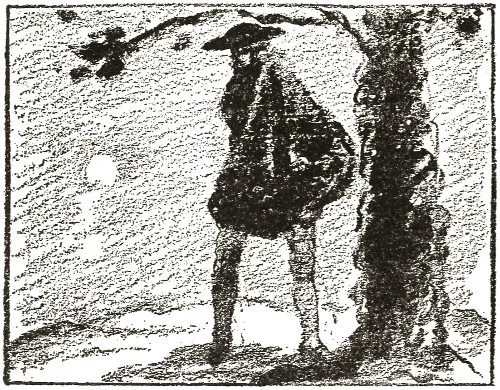
A number of these Flies, usually three or four, are apt to station themselves on the sand at one time near a burrow, of which they well know the entrance, carefully hidden though it be.このハエは、ふつう三、四ひきがいっしょに、巣穴の近くの砂の上で待ちかまえています。入り口がどんなにうまくかくされていても、ちゃんと知っているのです。 Their dull-brown color, their great blood-red eyes, their astonishing patience, have often reminded me of a picture of brigands, clad in dark clothes, with red handkerchiefs around their heads, waiting in ambush for an opportunity to hold up some travelers.くすんだ茶色の体、血のように赤い大きな目、そしておどろくほどのしんぼう強さを見ると、私はよく山ぞくの絵を思い出しました。黒っぽい服を着て、赤いバンダナを頭にまき、旅人をおそうチャンスを待ちぶせしている山ぞくです。

the Fly-Hunting Wasp の挿絵((1919 edition))

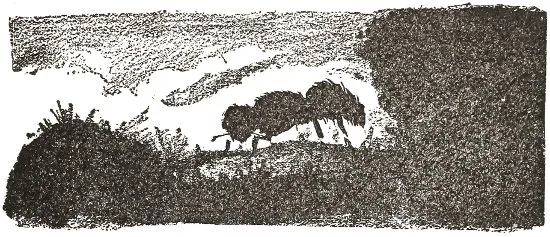
It is when the poor Wasp sees these brigands that she hesitates.かわいそうなハチがためらうのは、この山ぞくたちを見たときなのです。 At last she comes nearer, however.それでも、ついにハチは近づいてきます。 The Midges then take flight and follow behind the Wasp.すると小バエたちは飛び立って、ハチのあとについていきます。 If she turns, they turn also, so as to keep exactly behind her; if she advances, they advance; if she retreats, they retreat.ハチが向きを変えればハエも向きを変え、いつもぴったり後ろにつきます。ハチが進めば進み、下がれば下がります。 She cannot keep them off.ハチはハエを追いはらうことができません。 At last she grows weary and alights; they also alight, still behind her.とうとうハチはつかれており立ちます。ハエたちもやはり後ろにおり立ちます。 The Wasp darts off again, with an indignant whimpering; the Midges dart after her.ハチはぷんぷんおこったような声を上げて、また飛び立ちます。小バエたちもそのあとを追います。 The Wasp tries one more way to get rid of them.ハチはハエをふりはらうために、もう一つ手を使います。 She flies far away at full speed, hoping that they will follow and lose their way.全速力で遠くへ飛んでいくのです。ハエたちがついてきて、道にまよってくれればと思って。 But they know too much for that.けれども、ハエたちはそんな手にはのりません。 They settle down on the sand again near the burrow and wait for her to come back.巣穴の近くの砂の上にまたとまって、ハチがもどってくるのを待つのです。 Come she does; the pursuit begins all over again; the mother’s patience is worn out, and at last they have a chance to lay their eggs as she goes into the burrow.ハチはやっぱりもどってきます。追いかけっこがまた初めから始まり、母バチのしんぼうもつきて、とうとうハエたちは、ハチが巣穴に入るときに卵を産むチャンスを手に入れるのです。

We shall end our chapter with the story of the Wasp-grub to whom no accidents happen, into whose burrow no nasty Fly-eggs enter.この章のおしまいに、何の事故も起こらず、いやなハエの卵も入りこまなかったハチの幼虫のお話をしましょう。 For two weeks it eats and grows; then it begins to weave its cocoon.幼虫は2週間食べて大きくなり、それからまゆをつむぎはじめます。 It has not very much silk in its body to use for this, so it uses grains of sand to strengthen it.体の中には、まゆにする糸があまりたくさんないので、砂つぶを使って強くします。 First it pushes away the remains of its food and forces them into a corner of the cell.まず、食べのこしをおしのけて、部屋のすみにつめこみます。 Then, having swept its floor, it fixes to the different walls of its room threads of a beautiful white silk, forming a web which makes a kind of scaffold for the next work.それからゆかをそうじすると、部屋のあちこちのかべに美しい白い絹の糸を張りつけて、あみのようなものをつくります。これが次の仕事のための足場になります。

It then weaves a hammock of silk in the center of the threads.次に、糸のまん中に絹のハンモックをあみます。 This hammock is like a sack open wide at one end and closed at the other in a point.このハンモックは、一方のはしは大きく開き、もう一方のはしはとがってとじている、ふくろのような形です。 The grub, leaning half out of its hammock, picks up the sand almost grain by grain with its mouth.幼虫はハンモックから体を半分乗り出して、口で砂をほとんど一つぶずつ拾い上げます。 If any grain found is too large, it is thrown away.大きすぎるつぶは、すててしまいます。 When the sand is sorted in this way, the grub brings some into the hammock in its mouth, and begins to spread it in an even layer on the lower side of the hammock-sack; it adds grains also to the upper side, fixing them in the silk as one would place stones in putty.こうして砂をえり分けると、幼虫はそれを口でハンモックの中に運び、ふくろの下側に平らにしきつめはじめます。上側にもつぶを足していき、ちょうどパテに石をうめこむように絹にはりつけていきます。

The cocoon is still open at one end.まゆはまだ一方のはしが開いています。 It is time to close it.そこをとじる時です。 The grub weaves a cap of silk which fits the mouth of the sack exactly, and lays grains of sand one by one upon this foundation.幼虫はふくろの口にぴったり合う絹のふたをつくり、その土台の上に砂つぶを一つずつのせていきます。 The cocoon is all finished now, except that the grub gives some finishing touches to the inside by glazing the walls with varnish to protect its delicate skin from the rough sand.これでまゆは完成です。あとは仕上げに、内側のかべにニスをぬってつやつやにし、ざらざらした砂からやわらかい皮ふを守るだけです。 It then goes peacefully to sleep, to wait for its transformation into a Wasp like its mother.それから幼虫は安らかなねむりにつき、お母さんのようなハチに生まれかわる時を待つのです。

the Fly-Hunting Wasp の挿絵((1919 edition))

さいごまで よめたね!

「よめた!」をおすと、スタンプがもらえて おはなしの森 に木や動物がふえるよ。

PDFで印刷(A4 14まい)

おうちの方・大人の学習者へ
毎日ハエを運ぶハナダカバチの子育て。1ぴきの幼虫がハエを82ひきも食べるとはびっくりです。えものをためずに少しずつ運ぶこのやり方は、ハチが群れでくらすように進化した道すじを考える手がかりとして、今も研究されています。

出典台帳 — このページの「本物」の証明

英文
原文そのまま(1語も書きかえていません)。Project Gutenberg 電子書籍 #45812(J. Henri Fabre (adapted by Louise Seymour Hasbrouck)、1919年の本)
挿絵
(1919 edition)(同じ本の初版の挿絵。パブリックドメイン)
朗読
shibe(LibriVox のボランティア。Insect Adventures「The Fly-Hunting Wasp」)。録音はパブリックドメインで、元のファイルをそのまま使っています(音質を落とす加工なし)。
照合
朗読を音声認識(Whisper)で文字起こしし、原文と1語ずつ照らし合わせました。一致率 97.5%
文が光るタイミングはこの照合で決めています。
和訳
和訳はAIと人が作成。AIは3重チェック。人の目でも順次確認しています。英文には一切手を入れていません。