 7分
 朗読 laurencetrask
 原文そのまま

 PDFで印刷(A4 7まい)
[The caddis-worm is the grub of the caddis-fly, which is like a small moth and is often seen flitting over our streams and ponds.[トビケラの幼虫(ようちゅう)は、トビケラという虫の子どもです。トビケラは小さなガのような虫で、小川や池の上をひらひらと飛んでいるのがよく見られます。 There are about one hundred and fifty species of this fly in America.]アメリカには、このなかまが百五十種ほどいます。]
Whom shall I lodge in my glass trough, kept always wholesome by the action of the water-weeds?水草のはたらきでいつもきれいにたもたれている、わたしのガラスの水そうに、だれを住まわせましょうか? I shall keep Caddis-worms, those insects which clothe themselves with little sticks and other materials.トビケラの幼虫を飼うことにしましょう。小さな木の枝や、いろいろな材料で、自分の体に服を着せる虫です。 They are among the most ingenious of the self-clothing insects.自分で服を着る虫のなかでも、とりわけ工夫上手な虫なのです。
The particular species of Caddis-worm I have chosen is found in muddy-bottomed, stagnant pools crammed with small reeds.わたしがえらんだトビケラの幼虫は、底がどろで、小さなアシがびっしりしげった、よどんだ水たまりにいるものです。 It is the little grub that carries through the still waters a bundle of tiny fragments fallen from the reeds.アシから落ちた小さなかけらのたばをかかえて、静かな水の中を動きまわる、小さな幼虫です。 Its sheath, a traveling house, is an elaborate piece of work, made of many different materials.その「さや」は、持ち運びのできる家で、いろいろな材料を組み合わせて作った、手のこんだ作品です。
The young worms, the beginners, start with a sort of deep basket in wicker-work, made of small, stiff roots, long steeped and peeled under water.若い幼虫、つまり作りはじめたばかりの幼虫は、水の中に長いあいだつかって皮のむけた、小さなかたい根を使って、深いかごのようなあみ細工から作りはじめます。 The grub that has made a find of these fibers saws them with its jaws and cuts them into little straight sticks, which it fixes one by one to the edge of its basket, always crosswise.このせんいを見つけた幼虫は、あごでのこぎりのように切って、まっすぐな小さなぼうにし、それを一本ずつ、かごのふちに、いつも横向きにとりつけていきます。 This pile of spikes is a fine protection, but hard to steer through the tangle of water-plants.このとげの山は、身を守るにはいいのですが、水草のしげみの中を進むにはじゃまになります。 Sooner or later the worm forsakes it, and builds with round bits of wood, browned by the water, often as wide as a thick straw and a finger’s breadth long, more or less—taking them as chance supplies them.やがて幼虫はこれを捨てて、水につかって茶色くなった丸い木切れで家を作ります。木切れは太いわらほどのはばのことが多く、長さは指のはばくらいで、だいたいそのくらいです。手に入ったものを、そのまま使うのです。
It does not always use wood, however.でも、いつも木を使うわけではありません。 If there are plenty of small, dead Pond-snails in the pond, all of the same size, the Caddis-worm makes a splendid patchwork scabbard; with a cluster of slender roots, reduced by rotting to their stiff, straight, woody axis, it manufactures pretty specimens of wicker-work like baskets.池に、同じくらいの大きさの小さなモノアラガイの死んだ貝がらがたくさんあれば、トビケラの幼虫は、それをつぎはぎにしたみごとなさやを作ります。また、細い根のたばが、くさって、かたくてまっすぐな木のしんだけになったものを使って、かごのようなきれいなあみ細工を作ります。 With grains of rice, which I gave the grubs in my glass pond as an experiment, they built themselves magnificent towers of ivory.わたしがガラスの池で実験として米つぶをあたえると、幼虫たちは、ぞうげでできたようなすばらしいとうを作りました。 Next to the sheaths of snail-shells, this was the prettiest thing I ever saw the Caddis-worms make.トビケラの幼虫が作ったものの中で、これは、貝がらのさやの次にきれいなものでした。
THE PIRATES’ ATTACK海ぞくのしゅうげき
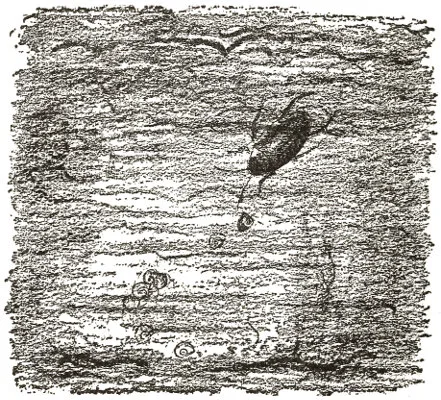
What is the use of these houses which the Caddis-worms carry about with them?トビケラの幼虫が持ち歩いているこの家は、何の役に立つのでしょう? I catch a glimpse of the reason for making them.家を作るわけが、ちらりとわかりました。 My glass pond was at first occupied by a dozen Water-beetles, whose diving performances are so curious to watch.わたしのガラスの池には、はじめ十二ひきほどのゲンゴロウが住んでいました。ゲンゴロウがもぐる様子は、見ていてとてもおもしろいのです。 One day, meaning no harm and for want of a better place to put them, I fling among them a couple of handfuls of Caddis-worms.ある日、わたしは悪気もなく、ほかにいい置き場所がなかったので、ゲンゴロウたちの中に、トビケラの幼虫を二つかみほど入れました。 Blunderer that I am, what have I done!なんてへまをしたのでしょう、わたしは何をしてしまったのでしょう! The pirate Water-beetles, hiding in the rugged corners of the rockwork, at once perceive the windfall.岩組みのでこぼこしたすみにかくれていた海ぞくのゲンゴロウたちは、たちまち思いがけないごちそうに気づきます。 They rise to the surface with great strokes of their oars; they hasten and fling themselves upon the crowd of carpenter Caddis-worms.オールのような足で大きく水をかいて水面へのぼってくると、いそいで大工のトビケラの幼虫のむれにおそいかかります。 Each Beetle grabs a sheath by the middle and tries to rip it open by tearing off shells and sticks.ゲンゴロウはそれぞれ、さやのまん中をつかみ、貝がらや木切れを引きはがして、さやをやぶろうとします。 While this is going on, the Caddis-worm, close-pressed, appears at the mouth of the sheath, slips out, and quickly escapes under the eyes of the Water-beetle, who appears to notice nothing.そのあいだに、追いつめられたトビケラの幼虫は、さやの口から顔を出し、するりとぬけ出して、ゲンゴロウの目の前をさっとにげていきます。ゲンゴロウは、何も気づいていないようです。
The brutal ripper of sheaths does not see the little worm, like a white sausage, that slips between his legs, passes under his fangs, and madly flees.らんぼうなさややぶりは、白いソーセージのような小さな幼虫が、自分の足のあいだをすりぬけ、きばの下を通って、むちゅうでにげていくのが見えないのです。 He continues to tear away the outer case and to tug at the silken lining.ゲンゴロウは、外がわのさやをはがしつづけ、内がわの絹のうら地を引っぱります。 When the breach is made, he is quite crestfallen at not finding what he expected.さやに穴があくと、思っていたものが見つからないので、すっかりしょげてしまいます。