
 11分
 朗読 Ruth Golding
 原文そのまま

 PDFで印刷(A4 9まい)
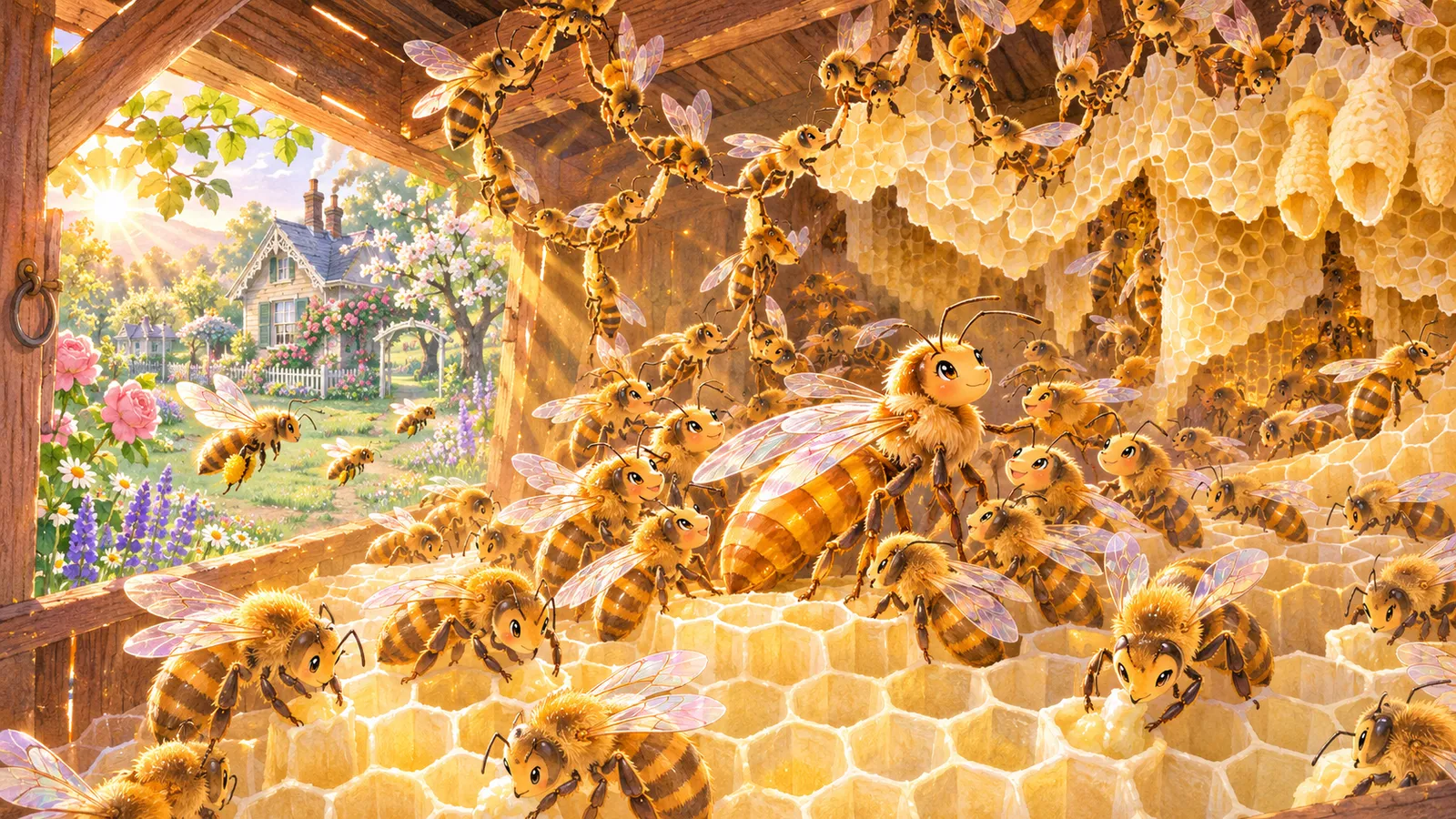
I am going to ask you to visit with me to-day one of the most wonderful cities with no human beings in it, and yet it is densely populated, for such a city may contain from twenty thousand to sixty thousand inhabitants.今日は、わたしといっしょに、とてもふしぎな都市の一つをたずねてもらいます。そこには人間は一人もいませんが、それでもぎっしりと住人がいます。こういう都市には、2万から6万もの住人がいることがあるのです。 In it you will find streets, but no pavements, for the inhabitants walk along the walls of the houses; while in the houses you will see no windows, for each house just fits its owner, and the door is the only opening in it.そこには通りはありますが、歩道はありません。住人たちは家のかべの上を歩くからです。そして家にはまどがありません。どの家も持ち主の体にぴったりの大きさで、入り口のほかにはあなが一つもないのです。 Though made without hands these houses are most evenly and regularly built in tiers one above the other; and here and there a few royal palaces, larger and more spacious than the rest, catch the eye conspicuously as they stand out at the corners of the streets.手を使わずに作られているのに、家々はとても整って規則正しく、段になって上へ上へと重ねて建てられています。そして、あちこちに、ほかの家より大きくてゆったりした王宮がいくつかあって、通りのかどに目立って立っているので、すぐ目にとまります。
Some of the ordinary houses are used to live in, while others serve as storehouses where food is laid up in the summer to feed the inhabitants during the winter, when they are not allowed to go outside the walls.ふつうの家のなかには住むために使われるものもあれば、ものおきとして使われるものもあります。ものおきには、夏のあいだに食べ物がたくわえられ、住人たちが都市のかべの外へ出ることをゆるされない冬のあいだの食べ物になるのです。 Not that the gates are ever shut: that is not necessary, for in this wonderful city each citizen follows the laws; going out when it is time to go out, coming home at proper hours, and staying at home when it is his or her duty.といっても、門が閉められるわけではありません。その必要がないのです。このふしぎな都市では、住人の一人一人がきまりを守り、出かける時間になれば出かけ、ちょうどよい時間に家に帰り、家にいるのが役目のときは家にいるからです。 And in the winter, when it is very cold outside, the inhabitants, having no fires, keep themselves warm within the city by clustering together, and never venturing out of doors.そして冬、外がとても寒いとき、住人たちは火を持っていないので、都市の中でぎゅっと身をよせ合ってあたたまり、けっして外へ出ようとはしません。
One single queen reigns over the whole of this numerous population, and you might perhaps fancy that, having so many subjects to work for her and wait upon her, she would do nothing but amuse herself.この大ぜいの住人全体を、たった一ぴきの女王がおさめています。仕えてくれる家来がこんなにたくさんいるのだから、女王は遊んでばかりいるのだろうと思うかもしれません。 On the contrary, she too obeys the laws laid down for her guidance, and never, except on one or two state occasions, goes out of the city, but works as hard as the rest in performing her own royal duties.ところが反対に、女王もまた自分のために決められたきまりにしたがっていて、1度か2度の特別な行事のときのほかは、けっして都市の外へ出ず、ほかの住人と同じようにせっせとはたらいて、女王の役目をはたしているのです。
From sunrise to sunset, whenever the weather is fine, all is life, activity, and bustle in this busy city.日の出から日の入りまで、天気がよければいつでも、このいそがしい都市は活気にあふれ、動きまわり、にぎわっています。 Though the gates are so narrow that two inhabitants can only just pass each other on their way through them, yet thousands go in and out every hour of the day; some bringing in materials to build new houses, others food and provisions to store up for the winter; and while all appears confusion and disorder among this rapidly moving throng, yet in reality each has her own work to do, and perfect order reigns over the whole.門はとてもせまくて、住人が2ひきやっとすれちがえるくらいしかないのに、1日じゅう1時間に何千びきも出入りしています。新しい家を建てる材料を運んでくるものもいれば、冬のためにたくわえる食べ物を運んでくるものもいます。すばやく動きまわるこの大ぜいのむれは、ごちゃごちゃでめちゃくちゃに見えますが、じつは一ぴき一ぴきに自分の仕事があり、全体がきちんと整っているのです。
Even if you did not already know from the title of the lecture what city this is that I am describing, you would no doubt guess that it is a beehive.もし、このお話の題名から、わたしがえがいているのが何の都市なのかまだ知らなかったとしても、きっと、それがミツバチの巣箱だと思いつくでしょう。 For where in the whole world, except indeed upon an anthill, can we find so busy, so industrious, or so orderly a community as among the bees?だって、世界じゅうで、アリづかの上をのぞけば、ミツバチほどいそがしく、はたらき者で、きちんとした社会が、ほかにどこにあるでしょう? More than a hundred years ago, a blind naturalist, Francois Huber, set himself to study the habits of these wonderful insects and with the help of his wife and an intelligent manservant managed to learn most of their secrets.100年よりも前、目の見えないフランソワ・ユベールという、しぜんを研究する人が、このふしぎな虫のくらしを研究しようと決心しました。そして、おくさんと、かしこい男の使用人の助けをかりて、ミツバチのひみつのほとんどを明らかにしたのです。 Before his time all naturalists had failed in watching bees, because if they put them in hives with glass windows, the bees, not liking the light, closed up the windows with cement before they began to work.それまでは、博物学者たちはみな、ミツバチの観察に失敗していました。ガラスのまどのついた巣箱に入れると、ミツバチは光がきらいなので、仕事を始める前に、まどをやにでふさいでしまったからです。 But Huber invented a hive which he could open and close at will, putting a glass hive inside it, and by this means he was able to surprise the bees at their work.でもユベールは、好きなときに開け閉めできる巣箱を発明し、その中にガラスの巣箱を入れました。こうして、はたらいているミツバチの不意をつくことができたのです。 Thanks to his studies, and to those of other naturalists who have followed in his steps, we now know almost as much about the home of bees as we do about our own; and if we follow out to-day the building of a bee-city and the life of its inhabitants, I think you will acknowledge that they are a wonderful community, and that it is a great compliment to anyone to say that he or she is "as busy as a bee."ユベールの研究と、そのあとにつづいたほかの博物学者たちの研究のおかげで、今わたしたちは、自分の家と同じくらい、ミツバチの家のことを知っています。今日、ミツバチの都市の建設と、そこに住むものたちのくらしをたどってみれば、ミツバチがすばらしい社会をつくっていること、そしてだれかを「ミツバチのようにいそがしい(よくはたらく)」と言うのは大きなほめ言葉だということに、きっとなっとくするでしょう。
In order to begin at the beginning of the story, let us suppose that we go into a country garden one fine morning in May when the sun is shining brightly overhead, and that we see hanging from the bough of an old apple-tree a black object which looks very much like a large plum-pudding.物語をはじめから始めるために、5月のある晴れた朝、太陽が頭の上で明るくかがやいているときに、いなかの庭へ入っていったとしましょう。そして、古いリンゴの木の枝から、大きなプラムプディングによく似た黒いものがぶら下がっているのを見つけたとします。 On approaching it, however, we see that it is a large cluster or swarm of bees clinging to each other by their legs; each bee with its two fore-legs clinging to the two hinder legs of the one above it.ところが近づいてみると、それはミツバチの大きなかたまり、つまり分ぽうしたむれで、ミツバチたちがあしでつかまり合っているのがわかります。どのハチも、2本の前あしで、すぐ上のハチの2本の後ろあしにつかまっているのです。 In this way as many as 20,000 bees may be clinging together, and yet they hang so freely that a bee, even from quite the centre of the swarm, can disengage herself from her neighbours and pass through to the outside of the cluster whenever she wishes.こうして2万びきものミツバチがつかまり合っていることもありますが、それでもとても自由にぶら下がっているので、むれのど真ん中にいるハチでも、まわりのハチからはなれて、好きなときにかたまりの外まで通りぬけていけるのです。
If these bees were left to themselves, they would find a home after a time in a hollow tree, or under the roof of a house, or in some other cavity, and begin to build their honeycomb there.もしこのミツバチたちをそのままにしておいたら、しばらくして、木のうろや家の屋根の下や、ほかのすき間に住まいを見つけ、そこでハチのすを作りはじめるでしょう。 But as we do not wish to lose their honey we will bring a hive, and, holding it under the swarm, shake the bough gently so that the bees fall into it, and cling to the sides as we turn it over on a piece of clean linen, on the stand where the hive is to be.でも、そのはちみつを失いたくないので、巣箱を持ってきて、むれの下にかかえ、枝をそっとゆすってミツバチを巣箱の中へ落とします。ミツバチが内側にしがみついたら、巣箱を置く台の上の、きれいな布の上に、巣箱をひっくり返してふせるのです。
And now let us suppose that we are able to watch what is going on in the hive.では、巣箱の中で何が起きているか、見ることができるとしましょう。 Before five minutes are over the industrious little insects have begun to disperse and to make arrangements in their new home.5分もたたないうちに、はたらき者の小さな虫たちは、ちらばって、新しい家でのしたくを始めています。 A number (perhaps about two thousand) of large, lumbering bees of a darker colour than the rest, will it is true, wander aimlessly about the hive, and wait for the others to feed them and house them; but these are the drones, or male bees (3, Fig.たしかに、ほかよりも色が黒っぽく、大きくてのそのそしたハチがたくさん(たぶん2000びきほど)、す箱の中をあてもなくうろつき、ほかのハチが食べ物や住まいをあたえてくれるのを待っています。でも、これらはおすバチ、つまりオスのハチで(図 54), who never do any work except during one or two days in their whole lives.54の3)、一生のうちで1日か2日のほかは、まったく仕事をしないのです。 But the smaller working bees (1, Fig.でも、もっと小さなはたらきバチ(図 54) begin to be busy at once.54の1)は、すぐにいそがしくはたらきはじめます。 Some fly off in search of honey.みつをさがしに飛んでいくものもいます。 Others walk carefully all round the inside of the hive to see if there are any cracks in it; and if there are, they go off to the horse-chestnut trees, poplars, hollyhocks, or other plants which have sticky buds, and gather a kind of gum called "propolis," with which they cement the cracks and make them air-tight.巣箱の内側をぐるりと注意深く歩いて、われ目がないか調べるものもいます。われ目があれば、トチノキやポプラやタチアオイなど、ねばねばした芽をもつ植物のところへ飛んでいき、「プロポリス」とよばれるやにのようなものを集めてきて、それでわれ目をふさぎ、空気がもれないようにするのです。 Others again, cluster round one bee (2, Fig.またほかのハチたちは、ほかより黒っぽく、体が長くて羽が短い一ぴきのハチ(図 54) blacker than the rest and having a longer body and shorter wings; for this is the queen-bee, the mother of the hive, and she must be watched and tended.54の2)のまわりに集まります。これが女王バチ、つまり巣箱のお母さんで、見守って世話をしなければならないのです。
But the largest number begin to hang in a cluster from the roof just as they did from the bough of the apple tree.でも、いちばん多くのハチは、リンゴの木の枝からぶら下がっていたときと同じように、天井からかたまりになってぶら下がりはじめます。 What are they doing there?そこで何をしているのでしょう? Watch for a little while and you will soon see one bee come out from among its companions and settle on the top of the inside of the hive, turning herself round and round, so as to push the other bees back, and to make a space in which she can work.しばらく見ていると、やがて一ぴきのハチが仲間のあいだから出てきて、巣箱の内側のてっぺんにとまり、ぐるぐる回ってほかのハチをおしのけ、自分がはたらく場所を作るのが見えるでしょう。 Then she will begin to pick at the under part of her body with her fore-legs, and will bring a scale of wax from a curious sort of pocket under her abdomen.それから、前あしでおなかの下側をつつきはじめ、おなかの下にあるふしぎなポケットのようなところから、ろうのうすいかけらを1まいとり出します。 Holding this wax in her claws, she will bite it with her hard, pointed upper jaws, which move to and fro sideways like a pair of pincers, then, moistening it with her tongue into a kind of paste, she will draw it out like a ribbon and plaster it on the top of the hive.このろうをつめでつかみ、かたくとがった上あごでかみます。上あごは、ペンチのように横に開いたり閉じたりするのです。それから、ろうを舌でしめらせてねり物のようにし、リボンのように引きのばして、巣箱の天井にぬりつけます。
After that she will take another piece; for she has eight of these little wax-pockets, and she will go on till they are all exhausted.そのあと、別のかけらをとり出します。この小さなろうのポケットは8つあり、全部からになるまでつづけるのです。 Then she will fly away out of the hive, leaving a small lump on the hive ceiling or on the bar stretched across it; then her place will be taken by another bee who will go through the same manoeuvres.それから、巣箱の天井か、天井にわたした横木に小さなかたまりを残して、巣箱の外へ飛んでいきます。すると、そのあとに別のハチがやって来て、同じ動きをくり返します。 This bee will be followed by another, and another, till a large wall of wax has been built, hanging from the bar of the hive as in Fig.このハチのあとにも、また次、また次とハチがつづき、やがて、図 55, only that it will not yet have cells fashioned in it.55のように、巣箱の横木から大きなろうのかべがぶら下がるまでになります。ただ、まだそのかべには、へや(巣あな)は作られていません。
Meanwhile the bees which have been gathering honey out of doors begin to come back laden.そのあいだに、外でみつを集めていたハチたちが、みつをたっぷり持って帰ってきはじめます。 But they cannot store their honey, for there are no cells made yet to put it in; neither can they build combs with the rest, for they have no wax in their wax-pockets.でも、みつをたくわえることはできません。みつを入れるへやがまだ一つも作られていないからです。ほかのハチといっしょに巣を作ることもできません。ろうのポケットにろうがないからです。 So they just go and hang quietly on to the other bees, and there they remain for twenty-four hours, during which time they digest the honey they have gathered, and part of it forms wax and oozes out from the scales under their body.そこで、ただほかのハチにつかまってしずかにぶら下がり、そのまま24時間じっとしています。そのあいだに、集めてきたみつを消化し、その一部がろうになり、体の下からうすいうろこのような形でにじみ出てくるのです。 Then they are prepared to join the others at work and plaster wax on to the hive.そうなると、ほかのハチといっしょに仕事に加わり、巣箱にろうをぬりつける用意ができるのです。