
 10分
 朗読 Ruth Golding
 原文そのまま

 PDFで印刷(A4 9まい)
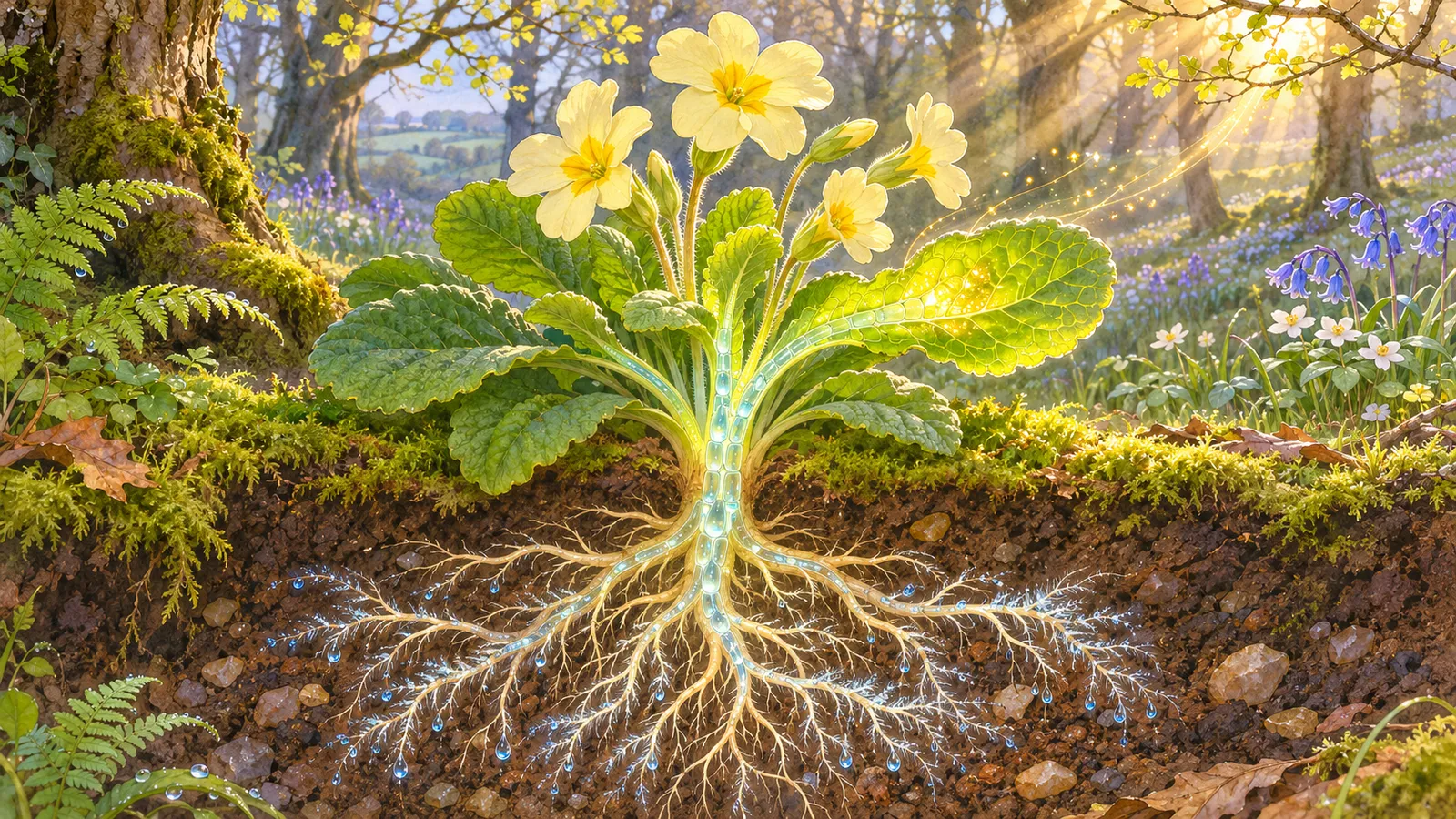
But the plant as soon as it has roots and leaves begins to make living matter out of matter that has never been alive.ところが植物は、根と葉ができるとすぐに、一度も生きたことのない物質から、生きた物質を作りはじめます。 Through all the little hairs of its roots it sucks in water, and in this water are dissolved more or less of the salts of ammonia, phosphorus, sulphur, iron, lime, magnesia, and even silica, or flint.根の小さな毛の一本一本から水を吸い上げますが、この水には、アンモニア、リン、いおう(いおう)、鉄、石灰、マグネシア、さらにはシリカ、つまり火打ち石の成分などの塩(えん)が、多かれ少なかれとけています。 In all kinds of earth there is some iron, and we shall see presently that this is very important to the plant.どんな土にも少しは鉄がふくまれています。これが植物にとってとても大切なことは、あとでわかります。
Suppose, then, that our primrose has begun to drink in water at its roots.では、サクラソウが根から水を飲みはじめたとしましょう。 How is it to get this water up into the stem and leaves, seeing that the whole plant is made of closed bags or cells?植物全体が閉じたふくろ、つまりさいぼうでできているのに、どうやってこの水をくきや葉まで上げるのでしょう? It does it in a very curious way, which you can prove for yourselves.植物はとてもふしぎなやり方でそれをしています。みなさんも自分でたしかめることができます。 Whenever two fluids, one thicker than the other, such as treacle and water for example, are only separated by a skin or any porous substance, they will always mix, the thinner one oozing through the skin into the thicker one.こい液体とうすい液体――たとえば糖みつと水――が、皮や、小さなあなのたくさんある物だけでへだてられていると、2つはかならずまざります。うすいほうが皮を通ってこいほうへしみこんでいくのです。 If you tie a piece of bladder over a glass tube, fill the tube half-full of treacle, and then let the covered end rest in a bottle of water, in a few hours the water will get in to the treacle and the mixture will rise up in the tube till it flows over the top.ガラスの管のはしにぼうこうのまくをしばりつけ、管の半分まで糖みつを入れて、まくでおおったはしを水の入ったびんにひたしておくと、数時間で水が糖みつの中へ入りこみ、まざったものが管の中を上がっていって、ついには上からあふれ出します。 Now, the saps and juices of plants are thicker than water, so, directly the water enters the cells at the root it oozes up into the cells above, and mixes with the sap.さて、植物のしるやえきは水よりこいので、水が根のさいぼうに入るとすぐに、上のさいぼうへとしみ上がって、しるとまざります。 Then the matter in those cells becomes thinner than in the cells above, so it too oozes up, and in this way cell by cell the water is pumped up into the leaves.すると、そのさいぼうの中身は上のさいぼうよりうすくなるので、それもまた上へしみ上がります。こうしてさいぼうからさいぼうへと、水は葉までくみ上げられるのです。
When it gets there it finds our old friends the sun-beams hard at work.葉に着くと、水はわたしたちのなじみの友だち、日の光がせっせとはたらいているのに出会います。 If you have ever tried to grow a plant in a cellar, you will know that in the dark its leaves remain white and sickly.地下室で植物を育てようとしたことがあれば、暗いところでは葉が白く弱々しいままだと知っているでしょう。 It is only in the sunlight that a beautiful delicate green tint is given to them, and you will remember from Lecture II. that this green tint shows that the leaf has used all the sun-waves except those which make you see green; but why should it do this only when it has grown up in the sunshine?葉に美しくやわらかな緑色がつくのは、日の光の中だけです。第2回のお話を思い出してください。この緑色は、葉が、緑に見せる波以外のすべての太陽の波を使ったことを表しているのでしたね。でも、どうして日なたで育ったときだけ、そうなるのでしょう?
The reason is this: when the sunbeam darts into the leaf and sets all its particles quivering, it divides the protoplasm into two kinds, collected into different cells.そのわけはこうです。日の光が葉にさしこんで、葉のつぶをすべてふるわせると、原形質を2種類に分けて、別々のさいぼうに集めるのです。 One of these remains white, but the other kind, near the surface, is altered by the sunlight and by the help of the iron brought in by the water.その1つは白いままですが、表面近くにあるもう1種類は、日の光と、水が運んできた鉄の助けによって、変わります。 This particular kind of protoplasm, which is called "chlorophyll," will have nothing to do with the green waves and throws them back, so that every little grain of this protoplasm looks green and gives the leaf its green colour.この特別な原形質は「葉緑素」とよばれ、緑の波とはかかわろうとせず、はね返してしまいます。そのため、この原形質の小さなつぶの一つ一つが緑に見え、葉を緑色にするのです。
It is these little green cells that by the help of the sun-waves digest the food of the plant and turn the water and gases into useful sap and juices.太陽の波の助けをかりて植物の食べ物を消化し、水と気体を役に立つしるやえきに変えるのは、この小さな緑のさいぼうなのです。 We saw in Lecture III. that when we breathe-in air, we use up the oxygen in it and send back out of our mouths carbonic acid, which is a gas made of oxygen and carbon.第3回のお話で見たように、わたしたちは空気を吸いこむと、その中の酸素を使い、口から炭酸ガス(二酸化炭素)をはき出します。これは酸素と炭素でできた気体です。
Now, every living things wants carbon to feed upon, but plants cannot take it in by itself, because carbon is solid (the blacklead in your pencils is pure carbon), and a plant cannot eat, it can only drink-in fluids and gases.さて、生き物はみな、栄養として炭素を必要としています。でも、植物は炭素をそのままとり入れることはできません。炭素は固体(えんぴつのしんのこくえんは、ほとんど純すいな炭素です)ですが、植物は食べることができず、液体や気体を飲みこむことしかできないからです。 Here the little green cells help it out of its difficulty.ここで、小さな緑のさいぼうが植物をこまった立場から助け出します。 They take in or absorb out of the air carbonic acid gas which we have given out of our mouths and then by the help of the sun-waves they tear the carbon and oxygen apart.緑のさいぼうは、わたしたちが口からはき出した炭酸ガスを空気の中から吸収し、太陽の波の助けをかりて、炭素と酸素を引きはなすのです。 Most of the oxygen they throw back into the air for us to use, but the carbon they keep.酸素のほとんどは、わたしたちが使えるように空気の中へもどしますが、炭素は自分のものにしておきます。
If you will take some fresh laurel-leaves and put them into a tumbler of water turned upside-down in a saucer of water, and set the tumbler in the sunshine, you will soon see little bright bubbles rising up and clinging to the glass.新しいゲッケイジュの葉を、水を入れてさかさにしたコップに入れ、そのコップを水を入れた小皿に立てて日なたに置いてみましょう。すぐに、小さく光るあわがのぼってきて、ガラスにくっつくのが見えるはずです。 These are bubbles of oxygen gas, and they tell you that they have been set free by the green cells which have torn from them the carbon of the carbonic acid in the water.これは酸素のあわです。水の中の炭酸ガスから炭素をうばいとった緑のさいぼうによって、自由にされたのだと教えてくれているのです。
But what becomes of the carbon?では、炭素はどうなるのでしょう? And what use is made of the water which we have kept waiting all this time in the leaves?そして、ずっと葉の中で待たせておいた水は、何に使われるのでしょう? Water, you already know, is made of hydrogen and oxygen, but perhaps you will be surprised when I tell you that starch, sugar, and oil, which we get from plants, are nothing more than hydrogen and oxygen in different quantities joined to carbon.水が水素と酸素でできていることは、もう知っていますね。でも、植物からとれるでんぷんや砂糖や油が、量のちがう水素と酸素が炭素とむすびついたものにすぎないと聞いたら、おどろくかもしれません。
It is very difficult at first to picture such a black thing as carbon making part of delicate leaves and beautiful flowers, and still more of pure white sugar.はじめは、炭素のような黒いものが、やわらかな葉や美しい花の一部になっているとは、なかなか思いうかべられません。まして、まっ白な砂糖の一部だなんて。 But we can make an experiment by which we can draw the hydrogen and oxygen out of common loaf sugar, and then you will see the carbon stand out in all its blackness.でも、ふつうの角砂糖から水素と酸素を引き出す実験をすれば、まっ黒な炭素がすがたを現すのが見られます。 I have here a plate with a heap of white sugar in it.ここに、白い砂糖を山もりにしたお皿があります。 I pour upon it first some hot water to melt and warm it, and then some strong sulphuric acid.まず、お湯をかけて砂糖をとかし、あたためます。それから、こいりゅうさんをかけます。 This acid does nothing more than simply draw the hydrogen and oxygen out.この酸は、ただ水素と酸素を引き出すだけです。 See! in a few moments a black mass of carbon begins to rise, all of which has come out of the white sugar you saw just now. *(The common dilute sulphuric acid of commerce is not strong enough for this experiment, but pure sulphuric acid can be secured from any chemist.ほら! 少しすると、黒い炭素のかたまりがもり上がってきます。これはみな、さっき見た白い砂糖から出てきたものです。*(店で売っているふつうのうすいりゅうさんでは、この実験には弱すぎます。でも、純すいなりゅうさんなら薬局で手に入れることができます。 Great care must be taken in using it, as it burns everything it touches.)ふれるものを何でもやいてしまうので、使うときにはじゅうぶん注意しなければなりません。) You see, then, that from the whitest substance in plants we can get this black carbon; and in truth, one-half of the dry part of every plant is composed of it.このように、植物の中でいちばん白い物質からでも、この黒い炭素がとり出せるのです。じっさい、どの植物でも、かわいた部分の半分は炭素でできています。
Now look at my plant again, and tell me if we have not already found a curious history?さあ、もう一度わたしの植物を見てください。もうすでに、ふしぎな歴史が見つかったと思いませんか? Fancy that you see the water creeping in at the roots, oozing up from cell to cell till it reaches the leaves, and there meeting the carbon which has just come out of the air, and being worked up with it by the sun-waves into starch, or sugar, or oils.水が根から入りこみ、さいぼうからさいぼうへとしみ上がって葉に届き、そこで空気から出てきたばかりの炭素と出会い、太陽の波によっていっしょにでんぷんや砂糖や油に作りかえられていく様子を、思いうかべてみてください。
But meanwhile, how is new protoplasm to be formed? for without this active substance none of the work can go on.でも、そのあいだに、新しい原形質はどうやって作られるのでしょう? この活発な物質がなければ、どの仕事も進められないのです。 Here comes into use a lazy gas we spoke of in Lecture III.ここで、第3回のお話で話した、なまけものの気体が役に立ちます。 There we thought that nitrogen was of no use except to float oxygen in the air, but here we shall find it very useful.あのときは、ちっ素は空気の中で酸素をうすめて運ぶほかには役に立たないと考えました。でもここでは、とても役に立つことがわかります。 So far, as we know, plants cannot take up nitrogen out of the air, but they can get it out of the ammonia which the water brings in at their roots.わたしたちの知るかぎりでは、植物は空気の中からちっ素をとり入れることはできません。でも、水が根から運んでくるアンモニアから、ちっ素をとり出すことができるのです。
Ammonia, you will remember, is a strong-smelling gas, made of hydrogen and nitrogen, and which is often almost stifling near a manure-heap.おぼえているでしょうが、アンモニアは水素とちっ素でできた強いにおいのする気体で、たい肥の山のそばでは、息がつまりそうになることもよくあります。 When you manure a plant you help it to get this ammonia, but at any time it gets some from the soil and also from the rain-drops which bring it down in the air.植物に肥料をやると、このアンモニアを手に入れる助けになります。でも植物は、いつでも土からも、空気中のアンモニアを運んでくる雨つぶからも、いくらかは手に入れています。 Out of this ammonia the plant takes the nitrogen and works it up with the three elements, carbon, oxygen, and hydrogen, to make the substances called albuminoids, which form a large part of the food of the plant, and it is these albuminoids which go to make protoplasm.植物はこのアンモニアからちっ素をとり出し、炭素、酸素、水素の3つの元素といっしょに作りかえて、アルブミノイド(たんぱく質)とよばれる物質を作ります。これは植物の食べ物の大きな部分をしめていて、原形質を作るもとになるのは、このアルブミノイドなのです。 You will notice that while the starch and other substances are only made of three elements, the active protoplasm is made of these three added to a fourth, nitrogen, and it also contains phosphorus and sulphur.気づいたでしょうか。でんぷんなどの物質は3つの元素だけでできていますが、活発な原形質は、その3つに4つ目のちっ素を加えたものでできていて、さらにリンといおうもふくんでいるのです。
And so hour after hour and day after day our primrose goes on pumping up water and ammonia from its roots to its leaves, drinking in carbonic acid from the air, and using the sun-waves to work them all up into food to be sent to all parts of its body.こうして、1時間また1時間、1日また1日と、サクラソウは根から葉へ水とアンモニアをくみ上げつづけ、空気から炭酸ガスを飲みこみ、太陽の波を使ってそれらをすべて食べ物に作りかえ、体のすみずみまで送っているのです。 In this way these leaves act, you see, as the stomach of the plant, and digest its food.このように、葉は植物の胃のようなはたらきをして、食べ物を消化しているのですね。
Sometimes more water is drawn up into the leaves than can be used, and then the leaf opens thousands of little mouths in the skin of its under surface, which let the drops out just as drops of perspiration ooze through our skin when we are overheated.ときには、使いきれないほどたくさんの水が葉に吸い上げられることがあります。すると葉は、裏側の皮にある何千もの小さな口を開いて、しずくを外へ出します。ちょうど、わたしたちが暑くなりすぎたとき、あせのしずくがはだからにじみ出るのと同じです。 These little mouths, which are called stomates (a, Fig.この小さな口は気こう(図 42) are made of two flattened cells, fitting against each other.42のa)とよばれ、ぴったり合わさった2つの平たいさいぼうでできています。 When the air is damp and the plant has too much water these lie open and let it out, but when the air is dry, and the plant wants to keep as much water as it can, then they are closely shut.空気がしめっていて植物に水が多すぎるときは、気こうは開いて水を出します。でも空気がかわいていて、植物ができるだけ水をためておきたいときは、ぴったりと閉じています。 There are as many as a hundred thousand of these mouths under one apple-leaf, so you may imagine how small they often are.リンゴの葉1まいの裏には、こうした口が10万個もあります。ですから、それがどんなに小さいことが多いか、想像できるでしょう。