
 5分
 朗読 Ruth Golding
 原文そのまま

 PDFで印刷(A4 6まい)
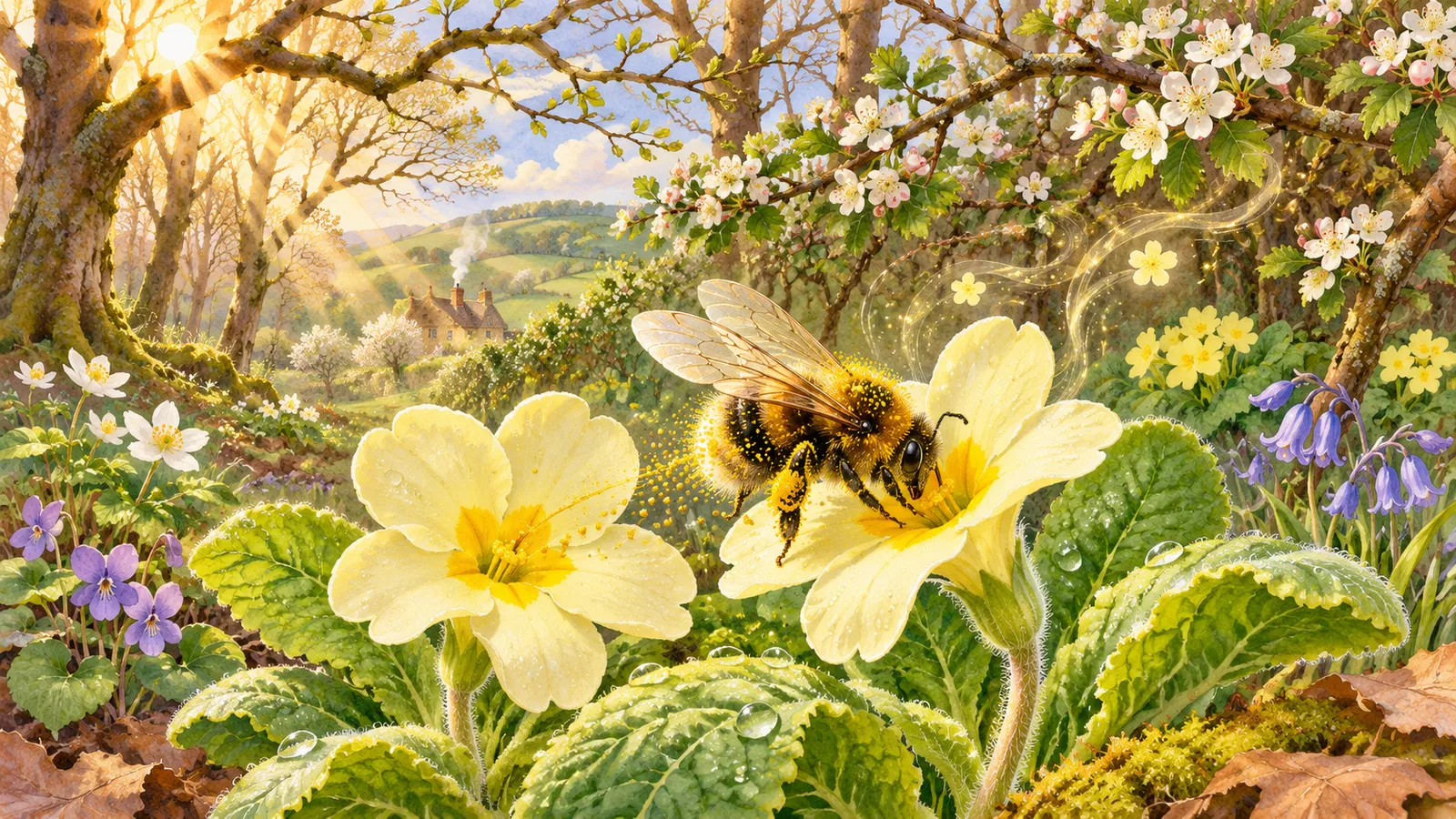
If you suck the end of the tube of the primrose flower you will find it tastes sweet, because a drop of honey has been lying there.サクラソウの花の管のはしを吸ってみると、あまい味がします。そこにみつが1てき、たまっていたからです。 When the insects go in to get this honey, they brush themselves against the yellow dust-bags, and some of the dust sticks to them, and then when they go to the next flower they rub it off on to its sticky knob.虫がこのみつをとりに入ると、黄色い粉のふくろに体がこすれて、粉がいくらか体にくっつきます。そして次の花へ行くと、その花のねばねばしたつまみに、粉をこすりつけるのです。
Look at No. 1 and No. 2 (Fig.1番と2番(図 43) and you will see at once that if an insect goes into No. 1 and the pollen sticks to him, when he goes into No. 2 just that part of his body on which the pollen is will touch the knob; and so the flowers become what we call "crossed," that is, the pollen-dust of the one feeds the ovule of the other.43)を見てください。すぐにわかるでしょう。虫が1番の花に入って花粉が体についたら、2番の花に入ったとき、ちょうど花粉のついている体の部分がつまみにふれるのです。こうして花は、わたしたちが「交配」とよぶ状態になります。つまり、一方の花の花粉が、もう一方の花のはいしゅを養うのです。 And just the same thing will happen if he flies from No. 2 to No. 1.そして、虫が2番から1番へ飛んでいっても、まったく同じことが起こります。 There the dust will be just in the position to touch the knob which sticks out of the flower.そのときは、粉が、花からつき出ているつまみに、ちょうどふれる位置についているのです。
Therefore, we can see clearly that it is good for the primrose that bees and other insects should come to it, and anything it can do to entice them will be useful.ですから、ミツバチやほかの虫が来てくれるのはサクラソウにとってよいことで、虫をさそうためにできることは何でも役に立つ、ということがはっきりわかります。 Now, do you not think that when an insect once knew that the pale-yellow crown showed where honey was to be found, he would soon spy these crowns out as he flew along? or if they were behind a hedge, and he could not see them, would not the sweet scent tell him where to come and look for them?さて、うすい黄色の花かんむりのあるところにみつがあると一度知った虫は、飛びながら、すぐにこの花かんむりを見つけるようになると思いませんか? また、花が生けがきのむこうにあって見えなくても、あまいかおりが、どこへさがしに来ればよいかを教えてくれるのではないでしょうか? And so we see that the pretty sweet-scented corolla is not only delightful for us to look at and to smell, but it is really very useful in helping the primrose to make strong healthy seeds out of which the young plants are to grow next year.こうして、かわいらしくてよいかおりのする花びらは、わたしたちが見たりかいだりして楽しいだけでなく、サクラソウが強くて元気なたねを作るのを助けるのに、本当に役に立っているのだとわかります。来年、そのたねから若い草が育つのです。
And now let us see what we have learnt.では、何を学んだかふり返ってみましょう。 We began with a tiny seed, though we did not then know how this seed had been made.わたしたちは小さなたねから始めました。そのときは、このたねがどうやってできたのかは知りませんでしたね。 We saw the plantlet buried in it, and learnt how it fed at first on prepared food, but soon began to make living matter for itself out of gases taken from the water through the cells to its stomach - the leaves!たねの中にうもれた小さな植物を見て、それがはじめは用意された食べ物を食べ、やがて、水からさいぼうを通って胃――つまり葉――へとり入れた気体から、自分で生きた物質を作りはじめることを学びました! And how marvellously the sun-waves entering there formed the little green granules, and then helped them to make food and living protoplasm!そして、そこへ入ってきた太陽の波が、なんとふしぎなやり方で小さな緑のつぶを作り、そのつぶが食べ物と生きた原形質を作るのを助けたことでしょう! At this point we might have gone further, and studied how the fibres and all the different vessels of the plant are formed, and a wondrous history it would have been.ここでもっと先へ進んで、植物のせんいや、いろいろな管がどうやってできるのかを学ぶこともできたでしょう。それはすばらしい歴史になったはずです。 But it was too long for one hour's lecture, and you must read it for yourselves in books on botany.でも、1時間のお話には長すぎました。植物学の本で、自分で読んでみてください。 We had to pass on to the flower, and learn the use of the covering leaves, the gaily coloured crown attracting the insects, the dust-bags holding the pollen, the little ovules each with the germ of a new plantlet, lying hidden in the seed- vessel, waiting for the pollen-grains to grow down to them.わたしたちは花へと進み、それぞれの役目を学ばなければなりませんでした。花をおおう葉、虫を引きよせるはなやかな色の花かんむり、花粉を入れた粉のふくろ、それに、たねの入れ物の中にかくれて、花粉のつぶが下へのびてくるのを待っている、新しい小さな植物のもとをもった小さなはいしゅです。 Lastly, when the pollen crept in at the tiny opening we learnt that the ovule had now all it wanted to grow into a perfect seed.最後に、花粉が小さな入り口からもぐりこむと、はいしゅは、完全なたねに育つのに必要なものを、すべて手に入れたことを学びました。
And so we came back to a primrose seed, the point from which we started; and we have a history of our primrose from its birth to the day when its leaves and flowers wither away and it dies down for the winter.こうして、出発点だったサクラソウのたねにもどってきました。サクラソウが生まれてから、葉や花がしおれて冬のあいだ地上の部分がかれてしまう日までの、サクラソウの歴史がわかったのです。
But what fairies are they which have been at work here?でも、ここではたらいていたのは、どんなようせいたちだったのでしょう? First, the busy little fairy Life in the active protoplasm; and secondly, the sun-waves.1つ目は、活発な原形質の中にいる、はたらき者の小さなようせい「命」。そして2つ目は、太陽の波です。 We have seen that it was by the help of the sunbeams that the green granules were made, and the water, carbonic acid, and nitrogen worked up into the living plant.緑のつぶが作られ、水と炭酸ガスとちっ素が生きた植物へと作りかえられたのは、日の光の助けによるものでしたね。 And in doing this work the sun-waves were caught and their strength used up, so that they could no longer quiver back into space.そして、この仕事をするうちに、太陽の波はつかまえられ、その力は使い切られて、もう宇宙へふるえながらもどっていくことはできなくなりました。 But are they gone for ever?でも、太陽の波は永久になくなってしまったのでしょうか? So long as the leaves or the stem or the root of the plant remain they are gone, but when those are destroyed we can get them back again.植物の葉やくきや根が残っているあいだは、なくなったままです。でも、それがこわされると、とりもどすことができるのです。 Take a handful of dry withered plants and light them with a match, then as the leaves burn and are turned back again to carbonic acid, nitrogen, and water, our sunbeams come back again in the flame and heat.かれてかわいた草をひとつかみとって、マッチで火をつけてごらんなさい。葉がもえて、また炭酸ガスとちっ素と水にもどっていくとき、わたしたちの日の光が、ほのおと熱になってもどってくるのです。
And the life of the plant?では、植物の命は? What is it, and why is this protoplasm always active and busy?命とは何なのでしょう? そして、どうしてこの原形質は、いつも活発にいそがしく動いているのでしょう? I cannot tell you.それは、わたしにもわかりません。 Study as we may, the life of the tiny plant is as much a mystery as your life and mine.どんなに研究しても、小さな植物の命は、あなたやわたしの命と同じくらい、なぞなのです。 It came, like all things, from the bosom of the Great Father, but we cannot tell how it came nor what it is.それは、すべてのものと同じように、大いなる父のふところからやって来ました。でも、それがどうやって来たのか、それが何なのかは、わかりません。 We can see the active grains moving under the microscope, but we cannot see the power that moves them.けんび鏡で、活発なつぶが動くのを見ることはできます。でも、それを動かしている力を見ることはできないのです。 We only know it is a power given to the plant, as to you and to me, to enable it to live its life, and to do its useful work in the world.わかっているのはただ、それが、あなたやわたしと同じように植物にもあたえられた力で、植物が自分の命を生き、世の中で役に立つ仕事をするためのものだということだけです。