 5分
 朗読 Patricia Oakley
 原文そのまま

 PDFで印刷(A4 6まい)
And now, can you understand why sea-water should taste salt and bitter?さて、海の水がしょっぱくて苦いのはなぜか、わかるでしょうか。 Every drop of water which flows from the earth to the sea carries something with it.陸から海へ流れていく水のしずくは、どれも何かを運んでいます。 Generally, there is so little of any substance in the water that we cannot taste it, and we call it pure water; but the purest of spring or river-water has always some solid matter dissolved in it, and all this goes to the sea.たいていは、水の中の物質がとても少ないので味がわからず、わたしたちはそれをきれいな水とよびます。でも、いちばんきれいなわき水や川の水にも、いつも何かかたい物がとけていて、それがみな海へ行くのです。 Now, when the sun-waves come to take the water out of the sea again, they will have nothing but the pure water itself; and so all these salts and carbonates and other solid substances are left behind, and we taste them in sea-water.さて、太陽の波が海から水をまた取り出しに来るとき、太陽の波は水そのものだけを持っていきます。そのため、こうした塩や炭酸塩、そのほかのかたい物質はみなあとに残され、わたしたちは海の水の中にそれを味わうのです。
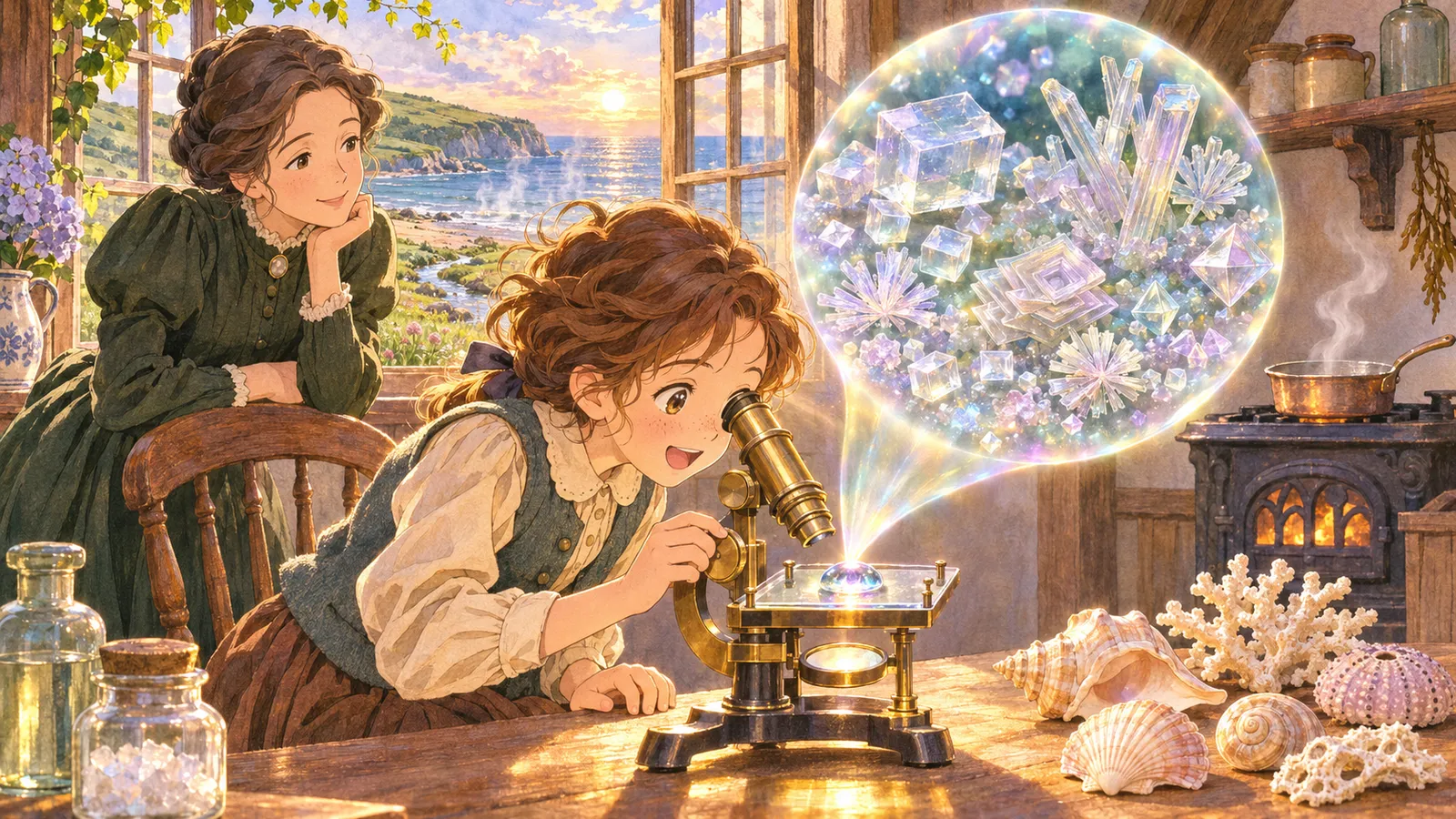
Some day, when you are at the seaside, take some extra water and set it on the hob till a great deal has simmered gently away, and the liquid is very thick.いつか海べへ行ったときは、かならず大人といっしょに行いましょう。海の水を少し多めにくんで火のそばの台にのせ、たくさんの水がしずかにじょうはつして、えきがとてもどろりとするまでにつめてみてください。 Then take a drop of this liquid, and examine it under a microscope.それから、この液をひとしずくとって、けんび鏡で調べてみましょう。 As it dries up gradually, you will see a number of crystals forming, some square - and these will be crystals of ordinary salt; some oblong - these will be crystals of gypsum or alabaster; and others of various shapes.だんだんかわいていくにつれて、たくさんの結しょうができていくのが見えるでしょう。四角いものもあって、これはふつうの塩の結しょうです。細長いものもあって、これはせっこう(アラバスター)の結しょうです。そのほか、いろいろな形のものもあります。 Then, when you see how much matter from the land is contained in sea-water, you will no longer wonder that the sea is salt; on the contrary, you will ask, Why does it not grow salter every year?海の水の中に陸からの物がどれほどふくまれているかを知れば、海がしょっぱいことはもうふしぎではなくなるでしょう。それどころか、「どうして海は年ごとにもっとしょっぱくならないのだろう」とたずねたくなるはずです。
The answer to this scarcely belongs to our history of a drop of water, but I must just suggest it to you.この答えは、水のしずくの物語にはあまり入らないのですが、少しだけお話ししておきましょう。 In the sea are numbers of soft-bodied animals, like the jelly animals which form the coral, which require hard material for their shells or the solid branches on which they live, and they are greedily watching for these atoms of lime, of flint, or magnesia, and of other substances brought down into the sea.海には、サンゴをつくる、クラゲのような体のやわらかい動物がたくさんいます。こうした動物は、からや、すみかにするかたい枝をつくるためにかたい材料を必要としていて、海に運ばれてくる石灰や火打ち石、マグネシアなどの原子を、いまかいまかと待ちかまえているのです。 It is with lime and magnesia that the tiny chalk-builders form their beautiful shells, and the coral animals their skeletons, while another class of builders use the flint; and when these creatures die, their remains go to form fresh land at the bottom of the sea; and so, though the earth is being washed away by the rivers and springs it is being built up again, out of the same materials, in the depths of the great ocean.小さな「チョークづくり」たちが美しいからをつくり、サンゴの動物が骨格をつくるのは、石灰とマグネシアを使ってです。また別のなかまの建築家たちは火打ち石を使います。そして、こうした生き物が死ぬと、その残がいは海の底に新しい陸をつくっていきます。こうして、地球は川や泉にけずり流されているけれども、同じ材料から、大海原の深い所でまた組み立てられているのです。
And now we have reached the end of the travels of our drop of water.さあ、わたしたちの水のしずくの旅も、ここで終わりです。 We have seen it drawn up by the fairy "heat," invisible into the sky; there fairy "cohesion" seized it and formed it into water-drops and the giant, "gravitation," pulled it down again to the earth.わたしたちは、しずくがようせいの「ねつ」によって、目に見えないまま空へすい上げられるのを見ました。そこで、ようせいの「ぎょう集力」がしずくをつかまえて水のつぶにし、大男の「引力」がまた地上へ引きもどしました。 Or, if it rose to freezing regions, the fairy of "crystallization" built it up into snow-crystals, again to fall to the earth, and either to be melted back into water by heat, or to slide down the valleys by force of gravitation, till it became squeezed into ice.あるいは、こおるような高い所まで上れば、「結しょう化」のようせいが雪の結しょうに組み上げ、また地上にふらせました。そして、熱でとけて水にもどったり、引力の力で谷をすべり下りて、ついにはおしかためられて氷になったりしました。 We have detected it, when invisible, forming a veil round our earth, and keeping off the intense heat of the sun's rays by day, or shutting it in by night.見えないすがたのときには、地球のまわりにベールをつくって、昼は太陽の光の強い熱をさえぎり、夜は熱をとじこめていることも見つけました。 We have seen it chilled by the blades of grass, forming sparkling dew-drops or crystals of hoar-frost, glistening in the early morning sun; and we have seen it in the dark underground, being drunk up greedily by the roots of plants.草の葉に冷やされて、朝日にきらめくつゆのしずくやしもの結しょうになるのを見ましたし、暗い地面の下で、植物の根にごくごく飲まれているのも見ました。 We have started with it from the tropics, and travelled over land and sea, watching it forming rivers, or flowing underground in springs, or moving onwards to the high mountains or the poles, and coming back again in glaciers and icebergs.熱帯からしずくといっしょに出発し、陸や海をこえて旅をしながら、しずくが川をつくったり、泉となって地下を流れたり、高い山や北極・南極へと進み、氷河や氷山になってまたもどってきたりするのを見てきました。 Through all this, while it is being carried hither and thither by invisible power, we find no trace of its becoming worn out, or likely to rest from its labours.そのあいだずっと、目に見えない力であちこちへ運ばれながらも、しずくがすりへったり、仕事を休みそうになったりするようすは、まったく見られません。 Ever onwards it goes, up and down, and round and round the world, taking many forms, and performing many wonderful feats.しずくはいつまでも進みつづけます。上へ下へ、世界をぐるぐるとめぐり、いろいろな形をとって、たくさんのすばらしいわざをやってのけるのです。 We have seen some of the work that it does, in refreshing the air, feeding the plants, giving us clear, sparkling water to drink, and carrying matter to the sea; but besides this, it does a wonderful work in altering all the face of our earth.空気をさわやかにし、植物に食べ物をあたえ、すんだきらきらした飲み水をあたえてくれ、海へ物を運ぶ――しずくのしている仕事のいくつかを見てきました。でもそれだけでなく、しずくは地球の表面全体のすがたを変える、すばらしい仕事もしているのです。 This work we shall consider in the next lecture, on "The two great Sculptors - Water and Ice."この仕事については、次のお話、「二人の大ちょうこく家――水と氷」で考えることにしましょう。