 11分
 朗読 Ruth Golding
 原文そのまま

 PDFで印刷(A4 9まい)
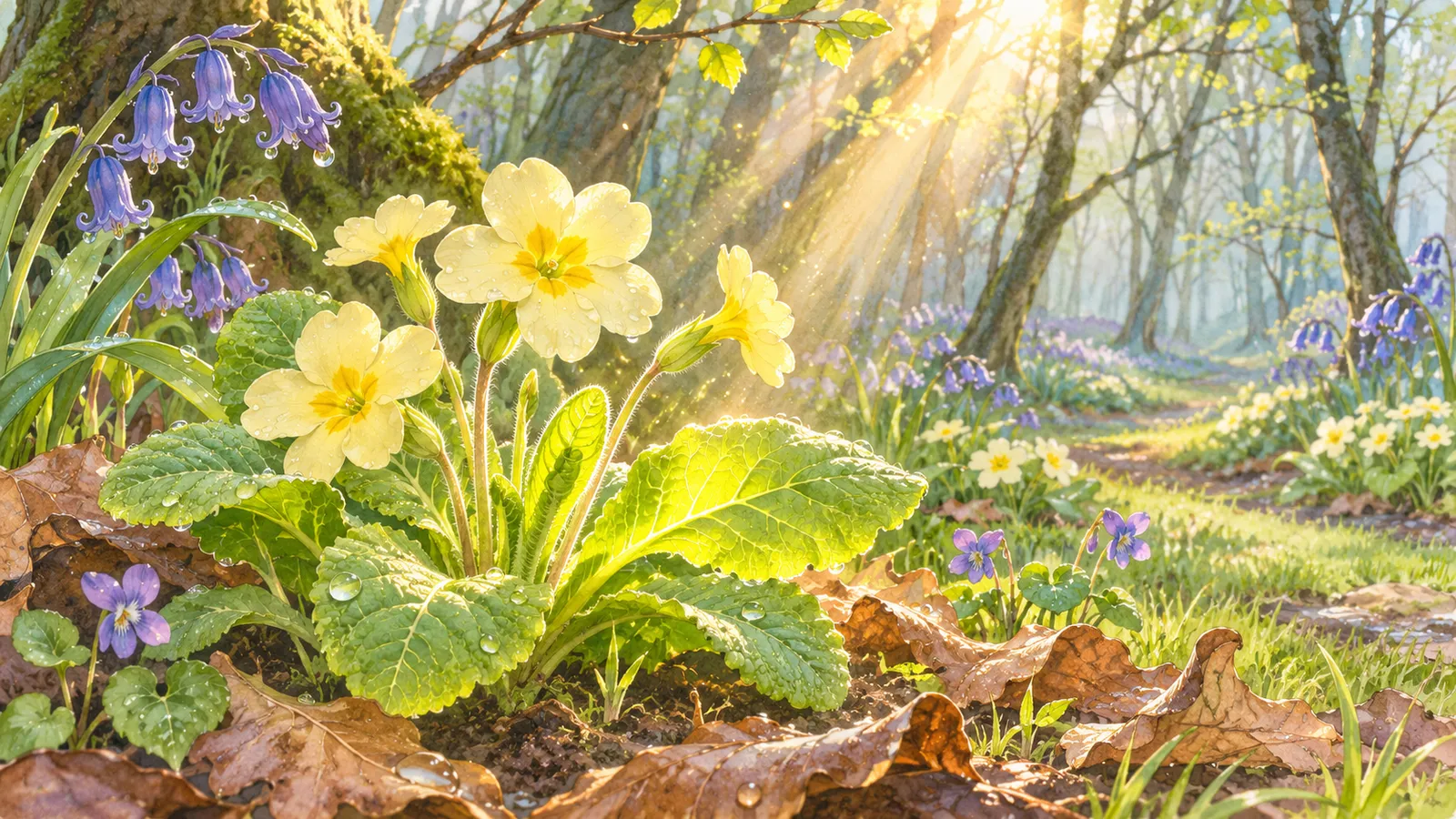
When the dreary days of winter and the early damp days of spring are passing away, and the warm bright sunshine has begun to pour down upon the grassy paths of the wood, who does not love to go out and bring home posies of violets, and bluebells, and primroses?冬のどんよりした日々や、春先のじめじめした日々が過ぎ去り、あたたかく明るい日の光が森の草の小道にふりそそぎはじめると、外へ出かけて、スミレやブルーベルやサクラソウの小さな花束をつんで帰るのが好きでない人はいるでしょうか? We wander from one plant to another picking a flower here and a bud there, as they nestle among the green leaves, and we make our rooms sweet and gay with the tender and lovely blossoms.わたしたちは草花から草花へと歩きまわり、緑の葉のあいだにうずもれるようにさいている花をここで1つ、つぼみをあそこで1つとつみ、やわらかく美しい花で部屋をよいかおりの、はなやかなものにします。 But tell me, did you ever stop to think, as you added flower after flower to your nosegay, how the plants which bear them have been building up their green leaves and their fragile buds during the last few weeks?でも、ねえ、花束に花を1つまた1つと加えながら、その花をさかせる草が、この数週間のあいだにどうやって緑の葉やこわれやすいつぼみを作り上げてきたのか、立ち止まって考えたことはありますか? If you had visited the same spot a month before, a few (of) last year's leaves, withered and dead, would have been all that you would have found.もしひと月前に同じ場所に来ていたら、見つかったのは、しおれてかれた去年の葉が少しだけだったでしょう。 And now the whole wood is carpeted with delicate green leaves, with nodding bluebells, and pale-yellow primroses, as if a fairy had touched the ground and covered it with fresh young life.それが今では、森じゅうに、やわらかな緑の葉や、うなずくようにゆれるブルーベルや、うすい黄色のサクラソウがじゅうたんのようにしきつめられています。まるでようせいが地面にふれて、みずみずしい若い命でおおったかのようです。 And our fairies have been at work here; the fairy "Life," of whom we know so little, though we love her so well and rejoice in the beautiful forms she can produce; the fairy sunbeams with their invisible influence kissing the tiny shoots and warming them into vigour and activity; the gentle rain-drops, the balmy air, all these have been working, while you or I passed heedlessly by; and now we come and gather the flowers they have made, and too often forget to wonder how these lovely forms have sprung up around us.そして、ここではわたしたちのようせいたちがはたらいていたのです。わたしたちはほとんど何も知らないけれど、とても愛していて、その生み出す美しい形を喜んでいる「命」というようせい。目に見えない力で小さな芽にキスをし、あたためて元気に動き出させる、日の光のようせいたち。やさしい雨つぶに、かおりのよいやわらかな空気。あなたやわたしが気にもとめずに通りすぎているあいだに、こうしたものがみなはたらいていたのです。それなのに今、わたしたちはやって来て、ようせいたちが作った花をつみ、こんなに美しい形がどうやってまわりに生まれてきたのかをふしぎに思うことを、あまりにもよく忘れてしまいます。
Our work during the next hour will be to consider this question.これからの1時間、わたしたちはこの問いを考えていきます。 You were asked last week to bring with you to-day a primrose- flower, or a whole plant if possible, in order the better to follow out with me the "Life of a Primrose."先週、みなさんには、今日サクラソウの花を1つ、できれば草ごと1かぶ持ってくるようにお願いしました。わたしといっしょに「サクラソウの一生」をよりよくたどるためです。 (To enjoy this lecture, the reader ought to have, if possible, a primrose- flower, an almond soaked for a few minutes in hot water, and a piece of orange.)(このお話を楽しむには、読者のみなさんも、できればサクラソウの花を1つ、お湯に数分ひたしたアーモンドを1つ、それにオレンジをひとかけら用意するとよいでしょう。) This is a very different kind of subject from those of our former lectures.これは、これまでのお話とはまったくちがう種類のテーマです。 There we took world- wide histories; we travelled up to the sun, or round the earth, or into the air; now I only ask you to fix your attention on one little plant, and inquire into its history.これまでは、世界じゅうにかかわる歴史をとり上げました。太陽まで旅をしたり、地球をめぐったり、空気の中へ入ったりしました。でも今回は、1本の小さな草に注意を集めて、その歴史を調べてほしいだけなのです。
There is a beautiful little poem by Tennyson, which says -テニスンの美しい小さな詩に、こんなものがあります――
We cannot learn all about this little flower, but we can learn enough to understand that it has a real separate life of its own, well worth knowing.この小さな花について何もかも学ぶことはできませんが、花には本当に自分だけの命があり、それが知るねうちのあるものだとわかるくらいは学べます。 For a plant is born, breathes, sleeps, feeds, and digests just as truly as an animal does, though in a different way.というのも、植物も、動物と同じように本当に生まれ、息をし、ねむり、食べ、消化するのです。ただ、そのやり方がちがうだけです。 It works hard both for itself to get its food, and for others in making the air pure and fit for animals to breathe.植物は、自分の食べ物を手に入れるために自分のためにもせっせとはたらき、また、空気をきれいにして動物が息をするのにふさわしいものにすることで、ほかのもののためにもはたらいています。 It often lays by provision for the winter.冬にそなえて、たくわえをしておくこともよくあります。 It sends young plants out, as parents send their children, to fight for themselves in the world; and then, after living sometimes to a good old age, it dies, and leaves its place to others.親が子どもを世の中へ送り出して自分の力で生きさせるように、植物も若い草を送り出します。そして、ときにはずいぶん長生きをしたあとで死に、その場所をほかのものにゆずるのです。
We will try to follow out something of this life to-day; and first, we will begin with the seed.今日は、この一生の一部をたどってみましょう。まずは、たねから始めます。
I have here a packet of primrose-seeds, but they are so small that we cannot examine them; so I have also had given to each one of you an almond-kernel, which is the seed of the almond- tree, and which has been soaked, so that it splits in half easily.ここにサクラソウのたねが1ふくろありますが、とても小さいので調べることができません。そこで、みなさん一人一人にアーモンドの実の中身も配ってもらいました。これはアーモンドの木のたねで、水にひたしてあるので、かんたんに半分に割れます。 From this we can learn about seeds in general, and then apply it to the primrose.これを使って、たね全体について学び、それをサクラソウに当てはめてみましょう。
If you peel the two skins off your almond-seed (the thick, brown, outside skin, and the thin, transparent one under it), the two halves of the almond will slip apart quite easily.アーモンドのたねから2まいの皮(外側の厚い茶色の皮と、その下のうすいすき通った皮)をむくと、アーモンドの2つの半分は、とてもかんたんにするりと分かれます。 One of these halves will have a small dent at the pointed end, while in the other half you will see a little lump, which fitted into the dent when the two halves were joined.片方の半分には、とがった先に小さなくぼみがあり、もう片方には小さなこぶが見えるでしょう。2つがくっついていたときに、このこぶがくぼみにはまっていたのです。 This little lump (a b, Fig.この小さなこぶ(図 37) is a young plant, and the two halves of the almond are the seed leaves which hold the plantlet, and feed it till it can feed itself.37のa b)は、若い植物です。そしてアーモンドの2つの半分は子葉(たねの中の葉)で、この小さな植物をだきかかえ、自分で栄養をとれるようになるまで、養っているのです。 The rounded end of the plantlet (b) sticking out of the almond, is the beginning of the root, while the other end (a) will in time become the stem.小さな植物の、アーモンドからつき出している丸い先(b)は根の始まりで、もう一方の先(a)は、やがてくきになります。 If you look carefully, you will see two little points at this end, which are the tips of future leaves.よく見ると、こちらの先に小さなとがったところが2つあるのがわかるでしょう。これは、これから出てくる葉の先なのです。 Only think how minute this plantlet must be in a primrose, where the whole seed is scarcely larger than a grain of sand!たね全体でも砂つぶほどの大きさしかないサクラソウでは、この小さな植物がどれほど小さいか、考えてもみてください! Yet in this tiny plantlet lies hid the life of the future plant.それでも、この小さな小さな植物の中に、未来の草の命がかくれているのです。
When a seed falls into the ground, so long as the earth is cold and dry, it lies like a person in a trance, as if it were dead; but as soon as the warm, damp spring comes, and the busy little sun-waves pierce down into the earth, they wake up the plantlet and make it bestir itself.たねが地面に落ちても、土が冷たくかわいているあいだは、まるで死んだように、深いねむりにおちた人のように横たわっています。でも、あたたかくしめった春がやって来て、いそがしく小さな太陽の波が土の中までさしこむと、それが小さな植物の目をさまさせ、動き出させるのです。 They agitate to and fro the particles of matter in this tiny body, and cause them to seek out for other particles to seize and join to themselves.太陽の波は、この小さな体の中の物質のつぶを前後にゆさぶり、ほかのつぶをさがしてつかまえ、自分にくっつけるようにさせます。
But these new particles cannot come in at the roots, for the seed has none; nor through the leaves, for they have not yet grown up; and so the plantlet begins by helping itself to the store of food laid up in the thick seed-leaves in which it is buried.けれども、この新しいつぶは根から入ることはできません。たねにはまだ根がないからです。葉から入ることもできません。葉もまだのびていないからです。そこで小さな植物は、自分がうもれている厚い子葉の中にたくわえられた食べ物を、自分で食べることから始めます。 Here it finds starch, oils, sugar, and substances called albuminoids, — the sticky matter which you notice in wheat-grains when you chew them is one of the albuminoids.そこには、でんぷんや油や砂糖、それにアルブミノイド(たんぱく質)とよばれる物質があります。小麦のつぶをかむと気づく、ねばねばしたものも、アルブミノイドの一つです。 This food is all ready for the plantlet to use, and it sucks it in, and works itself into a young plant with tiny roots at one end, and a growing shoot, with leaves, at the other.この食べ物は、小さな植物がすぐに使えるように用意されています。小さな植物はそれを吸いこんで、一方の先には小さな根、もう一方の先には葉をつけてのびていく芽をもつ、若い草へと育っていきます。
But how does it grow?でも、どうやって育つのでしょう? What makes it become larger?何が植物を大きくするのでしょう? To answer this you must look at the second thing I asked you to bring - a piece of orange.これに答えるには、持ってきてもらった2つ目のもの――オレンジのひとかけら――を見なければなりません。 If you take the skin off a piece of orange, you will see inside a number of long-shaped transparent bags, full of juice.オレンジのひとかけらの皮をむくと、中に、しるでいっぱいの、細長いすき通ったふくろがたくさん見えます。 These we call cells, and the flesh of all plants and animals is made up of cells like these, only of various shapes.これをさいぼうとよびます。すべての植物と動物の体は、これと同じようなさいぼうでできています。ただ、形はいろいろです。 In the pith of elder they are round, large, and easily seen (a, Fig.ニワトコのくきのしんでは、さいぼうは丸くて大きく、かんたんに見られます(図 39); in the stalks of plants they are long, and lap over each other (b, Fig.39のa)。植物のくきではさいぼうは細長く、たがいに重なり合っています(図 39), so as to give the stalk strength to stand upright.39のb)。こうして、くきがまっすぐ立っていられる強さを生み出しているのです。 Sometimes many cells growing one on the top of the other break into one tube and make vessels.ときには、たくさんのさいぼうが上へ上へと重なって育ち、つながって1本の管になり、道管を作ります。 But whether large or small, they are all bags growing one against the other.でも、大きくても小さくても、どれもたがいにくっつき合って育つふくろなのです。
In the orange-pulp these cells contain only sweet juice, but in other parts of the orange-tree or any other plant they contain a sticky substance with little grains in it.オレンジの実のさいぼうには、あまいしるしか入っていません。でも、オレンジの木のほかの部分や、ほかのどんな植物でも、さいぼうには小さなつぶの入ったねばねばした物質が入っています。 This substance is called "protoplasm," or the first form of life, for it is alive and active, and under a microscope you may see in a living plant streams of the little grains moving about in the cells.この物質は「原形質」、つまり「命の最初の形」とよばれます。生きていて活発に動くからです。けんび鏡で生きた植物を見ると、さいぼうの中を小さなつぶが流れるように動きまわっているのが見えます。
Now we are prepared to explain how our plant grows.さあ、これで植物がどうやって育つかを説明する用意ができました。 Imagine the tiny primrose plantlet to be made up of cells filled with active living protoplasm, which drinks in starch and other food from the seed-leaves.小さなサクラソウの植物が、活発に生きている原形質でいっぱいのさいぼうでできていると想像してください。原形質は、子葉からでんぷんなどの食べ物を飲みこみます。 In this way each cell will grow too full for its skin, and then the protoplasm divides into two parts and builds up a wall between them, and so one cell becomes two.こうして、それぞれのさいぼうは皮に入りきらないほどいっぱいになります。すると原形質は2つに分かれ、そのあいだにかべを作ります。こうして1つのさいぼうが2つになるのです。 Each of these two cells again breaks up into two more, and so the plant grows larger and larger, till by the time it has used up all the food in the seed-leaves, it has sent roots covered with fine hairs downwards into the earth, and a shoot with beginnings of leaves up into the air.その2つのさいぼうが、それぞれまた2つに分かれ、こうして植物はどんどん大きくなります。そして子葉の食べ物を全部使い切るころには、細かい毛でおおわれた根を土の中へ下へとのばし、葉の始まりをもつ芽を空中へ上へとのばしているのです。
Sometimes the seed-leaves themselves come above the ground, as in the mustard-plant, and sometimes they are left empty behind, while the plantlet shoots through them.カラシナのように、子葉そのものが地面の上に出てくることもあれば、小さな植物が子葉をつきぬけてのび、子葉はからっぽになって残されることもあります。
And now the plant can no longer afford to be idle and live on prepared food.さて、こうなると植物は、もうなまけて、用意された食べ物で生きているわけにはいきません。 It must work for itself.自分ではたらかなければならないのです。 Until now it has been taking in the same kind of food that you and I do; for we too find many seeds very pleasant to eat and useful to nourish us.今までは、植物はあなたやわたしと同じ種類の食べ物をとってきました。わたしたちも、多くのたねをおいしく食べ、体を養うのに役立てていますからね。 But now this store is exhausted.でも今、このたくわえはつきてしまいました。 Upon what then is the plant to live?では、植物は何を食べて生きていけばよいのでしょう? It is cleverer than we are in this, for while we cannot live unless we have food which has once been alive, plants can feed upon gases and water and mineral matter only.この点では、植物はわたしたちよりかしこいのです。わたしたちは、一度は生きていた食べ物がなければ生きられませんが、植物は気体と水と鉱物だけで生きていけるのです。 Think over the substances you can eat or drink, and you will find they are nearly all made of things which have been alive: meat, vegetables, bread, beer, wine, milk; all these are made from living matter, and though you do take in such things as water and salt, and even iron and phosphorus, these would be quite useless if you did not eat and drink prepared food which your body can work into living matter.あなたが食べたり飲んだりできるものを考えてみると、ほとんどすべてが、かつて生きていたものでできていることがわかるでしょう。肉、野菜、パン、ビール、ワイン、牛乳――どれも生きたものから作られています。水や塩、さらには鉄やリンのようなものもとってはいますが、もし体が生きた物質に作りかえられる、用意された食べ物を食べたり飲んだりしなければ、それらはまったく役に立たないのです。