 12分
 朗読 Patricia Oakley
 原文そのまま

 PDFで印刷(A4 9まい)
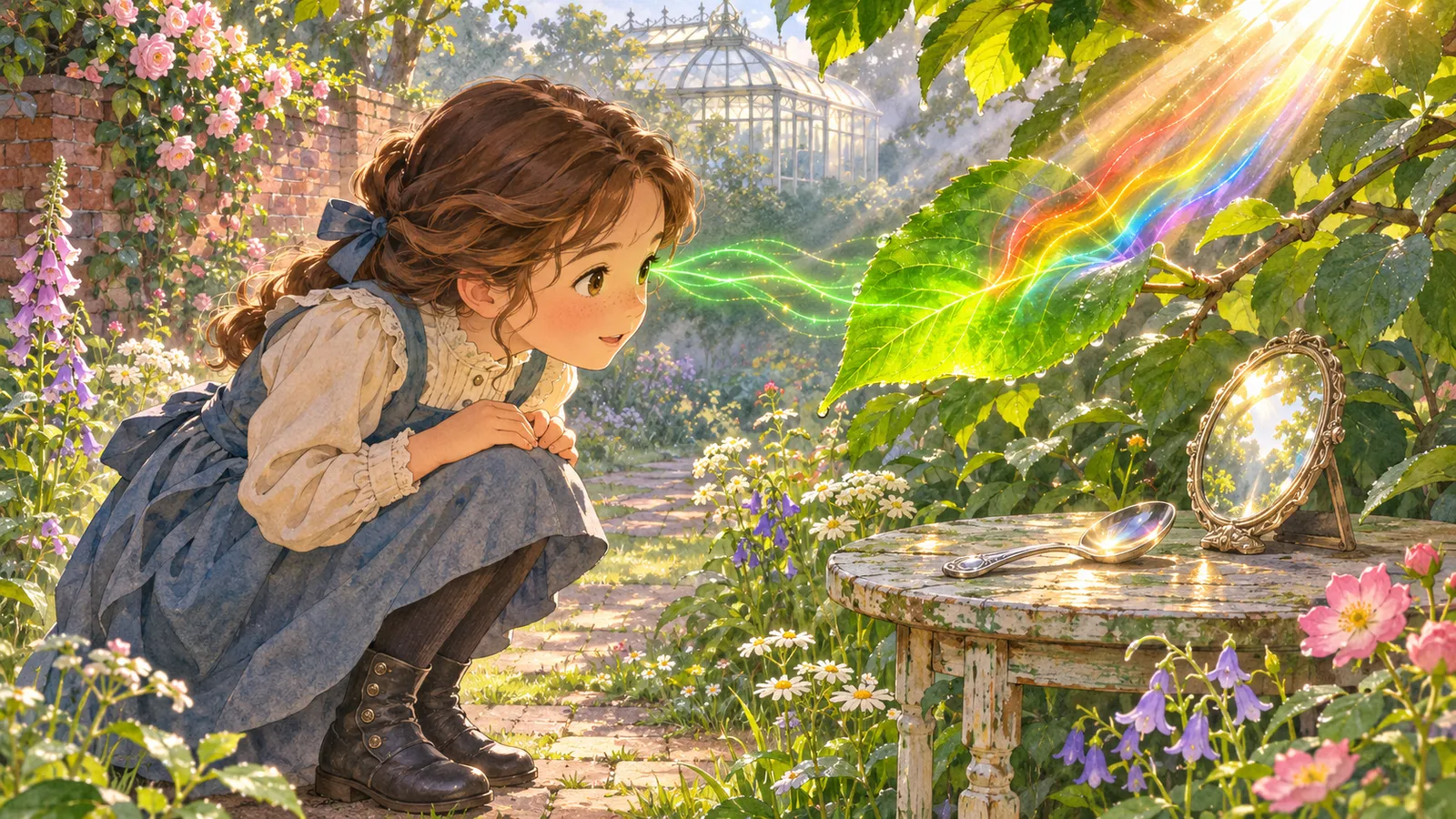
Into polished shining metal the waves hardly enter at all, but are thrown back from the surface; and so a steel knife or a silver spoon are very bright, and are clearly seen.みがかれてぴかぴかの金属には、波はほとんど入っていかず、表面ではね返されます。ですから、はがねのナイフや銀のスプーンはとても明るく光って、はっきり見えるのです。 Quicksilver is put at the back of looking-glasses because it reflects so many waves.鏡のうらに水銀がぬってあるのは、水銀がとてもたくさんの波をはね返すからです。 It not only sends back those which come from the sun, but those, too, which come from your face.水銀は、太陽から来る波だけでなく、みなさんの顔から来る波もはね返します。 So, when you see yourself in a looking-glass, the sun-waves have first played on your face and bounded off from it to the looking-glass; then, when they strike the looking-glass, they are thrown back again on to the retina of your eye, and you see your own face by means of the very waves you threw off from it an instant before.ですから、鏡で自分の顔を見るとき、太陽の波はまずみなさんの顔の上をおどり、顔からはね返って鏡へ行きます。そして鏡に当たると、またはね返されてみなさんの目のもうまくにとどきます。こうして、ほんの一しゅん前に自分の顔からはね返したまさにその波によって、自分の顔が見えるのです。
But the reflected light-waves do more for us than this.でも、はね返された光の波は、これ以上のことをしてくれます。 They not only make us see things, but they make us see them in different colours.ものを見せてくれるだけでなく、ものをいろいろな色に見せてくれるのです。 What, you will ask, is this too the work of the sunbeams?えっ、これも日の光のしごとなの?と聞くでしょうね。 Certainly; for if the colour we see depends on the size of the waves which come back to us, then we must see things coloured differently according to the waves they send back.もちろんです。なぜなら、わたしたちに見える色が、もどってくる波の大きさによって決まるのなら、ものがはね返す波によって、ものはちがう色に見えるはずだからです。 For instance, imagine a sunbeam playing on a leaf: part of its waves bound straight back from it to our eye and make us see the surface of the leaf, but the rest go right into the leaf itself, and there some of them are used up and kept prisoners.たとえば、日の光が葉の上をおどっているところを想像してごらんなさい。波の一部は葉からまっすぐわたしたちの目にはね返ってきて、葉の表面を見せてくれます。でも残りは葉の中まで入っていき、そこでその一部は使われて、とらわれの身になるのです。 The red, orange, yellow, blue, and violet waves are all useful to the leaf, and it does not let them go again.赤、だいだい、黄色、青、すみれ色の波は、みな葉の役に立つので、葉はそれをはなしません。 But it cannot absorb the green waves, and so it throws them back, and they travel to your eye and make you see a green colour.でも、葉は緑の波をすいとることができないので、それをはね返します。そして緑の波がみなさんの目までやってきて、緑色が見えるのです。 So when you say a leaf is green, you mean that the leaf does not want the green waves of the sunbeam, but sends them back to you.ですから、「葉は緑だ」と言うとき、それは、葉が日の光の緑の波をほしがらず、みなさんにおくり返している、という意味なのです。 In the same way the scarlet geranium rejects the red waves; this table sends back brown waves; a white tablecloth sends back nearly the whole of the waves, and a black coat scarcely any.同じように、まっ赤なゼラニウムは赤い波をことわります。このテーブルは茶色の波をおくり返し、白いテーブルかけは波のほとんどすべてをおくり返し、黒い上着はほとんどまったくおくり返しません。 This is why, when there is very little light in the room, you can see a white tablecloth while you would not be able to distinguish a black object, because the few faint rays that are there, are all sent back to you from a white surface.だから、部屋の中に光がとても少ないときでも、白いテーブルかけは見えるのに、黒いものは見分けられないのです。そこにあるわずかな弱い光が、白い表面からはみなおくり返されてくるからです。
Is it not curious to think that there is really no such thing as colour in the leaf, the table, the coat, or the geranium flower, but we see them of different colours because, for some reason, they send back only certain coloured waves to our eye?葉にも、テーブルにも、上着にも、ゼラニウムの花にも、ほんとうは色というものはなく、何かのわけで、それらがある色の波だけを目におくり返してくるので、ちがう色に見えるのだと考えると、おもしろくありませんか。
Wherever you look, then, and whatever you see, all the beautiful tints, colours, lights, and shades around you are the work of the tiny sun-waves.ですから、どこを見ても、何を見ても、まわりにある美しい色合いや色や光やかげは、みな小さな太陽の波のしごとなのです。
Again, light does a great deal of work when it falls upon plants.また、光は植物にふりそそぐと、たくさんのしごとをします。 Those rays of light which are caught by the leaf are by no means idle; we shall see in Lecture VII that the leaf uses them to digest its food and make the sap on which the plant feeds.葉につかまえられた光は、けっしてなまけてはいません。第7回の講義で見るように、葉はその光を使って食べ物をこなし、植物が栄養にする樹液をつくるのです。
We all know that a plant becomes pale and sickly if it has not sunlight, and the reason is, that without these light-waves it cannot get food out of the air, nor make the sap and juices which it needs.日の光が当たらないと植物が青白く弱々しくなることは、だれでも知っています。そのわけは、この光の波がなければ、植物は空気から食べ物をとることも、必要な樹液やしるをつくることもできないからです。 When you look at plants and trees growing in the beautiful meadows; at the fields of corn, and at the lovely landscape, you are looking on the work of the tiny waves of light, which never rest all through the day in helping to give life to every green thing that grows.美しい草原に育つ草や木や、麦畑や、美しいけしきをながめるとき、みなさんは、小さな光の波のしごとをながめているのです。光の波は、一日じゅう少しも休まずに、育っていくすべての緑のものに命をあたえる手助けをしているのです。
So far we have spoken only of light; but hold your hand in the sun and feel the heat of the sunbeams, and then consider if the waves of heat do not do work also.ここまでは光のことだけをお話ししてきました。でも、日なたに手をかざして日の光の熱を感じ、熱の波もしごとをしていないかどうか、考えてごらんなさい。 There are many waves in a sunbeam which move too slowly to make us see light when they hit our eye, but we can feel them as heat, though we cannot see them as light.日の光の中には、目に当たっても光が見えるほど速くは動かない波がたくさんあります。でも、それは光として見ることはできなくても、熱として感じることはできるのです。 The simplest way of feeling heat-waves is to hold a warm iron near your face.熱の波を感じるいちばんかんたんな方法は、あたたかいアイロンを顔に近づけることです。 You know that no light comes from it, yet you can feel the heat-waves beating violently against your face and scorching it.アイロンから光が出ていないことは知っているでしょう。それなのに、熱の波が顔にはげしくうちつけて、こがすように熱いのが感じられます。 Now there are many of these dark heat- rays in a sunbeam, and it is they which do most of the work in the world.さて、日の光の中には、このような目に見えない熱の光線がたくさんあって、世界のしごとのほとんどをしているのは、この光線なのです。
In the first place, as they come quivering to the earth, it is they which shake the water-drops apart, so that these are carried up in the air, as we shall see in the next lecture.まず第一に、熱の光線がふるえながら地球にやってくると、水のしずくをゆさぶってばらばらにし、空気の中へ運び上げます。これは次の講義で見ます。 And then remember, it is these drops, falling again as rain, which make the rivers and all the moving water on the earth.そして思い出してください。このしずくがまた雨になってふり、川や、地球上のすべての動く水をつくるのです。 So also it is the heat-waves which make the air hot and light, and so cause it to rise and make winds and air-currents, and these again give rise to ocean-currents.また、空気をあたためて軽くし、のぼらせて、風や空気の流れを起こすのも熱の波です。そして空気の流れがまた、海流を生み出すのです。 It is these dark rays, again, which strike upon the land and give it the warmth which enables plants to grow.陸に当たって、植物が育つことのできるあたたかさをあたえるのも、やはりこの目に見えない光線です。 It is they also which keep up the warmth in our own bodies, both by coming to us directly from the sun, and also in a very roundabout way through plants.わたしたち自身の体のあたたかさをたもってくれるのも、この光線です。太陽からじかにやってくることによっても、植物を通るとても回り道なやり方によってもです。 You will remember that plants use up rays of light and heat in growing; then either we eat the plants, or animals eat the plants and we eat the animals; and when we digest the food, that heat comes back in our bodies, which the plants first took from the sunbeam.植物は、育つときに光と熱の光線を使うことをおぼえているでしょう。そして、わたしたちが植物を食べるか、動物が植物を食べてわたしたちがその動物を食べるかします。そして食べ物をこなすと、植物がはじめに日の光からとったその熱が、わたしたちの体の中にもどってくるのです。 Breathe upon your hand, and feel how hot your breath is; well, that heat which you feel, was once in a sunbeam, and has travelled from it through the food you have eaten, and has now been at work keeping up the heat of your body.手に息をふきかけて、息がどんなにあたたかいか感じてごらんなさい。そう、みなさんが感じるその熱は、かつては日の光の中にあったのです。それが、みなさんの食べた食べ物を通って旅をしてきて、今はみなさんの体のあたたかさをたもつしごとをしているのです。
But there is still another way in which these plants may give out the heat-waves they have imprisoned.でも、植物がとじこめた熱の波を出すやり方は、まだほかにもあります。 You will remember how we learnt in the first lecture that coal is made of plants, and that the heat they give out is the heat these plants once took in.最初の講義で、石炭は植物でできていて、石炭が出す熱は、その植物がかつてとり入れた熱なのだと学んだのをおぼえているでしょう。 Think how much work is done by burning coals.石炭をもやすことで、どれほどたくさんのしごとがなされているか考えてごらんなさい。 Not only are our houses warmed by coal fires and lighted by coal gas, but our steam-engines and machinery work entirely by water which has been turned into steam by the heat of coal and coke fire; and our steamboats travel all over the world by means of the same power.わたしたちの家が石炭の火であたためられ、石炭ガスで明るくされているだけではありません。蒸気機関や機械は、石炭やコークスの火の熱で水を蒸気に変えて、すっかりそれで動いていますし、蒸気船も同じ力で世界じゅうを旅しているのです。 In the same way the oil of our lamps comes either from olives, which grow on trees; or from coal and the remains of plants and animals in the earth.同じように、わたしたちのランプの油も、木に実るオリーブからとれるか、石炭や、地中の植物や動物の残がいからとれるのです。 Even our tallow candles are made of mutton fat, and sheep eat grass; as so, turn which way we will, we find that the light and heat on our earth, whether it comes from fires, or candles, or lamps, or gas, and whether it moves machinery, or drives a train, or propels a ship, is equally the work of the invisible waves of ether coming from the sun, which make what we call a sunbeam.ヒツジのあぶらでできたろうそくでさえ、もとはヒツジの肉のあぶらで、ヒツジは草を食べます。ですから、どちらを向いても、地球上の光と熱は、それが火から来ても、ろうそくから来ても、ランプやガスから来ても、また機械を動かしても、汽車を走らせても、船を進めても、どれも同じように、太陽からやってきて、わたしたちが日の光とよぶものをつくっている、エーテルの目に見えない波のしごとなのです。
Lastly, there are still some hidden waves which we have not yet mentioned, which are not useful to us either as light or heat, and yet they are not idle.最後に、まだお話ししていない、かくれた波があります。光としても熱としても役に立たないのに、なまけてはいない波です。
Before I began this lecture, I put a piece of paper, which had been dipped in nitrate of silver, under a piece of glass; and between it and the glass I put a piece of lace.この講義を始める前に、わたしは、しょう酸銀という薬にひたした紙をガラスの下に置き、紙とガラスのあいだにレースを一まいはさんでおきました。 Look what the sun has been doing while I have been speaking.わたしが話しているあいだに、太陽が何をしていたか見てごらんなさい。 It has been breaking up the nitrate of silver on the paper and turning it into a deep brown substance; only where the threads of the lace were, and the sun could not touch the nitrate of silver, there the paper has remained light-coloured, and by this means I have a beautiful impression of the lace on the paper.太陽は紙の上のしょう酸銀をこわして、こい茶色の物質に変えていたのです。ただ、レースの糸があって太陽がしょう酸銀にふれられなかった所だけは、紙は明るい色のままです。こうして、紙の上にレースの美しい形がうつしとられたのです。 I will now dip the impression into water in which some hyposulphite of soda is dissolved, and this will "fix" the picture, that is, prevent the sun acting upon it any more; then the picture will remain distinct, and I can pass it round to you all.では、この紙を、チオりゅう酸ナトリウム(ハイポ)をとかした水にひたしましょう。これで絵が「定着」します。つまり、太陽がそれ以上はたらきかけないようにするのです。そうすれば、絵ははっきりしたまま残るので、みなさんに回してお見せできます。 Here, again, invisible waves have been at work, and this time neither as light nor as heat, but as chemical agents, and it is these waves which give us all our beautiful photographs.ここでもまた、目に見えない波がはたらいていたのです。今度は光としても熱としてもではなく、化学変化を起こすものとしてです。わたしたちの美しい写真をすべてもたらしてくれるのは、この波なのです。 In any toyshop you can buy this prepared paper, and set the chemical waves at work to make pictures.どこのおもちゃ屋さんでも、この薬をぬった紙を買って、化学の波をはたらかせて絵をつくることができます。 Only you must remember to fix it in the solution afterwards, otherwise the chemical rays will go on working after you have taken the lace away, and all the paper will become brown and your picture will disappear.ただ、あとで薬の液にひたして定着させるのをわすれないでください。そうしないと、レースをとりのけたあとも化学の光線がはたらきつづけて、紙はすっかり茶色になり、絵は消えてしまいます。
And now, tell me, may we not honestly say, that the invisible waves which make our sunbeams, are wonderful fairy messengers as they travel eternally and unceasingly across space, never resting, never tiring in doing the work of our world?さあ、教えてください。日の光をつくっている目に見えない波は、いつまでも休まず宇宙をわたり、けっして休まず、けっしてつかれずにわたしたちの世界のしごとをしている、すばらしいようせいのお使いだと、正直に言ってよいのではないでしょうか。 Little as we have been able to learn about them in one short hour, do they not seem to you worth studying and worth thinking about, as we look at the beautiful results of their work?たった1時間で学べたことはわずかですが、そのしごとの美しい結果をながめると、この波は学ぶねうちも、考えるねうちもあると思いませんか。 The ancient Greeks worshipped the sun, and condemned to death one of their greatest philosophers, named Anaxagoras, because he denied that it was a god.昔のギリシャ人は太陽をおがみ、いちばんえらいてつ学者のひとりであるアナクサゴラスが、太陽は神ではないと言ったので、死けいを言いわたしました。 We can scarcely wonder at this when we see what the sun does for our world; but we know that it is a huge globe made of gases and fiery matter and not a god.太陽がわたしたちの世界にしてくれることを見れば、それもむりはないと思えます。でもわたしたちは、太陽がガスともえる物質でできた大きな球で、神ではないことを知っています。 We are grateful for the sun instead of to him, and surely we shall look at him with new interest, now that we can picture his tiny messengers, the sunbeams, flitting over all space, falling upon our earth, giving us light to see with, and beautiful colours to enjoy, warming the air and the earth, making the refreshing rain, and, in a word, filling the world with life and gladness.わたしたちは太陽に感謝するのではなく、太陽があることに感謝するのです。そして、太陽の小さなお使いである日の光が、宇宙じゅうを飛びまわり、地球にふりそそいで、見るための光と楽しむための美しい色をくれ、空気と大地をあたため、さわやかな雨をつくり、ひと言でいえば、世界を命と喜びで満たしているのを思いえがけるようになった今、きっと新しいきょうみをもって太陽をながめることでしょう。