 10分
 朗読 Patricia Oakley
 原文そのまま

 PDFで印刷(A4 9まい)
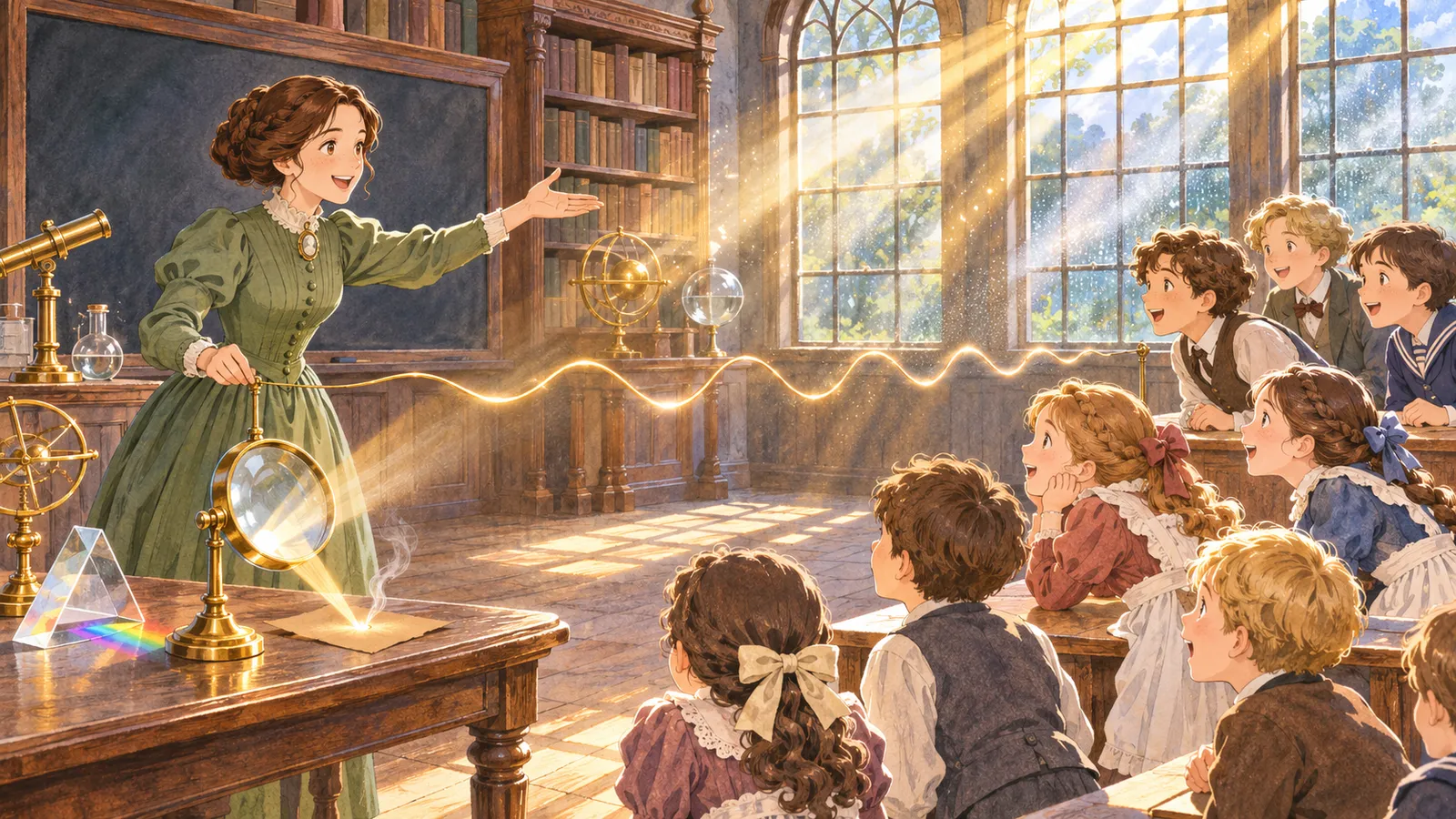
In order to see how powerful the sun's rays are, you have only to take a magnifying glass and gather them to a point on a piece of brown paper, for they will set the paper alight.太陽の光がどれほど強いかを知るには、虫めがねで光を茶色の紙の一点に集めてみるだけでよいのです。紙に火がついてしまいますから。 Sir John Herschel tells us that at the Cape of Good Hope the heat was even so great that he cooked a beefsteak and roasted some eggs by merely putting them in the sun, in a box with a glass lid!サー・ジョン・ハーシェルによると、喜望ほう(アフリカの南のはし)では、ガラスのふたのついた箱に入れて日なたに置いておくだけで、ビーフステーキを焼き、たまごをいくつか焼くことができたほど暑かったそうです! Indeed, just as we should all be frozen to death if the sun were sold, so we should all be burnt up with intolerable heat if his fierce rays fell with all their might upon us.じっさい、もし太陽が冷たかったらわたしたちはみなこごえ死んでしまうように、もし太陽のはげしい光が全力でわたしたちにふりそそいだら、わたしたちはみな、たえられない熱で焼けてしまうでしょう。 But we have an invisible veil protecting us, made - of what do you think?でも、わたしたちを守ってくれる、目に見えないベールがあるのです。それは何でできていると思いますか。 Of those tiny particles of water which the sunbeams draw up and scatter in the air, and which, as we shall see in Lecture IV, cut off part of the intense heat and make the air cool and pleasant for us.日の光が引き上げて空気の中にまきちらす、あの水の小さなつぶでできているのです。第4回の講義で見るように、このつぶが強い熱の一部をさえぎって、空気をすずしく気持ちよくしてくれるのです。
We have now learnt something of the distance, the size, the light, and the heat of the sun - the great source of the sunbeams.さて、日の光のおおもとである太陽の、きょり、大きさ、光、熱について、少しわかりました。 But we are as yet no nearer the answer to the question, What is a sunbeam? how does the sun touch our earth?でも、「日の光とは何か」「太陽はどうやって地球にふれるのか」という問いの答えには、まだ少しも近づいていません。
Now suppose I with to touch you from this platform where I stand, I can do it in two ways.さて、わたしが立っているこのだんの上から、みなさんにふれたいとします。そのやり方は二つあります。 Firstly, I can throw something at you and hit you - in this case a thing will have passed across the space from me to you.一つ目は、何かを投げてみなさんに当てることです。この場合、わたしからみなさんまで、ある「もの」が空間をわたっていったことになります。 Or, secondly, if I could make a violent movement so as to shake the floor of the room, you would feel a quivering motion; and so I should touch you across the whole distance of the room.二つ目は、もしわたしがはげしく動いて部屋のゆかをゆらすことができれば、みなさんはふるえる動きを感じるでしょう。こうしてわたしは、部屋のはしからはしまでへだてて、みなさんにふれることになります。 But in this case no thing would have passed from me to you but a movement or wave, which passed along the boards of the floor.でもこの場合、わたしからみなさんへは「もの」は何もわたっておらず、ゆか板をつたわっていった動き、つまり波がわたっただけなのです。 Again, if I speak to you, how does the sound reach you ear?また、わたしがみなさんに話しかけると、その音はどうやってみなさんの耳にとどくのでしょう。 Not by anything being thrown from my mouth to your ear, but by the motion of the air.わたしの口からみなさんの耳へ何かが投げられるのではなく、空気の動きによってとどくのです。 When I speak I agitate the air near my mouth, and that makes a wave in the air beyond, and that one, another, and another (as we shall see more fully in Lecture VI) till the last wave hits the drum of your ear.わたしが話すと、口の近くの空気がゆさぶられ、それがその先の空気に波をつくり、その波がまた次の波を、さらに次の波をつくって(第6回の講義でもっとくわしく見ます)、とうとう最後の波がみなさんの耳のこまくに当たるのです。
Thus we see there are two ways of touching anything at a distance; 1st, by throwing some thing at it and hitting it; 2nd, by sending a movement of wave across to it, as in the case of the quivering boards and the air.このように、はなれた所にあるものにふれるには二つのやり方があることがわかります。一つ目は、何かを投げて当てること。二つ目は、ふるえるゆか板や空気の場合のように、動き、つまり波をおくることです。
Now the great natural philosopher Newton thought that the sun touched us in the first of these ways, and that sunbeams were made of very minute atoms of matter thrown out by the sun, and making a perpetual cannonade on our eyes.さて、えらい自然てつ学者(今でいう科学者)ニュートンは、太陽は一つ目のやり方でわたしたちにふれていると考えました。日の光は、太陽から投げ出されたとても小さな物質のつぶでできていて、わたしたちの目にたえまなく大ほうをうちこんでいるのだ、と。 It is easy to understand that this would make us see light and feel heat, just as a blow in the eye makes us see starts, or on the body makes it feel hot: and for a long time this explanation was supposed to be the true one.こう考えると、光が見えたり熱を感じたりするわけは、わかりやすいでしょう。目をぶつけると目から火花(星)が出たり、体をぶたれると熱く感じたりするのと同じです。そして長いあいだ、この説明が正しいと思われていました。 But we know now that there are many facts which cannot be explained on this theory, though we cannot go into them here.でも今では、この考え方では説明できない事実がたくさんあることがわかっています。ただ、ここでそれにふれることはできません。 What we will do, is to try and understand what now seems to be the true explanation of the sunbeam.わたしたちがするのは、今のところ日の光の正しい説明だと思われていることを、理解しようとしてみることです。
About the same time that Newton wrote, a Dutchman, named Huyghens, suggested that light comes from the sun in tiny waves, travelling across space much in the same way as ripples travel across a pond.ニュートンが書いたのとだいたい同じころ、ホイヘンスというオランダ人が、光は小さな波になって太陽からやってくるのだ、と言い出しました。さざ波が池をわたっていくのとほとんど同じように、宇宙をわたってくるのだ、と。 The only difficulty was to explain in what substance these waves could be travelling: not through water, for we know that there is no water in space - nor through air, for the air stops at a comparatively short distance from our earth.ただひとつむずかしかったのは、その波がどんな物質の中をつたわってくるのかを説明することでした。水の中ではありません。宇宙には水がないことがわかっていますから。空気の中でもありません。空気は地球からわりあい近いところでなくなってしまいますから。 There must then be something filling all space between us and the sun, finer than either water or air.それなら、わたしたちと太陽のあいだのすべての空間をうめている、水よりも空気よりも細かい何かがあるにちがいありません。
And now I must ask you to use all you imagination, for I want you to picture to yourselves something quite as invisible as the Emperor's new clothes in Andersen's fairy-tale, only with this difference, that our invisible something is very active; and though we can neither see it nor touch it we know it by its effects.さあ、ここで、そうぞうする力をせいいっぱい使ってください。アンデルセンのおとぎ話の『はだかの王さま』の新しい服と同じくらい、目に見えない何かを心にえがいてほしいのです。ただ一つちがうのは、わたしたちの目に見えない何かは、とてもよくはたらくということです。それは見ることもさわることもできませんが、そのはたらきから、それがあるとわかるのです。 You must imagine a fine substance filling all space between us and the sun and the starts.わたしたちと太陽や星々とのあいだの、すべての空間をうめている、細かい物質を想像してください。 A substance so very delicate and subtle, that not only is it invisible, but it can pass through solid bodies such as glass, ice, or even wood or brick walls.それはとてもうすくて、とらえどころがなく、目に見えないだけでなく、ガラスや氷、さらには木やれんがのかべのような固いものさえ通りぬけてしまうのです。 This substance we call "ether."この物質を、わたしたちは「エーテル」とよんでいます。 I cannot give you here the reasons why we must assume that it is throughout all space; you must take this on the word of such men as Sir John Herschel or Professor Clerk-Maxwell, until you can study the question for yourselves.エーテルが宇宙じゅうにあると考えなければならないわけを、ここで説明することはできません。自分でこの問題を学べるようになるまでは、サー・ジョン・ハーシェルやクラーク・マクスウェル教授のような人たちのことばを信じてください。
Now if you can imagine this ether filling every corner of space, so that it is everywhere and passes through everything, ask yourselves, what must happen when a great commotion is going on in one of the large bodies which float in it?さて、このエーテルが宇宙のすみずみまでうめていて、どこにでもあり、何でも通りぬけると想像できたら、自分にたずねてみてください。エーテルの中にうかんでいる大きな天体のひとつで、大さわぎが起こっていたら、どうなるでしょう。 When the atoms of the gases round the sun are clashing violently together to make all its light and heat, do you not think they must shake this ether all around them?太陽のまわりのガスの原子がはげしくぶつかり合って、あの光と熱をすべてつくり出しているとき、原子はまわりのエーテルをゆさぶるにちがいないと思いませんか。 And then, since the ether stretches on all sides from the sun to our earth and all other planets, must not this quivering travel to us, just as the quivering of the boards would from me to you?そして、エーテルは太陽から地球やほかのすべてのわく星まで四方八方に広がっているのですから、ゆか板のふるえがわたしからみなさんへつたわるのと同じように、このふるえもわたしたちのところまでつたわってくるにちがいないでしょう? Take a basin of water to represent the ether, and take a piece of potassium like that which we used in our last lecture, and hold it with a pair of nippers in the middle of the water.エーテルにみたてて、水を入れたはちを用意し、前の講義で使ったようなカリウムのかけらをピンセットではさんで、水のまん中に持っていきましょう。 You will see that as the potassium hisses and the flame burns round it, they will make waves which will travel all over the water to the edge of the basin,, and you can imagine how in the same way waves travel over the ether from the sun to us.カリウムがシューシューいって、まわりでほのおがもえると、波ができて、水の上をはちのふちまでつたわっていくのが見えるでしょう。同じように、波がエーテルの中を太陽からわたしたちのところまでつたわってくるようすが、そうぞうできるでしょう。
Straight away from the sun on all sides, never stopping, never resting, but chasing after each other with marvellous quickness, these tiny waves travel out into space by night and by day.太陽から四方八方へまっすぐに、けっして止まらず、けっして休まず、おどろくほどの速さでおいかけっこをしながら、この小さな波たちは昼も夜も宇宙へとつたわっていくのです。 When our spot of the earth where England lies is turned away from them and they cannot touch us, then it is night for us, but directly England is turned so as to face the sun, then they strike on the land, and the water, and warm it; or upon our eyes, making the nerves quiver so that we see light.地球のうち、イギリスのある場所がこの波からそむけられていて、波がわたしたちにふれられないときは、わたしたちにとって夜です。でも、イギリスが回って太陽のほうを向くとすぐに、波は陸や水に当たってあたためたり、わたしたちの目に当たって神経をふるわせ、光が見えるようにしたりするのです。 Look up at the sun and picture to yourself that instead of one great blow from a fist causing you to see starts for a moment, millions of tiny blows from these sun-waves are striking every instant on you eye; then you will easily understand that his would cause you to see a constant blaze of light.太陽を見上げて、こう心にえがいてごらんなさい。げんこつで1回強くなぐられて一しゅん目から火花が出るのではなく、この太陽の波による何百万もの小さな一打ちが、一しゅんごとにみなさんの目に当たっているのだと。そうすれば、そのために光がたえまなくかがやいて見えるのだと、すぐにわかるでしょう。
But when the sun is away, if the night is clear we have light from the starts.でも、太陽がいないとき、晴れた夜なら星から光がとどきます。 Do these then too make waves all across the enormous distance between them and us?では、星もまた、星とわたしたちのあいだの、とてつもないきょりをこえて、波をおくってきているのでしょうか。 Certainly they do, for they too are suns like our own, only they are so far off that the waves they send are more feeble, and so we only notice them when the sun's stronger waves are away.もちろんそうです。星もわたしたちの太陽と同じ太陽なのですが、とても遠くにあるので、おくってくる波は弱く、太陽の強い波がないときにだけ気づくのです。
But perhaps you will ask, if no one has ever seen these waves not the ether in which they are made, what right have we to say they are there?でも、だれもこの波も、波ができるエーテルも見たことがないのに、どうしてそれがあると言えるのか、とたずねるかもしれませんね。 Strange as it may seem, though we cannot see them we have measured them and know how large they are, and how many can go into an inch of space.ふしぎに思えるかもしれませんが、わたしたちは波を見ることはできなくても、波をはかって、どのくらいの大きさか、1インチの中にいくつ入るかを知っているのです。 For as these tiny waves are running on straight forward through the room, if we put something in their way, they will have to run round it; and if you let in a very narrow ray of light through a shutter and put an upright wire in the sunbeam, you actually make the waves run round the wire just as water runs round a post in a river; and they meet behind the wire, just as the water meets in a V shape behind the post.というのは、この小さな波が部屋の中をまっすぐ進んでいるとき、とちゅうに何かを置くと、波はそれをまわりこまなければなりません。よろい戸からとても細い光を入れて、その日の光の中にまっすぐ立てた針金を置くと、川の中のくいのまわりを水が流れるのと同じように、波はほんとうに針金のまわりをまわりこみます。そして、くいの後ろで水がV字の形に出会うのと同じように、波は針金の後ろで出会うのです。 Now when they meet, they run up against each other, and here it is we catch them.さて、波が出会うと、波どうしがぶつかり合います。そしてここで、波をつかまえられるのです。 Fir if they meet comfortably, both rising up in a good wave, they run on together and make a bright line of light; but if they meet higgledy-piggledy, one up and the other down, all in confusion, they stop each other, and then there is no light but a line of darkness.というのは、波がうまく出会って、両方ともいっしょにもり上がってよい波になれば、波はいっしょに進んで明るい光のすじをつくります。でも、片方が上でもう片方が下というように、めちゃくちゃに出会ってごちゃごちゃになると、波はたがいにうち消し合って、そこには光がなく、暗いすじができるのです。 And so behind your piece of wire you can catch the waves on a piece of paper, and you will find they make dark and light lines one side by side with the other, and by means of these bands it is possible to find out how large the waves must be.ですから、針金の後ろで波を紙に受けとめると、暗いすじと明るいすじがとなり合ってならんでいるのがわかります。そして、このしまもようを使って、波がどのくらいの大きさにちがいないかを知ることができるのです。 This question is too difficult for us to work it out here, but you can see that large waves will make broader light and dark bands than small ones will, and that in this way the size of the waves may be measured.この問題はむずかしすぎて、ここでといてみることはできません。でも、大きな波は小さな波よりも、はばの広い明るいしまと暗いしまをつくるので、こうして波の大きさがはかれるということはわかるでしょう。