
 8分
 朗読 Auntie Em
 原文そのまま

 PDFで印刷(A4 9まい)
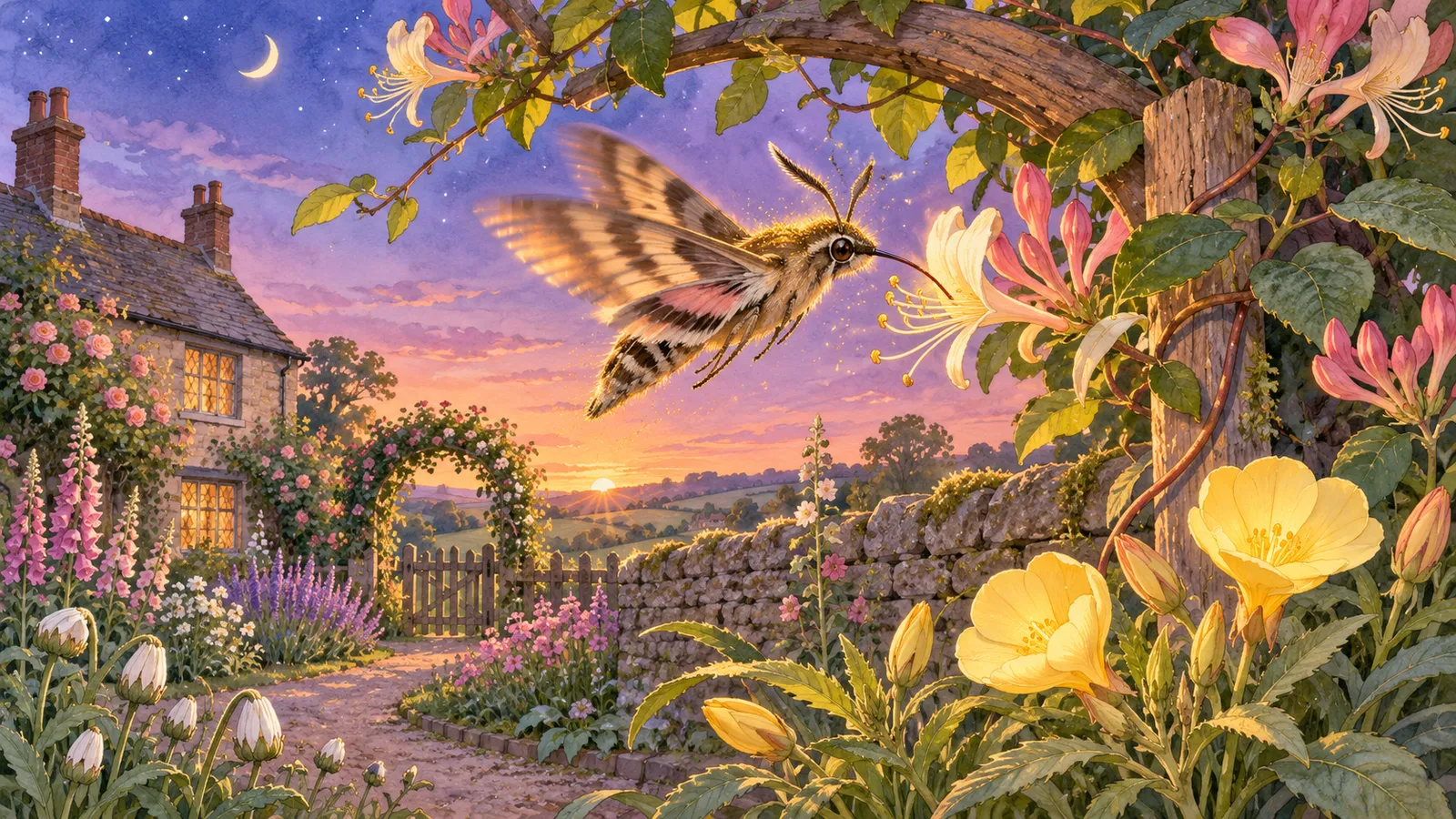
What do you think is the reason of this?そのわけは何だと思いますか? If you go near a bed of evening primroses just when the sun is setting, you will soon be able to guess, for they will then give out such a sweet scent that you will not doubt for a moment that they are calling the evening moths to come and visit them.夕日がしずむころにマツヨイグサの花だんに近づけば、すぐに見当がつくでしょう。そのころ、花がとてもあまいにおいを出すので、夜のガをよんでいるのだと、少しもうたがわないはずです。 The daisy opens by day, because it is visited by day insects, but those particular moths which can carry the pollen-dust of the evening primrose, fly only by night, and if this flower opened by day other insects might steal its honey, while they would not be the right size or shape to touch its pollen-bags and carry the dust.デイジーが昼に開くのは、昼の虫がおとずれるからです。でも、マツヨイグサの花粉を運べるとくべつなガは、夜にしか飛びません。もしこの花が昼に開いたら、ほかの虫にみつをぬすまれてしまうかもしれません。しかもその虫たちは、大きさも形もちょうどよくないので、花粉のふくろにふれて花粉を運ぶことができないのです。
It is the same if you pass by a honeysuckle in the evening; you will be surprised how much stronger its scent is than in the day- time.夕方にスイカズラのそばを通っても同じです。昼間よりずっとにおいが強いのにおどろくでしょう。 This is because the sphinx hawk-moth is the favourite visitor of that flower, and comes at nightfall, guided by the strong scent, to suck out the honey with its long proboscis, and carry the pollen-dust.それは、スズメガがこの花の一番のお客さんで、日がくれると強いにおいをたよりにやってきて、ストローのような長い口でみつをすい、花粉を運ぶからです。
Again, some flowers close whenever rain is coming.また、雨がふりそうになると、いつでもとじる花もあります。 The pimpernel (Anagallis arvensis) is one of these, hence its name of the "Shepherd's Weather-glass."アカバナルリハコベ(Anagallis arvensis)もその1つで、だから「羊かいの晴雨計(天気計)」という名前がついているのです。 This little flower closes, no doubt, to prevent its pollen-dust being washed away, for it has no honey; while other flowers do it to protect the drop of honey at the bottom of their corolla.この小さな花がとじるのは、きっと花粉が雨で流されないようにするためでしょう。この花にはみつがないからです。いっぽう、ほかの花は、花冠(花びら全体)の底にあるみつのしずくを守るためにとじます。 Look at the daisies for example when a storm is coming on; as the sky grows dark and heavy, you will see them shrink up and close till the sun shines again.たとえば、あらしが近づいてきたときのデイジーを見てごらんなさい。空が暗く重くなるにつれて、花がちぢんでとじ、また日がさすまでそのままでいるのがわかるでしょう。 They do this because in each of the little yellow florets in the centre of the flower there is a drop of honey which would be quite spoiled if it were washed by the rain.そうするのは、花のまん中にある小さな黄色い小花の1つ1つにみつのしずくがあって、雨に洗われたらすっかりだめになってしまうからです。
And now you will see why cup-shaped flowers so often droop their heads - think of the harebell, the snowdrop, the lily-of-the- valley, the campanula, and a host of others; how pretty they look with their bells hanging so modestly from the slender stalk!さあ、これで、カップの形をした花がなぜよく頭をたれているのかがわかるでしょう。イトシャジン、スノードロップ、スズラン、カンパニュラ(ホタルブクロのなかま)など、たくさんの花を思い出してください。ほっそりしたくきから、つつましくすずをぶら下げて、なんとかわいらしいことでしょう! They are bending down to protect the honey-glands within them, for if the cup became full of rain or dew the honey would be useless, and the insects would cease to visit them.花は、中のみつせんを守るために下を向いているのです。もしカップが雨やつゆでいっぱいになったら、みつは役に立たなくなり、虫は来なくなってしまうからです。
But it is not only necessary that the flowers should keep their honey for the insects, they also have to take care and keep it for the right kind of insect.けれども、花は虫のためにみつをとっておくだけでなく、ちょうどよい種類の虫のためにとっておくよう、気をつけなければなりません。 Ants are in many cases great enemies to them, for they like honey as much as bees and butterflies do, yet you will easily see that they are so small that if they creep into a flower they pass the anthers without rubbing against them, and so take the honey without doing any good to the plant.アリは多くの場合、花にとって大敵です。アリもハチやチョウと同じくらいみつが好きですが、とても小さいので、花の中にもぐりこんでも、やく(花粉のふくろ)にこすれずに通りすぎてしまいます。つまり、植物の役に何も立たずに、みつだけを持っていってしまうのです。 Therefore we find numberless contrivances for keeping the ants and other creeping insects away.そこで、アリやほかのはいまわる虫を遠ざけるための、数えきれないほどのしかけが見られます。 Look for example at the hairy stalk of the primrose flower; those little hairs are like a forest to a tiny ant, and they protect the flower from his visits.たとえば、サクラソウの花の、毛の生えたくきを見てごらんなさい。その小さな毛は、小さなアリにとっては森のようなもので、アリが来るのを防いでいます。 The Spanish catchfly (Silene otites), on the other hand, has a smooth, but very gummy stem, and on this the insects stick, if they try to climb.いっぽう、スペインのムシトリナデシコ(Silene otites)は、つるつるしていますがとてもねばねばしたくきを持っていて、虫がよじのぼろうとすると、そこにくっついてしまいます。 Slugs and snails too will often attack and bite flowers, unless they are kept away by thorns and bristles, such as we find on the teazel and the burdock.ナメクジやカタツムリも、よく花をおそってかじります。それを防ぐのが、ラシャカキグサやゴボウに見られるような、とげやかたい毛です。 And so we are gradually learning that everything which a plant does has its meaning, if we can only find it out, and that even very insignificant hair has its own proper use, and when we are once aware of this a flower-garden may become quite a new world to us if we open our eyes to all that is going on in it.こうして、植物のすることにはすべて意味があって、ただそれを見つけさえすればよいのだということ、そして、目立たない毛1本にさえそれなりの役目があることが、少しずつわかってきました。一度このことに気づけば、目を開いて、花畑で起こっていることのすべてに注意をはらうなら、花畑はまったく新しい世界になるかもしれません。
But as we cannot wander among many plants to-day, let us take a few which the bees visit, and see how they contrive not to give up their honey without getting help in return.でも、きょうはたくさんの植物の間を歩き回ることはできないので、ハチがおとずれる花をいくつか取り上げ、助けてもらわずにみつをわたしてしまわないよう、どのように工夫しているのかを見てみましょう。 We will start with the blue wood-geranium, because from it we first began to learn the use of insects to flowers.まず、森にさく青いフウロソウ(ゲラニウム)から始めましょう。花にとって虫がどんな役に立つのかを、わたしたちが初めて学びはじめたのは、この花からだったからです。
More than a hundred years ago a young German botanist, Christian Conrad Sprengel, noticed some soft hairs growing in the centre of this flower, just round the stamens, and he was so sure that every part of a plant is useful, that he set himself to find out what these hairs meant.百年以上前、クリスティアン・コンラート・シュプレンゲルというドイツの若い植物学者が、この花のまん中の、おしべのまわりに生えているやわらかい毛に気づきました。シュプレンゲルは、植物のどの部分にも役目があるとかたく信じていたので、この毛が何のためにあるのかを調べることにしました。 He soon discovered that they protected some small honey-bags at the base of the stamens, and kept the rain from washing the honey away, just as our eyebrows prevent the perspiration on our faces from running into our eyes.まもなく、その毛がおしべのつけ根にある小さなみつぶくろを守り、雨がみつを洗い流さないようにしていることを発見しました。ちょうど、わたしたちのまゆ毛が、顔のあせが目に流れこむのを防いでいるのと同じです。 This led him to notice that plants take great care to keep their honey for insects, and by degrees he proved that they did this in order to tempt the insects to visit them and carry off their pollen.このことから、シュプレンゲルは、植物がみつを虫のためにとても大切にとっておくことに気づき、だんだんと、それは虫に来てもらって花粉を運ばせるためだということを証明していきました。
The first thing to notice in this little geranium flower is that the purple lines which ornament it all point directly to the place where the honey lies at the bottom of the stamens, and actually serve to lead the bee to the honey; and this is true of the veins and marking of nearly all flowers except of those which open by night, and in these they would be useless, for the insects would not see them.この小さなフウロソウの花でまず注目したいのは、花をかざるむらさきのすじが、どれもおしべの根もとのみつがある場所をまっすぐ指していて、じっさいにハチをみつへ案内する役目をしていることです。これは、夜に開く花をのぞいて、ほとんどすべての花のすじや模様についてもいえます。夜に開く花では、虫に見えないので、すじがあっても役に立たないのです。
When the geranium first opens, all its ten stamens are lying flat on the corolla or coloured crown, as in the left-hand flower in Fig.フウロソウが開いたばかりのときは、10本のおしべがすべて、花冠(色のついた花びら)の上にぺたりとねています。左の花のようすです(図 58, and then the bee cannot get at the honey.58)。このときは、ハチはみつにとどきません。 But in a short time five stamens begin to raise themselves and cling round the stigma or knob at the top of the seed-vessel, as in the middle flower.でもしばらくすると、5本のおしべが起き上がり、まん中の花のように、柱頭(種をつくるふくろのてっぺんにある頭)にまとわりつきます。 Now you would think they would leave their dust there.これなら、おしべは花粉をそこにつけていくだろうと思うでしょう。 But no! the stigma is closed up so tight that the dust cannot get on to the sticky part.ところが、そうではありません!柱頭はぴったりとじているので、花粉はねばねばした部分につくことができないのです。 Now, however, the bee can get at the honey-glands on the outside of the raised stamens; and as he sucks it, his back touches the anthers or dust-bags, and he carries off the pollen.けれども、このときハチは、立ち上がったおしべの外側にあるみつせんにとどきます。ハチがみつをすうと、せなかがやく(花粉ぶくろ)にふれて、花粉を運び去るのです。 Then, as soon as all their dust is gone, these five stamens fall down, and the other five spring up.そして、花粉がすっかりなくなると、この5本のおしべはたおれ、のこりの5本が起き上がります。 Still, however, the stigma remains closed, and the pollen of these stamens, too, may be carried away to another flower.それでもまだ柱頭はとじたままなので、このおしべの花粉もまた、ほかの花へ運ばれていくかもしれません。 At last these five also fall down, and then, and not till then, the stigma opens and lays out its five sticky points, as you may see in the right-hand flower, Fig.とうとうこの5本もたおれると、そのときになって初めて、柱頭が開いて5つのねばねばした先を広げます。右の花で見られるとおりです(図 58.58)。
But its own pollen is all gone, how then will it get any?でも、自分の花粉はもう全部なくなっています。では、どうやって花粉を手に入れるのでしょう? It will get it from some bee who has just taken it from another and younger flower; and thus you see the blossom is prevented from using its own pollen, and made to use that of another blossom, so that its seeds may grow healthy and strong.ほかの、もっと若い花から花粉をとってきたばかりのハチからもらうのです。こうして、この花は自分の花粉を使えないようになっていて、ほかの花の花粉を使うことになります。そうすれば、種が元気にじょうぶに育つのです。
The garden nasturtium, into whose blossom we saw the humble-bee poling his head, takes still more care of its pollen-dust.前にマルハナバチが頭をつっこんでいるのを見たキンレンカ(ナスタチウム)は、もっと念入りに花粉を守ります。 It hides its honey down at the end of its long spur, and only sends out one stamen at a time instead of five like the geranium; and then, when all the stamens have had their turn, the sticky knob comes out last for pollen from another flower.キンレンカは、花のうしろにのびた長いつのの先にみつをかくし、フウロソウのように5本ずつではなく、1度に1本ずつしかおしべを出しません。そして、おしべが全部順番をおえると、最後にねばねばした頭(柱頭)が出てきて、ほかの花からの花粉を待つのです。
All this you may see for yourselves if you find geraniums* in the hedges, and nasturtiums in you garden.生けがきのあたりでフウロソウ*を、庭でキンレンカを見つけたら、こうしたことはみんな自分で見ることができます。 But even if you have not these, you may learn the history of another flower quite as curious, and which you can find in any field or lane even near London.でも、もしこれらがなくても、同じくらいふしぎな、別の花の物語を学ぶことができます。その花は、ロンドンの近くでさえ、どこの野原や小道でも見つかります。 The common dead-nettle (Fig.ふつうのオドリコソウ(図 59) takes a great deal of trouble in order that the bee may carry off its pollen.59)は、ハチに花粉を運んでもらうために、たいへんな手間をかけています。 When you have found one of these plants, take a flower from the ring all round the stalk and tear it gently open, so that you can see down its throat.この植物を見つけたら、くきのまわりをぐるりと取りまいてさいている花を1つとって、のどのおくが見えるように、そっとさいてみましょう。 There, just at the very bottom, you will find a thick fringe of hairs, and you will guess at once that these are to protect a drop of honey below.そのいちばん底に、毛がびっしりと生えたふちかざりがあるでしょう。これはその下のみつのしずくを守るものだと、すぐに見当がつくはずです。 Little insects which would creep into the flower and rob it of its honey without touching the anthers of the stamens cannot get past these hairs, and so the drop is kept till the bee comes to fetch it. (*The scarlet and other bright geraniums of our flower-gardens are not true geraniums, but pelargoniums.花にもぐりこんで、おしべのやくにふれずにみつをぬすんでいく小さな虫は、この毛を通りぬけることができないので、ハチが取りに来るまで、みつのしずくはとっておかれるのです。(*花畑にさく赤やそのほかのあざやかなゼラニウムは、本当のゲラニウム(フウロソウ)ではなく、ペラルゴニウムです。 You may, however, watch all these peculiarities in them if you cannot procure the true wild geranium.)でも、本物の野生のフウロソウが手に入らなければ、これらの花でも、こうしたとくちょうをすべて観察できます。)
Now look for the stamens; there are four of them, two long and two short, and they are quite hidden under the hood which forms the top of the flower.では、おしべをさがしてみましょう。おしべは4本あり、2本が長く2本が短く、花のてっぺんをつくっているずきんの下に、すっかりかくれています。 How will the bee touch them?ハチはどうやっておしべにふれるのでしょう? If you were to watch one, you would find that when the bee alights on the broad lip and thrusts her head down the tube, she first of all knows her back against the little forked tip.ハチを見ていると、ハチが広いくちびる(下の花びら)にとまり、つつの中に頭をつっこむとき、まず、先がふたまたになった小さな先っぽに、せなかをぶつけることがわかるでしょう。 This is the sticky stigma, and she leaves there any dust she has brought from another flower; then, as she must push far in to reach the honey, before she comes out again has carried away the yellow powder on her back, ready to give it to the next flower.これがねばねばした柱頭で、ハチはほかの花から運んできた花粉をそこにのこしていきます。そして、みつにとどくにはおくまでおし入らなければならないので、外に出てくる前に、せなかに黄色い粉をのせて運び出し、次の花にわたす用意ができているのです。