

 ワークシート
 ぬりえ
 迷路
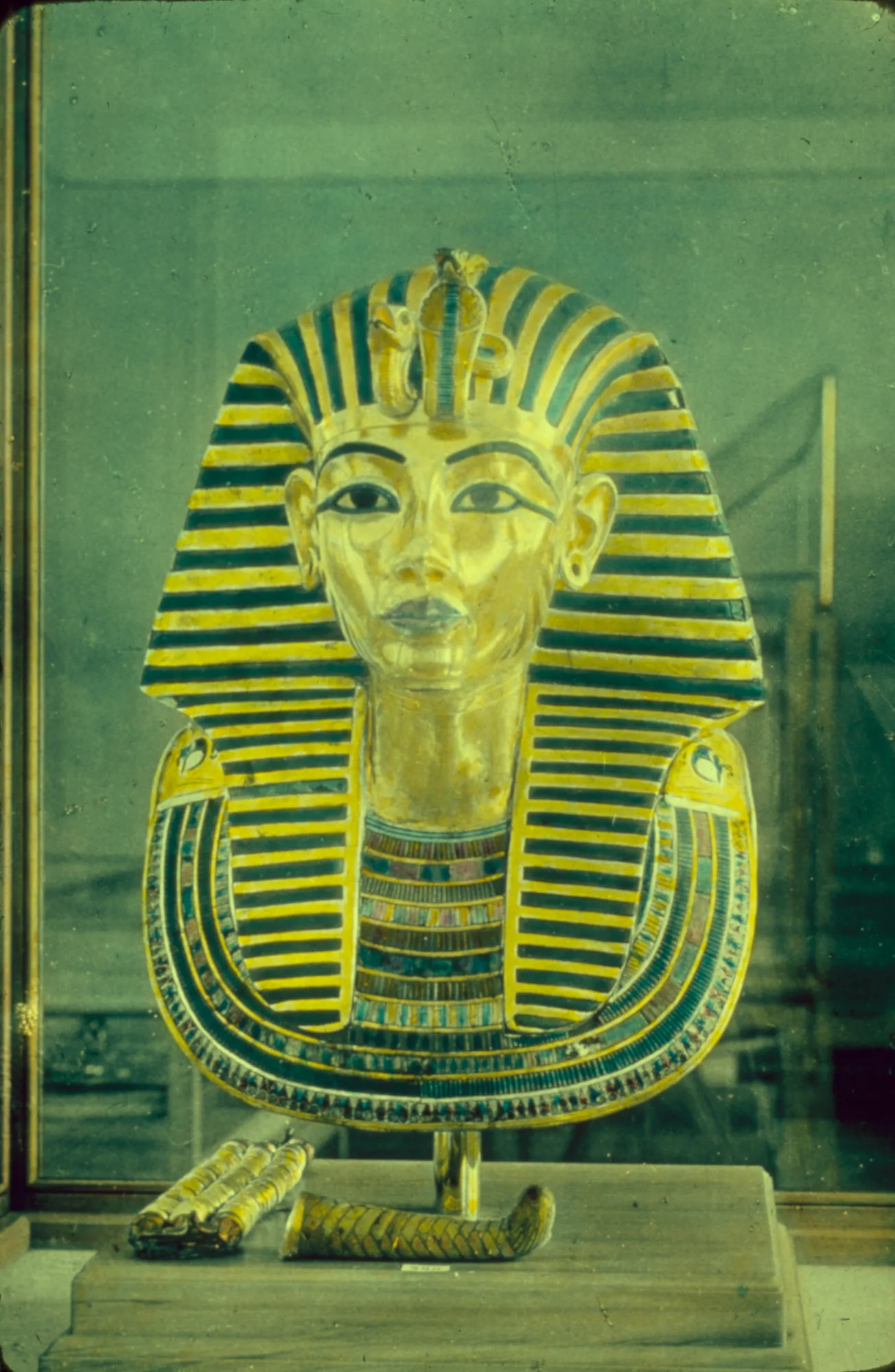
重さ10kgをこえる金のマスク!3000年以上ねむっていた少年王の顔。A gold mask weighing over 10 kg! The face of a boy king who slept for more than 3,000 years.
この作品のお話
Storyこれは古代エジプトの王ツタンカーメンのミイラにかぶせられていた、黄金のマスクです。高さは54センチ、重さは約10キロ。金の板に、青いラピスラズリや赤いカーネリアンなどの宝石やガラスがはめこまれています。王はおよそ18〜19歳で亡くなったと考えられ、紀元前1323年ごろに埋葬されました。
This gold mask covered the mummy of Tutankhamun, a king of ancient Egypt. It is 54 cm tall and weighs about 10 kg. Blue lapis lazuli, red carnelian and coloured glass are set into the gold. The king died at about 18 or 19 and was buried around 1323 BC.
1922年、イギリスの考古学者ハワード・カーターが「王家の谷」で王の墓を発見しました。古代に盗賊が入りましたが、多くの副葬品が残っていました。マスクは1925年、ミイラの上で見つかりました。額にはハゲワシとコブラがつき、上エジプトと下エジプトを守る女神をあらわします。しま模様の頭巾は「ネメス」と呼ばれる王のかぶりものです。
In 1922, the British archaeologist Howard Carter found the king's tomb in the Valley of the Kings. Ancient robbers had broken in, but many treasures were still there. The mask was found on the mummy in 1925. On the forehead are a vulture and a cobra, goddesses of Upper and Lower Egypt. The striped headcloth is called a 'nemes'.
マスクは長いあいだカイロのエジプト考古学博物館に展示され、世界中の人が見に来ました。2025年には、ギザのピラミッドの近くに開館した大エジプト博物館へ移されています。この画像は、その昔の展示ケースの中のマスクを写した古い写真に、手で色をつけたものです。あごひげがまだ外され、マスクの前に置かれていたころのようすがわかります。
For many years, the mask was shown at the Egyptian Museum in Cairo, and people came from all over the world. In 2025, it moved to the new Grand Egyptian Museum near the pyramids of Giza. This image is an old photo of the mask in its display case, colored by hand. It was taken when the beard was still kept apart, in front of the mask.
これは金のマスクです。エジプトの若い王のためのものです。王の名前はツタンカーメン。18歳くらいで亡くなりました。2014年、あごひげが取れて、だれかが接着剤を使ってしまいました!
This is a gold mask. It is for a young king of Egypt. His name is Tutankhamun. He died at about 18. In 2014, the beard came off, and someone used glue!
英語のレベルは上の「やさしい/ふつう」で切りかえられます。
えっ!?な裏ネタ
Secretsじつはあごひげは、発見されたときから外れていて、1941年にマスクにとりつけられました。2014年には展示ケースの作業中にまた取れ、職員が強力な接着剤でつけ直して問題に。2015年に、ドイツとエジプトの専門家チームが正しく修復しました。
The beard was already loose when the mask was found, and it was attached in 1941. In 2014, it came off again during work on the display case, and staff glued it back with strong glue. This caused a scandal. In 2015, German and Egyptian experts fixed it properly.
墓の発掘を支援したカーナヴォン卿は、墓が開かれた翌年の1923年に亡くなりました。これが「ファラオの呪い」のうわさとして新聞をにぎわせました。でも発見者のカーターは、その後16年近く生きました。呪いは伝説にすぎません。
Lord Carnarvon, who paid for the dig, died in 1923. Newspapers wrote about the 'curse of the pharaoh'. But Howard Carter, who found the tomb, lived for nearly 16 more years. The curse is only a legend.
よく見ると、耳たぶに穴があいています。古代エジプトでは、身分の高い人は男女ともにピアスをしていました。ツタンカーメンのミイラの耳にも穴があったことが知られています。
Look closely: there are holes in the earlobes. In ancient Egypt, important men and women wore earrings. Tutankhamun's mummy also had pierced ears.
マスクのうしろ側と肩には、『死者の書』の呪文が刻まれています。マスクの部分を神々の体の部分になぞらえ、王を守るように願う言葉です。表だけでなく、裏まで「お守り」になっているのです。
A spell from the Book of the Dead is carved on the back and shoulders. It links parts of the mask to the gods and asks them to protect the king. Even the back works as a charm.
ここを見て!
Look Closer1ハゲワシとコブラVulture and cobra
額のハゲワシは上エジプト、コブラは下エジプトの守り神。二つの国を治める王のしるしです。
The vulture protects Upper Egypt and the cobra protects Lower Egypt. Together they show he ruled both lands.
2若い王の顔Young king's face
目のまわりは黒く縁どられ、白目には石英、黒目には黒曜石が使われています。
The eyes are lined in black. Quartz is used for the whites and obsidian for the pupils.
3外されたあごひげThe beard, set apart
先がくるんと曲がった、神々と同じつけひげ。この写真では、マスクから外されて前に置かれています。
This curled false beard is like the gods' beards. In this photo, it lies in front of the mask.
4首かざりBroad collar
青・赤・水色の石が何列も並ぶ大きな首かざり。両はしにはハヤブサの頭がついています。
Rows of blue, red and light blue stones make a big collar. There are falcon heads at both ends.
英語で名画を語ろう
Talk about Art in EnglishThe mask is decorated with blue and red stones.
マスクは青や赤の石で飾られています。
💡 宝物・工芸品の説明でよく使います。be decorated with + 飾りの材料。
英語で説明すると… Describe it
これは若い王の金のマスクを写した古い写真です。おだやかな顔で、大きな黒い目をしています。頭巾には濃い色のしま模様があり、額には鳥と蛇がついています。マスクの前の台には、つけひげが置かれています。
This is an old photo of a gold mask of a young king. He has a calm face and big dark eyes. There are dark stripes on his headcloth, and there is a bird and a snake on his forehead. In front of the mask, his false beard lies on the stand.
考えてみよう Think & Talk
- エジプトの人々は、なぜ亡くなった人のためにこんなに金を使ったのだと思いますか?Why do you think the Egyptians used so much gold for the dead?
- お墓の宝物は、博物館で展示されるべきでしょうか?Should treasures from tombs be shown in museums? Why or why not?
この作品の英単語
WordsCarter found the king's tomb in 1922.
カーターは1922年に王の墓を見つけました。
The mask is made of gold and weighs about 10 kilograms.
そのマスクは金でできていて、重さは約10キロです。
The king was buried with many treasures.
王は多くの宝物と一緒に埋葬されました。
Precious stones are set into the gold.
貴重な石が金にはめこまれています。
ミニクイズ
QuizQ. ツタンカーメンの墓を見つけたのはだれ?Who found Tutankhamun's tomb?
1922年、イギリスの考古学者ハワード・カーターが王家の谷で発見しました。
The British archaeologist Howard Carter found it in the Valley of the Kings in 1922.
ウソ?ホント? マスクのあごひげは、2014年に取れてしまったことがある。The mask's beard once came off in 2014.
接着剤でつけ直され、2015年に専門家が修復しました。
It was glued back, and experts repaired it in 2015.
ウソ?ホント? マスクはツタンカーメンが生きているあいだ、毎日かぶっていた。Tutankhamun wore the mask every day while he was alive.
亡くなった王のミイラにかぶせるために作られたものです。
It was made to cover the king's mummy after he died.
 画像の出典とライセンス / Image credit
- PDEgypt. Cairo. King Tutankhamun's mask LOC matpc.23053 (cropped).jpg(Wikimedia Commons)
ライセンス:Public domain(パブリックドメイン)/作者・撮影者の表記:Matson Collection
この作品は、作者の死後長い年月がたち著作権の保護期間が終わっています。写真は撮影者がパブリックドメインとして公開したもの、または著作権の保護期間が終わった古い写真です。 所蔵:大エジプト博物館(2025年までカイロのエジプト考古学博物館)(Grand Egyptian Museum (until 2025, the Egyptian Museum in Cairo))。画像は表示のために縮小・WebP 形式に変換しています。
