

 ワークシート
 ぬりえ
 迷路
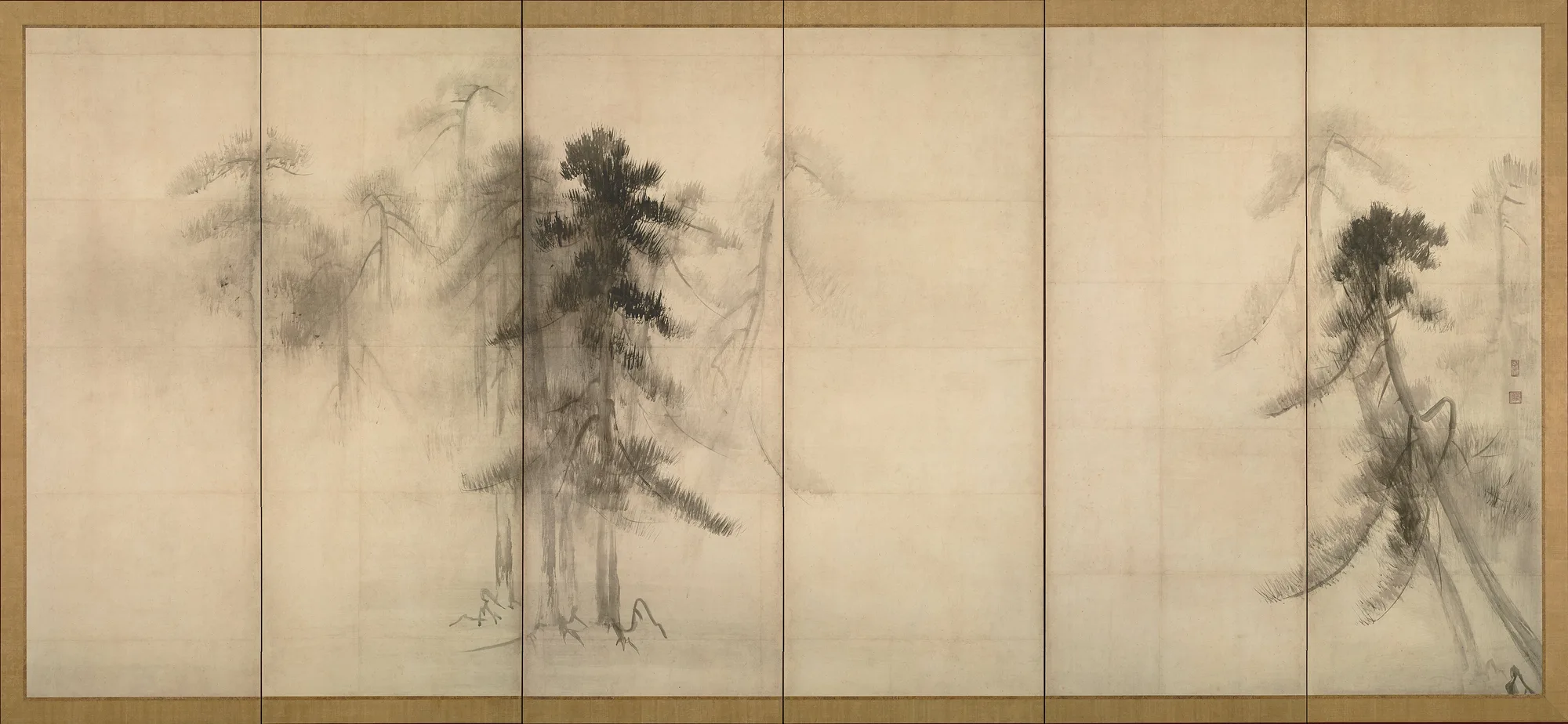
描いていない「白」が霧になる。日本を代表する水墨画のひとつ。The empty white becomes mist. One of Japan's greatest ink paintings.
 美術館アンテナ:長谷川等伯の作品に会える展覧会
この作品のお話
Story長谷川等伯の「松林図屏風」は、霧の中に松の林がうかびあがる、墨だけで描かれた国宝の屏風です。六曲一双(6枚折りの屏風2つ)のうち、これは右側に立てる右隻(うせき)。濃い墨の松は手前に、うすい墨の松は霧の奥に見えます。画面の大部分は、何も描かれていない紙の白さです。
Pine Trees by Hasegawa Tōhaku is a National Treasure. Pine trees appear and fade in the mist, painted only in ink. It is a pair of six-panel folding screens. This is the right screen. Dark pines seem close to us, while pale ones fade into the mist. Most of the screen is simply the white of the paper.
等伯は能登の七尾(いまの石川県)に生まれ、30代で京都に出て、当時の画壇のトップ・狩野派と張りあいました。雪舟を尊敬し、自分を「雪舟五代」と名のっています。松の葉は、すばやく勢いのある筆で描かれています。ふるさと能登の海辺の松林を思いうかべて描いた、という見方もあります。
Tōhaku was born in Nanao in Noto, now Ishikawa Prefecture. In his thirties, he moved to Kyoto and competed with the powerful Kano school. He admired Sesshū and called himself 'the fifth generation after Sesshū.' The pine needles are painted with quick, strong strokes. Some think he was remembering the pine woods by the sea in his hometown.
じつはこの屏風、紙のつぎ目に不自然なところがあり、もとは別の目的の下絵だったのではないか、という説もあります。それでも、霧と静けさを描いたこの作品は、日本の水墨画の最高傑作のひとつとされています。東京国立博物館では、毎年お正月のころに公開されることで知られています。
In fact, some of the paper joins look unusual. So some experts think the screens were first made as a draft for another purpose. Even so, this picture of mist and silence is called one of the greatest Japanese ink paintings. The Tokyo National Museum is known for showing it around New Year.
これは大きな屏風です。霧の中の松の木がえがかれています。画家は黒い墨だけを使いました。紙のほとんどは白いのに、霧のように見えます。日本でいちばん有名な水墨画のひとつです。
This is a big folding screen. It shows pine trees in the mist. The artist used only black ink. Most of the paper is white, but it looks like fog. It is one of the most famous ink paintings in Japan.
英語のレベルは上の「やさしい/ふつう」で切りかえられます。
えっ!?な裏ネタ
Secrets紙のつぎ目がそろっていなかったり、松の配置がとぎれたりするところから、もとは襖絵などの下絵で、のちに屏風に仕立てられたのでは、という説があります。それでも名画になったのが、この作品のすごさです。
Some paper joins do not line up, and some pines are cut off. So one idea is that it began as a draft for sliding doors and was later made into screens. Even so, it became a masterpiece.
東京国立博物館では、松林図屏風を毎年お正月の時期に展示するのが恒例です。松はおめでたい木。新年にこの霧の松林を見に来る人も多いのです。霧の松林は、新しい年の静かな始まりにぴったりです。
The Tokyo National Museum usually shows this screen around New Year. Pine trees are lucky in Japan, and many people come to see these misty pines to start the year. The misty pines are perfect for a quiet start to the year.
1593年、等伯は絵の才能があった息子の久蔵を、数え年26歳(満25歳ほど)で亡くしました。この屏風のさびしい静けさに、その悲しみを重ねる見方もありますが、はっきりした証拠はありません。
In 1593, Tōhaku lost his talented son Kyūzō, aged 26 by the traditional Japanese count (about 25 today). Some people feel his sadness in the quiet of this screen, but there is no clear proof.
等伯は、豊臣秀吉が亡き子のために建てた寺の障壁画の仕事を手に入れ、狩野派と肩をならべました。いまも京都の智積院に、等伯の金色の「楓図」と、久蔵が描いたとされる「桜図」が残っています。
Tōhaku won the job of painting a temple that Toyotomi Hideyoshi built for his dead son. This made him a rival of the Kano school. Their golden paintings survive at Chishakuin Temple in Kyoto: Maple Trees is by Tōhaku, while Cherry Blossoms is said to be by his son Kyūzō.
ここを見て!
Look Closer1手前の濃い松Dark pines up close
濃い墨の松が、いちばん手前に立っています。
Pines in dark ink stand closest to us.
2霧にとける松Pines fading into mist
うすい墨の松は、霧の奥へ消えていくようです。
Pale pines seem to disappear deep into the mist.
3何もない白Empty white space
何も描いていない紙の白。ここに霧や空気を感じさせるのが等伯のワザです。
Plain white paper. Tōhaku makes us feel mist and air here.
4かたむく松Leaning pine
右はしでは、松が風に吹かれたように斜めにのびています。
On the far right, a pine leans as if blown by the wind.
英語で名画を語ろう
Talk about Art in EnglishSome pine trees fade into the mist on the left.
左では、何本かの松が霧の中へ消えていきます。
💡 fade into ~で「~の中へうすれて消える」。fade into the night(夜にとけこむ)のようにも。
英語で説明すると… Describe it
これは墨で描かれた屏風です。霧の中に松の木があります。真ん中では、濃い色の松のむれが手前に立っています。左では、うすい松が白い空間の中へ消えていきます。
This is a folding screen painted in ink. There are pine trees in the mist. In the middle, a group of dark pines stands close to us. On the left, pale pines fade into the white space.
考えてみよう Think & Talk
- 等伯はなぜ、こんなに何も描かない部分を残したのだと思いますか?Why do you think Tōhaku left so much empty space?
- この松林では、どんな音が聞こえてきそうですか?What sounds can you imagine in this pine forest?
この作品の英単語
WordsThe pine trees are hidden in the mist.
松の木が霧にかくれている。
This folding screen has six panels.
この屏風は6枚の面がある。
The trees fade into the white.
木々は白の中へ消えていく。
Most of the screen is empty.
屏風の大部分はからっぽだ。
ミニクイズ
QuizQ. 長谷川等伯が自分を何と名のった?What did Tōhaku call himself?
尊敬する雪舟の流れをつぐ者として「雪舟五代」と名のりました。
He called himself the fifth generation after Sesshū, whom he admired.
ウソ?ホント? 松林図屏風は、墨だけで描かれている。Pine Trees is painted only in ink.
色は使わず、墨のこさと紙の白さで霧と松を表しています。
It uses no color, only ink tones and white paper.
ウソ?ホント? 等伯は京都で生まれ育った。Tōhaku was born and raised in Kyoto.
能登の七尾(石川県)に生まれ、30代で京都に出ました。
He was born in Nanao, Noto, and moved to Kyoto in his thirties.
 画像の出典とライセンス / Image credit
- PDHasegawa Touhaku - Pine Trees - Google Art Project.jpg(Wikimedia Commons)
ライセンス:Public domain(パブリックドメイン)/作者・撮影者の表記:Hasegawa Touhaku (1539 - 1610) – Creator Details on Google Art Project/提供元:HgFQR4hgzPorXg at Google Cultural Institute maximum zoom level
この作品は、作者の死後長い年月がたち著作権の保護期間が終わった「パブリックドメイン」の作品です。画像は平面の作品を忠実に写したもので、新しい著作権は生じません(Wikimedia Commons の PD-Art の考え方)。 所蔵:東京国立博物館(Tokyo National Museum)。画像は表示のために縮小・WebP 形式に変換しています。
