 ワークシート
 ぬりえ
 迷路
将軍の注文説も!信長が謙信に贈ったと伝わる、約2500人の金色の京都。A shogun may have ordered it, and Nobunaga is said to have given it to Kenshin. Golden Kyoto with about 2,500 people!
 美術館アンテナ:狩野永徳の作品に会える展覧会
この作品のお話
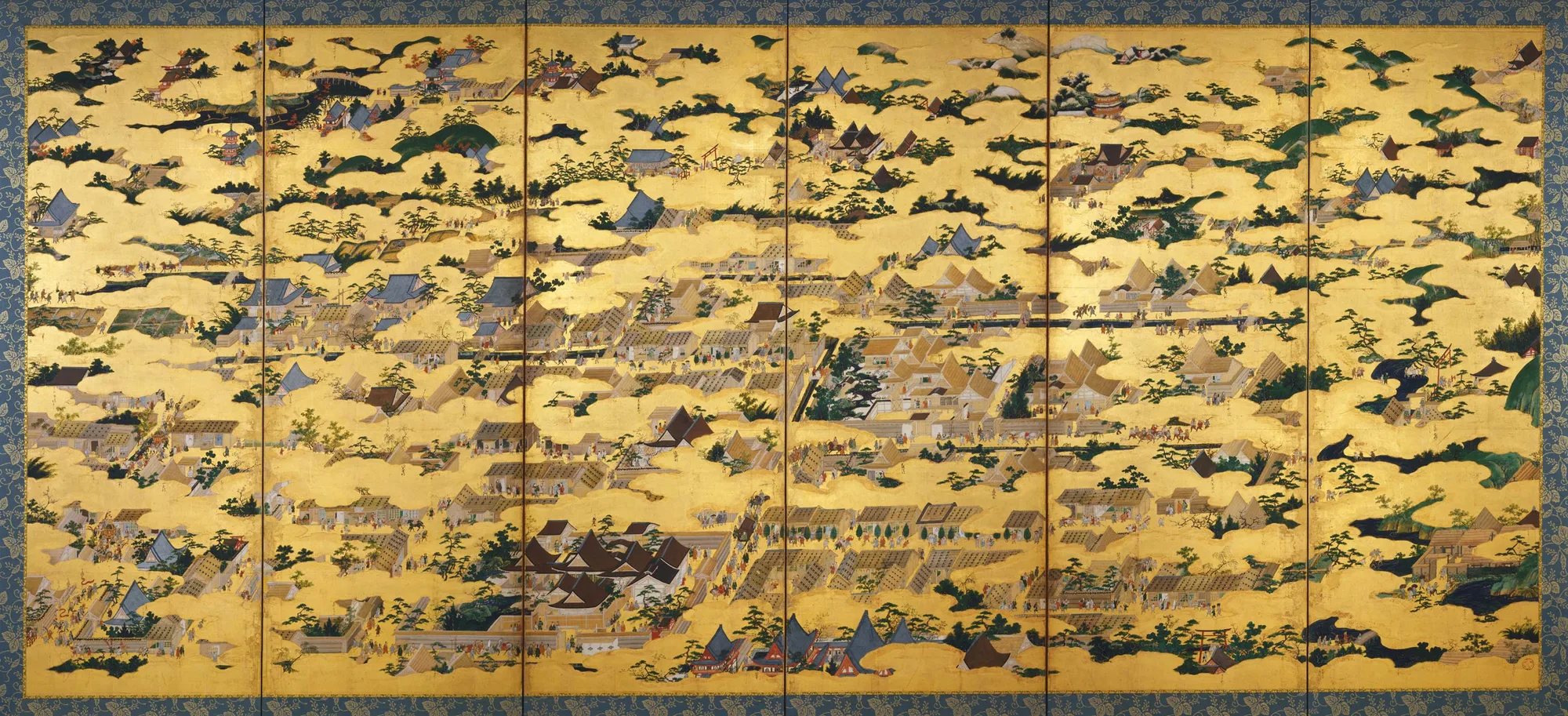
Story京都の町なか(洛中)と郊外(洛外)を、金色の雲のあいだから鳥のように見下ろして描いた屏風です。6面の屏風2つで1組になっていて、この画像は左側の1隻。京都の北側の町「上京」と、西や北の郊外の山や寺が描かれ、将軍の屋敷や武家の屋敷、祭りや商い、人びとの暮らしがぎっしりつまっています。国宝で、山形県の米沢市上杉博物館にあります。
This folding screen shows the city of Kyoto and its outskirts, seen from above between golden clouds like a bird's view. It is one of a pair of six-panel screens, and the image shows the left screen. It shows Kamigyō, the northern part of the city, and the hills and temples in the western and northern outskirts. The shogun's palace, samurai mansions, festivals, shops and daily life are packed in. It is a National Treasure, kept at the Yonezawa City Uesugi Museum in Yamagata.
有力な説では、室町幕府13代将軍・足利義輝が、まだ20代前半の狩野永徳に注文したと考えられています。上杉謙信を京都へまねく意図があったという見方もあります。ところが1565年、義輝は家臣たちにおそわれて亡くなります。その後この屏風は、1574年に織田信長から越後の上杉謙信へ贈られたと伝わります。注文から贈り物になるまでのくわしいいきさつは、まだはっきりしていません。
A leading theory holds that the shogun Ashikaga Yoshiteru ordered the screens from the young Kanō Eitoku, still in his early twenties. Some think he meant to invite Uesugi Kenshin to Kyoto. But in 1565 Yoshiteru was attacked and killed. Later, in 1574, Oda Nobunaga is said to have given the screens to Kenshin, the lord of Echigo. How they passed from the order to the gift is still not clear.
屏風はその後、上杉家に大切に伝えられ、江戸時代には米沢藩主となった上杉家とともに米沢へ。描かれた人はおよそ2500人、寺社や屋敷などの名前を記した墨書は232か所にのぼります。戦国時代の京都のすがたや人びとの暮らしを今に伝える、一級の資料です。
The screens were treasured by the Uesugi family, who later ruled the Yonezawa domain, and so they came to Yonezawa. About 2,500 people are painted on them, and there are 232 written labels naming temples, shrines and mansions. They are a first-class record of Kyoto and its people in the age of warring states.
これは上から見た京都の町です。あちこちに金色の雲がうかんでいます。家やお寺、たくさんの人が見えます。この一組の屏風には、およそ2500人が描かれています!有名な武将・織田信長が、ほかの武将へのおくり物にしました。
This is the city of Kyoto from above. Golden clouds float everywhere. You can see houses, temples and many people. About 2,500 people are in this pair of screens! The famous leader Oda Nobunaga gave them to another leader as a gift.
英語のレベルは上の「やさしい/ふつう」で切りかえられます。
えっ!?な裏ネタ
Secrets注文主とされる将軍・足利義輝は、1565年に殺されてしまいました。その後、天下取りを進める織田信長がこの屏風を手に入れ、1574年に上杉謙信へ贈ったと伝わります。強い謙信を敵にしないための贈り物だった、と考える研究者もいます。
The shogun Ashikaga Yoshiteru, who is thought to have ordered it, was killed in 1565. Later, Oda Nobunaga, who was rising to power, got the screens and is said to have sent them to Uesugi Kenshin in 1574. Some scholars think it was a gift to keep the powerful Kenshin from becoming an enemy.
左隻の右から4面目の手前には、将軍の屋敷へ向かう武家の大行列があります。輿に乗る身分の高い人物は、若いころの上杉謙信ではないか、とする説があります。もしそうなら、謙信は贈られた屏風の中に自分の姿を見つけたことになります。
On the fourth panel from the right of the left screen, a large samurai procession heads to the shogun's palace. One theory says the important person in the palanquin may be the young Uesugi Kenshin. If so, Kenshin would have found himself inside the gift he received.
研究者がこの一双に描かれた人を数えたところ、およそ2500人になりました。数え方で少しちがい、2479人とも2485人ともいわれます。お坊さん、商人、子ども、牛車をひく人まで、ひとりひとりがちがう動きをしています。
When researchers counted the people on this pair of screens, there were about 2,500. The number changes a little depending on how you count, such as 2,479 or 2,485. Monks, merchants, children and ox-cart drivers each move in their own way.
1988年、歴史学者の今谷明は、描かれた京都の景色は1547年ごろのもので、そのとき永徳はまだ4歳だったと主張し、永徳の作品ではないという説を出しました。これにほかの研究者が反論して大論争に。今は、永徳が描き信長が謙信に贈った、という説が一般的です。
In 1988, the historian Imatani Akira argued that the scenery showed Kyoto around 1547, when Eitoku was only four, so he could not have painted it. Other scholars disagreed, and a big debate began. Today, most accept that Eitoku painted it and Nobunaga gave it to Kenshin.
ここを見て!
Look Closer1将軍の屋敷へ向かう行列Procession to the shogun's palace
輿を中心に、武士たちが長い列をつくって進みます。輿の人物は若き上杉謙信だという説もあります。
Samurai march in a long line around a palanquin. Some say the person inside is the young Uesugi Kenshin.
2金色の雲Golden clouds
画面中にただよう金の雲。場面と場面をつなぎ、見せたくない部分をかくす、大切な仕かけです。
Golden clouds float everywhere. They join one scene to the next and hide parts the painter did not need to show.
3紅葉の山と橋Autumn hills and a bridge
左上には、赤い紅葉の中を流れる川と橋。町の外に広がる郊外の名所が描かれています。
At the top left, a river and a bridge among red autumn leaves. Famous spots outside the city are shown here.
4町家のならぶ通りStreets of townhouses
板ぶきの屋根がずらりとならぶ町なみ。通りには行き交う人びとが細かく描かれています。
Rows of houses with wooden roofs line the streets, full of tiny people coming and going.
英語で名画を語ろう
Talk about Art in EnglishGolden clouds float here and there over the city.
町の上のあちこちに、金色の雲がうかんでいます。
💡 「ここにもあそこにも」で「あちこちに」。順番を入れかえず here and there と言います。
英語で説明すると… Describe it
これは上から見た京都の景色です。あちこちに金色の雲がうかんでいます。雲のあいだには、家やお寺、細い通りがあります。下のほうでは、長い行列が大きな屋敷へ向かって進んでいます。
This is a view of Kyoto from above. Golden clouds float here and there. Between the clouds, there are houses, temples and narrow streets. In the lower part, a long procession is moving toward a big mansion.
考えてみよう Think & Talk
- 信長はなぜ、京都の絵をおくり物に選んだのだと思いますか?Why do you think Nobunaga chose a picture of Kyoto as a gift?
- あなたの町の屏風を作るなら、どんな場所を入れますか?If you made a screen of your town, what places would you put in it?
この作品の英単語
WordsThe folding screen shows the city of Kyoto.
その屏風には京都の町が描かれています。
A long procession heads to the palace.
長い行列が屋敷へ向かっています。
Nobunaga gave the screens as a gift.
信長は屏風をおくり物にしました。
Researchers counted about 2,500 people.
研究者は約2500人を数えました。
ミニクイズ
QuizQ. この屏風を上杉謙信に贈ったと伝えられる人物は?Who is said to have given these screens to Uesugi Kenshin?
1574年に織田信長が謙信に贈ったと伝えられています。
Oda Nobunaga is said to have given them to Kenshin in 1574.
ウソ?ホント? 金色の雲は、本当の雲の色をそのまま描いたものだ。The golden clouds show the real color of the clouds.
金の雲は、場面をつないだり区切ったりするための絵の工夫です。
The gold clouds are a painting device to join and divide scenes.
ウソ?ホント? この屏風の一双には、2000人以上の人が描かれている。More than 2,000 people are painted on this pair of screens.
数えた研究者によると、およそ2500人です。
Researchers who counted them found about 2,500.
 画像の出典とライセンス / Image credit
- PDKanō Eitoku - Rakuchū rakugai zu (Uesugi) - left screen.jpg(Wikimedia Commons)
ライセンス:Public domain(パブリックドメイン)/作者・撮影者の表記:Kanō Eitoku
この作品は、作者の死後長い年月がたち著作権の保護期間が終わった「パブリックドメイン」の作品です。画像は平面の作品を忠実に写したもので、新しい著作権は生じません(Wikimedia Commons の PD-Art の考え方)。 所蔵:米沢市上杉博物館(Yonezawa City Uesugi Museum)。画像は表示のために縮小・WebP 形式に変換しています。