

 PDF をダウンロード
Let's Look at Art!
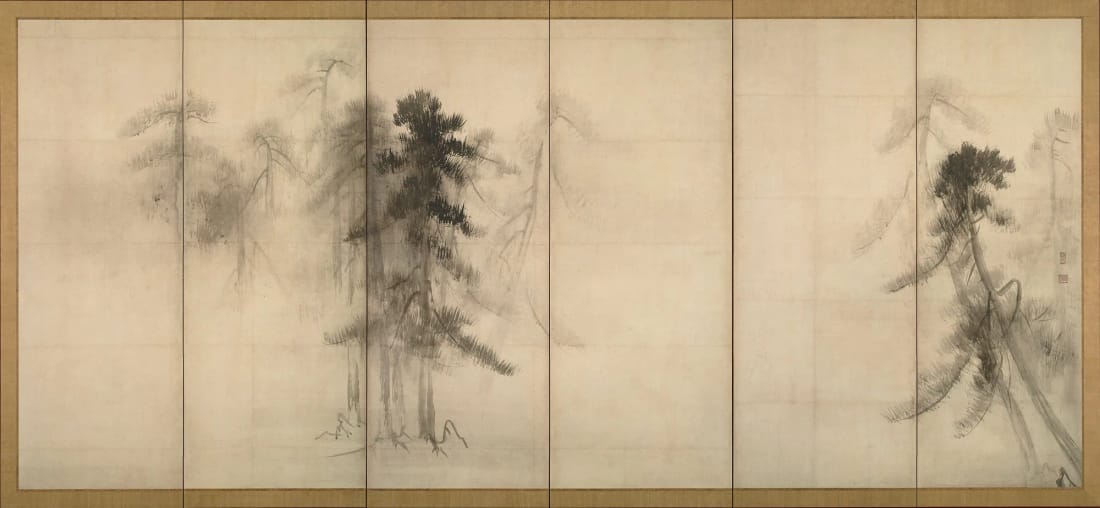
Title: Pine Trees (right screen)
Artist: Hasegawa Tōhaku (1539–1610)
Year: Late 16th century
Medium: One of a pair of six-panel folding screens; ink on paper
Museum: Tokyo National Museum, Tokyo
1 Find it! 絵の中から見つけて、○でかこもう。
- ☐ Dark pines up close
- ☐ Pines fading into mist
- ☐ Empty white space
- ☐ Leaning pine
2 First look 最初に見たときの感想を書こう。
When I first saw this painting, I felt ______________ because ______________________.
Three colors I can see: ①__________ ②__________ ③__________
3 Words — Match them. 英語と日本語を線で結ぼう。
- mist ●
- folding screen ●
- fade ●
- empty ●
- ● 霧・もや
- ● うすれる・消えていく
- ● 屏風
- ● からっぽの
Pine Trees (right screen)
4 Fill in the blanks. 下の箱から選んで、( )に入れよう。形を変えるものもあります。
- The pine trees are hidden in the .
- This screen has six panels.
- The trees into the white.
- Most of the screen is .
5 Read and answer — True or False? 英文を読んで、正しければ T、ちがえば F。
This is a big folding screen. It shows pine trees in the mist. The artist used only black ink. Most of the paper is white, but it looks like fog. It is one of the most famous ink paintings in Japan.
Pine Trees by Hasegawa Tōhaku is a National Treasure. Pine trees appear and fade in the mist, painted only in ink. It is a pair of six-panel folding screens. This is the right screen. Dark pines seem close to us, while pale ones fade into the mist. Most of the screen is simply the white of the paper.
- Pine Trees is painted only in ink. T / F
- Tōhaku was born and raised in Kyoto. T / F
6 Quiz — Choose the best answer. 正しいものを選ぼう。
What did Tōhaku call himself?
- Fifth generation of the Kano school
- Hokusai's student
- Best painter in Noto
- Fifth generation after Sesshū
Pine Trees (right screen)
7 Put the words in order. 語を正しく並べかえて、文を書こう。
- into / pine / on / mist / the / fade / the / trees / Some / left .
- a / screen / This / folding / is / ink / in / painted .
8 Complete the description. 箱の語を(1)〜(4)に入れて、絵の説明を完成させよう。
This is a folding screen (1) in ink. There are pine trees in the mist. In the middle, a group of dark (2) stands close to us. On the left, pale pines fade into the (3) (4).
9 Describe the painting in English. この絵を英語で説明しよう(3文以上)。
10 Think & Talk 考えて、ペアやグループで話し合おう。
Why do you think Tōhaku left so much empty space?
What sounds can you imagine in this pine forest?
11 My favorite part いちばん好きなところを英語で。
I like the ____________ because ____________________________.
Answers & Notes
1 Find it!
Dark pines up close=手前の濃い松/Pines fading into mist=霧にとける松/Empty white space=何もない白/Leaning pine=かたむく松
2 First look
自由に書けたら正解。I felt calm / surprised / happy … などの形容詞を使おう。
3 Words
1–a(mist=霧・もや) 2–c(folding screen=屏風) 3–b(fade=うすれる・消えていく) 4–d(empty=からっぽの)
4 Fill in the blanks
- mist The pine trees are hidden in the mist.
松の木が霧にかくれている。 - folding This folding screen has six panels.
この屏風は6枚の面がある。 - fade The trees fade into the white.
木々は白の中へ消えていく。 - empty Most of the screen is empty.
屏風の大部分はからっぽだ。
5 Read — T / F
【本文の訳】これは大きな屏風です。霧の中の松の木がえがかれています。画家は黒い墨だけを使いました。紙のほとんどは白いのに、霧のように見えます。日本でいちばん有名な水墨画のひとつです。
【本文の訳】長谷川等伯の「松林図屏風」は、霧の中に松の林がうかびあがる、墨だけで描かれた国宝の屏風です。六曲一双(6枚折りの屏風2つ)のうち、これは右側に立てる右隻(うせき)。濃い墨の松は手前に、うすい墨の松は霧の奥に見えます。画面の大部分は、何も描かれていない紙の白さです。
- T 松林図屏風は、墨だけで描かれている。
解説:色は使わず、墨のこさと紙の白さで霧と松を表しています。 - F 等伯は京都で生まれ育った。
解説:能登の七尾(石川県)に生まれ、30代で京都に出ました。
6 Quiz
D 問:長谷川等伯が自分を何と名のった?
選択肢:A 狩野五代/B 北斎の弟子/C 能登一の絵師/D 雪舟五代
解説:尊敬する雪舟の流れをつぐ者として「雪舟五代」と名のりました。
7 Put the words in order
- Some pine trees fade into the mist on the left.
左では、何本かの松が霧の中へ消えていきます。 - This is a folding screen painted in ink.
これは墨で描かれた屏風です。
💡 fade into the mist(霧の中へ消えていく):fade into ~で「~の中へうすれて消える」。fade into the night(夜にとけこむ)のようにも。
8 Complete the description
(1) painted (2) pines (3) white (4) space
9 Describe(模範解答)
This is a folding screen painted in ink. There are pine trees in the mist. In the middle, a group of dark pines stands close to us. On the left, pale pines fade into the white space.
これは墨で描かれた屏風です。霧の中に松の木があります。真ん中では、濃い色の松のむれが手前に立っています。左では、うすい松が白い空間の中へ消えていきます。
10 Think & Talk(問いの訳)
- Why do you think Tōhaku left so much empty space?
等伯はなぜ、こんなに何も描かない部分を残したのだと思いますか? - What sounds can you imagine in this pine forest?
この松林では、どんな音が聞こえてきそうですか?
正解のない問いです。理由をつけて話せたら◎。
Fun Fact(訳)
もとは下書きだった!? 紙のつぎ目がそろっていなかったり、松の配置がとぎれたりするところから、もとは襖絵などの下絵で、のちに屏風に仕立てられたのでは、という説があります。それでも名画になったのが、この作品のすごさです。
