

 ワークシート
 ぬりえ
 迷路
4500年前の「デキる会社員」!?水晶の目がどこまでも追いかけてくる。An office worker from 4,500 years ago!? His crystal eyes follow you everywhere.
この作品のお話
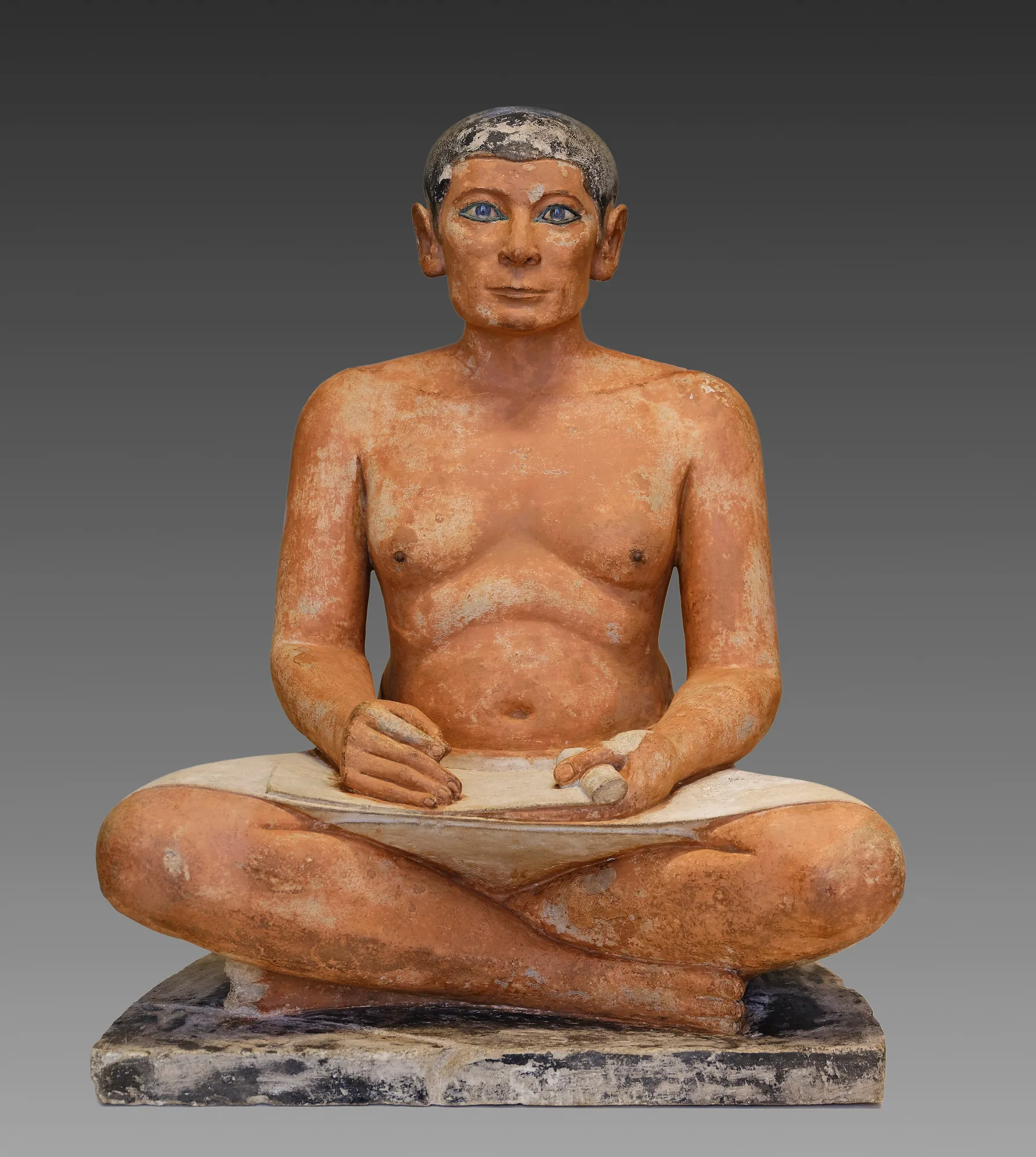
Storyあぐらをかいてすわり、ひざの上にパピルス(古代の紙)の巻物を広げた男性。字を書く仕事をする「書記」の像です。約4500年前、古代エジプトの古王国時代に作られました。1850年、フランスの考古学者オーギュスト・マリエットが、ピラミッドで知られるサッカラで発見し、今はルーヴル美術館の人気者です。
A man sits cross-legged with a papyrus scroll open on his lap. He is a scribe, a person whose job was writing. The statue was made about 4,500 years ago, in Egypt's Old Kingdom. In 1850, the French archaeologist Auguste Mariette found it at Saqqara, a place famous for pyramids. Today it is a star of the Louvre.
石灰岩をほって色をぬり、目には特別な細工がしてあります。白い石の中に、黒目となる水晶をはめこみ、銅でふちどっているのです。体も、王の像のような理想の姿ではなく、少しやわらかいおなかや胸まで本物らしく表されています。右手はもともと筆を持っていたと考えられますが、今は失われています。
The statue is carved from limestone and painted, and the eyes are very special. Rock crystal, forming the irises, is set into white stone and framed with copper. His body is not idealized like a king's statue. Even his soft belly and chest look real. His right hand probably once held a brush, but it is now lost.
これほど有名なのに、この人の名前はわかっていません。像はもともと、名前や肩書きをきざんだ大きな台石にはめこまれていたと考えられますが、その台石が見つかっていないのです。それでも、今にも話しかけてきそうな表情と生き生きとした目は、4500年の時をこえて見る人を引きつけ、古代エジプト美術の最高傑作の1つとされています。
Although he is so famous, we do not know his name. The statue probably once fitted into a larger stone base with his name and titles, but that base has not been found. Still, his lively face and shining eyes attract visitors across 4,500 years. It is one of the greatest masterpieces of ancient Egyptian art.
この男の人は書記です。字を書くのが仕事です。足を組んで床にすわっています。ひざの上に紙を広げています。目は水晶でできていて、本物のように見えます。
This man is a scribe. His job is writing. He sits on the floor with crossed legs. He has paper on his lap. His eyes are made of crystal, and they look very real.
英語のレベルは上の「やさしい/ふつう」で切りかえられます。
えっ!?な裏ネタ
Secrets目は白い石に水晶をはめこみ、銅でふちどったもの。水晶が光を受けてきらりと光るので、展示室のどこに立っても、こちらを見ているように感じると言われます。4500年前の職人の、おどろくべき技です。
The eyes are made of rock crystal set in white stone and framed with copper. The crystal catches the light, so many visitors feel he is looking at them wherever they stand.
古代エジプトの像には、ふつう名前や肩書きがきざまれます。ところがこの像には名前を示す文字が残っていません。発見当時の記録もくわしくなく、だれの像なのかは今もなぞです。
Ancient Egyptian statues usually have names and titles carved on them. But no name survives on this statue. The records from its discovery are not detailed either, so we still do not know who he was.
当時、読み書きができる人はほんのひとにぎりでした。『職業の風刺』という古代エジプトの教えの文章では、ほかの仕事の大変さを並べたてて「書記になるのが一番だ」とすすめています。
At that time, only a small number of people could read and write. An ancient Egyptian text called 'The Satire of the Trades' lists how hard other jobs are and says that being a scribe is the best.
白いこしみの(腰布)が、組んだひざの上でぴんとはって、まるで机のようになっています。その上にパピルスを広げれば、どこでもすぐに仕事ができるというわけです。書記のこの姿勢は、古代エジプトの像の決まった型の1つでした。
His white kilt is stretched tight over his crossed legs, like a little desk. With papyrus spread on top, he can start working anywhere.
ここを見て!
Look Closer1水晶の目Crystal eyes
白い石に、黒目の部分として水晶をはめこんだ目。光を受けて、生きているようにかがやきます。
Rock crystal irises are set into white stone. The eyes shine as if they were alive.
2書くための右手Writing hand
指で何かをつまむ形の右手。もとは筆を持っていたと考えられます。
His right hand seems to pinch something. It probably held a brush.
3パピルスの巻物Papyrus scroll
左手で巻いた部分をおさえ、ひざの上に広げたパピルス。書く準備は万全です。
His left hand holds the rolled part, and the papyrus is spread on his lap. He is ready to write.
4組んだ足とこしみのCrossed legs and kilt
あぐらをかいた足の上で、白い腰布がぴんとはって机の代わりになっています。
The white kilt is stretched over his crossed legs and works as a desk.
英語で名画を語ろう
Talk about Art in EnglishThe scribe sits cross-legged with a scroll on his lap.
書記はひざに巻物をのせて、あぐらをかいてすわっています。
💡 cross-legged は「足を組んだ」。床にすわる姿勢を言うときの基本表現です。
英語で説明すると… Describe it
これは床にすわっている男の人の像です。足を組み、白い腰布を身につけています。ひざの上にはパピルスの巻物があります。明るい目でまっすぐ前を見ています。
This is a statue of a man sitting on the floor. His legs are crossed, and he is wearing a white kilt. There is a papyrus scroll on his lap. He is looking straight ahead with bright eyes.
考えてみよう Think & Talk
- 書記は何を書こうと待っているのだと思いますか?What do you think the scribe is waiting to write?
- 古代では、なぜ読み書きがそんなに特別だったのでしょう?Why was reading and writing so special in ancient times?
この作品の英単語
WordsA scribe wrote letters and records.
書記は手紙や記録を書きました。
He has a papyrus scroll on his lap.
彼はひざにパピルスの巻物をのせています。
His face looks lively.
彼の顔は生き生きとしています。
Scribes recorded the king's orders.
書記は王の命令を記録しました。
ミニクイズ
QuizQ. この像の人の仕事は?What was this man's job?
パピルスを広げて筆で書く「書記」です。読み書きは特別な技能でした。
He is a scribe who wrote on papyrus. Reading and writing were special skills.
ウソ?ホント? この像の目には、水晶が使われている。Rock crystal is used in this statue's eyes.
白い石に水晶をはめこみ、銅でふちどっています。
Crystal is set into white stone and framed with copper.
ウソ?ホント? 像の台にはこの人の名前がはっきりきざまれている。His name is clearly carved on the base of the statue.
名前を示す文字は残っておらず、だれなのかはわかっていません。
No name survives, so no one knows who he was.
 画像の出典とライセンス / Image credit
- CC0Le Scribe accroupi - Musée du Louvre Antiquités égyptiennes E 3023.jpg(Wikimedia Commons)
ライセンス:CC0(パブリックドメイン提供)/作者・撮影者の表記:Shonagon
この作品は、作者の死後長い年月がたち著作権の保護期間が終わっています。写真は撮影者がパブリックドメインとして公開したもの、または著作権の保護期間が終わった古い写真です。 所蔵:ルーヴル美術館(Musée du Louvre)。画像は表示のために縮小・WebP 形式に変換しています。
