

 ワークシート
 ぬりえ
 迷路
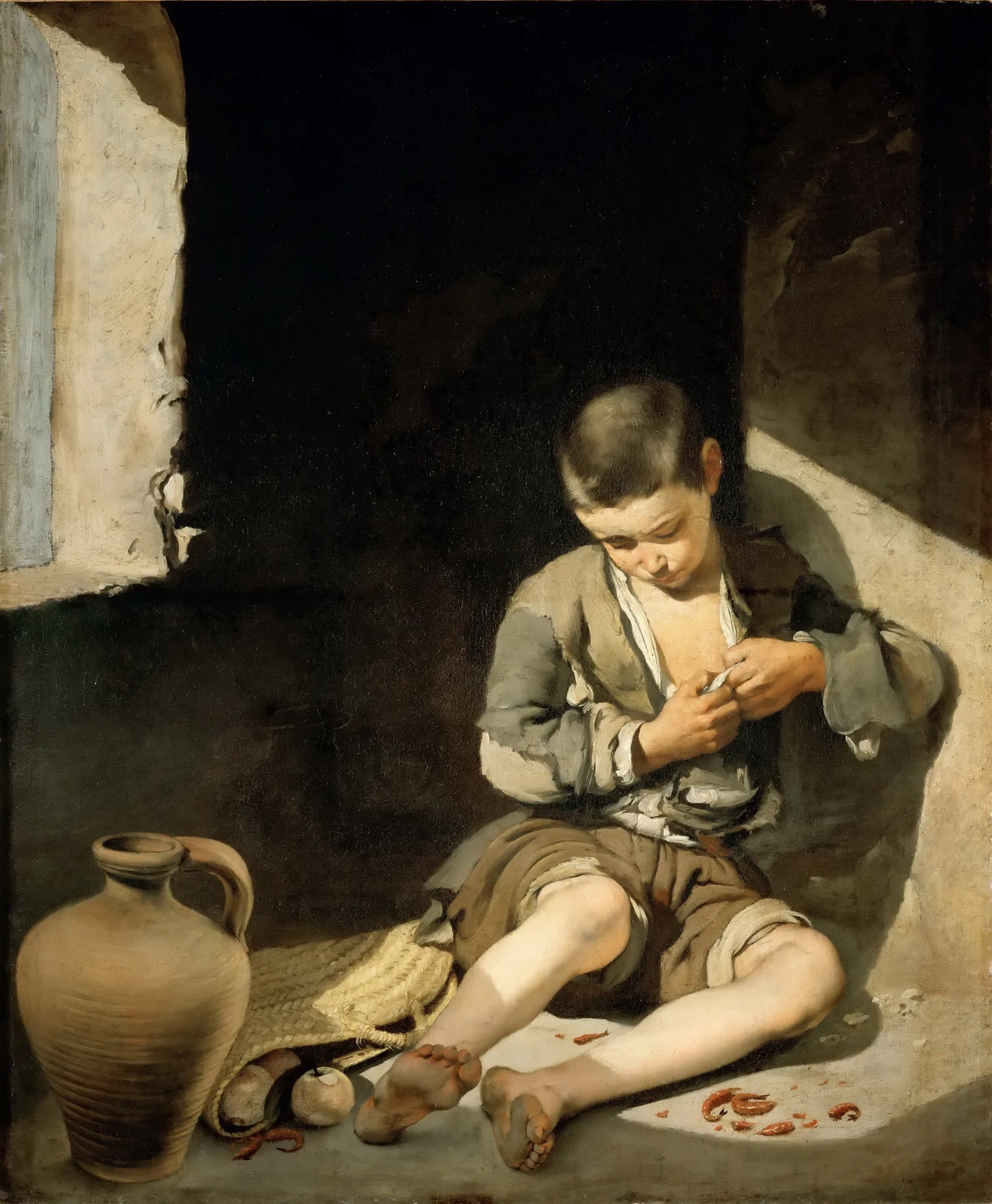
光の中でシラミとり。セビーリャの路地の、ひとりぼっちの少年。Picking lice in a patch of sunlight: a lonely boy in Seville.
この作品のお話
Story薄暗い部屋のすみ、窓から差しこむ光の中に、ぼろぼろの服の少年が座りこんでいます。うつむいて、服についたシラミをつまんでいるところです。足元にはエビのからが散らばり、そばには水がめと、りんごの入ったかご。食事をすませて、ひと息ついているのでしょう。はだしの足の裏の汚れまで、ていねいに描かれています。
In a corner of a dark room, a boy in torn clothes sits in a patch of sunlight from a window. He looks down and picks lice from his shirt. Shrimp shells lie by his feet, and there is a water jug and a basket of apples. He seems to be resting after a meal. Even the dirt on the soles of his bare feet is carefully painted.
ムリーリョは、スペインの港町セビーリャの画家です。17世紀のセビーリャは、アメリカ大陸との貿易で栄える一方、疫病や貧しさに苦しむ人も多い町でした。ムリーリョ自身も10歳ごろまでに両親を亡くしています。この絵は、町の子どもを主役にしたムリーリョの作品のうち、知られている最初のもの。暗い背景に強い光を当てる描き方には、カラヴァッジョの影響が見られます。
Murillo was a painter from Seville, a port city in Spain. In the 17th century, Seville grew rich from trade with the Americas, but many people also suffered from disease and poverty. Murillo himself lost both parents by about the age of ten. This is his first known painting of a street child. The strong light against a dark background shows the influence of Caravaggio.
ムリーリョは聖母マリアなどの宗教画の名人として知られますが、こうした町の子どもの絵は、とくにスペインの外で大人気になりました。この絵は18世紀に国王ルイ16世のコレクションに入り、のちにルーヴル美術館のものになりました。当時、王のコレクションにあったスペインの画家は、ムリーリョやベラスケスなど、ほんのわずかでした。
Murillo is famous for religious paintings, such as pictures of the Virgin Mary. But his paintings of street children became very popular, especially outside Spain. In the 18th century, this painting entered the collection of King Louis XVI and later became part of the Louvre. At that time, only a few Spanish painters, such as Murillo and Velázquez, were in the king's collection.
貧しい少年が床に座っています。くつをはいていません。窓から日の光が差しこんでいます。少年は服についた虫をとっています。エビのからを見てください。小さな食事を終えたところなのかもしれません!
A poor boy sits on the floor. He has no shoes. Sunlight comes in from a window. He is picking bugs from his shirt. Look at the shrimp shells. Maybe he just had a small meal!
英語のレベルは上の「やさしい/ふつう」で切りかえられます。
えっ!?な裏ネタ
Secretsナポレオン戦争のとき、フランスのスルト元帥はセビーリャからムリーリョの絵を大量に持ち去りました。そのうちの『無原罪の御宿り』は1852年、ルーヴル美術館が61万5300フランで買い取り、当時の絵画の最高値となりました。この絵は1941年にスペインへ返されています。
During the Napoleonic Wars, the French Marshal Soult took many Murillo paintings from Seville. In 1852, the Louvre bought one of them, "The Immaculate Conception," for 615,300 francs. It was a record price for a painting at the time. It went back to Spain in 1941.
ムリーリョは1682年、カディスの修道院の祭壇画を描いている最中に足場から落ち、そのけががもとでまもなく亡くなったと伝えられています。最後の最後まで、筆を持ち続けた画家でした。
It is said that in 1682, Murillo fell from a scaffold while painting an altarpiece for a monastery in Cádiz. He died soon after from his injuries. He was painting until the very end.
床に散らばる赤いエビのからと、かごのりんご。少年は物乞いをして、ささやかな食事にありついたあとなのかもしれません。小さな物ひとつで、絵の前後のお話まで想像させる。ムリーリョの語りのうまさです。
Red shrimp shells on the floor and apples in a basket. Maybe the boy has just had a small meal after begging. With tiny details, Murillo makes us imagine what happened before and after. He was a great storyteller.
光と影を強くくらべた描き方や、町の子どもを主役にするアイデアは、のちにイギリスのレノルズやコンスタブル、フランスのマネといった画家たちにも影響をあたえたと言われます。
The strong light and shadow, and the idea of making a street child the hero, are said to have influenced later painters, such as Reynolds and Constable in England and Manet in France.
ここを見て!
Look Closer1シラミをとる手Picking lice
うつむいて、服についたシラミを指でつまむ少年。真剣な表情です。
The boy looks down and picks lice from his shirt. He looks very serious.
2エビのからShrimp shells
床に散らばった赤いエビのから。ここでだれかが食事をしたことを思わせます。
Red shrimp shells on the floor. They suggest that someone has eaten here.
3水がめWater jug
素焼きの大きな水がめ。ざらざらした土の感じまで伝わってきます。
A big clay water jug. You can almost feel its rough surface.
4窓の光Window light
左上の窓から差しこむ光が、少年だけをスポットライトのように照らします。
Light from the window at the upper left shines on the boy like a spotlight.
英語で名画を語ろう
Talk about Art in EnglishSunlight falls on the boy and his bare feet.
日の光が、少年とそのはだしの足に当たっています。
💡 fall は「落ちる」だけでなく、光や影が「当たる・差す」ときにも使います。
英語で説明すると… Describe it
暗い部屋の床に、少年が座っています。窓から日の光が差しこんでいます。左側には、大きなかめと、りんごの入ったかごがあります。はだしの足のそばには、エビのからが落ちています。
A boy is sitting on the floor in a dark room. Sunlight is coming in from a window. On the left, there is a big jug and a basket of apples. Shrimp shells are lying near his bare feet.
考えてみよう Think & Talk
- この少年は、どんな暮らしをしていると思いますか?What do you think this boy's life is like?
- ムリーリョはなぜ、貧しい子どもを絵の主役にしたのだと思いますか?Why do you think Murillo chose a poor child as the main figure?
この作品の英単語
WordsThe young beggar sits on the floor.
物乞いの少年が床に座っています。
Many poor children lived in Seville.
セビーリャには貧しい子どもがたくさんいました。
Shrimp shells lie near his feet.
彼の足のそばにエビのからが落ちています。
The boy is resting after his meal.
少年は食事のあと休んでいます。
ミニクイズ
QuizQ. 少年がしていることは?What is the boy doing?
うつむいて、服についたシラミをつまんでいます。別名は「シラミをとる少年」です。
He is picking lice from his shirt. The painting is also called "The Lice-Ridden Boy."
ウソ?ホント? 少年はくつをはいている。The boy is wearing shoes.
はだしで、足の裏の汚れまで描かれています。
He is barefoot, and even the dirt on his feet is painted.
ウソ?ホント? この絵は、フランス国王ルイ16世のコレクションに入ったことがある。This painting was once in the collection of King Louis XVI of France.
18世紀に王のコレクションに入り、のちにルーヴル美術館のものになりました。
It joined the king's collection in the 18th century and later went to the Louvre.
 画像の出典とライセンス / Image credit
- PDBartolomé Esteban Murillo - Joven mendigo (1645-50).jpg(Wikimedia Commons)
ライセンス:Public domain(パブリックドメイン)/作者・撮影者の表記:Bartolomé Esteban Murillo/提供元:GalleriX
この作品は、作者の死後長い年月がたち著作権の保護期間が終わった「パブリックドメイン」の作品です。画像は平面の作品を忠実に写したもので、新しい著作権は生じません(Wikimedia Commons の PD-Art の考え方)。 所蔵:ルーヴル美術館(Musée du Louvre)。画像は表示のために縮小・WebP 形式に変換しています。
