

 ワークシート
 ぬりえ
 迷路
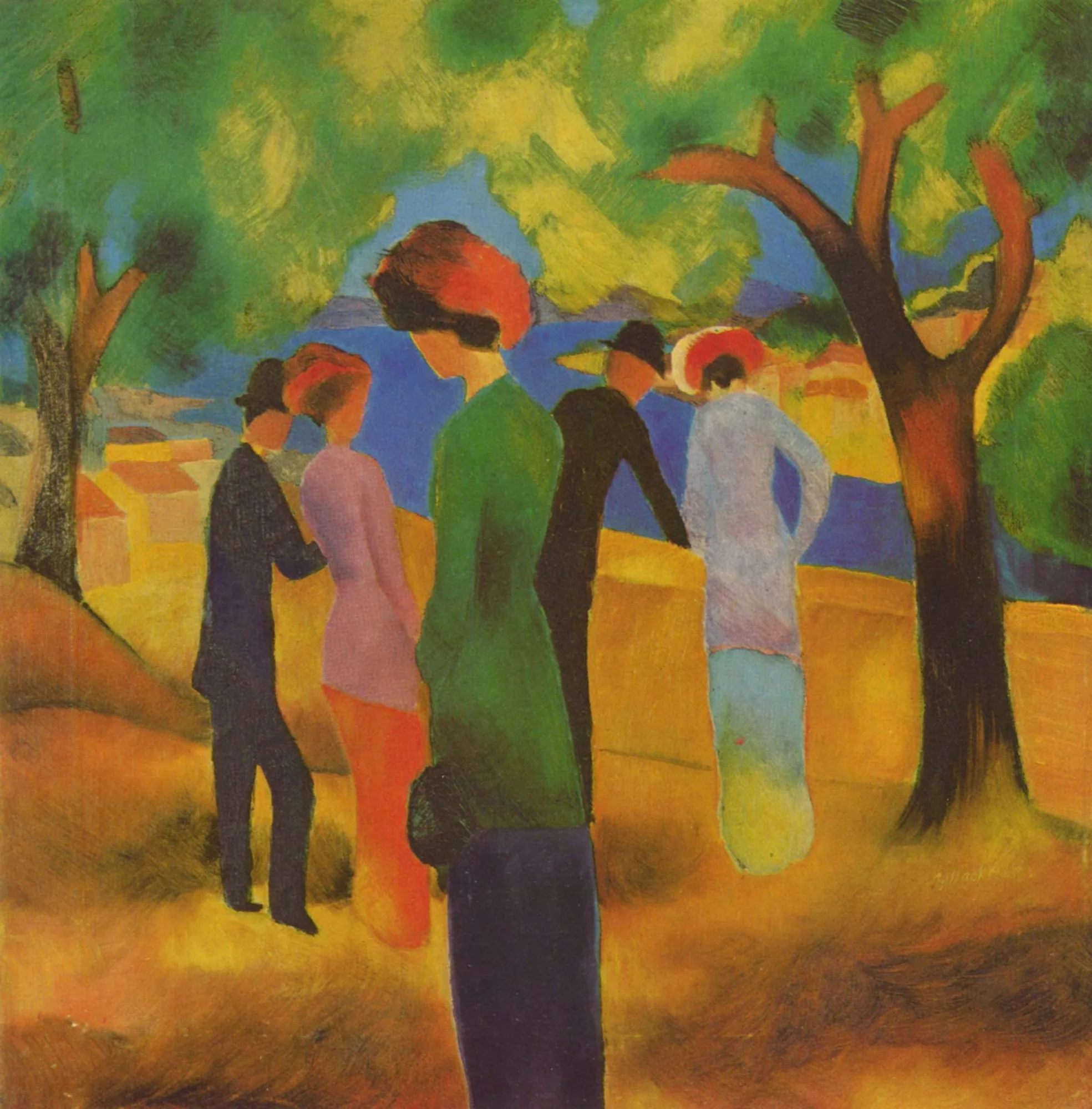
湖のほとりの散歩道。27歳で戦死した画家が残した、明るい午後。A lakeside walk: a bright afternoon by a painter who died in war at 27.
この作品のお話
Story1913年、ドイツの画家アウグスト・マッケが描いた絵です。青い湖のそば、大きな木の下に何人かの人が立っています。まん中では、緑の上着の女性がうつむきかげんに立ち、左には寄りそう男女、右には水色の服の女性。人々の顔はほとんど描かれず、緑や黄、青の明るい色の面が、ゆったりした午後の空気を伝えます。
August Macke, a German painter, made this picture in 1913. Several people stand under big trees beside a blue lake. In the middle, a woman in a green jacket looks slightly down. On the left, a man and a woman stand close together, and on the right is a woman in light blue. Their faces are hardly painted. Bright patches of green, yellow and blue give a calm afternoon feeling.
マッケは「青騎士」の画家たちと親しく、とくにフランツ・マルクとは親しい友人でした。パリで見た新しい絵画、とくにロベール・ドローネーの明るい色の面からも影響を受けています。1913年の秋にはスイスのトゥーン湖のほとりに移り住み、この絵はそこで描いた最初のころの作品のひとつとされています。
Macke was close to the artists of 'The Blue Rider', and Franz Marc was a close friend. He was also influenced by new painting he saw in Paris, especially the bright color planes of Robert Delaunay. In autumn 1913, he moved to the shore of Lake Thun in Switzerland. This painting is thought to be one of the first he made there.
1914年4月、マッケはクレーらとチュニジアを旅し、強い光の中で輝くような水彩画をたくさん描きました。しかしその年の8月に第一次世界大戦が始まり、マッケは兵士として出征します。そして9月、フランスのシャンパーニュ地方の戦場で、27歳の若さで亡くなりました。この絵は、戦争直前の静かで明るい時間を今に伝えています。
In April 1914, Macke traveled to Tunisia with Klee and others, and painted many glowing watercolors in the strong light. But in August that year, the First World War began, and Macke went to war as a soldier. In September, he was killed on a battlefield in the Champagne region of France. He was only 27. This painting keeps a calm, bright moment from just before the war.
湖のそばの木の下に人々が立っています。女の人が緑の上着を着ています。色は明るく楽しい感じです。マッケは1913年にこの絵を描きました。次の年、戦争で亡くなりました。まだ27歳でした。
People stand under trees by a lake. A woman wears a green jacket. The colors are bright and happy. Macke painted this in 1913. The next year, he died in a war. He was only 27.
英語のレベルは上の「やさしい/ふつう」で切りかえられます。
えっ!?な裏ネタ
Secrets1914年のチュニジア旅行には、マッケ、クレー、スイスの画家ルイ・モワイエが参加しました。この旅でクレーは日記に「色とわたしはひとつだ。わたしは画家だ」という意味の言葉を書いています。マッケにとっても、この旅は光と色の研究をさらに深める機会になりました。
The 1914 trip to Tunisia was made by Macke, Klee and the Swiss painter Louis Moilliet. During the trip, Klee wrote in his diary words meaning, 'Color and I are one. I am a painter.' For Macke, too, the trip deepened his exploration of light and color.
マッケが戦死したと知ったマルクは、追悼の文章の中で、マッケはわたしたちのだれよりも、色にいちばん明るく澄んだ響きを与えた、という意味のことを書きました。そのマルクも2年後、同じ戦争で命を落とします。
When Marc learned that Macke had been killed, he wrote in a farewell essay that Macke had given color the brightest and purest sound of all of them. Two years later, Marc himself was killed in the same war.
マッケの妻エリーザベトのおじ、ベルリンの実業家ベルンハルト・ケーラーは、新しい芸術を応援するコレクターでした。カンディンスキーとマルクが出した本『青騎士』の出版も、彼が資金を出して支えています。マッケはその橋渡し役でもありました。
Bernhard Koehler, a businessman in Berlin and the uncle of Macke's wife Elisabeth, was a collector who supported new art. He helped pay for the book 'The Blue Rider' by Kandinsky and Marc. Macke helped connect them.
マッケが家族と暮らし、屋根裏のアトリエで多くの作品を描いたドイツ・ボンの家は、今「アウグスト・マッケ・ハウス」として公開されています。マルクもこの家を訪れ、2人でアトリエの壁に大きな壁画を描いたこともあります。
The house in Bonn, Germany, where Macke lived with his family and painted in his attic studio, is now open as the August Macke House. Marc visited this house, and the two friends once painted a large mural together on the studio wall.
ここを見て!
Look Closer1緑の上着の女性Woman in the green jacket
画面のまん中に立つ、主役の女性。赤い帽子と緑の上着が明るくひびき合います。
The main figure stands in the center. Her red hat and green jacket shine together.
2寄りそう2人A couple
左の黒い服の男性とピンクの服の女性。顔を寄せて話しているようです。
On the left, a man in black and a woman in pink. They seem to be talking closely.
3水色の服の女性Woman in light blue
白い帽子と水色の服の女性。湖のほうを向いて、後ろ姿を見せています。
A woman in a white hat and light blue dress. She faces the lake with her back to us.
4青い湖The blue lake
人々の向こうに広がる湖。遠くの山や町も、やわらかな色の面で描かれています。
The lake spreads behind the people. Distant mountains and houses are painted as soft patches of color.
英語で名画を語ろう
Talk about Art in EnglishPeople stand in the shade of the trees.
人々は木かげに立っています。
💡 shade は日の光がさえぎられた「かげ」。人や物の形の影は shadow と言います。
英語で説明すると… Describe it
これは湖のそばの晴れた日です。何人かの人が木の下に立っています。まん中には、緑の上着に赤い帽子の女性がいます。うしろには、青い湖と山が見えます。
This is a sunny day by a lake. Some people are standing under the trees. In the middle, there is a woman in a green jacket and a red hat. Behind them, we can see a blue lake and mountains.
考えてみよう Think & Talk
- マッケはなぜ人々の顔を描かなかったのだと思いますか?Why do you think Macke did not paint the people's faces?
- 人々はどんな話をしていると思いますか?What do you think the people are talking about?
この作品の英単語
WordsThe woman wears a green jacket.
女性は緑の上着を着ています。
People stroll by the lake.
人々が湖のそばを散歩しています。
Macke loved bright colors.
マッケは明るい色が大好きでした。
Macke died on a battlefield in France.
マッケはフランスの戦場で亡くなりました。
ミニクイズ
QuizQ. 1914年にマッケがクレーらと旅した国は?Which country did Macke visit with Klee in 1914?
北アフリカのチュニジアを旅し、強い光の中で明るい水彩画を描きました。
They traveled to Tunisia in North Africa and painted bright watercolors in the strong light.
ウソ?ホント? マッケは27歳で亡くなった。Macke died at the age of 27.
1914年9月、第一次世界大戦の戦場で亡くなりました。
He was killed in the First World War in September 1914.
ウソ?ホント? 人々の顔は、まつげまで細かく描かれている。The people's faces are painted in detail, even their eyelashes.
顔はほとんど描かれず、色の面で人の形を表しています。
The faces are hardly painted. The figures are made of patches of color.
 画像の出典とライセンス / Image credit
- PDAugust Macke 005.jpg(Wikimedia Commons)
ライセンス:Public domain(パブリックドメイン)/作者・撮影者の表記:August Macke
この作品は、作者の死後長い年月がたち著作権の保護期間が終わった「パブリックドメイン」の作品です。画像は平面の作品を忠実に写したもので、新しい著作権は生じません(Wikimedia Commons の PD-Art の考え方)。 所蔵:ルートヴィヒ美術館(Museum Ludwig)。画像は表示のために縮小・WebP 形式に変換しています。
