Thursday, October 15 (archive)
Today in Japan
What day is it?
-
1948年からNewspaper Week新聞週間(10月15日〜21日)
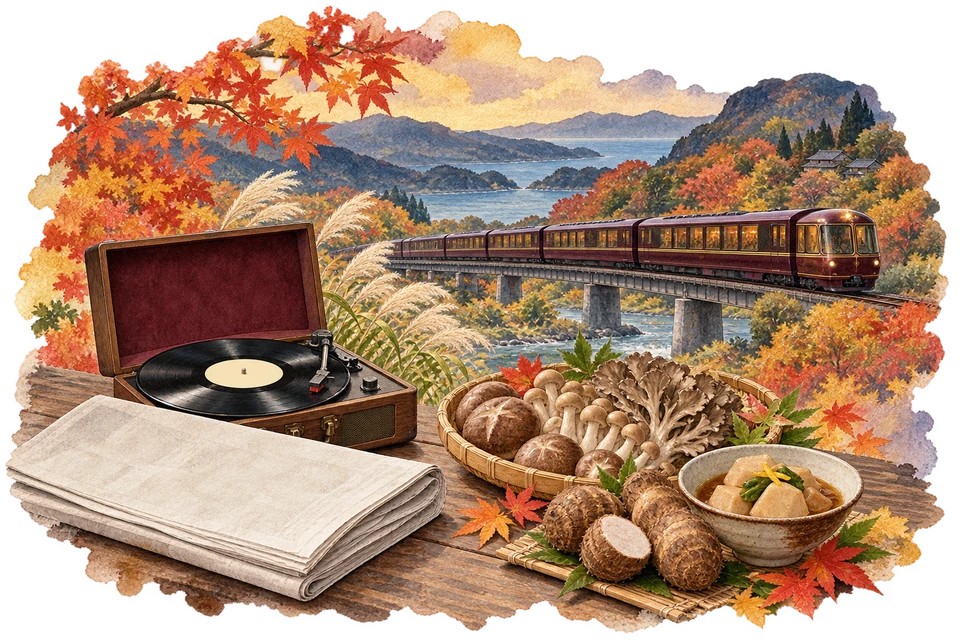
Newspaper Week starts today and runs through the 21st. The Japan Newspaper Association began it in 1948, following a suggestion from the occupation authorities and in step with National Newspaper Week in the US. The Sunday in the week is Newspaper Delivery Day, a nod to the people who bring papers to homes before sunrise.
-
1995年制定Mushroom Dayきのこの日
October is when people in Japan buy the most mushrooms, so the Japan Special Forest Product Promotion Association picked the middle of the month for Mushroom Day in 1995. Shiitake, shimeji, enoki and maitake are everyday supermarket mushrooms here. Matsutake is the famous autumn luxury, and good ones can be very expensive.
Read more › -
1961年"Ue o Muite Aruko" ("Sukiyaki") comes out「上を向いて歩こう」発売
Kyu Sakamoto's "Ue o Muite Aruko" came out in October 1961, and the 15th is usually given as the date. In the US it was released as "Sukiyaki," and in June 1963 it went to No. 1 on the Billboard Hot 100 and stayed there for three weeks. It was the first Japanese song to top that chart.
-
2013年Seven Stars in Kyushu starts running「ななつ星 in 九州」運行開始
On this day in 2013, JR Kyushu's luxury sleeper train "Seven Stars in Kyushu" made its first trip. It's a cruise train: guests stay on board for one or more nights, sleep in private suites and visit sights around Kyushu. When the first trips went on sale, more than seven times as many people applied as there were seats, so places were decided by lottery.
If someone asks you
Is the song "Sukiyaki" about food?
No, it has nothing to do with food. The Japanese title means "I look up as I walk," and it's about someone walking alone at night, looking up so the tears won't fall. When it came out in the US, it was given the title "Sukiyaki," reportedly because it was a short Japanese word that Americans already knew. It's a sad song with a cheerful tune, which may be part of why people still remember it.
Phrase of the day
I get the paper delivered every morning.
Sentence of the day
Today kicks off Newspaper Week, and it's also Mushroom Day. If someone asks you about "Sukiyaki," you can tell them it's a 1961 Japanese hit song that has nothing to do with food.
Related topics
- Food & DrinkStandard sansai to kinoko山菜ときのこwild vegetables and mushrooms from the mountains
- Food & DrinkEssential sukiyakiすき焼きbeef simmered at the table
- Pop CultureStandard tetsudo fan鉄道ファンJapan's railway enthusiasts, a hobby broad enough to include photographers, sound recorders and model builders
- Food & DrinkEssential ekiben駅弁station lunch boxes