Naoshima
the small island in the Inland Sea turned into a contemporary art site
直島(なおしま)
In one line
The shortest answer that works
Naoshima is a small island in the Inland Sea that was turned into a contemporary art destination.
直島は瀬戸内海の小さな島で、現代美術の行き先に生まれ変わった場所です。
In 30 seconds
The standard explanation
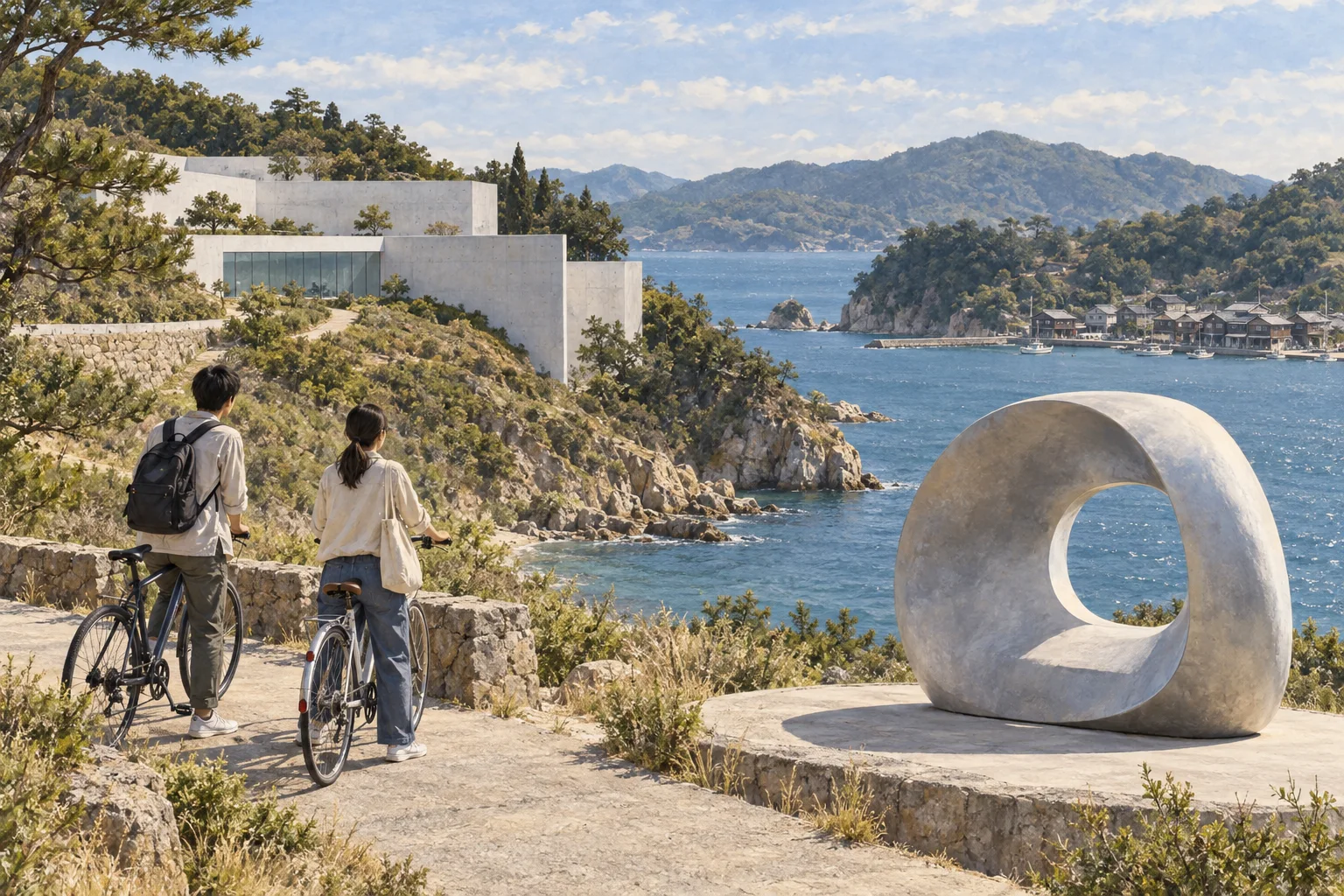
Naoshima is an island of around three thousand people in the Seto Inland Sea. From the late 1980s a publishing company and the island's town worked with the architect Ando Tadao to build museums there, some of them partly underground so as not to spoil the view. Old houses in the village were turned into artworks. It now draws visitors from all over the world.
直島は瀬戸内海にある、人口3千人ほどの島です。1980年代の終わりから、出版の会社と町が建築家の安藤忠雄と組んで美術館を建てました。景色を壊さないよう、一部を地下に埋めた建物もあります。集落の古い家は、そのまま作品になりました。いまは世界中から人が訪れます。
As a short speech
A full paragraph you can read aloud
Naoshima is a small island in the Seto Inland Sea with about three thousand residents, and it is one of the more interesting things to happen to rural Japan in the last forty years. Like many islands its population was falling and its industry was a copper smelter.
Then from the late 1980s a company and the town began building art museums there, designed by Ando Tadao, several of them sunk into the hillsides so the buildings do not dominate the landscape. Some works are permanently installed in rooms built specifically for them.
In the old village, empty houses were handed to artists and turned into works you walk inside. The image everyone knows is a large yellow pumpkin by Kusama Yayoi sitting on a pier. What I find interesting is not any single work but the argument the place is making: that art can be a reason for an island to keep existing.
直島は瀬戸内海の小さな島で、住んでいるのは3千人ほど。この40年の日本の地方に起きたことの中でも、とりわけ面白い例です。ほかの多くの島と同じく人口は減り、産業は銅の製錬所でした。そこへ1980年代の終わりから、会社と町が美術館を建て始めます。
設計は安藤忠雄で、いくつかは斜面に埋め込まれ、建物が風景を圧倒しないようにしてあります。その作品のためだけに造られた部屋に、恒久的に置かれている作品もあります。集落では、空き家が作家に託され、中を歩ける作品になりました。
誰もが知っている絵は、桟橋に置かれた草間彌生の黄色いかぼちゃでしょう。私が面白いと思うのは個々の作品より、この島が投げかけている主張です。芸術は、島が在り続ける理由になりうる、という。
Questions people actually ask
And how to answer them.
Do I need to know about art to enjoy it?
No. A lot of the work is about light, space and the sea rather than art history. The buildings themselves and the walk between them are half the experience.
要りません。多くの作品は美術史というより、光と空間と海についてのものです。建物そのものと、その間を歩くことが体験の半分です。
Is photography allowed?
Often not, inside the museums. Several works depend on your eyes adjusting to darkness over several minutes, which a phone screen ruins for everyone in the room.
館内は禁じられていることが多いです。暗さに目が慣れるまで数分かかることを前提にした作品があり、画面の光はその部屋の全員の邪魔になります。
What is the art festival?
The Setouchi Triennale spreads works across a dozen islands every three years. During it, ferries and villages that are usually quiet fill with visitors, and works appear in places with no museum at all.
瀬戸内国際芸術祭が3年に一度、十いくつの島に作品を広げます。その間は、ふだん静かな船や集落が人でいっぱいになり、美術館のない場所にも作品が現れます。
Phrases you can use
- About three thousand people live here.ここには3千人ほどが住んでいます。
- Some of the museums are built into the ground.地面に埋め込まれた美術館もあります。
- Old houses in the village were made into artworks.集落の古い家が、そのまま作品になりました。
- You get here by ferry.ここへはフェリーで来ます。
- Photography is usually not allowed inside.館内はたいてい撮影できません。
Words you need
- contemporary art現代美術
- installationインスタレーション
- ferryフェリー
- depopulation過疎
- smelter製錬所
Watch
From YouTubeBackground (Japanese)
直島は香川県に属し、人口はおよそ3千人。島の北部には大正時代から続く銅の製錬所があり、島の経済を支えてきた。1980年代後半からベネッセと町が現代美術による島づくりを進め、安藤忠雄の設計による宿泊施設と美術館が建てられた。地中美術館は2004年に開館し、景観を損なわないよう建物の大部分が地下にある。集落の空き家を作品にする「家プロジェクト」は1998年に始まった。瀬戸内国際芸術祭は2010年に始まり、3年ごとに開かれている。