Momotaro
the boy born from a peach who goes to fight demons
桃太郎(ももたろう)
In one line
The shortest answer that works
Momotaro is a boy born from a peach who sails to an island to defeat demons.
桃太郎は桃から生まれた男の子で、島へ渡って鬼を退治する話です。
In 30 seconds
The standard explanation
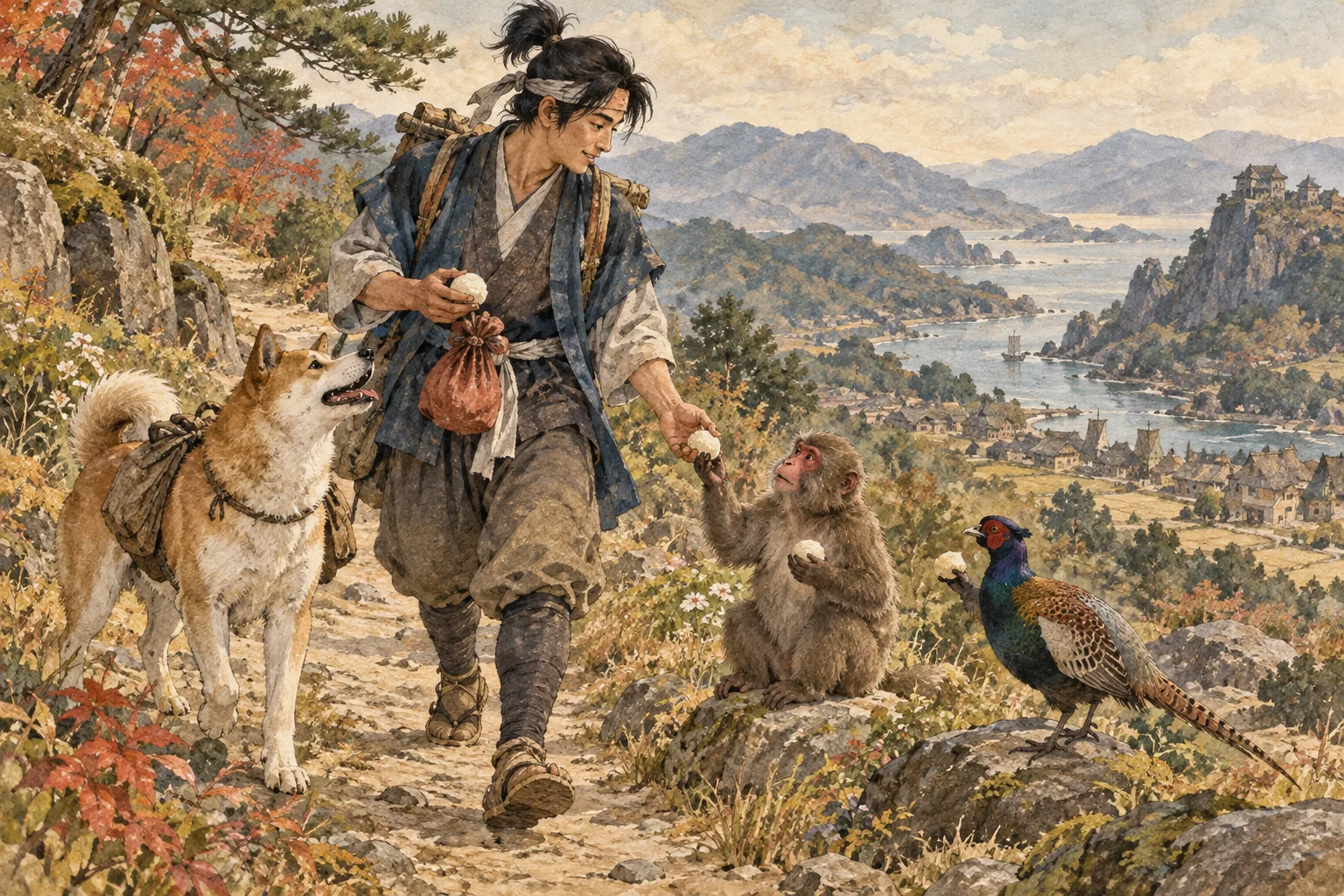
An old couple find a giant peach in the river. Inside is a boy. He grows up strong, takes millet dumplings from his mother, and sets off for Demon Island. On the way a dog, a monkey and a pheasant join him in exchange for a dumpling each. They defeat the demons and bring back treasure.
老夫婦が川で大きな桃を拾います。中には男の子。強く育ち、母からきび団子をもらって鬼ヶ島へ向かいます。道中、犬、猿、雉が団子ひとつずつで仲間になります。鬼を退治し、宝を持ち帰ります。
As a short speech
A full paragraph you can read aloud
Momotaro is one of the first stories Japanese children learn, and it is worth knowing because adults use it constantly as a metaphor. An old woman washing clothes in a river sees a huge peach float by; she takes it home, and when she and her husband cut it open a boy is inside.
He grows up unusually strong, announces he is going to Demon Island, and his mother makes him millet dumplings for the journey. A dog, a monkey and a pheasant each ask for a dumpling and join him. They cross the sea, defeat the demons, and return with the treasure the demons had stolen.
In business writing, a leader who assembles a team of specialists is sometimes compared to Momotaro gathering his dog, monkey and pheasant. There is a harder reading too: during the war the story was used in propaganda, with Japan as Momotaro, and scholars have written about how a tale of invading an island and taking treasure was put to that use.
桃太郎は日本の子どもが最初に覚える話の一つで、大人がたとえとして使い続けるので、知っておく値打ちがあります。川で洗濯をしていた老婆が、大きな桃が流れてくるのを見つけます。持ち帰って夫と割ると、中から男の子。
並外れて強く育ち、鬼ヶ島へ行くと言い出します。母はきび団子を持たせます。犬と猿と雉が、団子ひとつと引き換えに仲間になります。海を渡り、鬼を倒し、鬼が奪っていた宝を持ち帰ります。
ビジネスの文章では、専門家を集めてチームを作る人が、犬と猿と雉を集める桃太郎にたとえられることがあります。もっと重い読み方もあります。戦時中、この話は宣伝に使われ、日本が桃太郎に重ねられました。島へ攻め入って宝を取る話が、どう使われたのかについては研究があります。
Questions people actually ask
And how to answer them.
Why a peach?
Peaches were believed to drive away evil, an idea that came from China and appears in the oldest Japanese chronicles, where peaches are thrown to repel pursuers from the underworld.
桃には邪気を祓う力があると考えられていたからです。中国から入った考えで、日本の古い神話にも、黄泉の追手に桃を投げて退ける場面があります。
Which town claims him?
Okayama is the best known claimant, tied to a local legend about a prince defeating an ogre, and the city sells millet dumplings as its souvenir. Several other places make claims too.
いちばん知られているのは岡山で、鬼を退治した皇子の伝説と結びつけられ、きび団子を土産にしています。ほかにも名乗る土地がいくつかあります。
Is the story controversial?
Some of it. Modern retellings soften the ending, and picture books now sometimes have the demons apologize rather than be destroyed. Its wartime use as propaganda is also discussed in schools and scholarship.
あります。いまの絵本は結末を和らげ、鬼が滅ぼされるのではなく謝る形にするものもあります。戦時中に宣伝に使われたことも、学校や研究で論じられます。
Phrases you can use
- He was born from a peach found in a river.川で拾った桃から生まれました。
- A dog, a monkey and a pheasant joined him.犬と猿と雉が仲間になりました。
- Each joined for one millet dumpling.どれもきび団子ひとつで仲間になりました。
- They went to Demon Island and brought back treasure.鬼ヶ島へ行き、宝を持ち帰りました。
- We use it for a leader who gathers a team.仲間を集める人のたとえに使います。
Words you need
- peach桃
- millet dumplingきび団子
- pheasant雉
- to subdue, to defeat退治する
- treasure宝
Watch
From YouTubeBackground (Japanese)
桃太郎の話が文字の形で現れるのは江戸時代で、それ以前の伝承ははっきりしない。桃が邪気を祓うという考えは中国から伝わり、『古事記』では伊邪那岐命が黄泉の追手に桃を投げて退ける場面がある。岡山県が名乗るのは、吉備津彦命が温羅という鬼を討ったという伝説による。明治の国定教科書に採られたことで筋が全国的にそろい、戦時中には宣伝の題材にもなった。近年の絵本では、鬼を滅ぼさず和解させる結末も作られている。