mizu ni nagasu
letting the past wash away
水に流す(みずにながす)
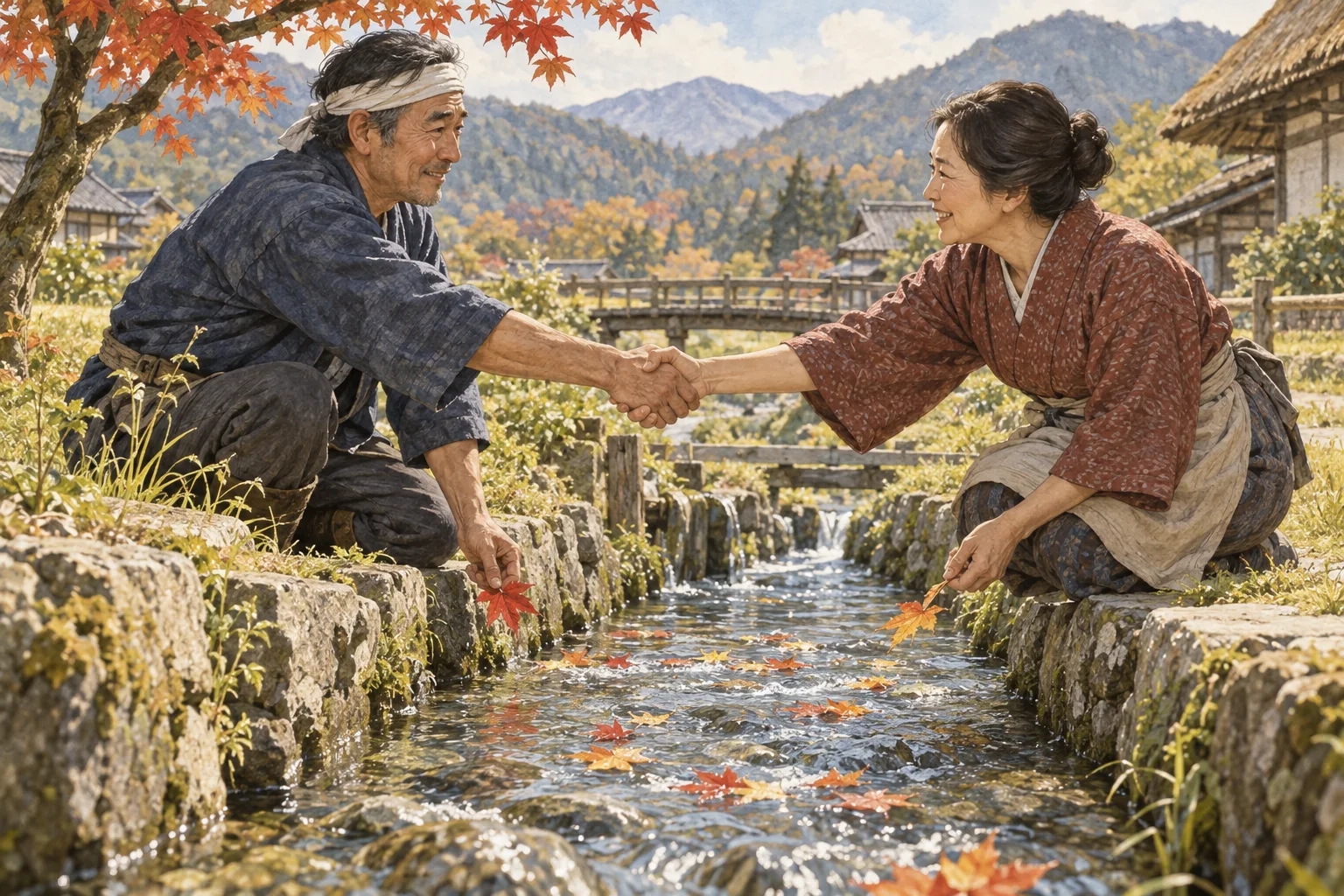
In one line
The shortest answer that works
Mizu ni nagasu means agreeing to let a past quarrel wash away and never raise it again.
水に流すとは、過去のわだかまりを流してしまい、二度と持ち出さないという合意です。
In 30 seconds
The standard explanation
To let something flow away in water means to put a past dispute behind you completely. It is not quite forgiveness, because nobody has to admit fault or be pardoned. It is a mutual agreement to treat the matter as gone, and the strong implication is that neither side will bring it up again.
水に流すとは、過去のもめごとを完全に後ろに置くことです。許しとは少し違います。誰かが非を認める必要も、赦される必要もないからです。その件はもうないものとして扱うという互いの合意であり、どちらももう持ち出さないという含みが強くあります。
As a short speech
A full paragraph you can read aloud
Mizu ni nagasu literally means to let something flow away in water, and it is what Japanese people say when they want to close a dispute. It is worth distinguishing from forgiveness. Forgiveness in the English sense usually implies that one side did wrong, admitted it, and was pardoned by the other. Mizu ni nagasu skips all of that.
Nobody has to be declared at fault, no apology is strictly required, and the matter is simply treated as having been carried off. The important half of the expression is the commitment that follows: once something has been let flow, raising it again is a serious breach, and doing so will be held against you rather than against the original offense.
The image comes from water as a purifier, which runs through Shinto practice, where rinsing the hands and mouth removes impurity. It also has a limit worth stating: it works for quarrels and misunderstandings, not for serious harm.
水に流すは文字どおり、水に流してしまうという意味で、日本人がもめごとを終わらせたいときに言う言葉です。許しとは区別しておく価値があります。英語で言う許しは、ふつう一方が悪いことをし、それを認め、他方から赦されるという筋道を含みます。水に流すはそれをすべて飛ばします。
誰が悪いと定める必要も、厳密には謝罪も要らず、その件はただ流れていったものとして扱われます。この言い方の大事な後半は、そのあとに続く約束です。いったん流したことを蒸し返すのは重い違反で、もとの過ちよりも、蒸し返したことのほうが咎められます。
この像は水を清めるものとする考えから来ていて、手と口をすすいで穢れを落とす神道の作法にも通じます。限界も言っておく必要があります。これは口論や行き違いには働きますが、重い加害には働きません。
Questions people actually ask
And how to answer them.
So it's the same as forgive and forget?
Close, but forgive and forget still names a wrongdoer. Mizu ni nagasu can be agreed without establishing who was at fault, which is often exactly why it is useful: it lets both sides step back without either having to lose.
近いですが、許して忘れるという言い方は、なお誰が悪かったかを名指します。水に流すは、非がどちらにあるかを決めずに合意できます。それがしばしば便利な理由でもあります。どちらも負けずに引ける形になるからです。
What happens if someone brings it up again?
It is treated as a real breach of trust, and there is a word for it, mushikaesu, literally to reheat something by steaming it again. Bringing back a settled matter usually damages the relationship more than the original dispute did.
信義に反する行いとして扱われ、そのための言葉もあります。「蒸し返す」です。いったん収めた話を持ち出すことは、たいてい、もとのもめごとよりも関係を傷つけます。
A common misunderstanding
MYTHIt means Japanese people avoid dealing with problems.
FACTIt is a way of closing a matter rather than of ignoring it, usually used after the dispute has been aired. Its limit is that it is not appropriate for serious harm, and using it there is criticized in Japan too.
Phrases you can use
- Let's put it behind us.水に流しましょう。
- Neither of us brings it up again.お互い、もう蒸し返さないことにしましょう。
- Nobody has to be declared at fault.どちらが悪いと決めなくていいのです。
- Bringing it up again would be worse.蒸し返すほうが問題です。
Words you need
- to let go of水に流す
- to bring up again蒸し返す
- disputeもめごと
- to reconcile和解する
Watch
From YouTubeBackground (Japanese)
水が穢れを洗い流すという考えは神道の禊に通じ、参拝前の手水や、大相撲の力士が口をすすぐ所作にも見られます。「水に流す」はその発想を人間関係に移した言い方です。似た言い方に「なかったことにする」がありますが、こちらは一方的に無視する含みがあり、印象が悪くなります。反対の動きを表すのが「蒸し返す」で、済んだ話を再び持ち出すことを指します。ビジネスの場では「今後に生かしましょう」といった言い換えが使われることもあります。