ki ga kiku
noticing what's needed and acting on it without being asked
気が利く(きがきく)
In one line
The shortest answer that works
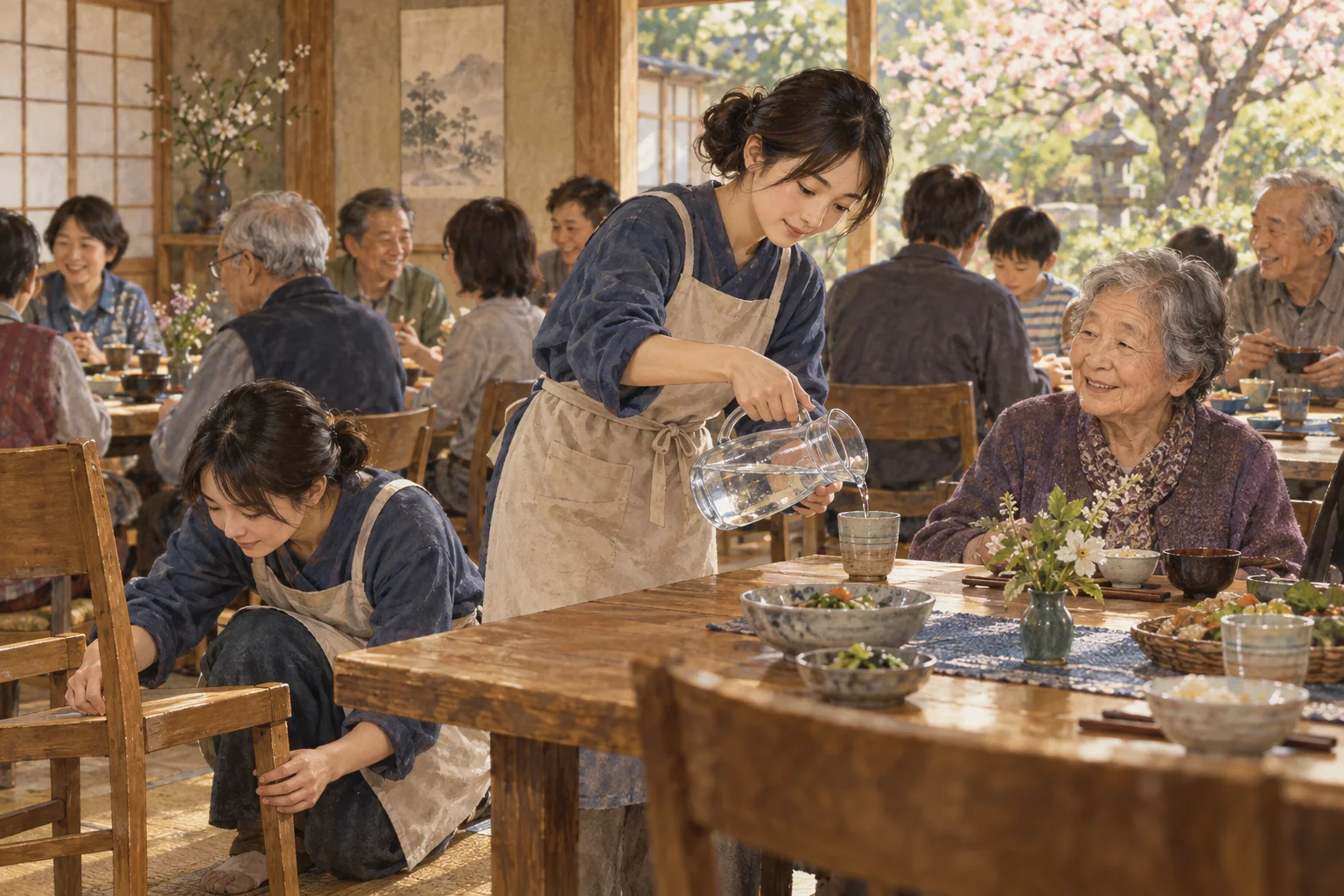
Ki ga kiku describes someone who notices what's needed and quietly takes care of it before being asked.
気が利くとは、頼まれる前に必要なことに気づいて、さりげなく手を打つ人を表す言葉です。
In 30 seconds
The standard explanation
A person described as ki ga kiku is the one who refills the teapot before it's empty, hands you a tissue before you ask, or notices a guest is cold and adjusts the air conditioning without a word. It is one of the highest compliments in everyday Japanese, valued in service jobs, at home and in the office alike. The opposite, ki ga kikanai, describes someone who misses these cues entirely.
気が利く人とは、お茶が切れる前に注ぎ足したり、聞かれる前にティッシュを差し出したり、客が寒そうにしていると気づいて黙って冷房を調整したりする人のことです。日常の日本語の中でも高い部類の褒め言葉で、接客の仕事でも、家庭でも、職場でも重んじられます。反対の「気が利かない」は、こうした合図にまったく気づかない人を表します。
As a short speech
A full paragraph you can read aloud
Ki ga kiku is a compliment you hear constantly in Japan, and it is worth understanding because it points to a real skill that gets tested daily. Literally the phrase means something like "the spirit works," and it describes someone who reads a small, unstated need and quietly handles it before being asked — pouring more tea, moving a chair out of someone's path, noticing a colleague is swamped and picking up part of the work without an announcement.
It differs slightly from kikubari, which is the broader habit or attitude of paying attention to others; ki ga kiku is more often used to praise a specific, quick, well-timed action in the moment. It is prized in service work, where a good waiter is expected to refill a glass without being flagged down, but it applies just as much at home and in an office, and being told you are ki ga kiku is a genuine compliment on your judgment, not just your kindness.
気が利くという褒め言葉は、日本で本当によく耳にする言葉で、毎日のように試される実際の技能を指しているという点で知っておく価値があります。文字どおりには「気が働く」という意味で、口に出されない小さな必要に気づき、頼まれる前に黙って手を打つ人を表します。お茶を注ぎ足す、人の通り道から椅子をどけておく、同僚が手一杯なのに気づいて言わずに仕事の一部を引き受ける、といった場面です。
より広く「他人に注意を払う姿勢や習慣」を指す気配りとは少し違い、気が利くは、その場その場の、機を捉えた具体的な行動を褒めるときに使われることが多い言葉です。接客の仕事では重んじられ、よい店員は呼ばれる前にグラスを満たすことが期待されますが、家庭や職場でも同じように大事にされ、気が利くと言われることは、優しさだけでなく判断力そのものへの本物の褒め言葉になります。
Questions people actually ask
And how to answer them.
How is this different from kikubari?
Kikubari is the broader habit of paying attention to others' needs; ki ga kiku more often praises a specific, well-timed action someone actually takes. You can have kikubari as a general attitude and still be told you weren't ki ga kiku in one particular moment.
気配りは他人の必要に注意を払う、より広い習慣です。気が利くは、実際にとった具体的で間のよい行動を褒めることが多い言葉です。気配りという姿勢はあっても、ある一場面で「気が利かなかった」と言われることはあり得ます。
Can you learn to be ki ga kiku, or is it just personality?
Both are mentioned. Some people are naturally observant, but service jobs and apprenticeships spend real time training staff to notice specific cues, which suggests it is at least partly learnable.
どちらも語られます。もともと観察力のある人もいますが、接客業や見習いの現場では、決まった合図に気づく訓練に実際に時間をかけており、少なくとも部分的には身につけられるものとされています。
Is there a downside to being ki ga kiku all the time?
People sometimes describe it as tiring, since it means constantly scanning a room for unstated needs. It can also tip into being seen as overbearing if you act before someone actually wanted help.
口に出されない必要を常に見張っている状態になるため、疲れると言われることがあります。相手が本当は望んでいないのに先回りして動くと、お節介に見えてしまうこともあります。
Phrases you can use
- That's so thoughtful of you, thank you.気が利きますね、ありがとうございます。
- She noticed before anyone said anything.誰も言う前に彼女は気づいていました。
- Sorry, I wasn't paying enough attention.気が利かなくてすみません。
- That was a thoughtful thing to do.気の利いたことをしてくれましたね。
- He always has an extra one ready, just in case.彼はいつも念のため、もう一つ余分に用意しています。
Words you need
- thoughtful, attentive気が利く
- inattentive, oblivious気が利かない
- consideration, attentiveness気配り
- to notice, to be aware気づく
- to act ahead of time先回りする
Watch
From YouTubeBackground (Japanese)
「気が利く」は、目に見えない相手の必要をとっさに読み取り、頼まれる前に対応することを指す表現で、接客業の教育でよく取り上げられる資質のひとつとされる。似た言葉に「気配り」「心配り」「気が回る」があり、微妙にニュアンスが異なるとされるが、明確な線引きがあるわけではなく、使う人や場面によって重なり合う。反対の「気が利かない」は日常でよく使われる軽い非難で、悪意より不注意を指すことが多い。