goshuin
a calligraphic seal stamped at a shrine or temple
御朱印(ごしゅいん)
In one line
The shortest answer that works
A goshuin is a hand-written seal a shrine or temple gives you as proof you visited and prayed.
御朱印とは、参拝した証として神社やお寺が手書きで授ける印のことです。
In 30 seconds
The standard explanation
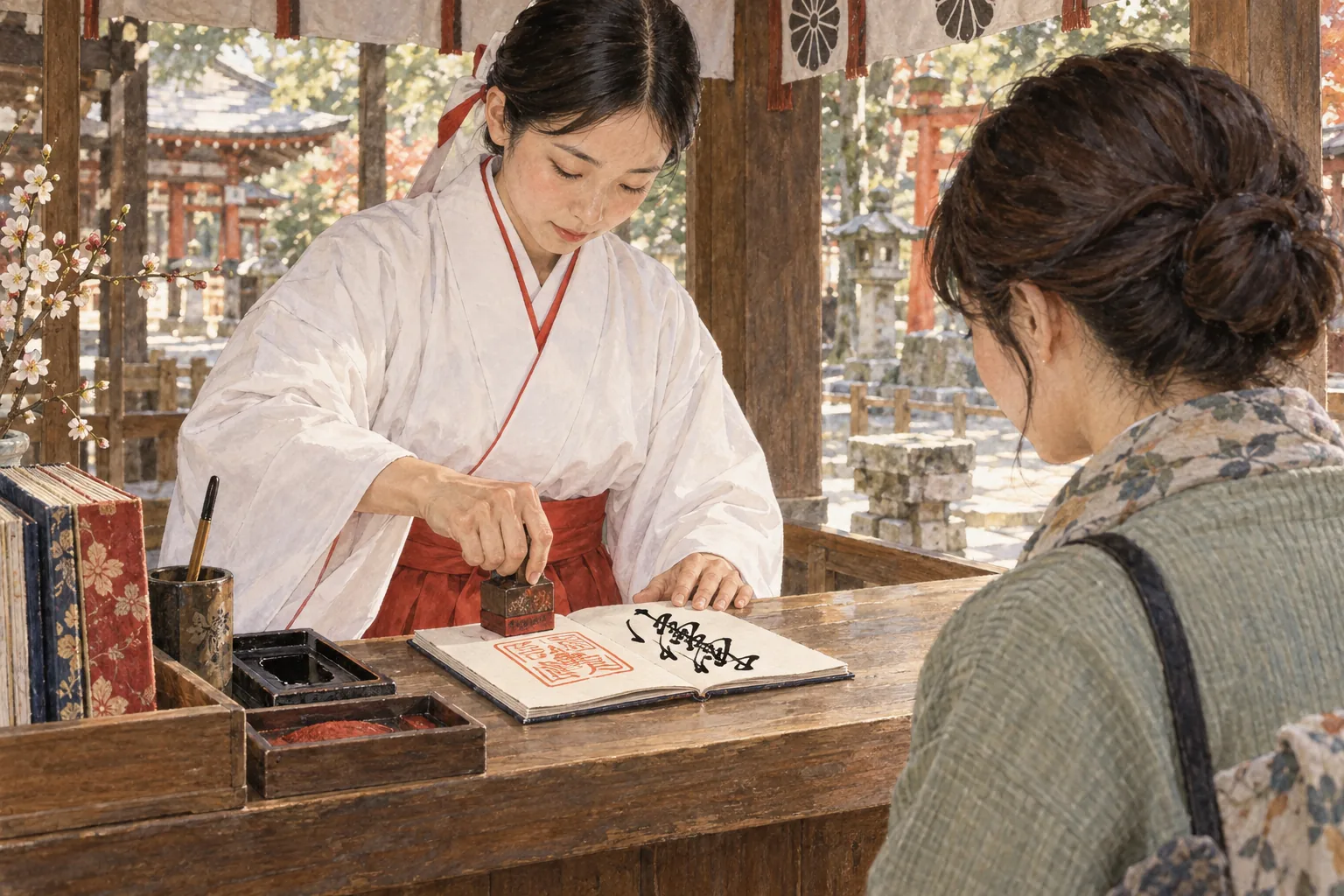
A goshuin is a page of calligraphy and red seals, written for you by hand at a shrine or temple office. You bring a special accordion-fold book, hand it over after praying, and it is written while you wait. It is a record of worship, not a tourist stamp, so you are expected to pray first and to treat the finished book with care.
御朱印は、墨書と朱印を組み合わせた一枚で、神社やお寺の授与所で手書きしてもらいます。蛇腹折りの専用の帳面を持っていき、参拝したあとに預けると、その場で書いてくれます。観光スタンプではなく参拝の記録なので、先にお参りし、できた帳面も丁寧に扱うことが求められます。
As a short speech
A full paragraph you can read aloud
A goshuin is something worth knowing about if you visit a lot of shrines and temples. You buy a book called a goshuincho, which folds like an accordion, and at each place you visit you hand it in at the office.
Someone writes the name of the shrine and the date in brush calligraphy and stamps it with red seals, usually while you wait, and you pay a small amount. Each one is different, written by hand, so no two books are alike. There is one thing to get right.
This is a record of having worshipped, not a stamp rally, so you pray first and collect afterwards. Some places have had to put up signs about this because of visitors treating it as a collectible. Done properly, though, a goshuincho becomes a genuinely personal record of where you went and when.
神社やお寺をいくつも回るなら、御朱印は知っておく価値があります。蛇腹折りの「御朱印帳」を用意し、訪れた先の授与所で預けます。社名や寺名と日付を筆で書き、朱印を押してくれます。
たいていその場で書かれ、少額を納めます。一枚ずつ手書きなので、同じ帳面は二つとありません。一つだけ守りたいことがあります。これは参拝の記録であってスタンプラリーではないので、先にお参りしてから受けます。
収集品として扱う人が増え、注意書きを掲げる寺社も出ました。正しく続ければ、御朱印帳はどこにいつ行ったかの、まったく個人的な記録になります。
Questions people actually ask
And how to answer them.
Can I use a normal notebook?
It is better not to. The proper book uses thick paper that does not bleed, and some places will decline to write in anything else. They are sold at most large shrines and at stationery shops.
やめたほうがよいです。専用の帳面は墨がにじまない厚い紙を使っており、それ以外には書かないという寺社もあります。大きな神社や文具店で買えます。
Should I keep shrine and temple seals in the same book?
Most places do not mind, but some temples prefer to keep them separate, so serious collectors carry two books. If you only want one, that is usually fine.
気にしない寺社が大半ですが、分けることを望む寺もあるため、熱心な人は2冊持ちます。1冊にまとめても、たいていは問題ありません。
How much does it cost?
Typically 300 to 500 yen. It is called an offering rather than a price, and many places now ask for the exact amount in a tray.
300〜500円程度が一般的です。代金ではなく「納める」お金とされ、近年はお釣りの出ないよう受け皿に用意するよう求める寺社も増えました。
Phrases you can use
- Please pray first, then come for the seal.先にお参りしてから、御朱印をお受けください。
- You'll need a proper goshuincho book.専用の御朱印帳が必要です。
- It's written by hand while you wait.その場で手書きしてくれます。
- Each one is different.一枚ずつ違います。
- It's a record of worship, not a souvenir stamp.参拝の記録であって、観光スタンプではありません。
Words you need
- calligraphy書、筆文字
- seal / stamp印、朱印
- accordion-fold book蛇腹折りの帳面
- worship (verb)参拝する
- collect集める
Watch
From YouTubeBackground (Japanese)
御朱印の起源は、写経を寺に納めた証として受け取った「納経印」にあるとされる。そのため今も「納経帳」という呼び方が残る地域があり、四国八十八箇所の巡礼では納経帳が使われる。神社で御朱印が広まったのは近代になってからで、寺のほうが歴史は古い。2010年代に御朱印集めが流行し、限定御朱印を目当てにした行列や、転売が問題になった寺社もある。書き手が不在のときは、あらかじめ書かれた紙を渡す「書き置き」で対応することが多い。なお御朱印帳は、持ち主が亡くなったときに棺に納める風習がある地域もある。