
 8分
 朗読 Auntie Em
 原文そのまま

 PDFで印刷(A4 9まい)
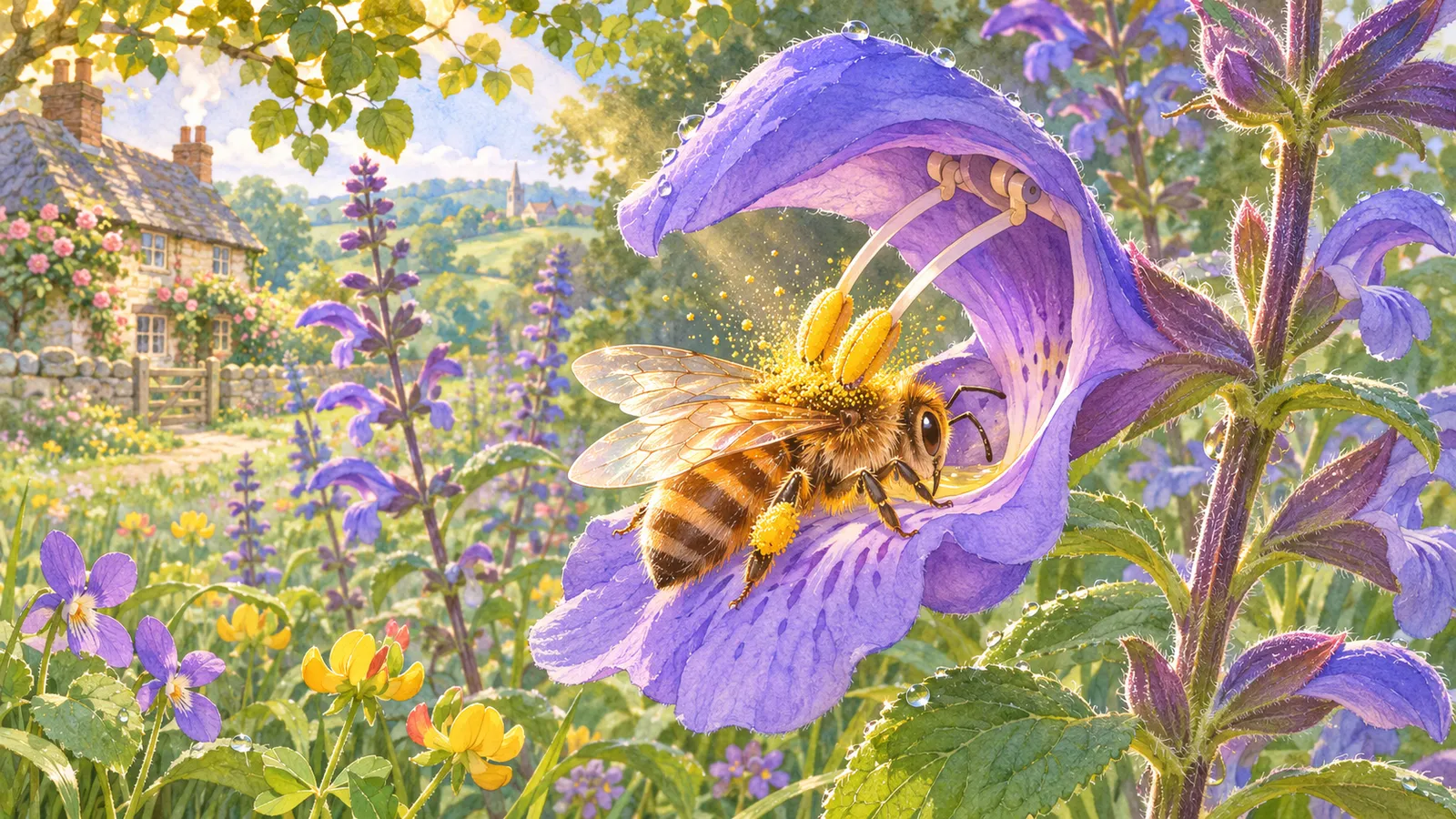
Do you remember how we noticed at the beginning of the lecture that a bee always likes to visit the same kind of plant in one journey?講義のはじめに、ハチは1回の旅で同じ種類の植物ばかりをおとずれたがる、と気づいたのをおぼえていますか? You see now that this is very useful to the flowers.これが花にとってとても役に立つことが、もうわかりますね。 If the bee went from a dead-nettle to a geranium, the dust would be lost, for it would be of no use to any other plant but a dead- nettle.もしハチがオドリコソウからフウロソウへ行ったら、花粉はむだになってしまいます。オドリコソウの花粉は、オドリコソウ以外の植物には何の役にも立たないからです。 But since the bee likes to get the same kind of honey each journey, she goes to the same kind of flowers, and places the pollen-dust just where it is wanted.でも、ハチは1回の旅で同じ種類のみつをとりたがるので、同じ種類の花に行き、花粉をちょうど必要な所においてくるのです。
There is another flower, called the Salvia, which belongs to the same family as our dead-nettle, and I think you will agree with me that its way of dusting the bee's back is most clever.サルビアという、オドリコソウと同じなかまの花がもう1つあります。サルビアがハチのせなかに花粉をまぶすやり方は、とてもかしこいと、みなさんもきっと思うでしょう。 The Salvia (Fig.サルビア(図 60) is shaped just like the dead-nettle, with a hood and a broad lip, but instead of four stamens it has only two, the other two being shrivelled up.60)は、ずきんと広いくちびるがあって、オドリコソウとそっくりの形をしていますが、おしべは4本ではなく2本しかありません。のこりの2本はしなびてしまっているのです。 The two that are left have a very strange shape, for the stalk or filament of the stamen is very short, while the anther, which is in most flowers two little bags stuck together, has here grown out into a long thread, with a little dust-bag at one end only.のこった2本は、とてもかわった形をしています。おしべのじく(花糸)はとても短いのに、ふつうの花では2つの小さなふくろがくっついてできているやくが、ここでは長い糸のようにのびて、その片方のはしにだけ、小さな花粉ぶくろがついているのです。 In 1, Fig.1の絵(図 60, you only see one of these stems, because the flower is cut in half, but in the whole flower, one stands on each side just within the lip.60)では、花を半分に切ってあるので、このじくは1本しか見えませんが、花全体では、くちびるのすぐ内側の左右に1本ずつ立っています。 Now, when the bee puts her head into the tube to reach the honey, she passes right between these two swinging anthers, and knocking against the end pushes it before her and so brings the dust-bag plump down on her back, scattering the dust there! you can easily try this by thrusting a pencil into any Salvia flower, and you will see the anther fall.さて、ハチがみつにとどこうとしてつつに頭を入れると、ぶらぶらゆれる2本のやくのちょうど間を通ります。そして、はしにぶつかっておしていくので、花粉ぶくろがハチのせなかにどすんとおりてきて、花粉をまきちらすのです!どのサルビアの花でも、えんぴつをさしこんでみれば、かんたんにためせます。やくがたおれてくるのが見えるでしょう。
You will notice that all this time the be does not touch the sticky stigma which hangs high above her, but after the anthers are empty and shrivelled the stalk of the stigma grows longer, and it falls lower down.そのあいだずっと、ハチは高い所にぶら下がっているねばねばした柱頭にはふれないことに注意してください。でも、やくが空っぽになってしなびると、柱頭のじくがのびて、柱頭が低くたれ下がってきます。 By-and-by another bee, having pollen on her back, comes to look for honey, and as she goes into No. 3, she rubs against the stigma and leaves upon it the dust from another flower.やがて、せなかに花粉をつけた別のハチがみつをさがしにやってきます。そして3の花に入っていくとき、柱頭にこすれて、ほかの花からの花粉をそこにのこしていくのです。
Tell me, has not the Salvia, while remaining so much the same shape as the dead-nettle, devised a wonderful contrivance to make use of the visits of the bee?どうでしょう、サルビアは、オドリコソウとほとんど同じ形のままなのに、ハチの訪問を利用するすばらしいしかけを考え出したと思いませんか?
The common sweet violet (Viola odorata) or the dog violet (Viola canina), which you can gather in any meadow, give up their pollen-dust in quite a different way from the Salvia, and yet it is equally ingenious.どの野原でもつめるニオイスミレ(Viola odorata)やイヌスミレ(Viola canina)は、サルビアとはまったくちがうやり方で花粉をわたしますが、同じくらいよくできています。 Everyone has noticed what an irregular shape this flower has, and that one of its purple petals has a curious spur sticking out behind.この花がふぞろいな形をしていて、むらさきの花びらの1まいのうしろに、ふしぎなつのがつき出していることには、だれでも気づいています。 In the tip of this spur and in the spur of the stamen lying in it the violet hides its honey, and to reach it the bee must press past the curious ring of orange-tipped bodies in the middle of the flower.このつのの先と、その中に入っているおしべのつのに、スミレはみつをかくしています。それにとどくには、ハチは花のまん中にある、先がオレンジ色のふしぎな輪の横をおし通らなければなりません。 These bodies are the anthers, Fig.これらがやくです(図 61, which fit tightly round the stigma, so that when the pollen-dust, which is very dry, comes out of the bags, it remains shut in by the tips as if in a box.61)。やくは柱頭のまわりにぴったりとはまっているので、とてもかわいた花粉がふくろから出てきても、先っぽにとじこめられて、箱の中に入っているようになります。 Two of these stamens have spurs which lie in the coloured spur of the flower, and have honey at the end of them.おしべのうち2本には、花の色のついたつのの中に入るつのがあって、その先にみつがあります。 Now, when the bee shakes the end of the stigma, it parts the ring of anthers, and the fine dust falls through upon the insect.さて、ハチが柱頭の先をゆらすと、やくの輪が開いて、細かい花粉がハチの上にこぼれ落ちるのです。
Let us see for a moment how wonderfully this flower is arranged to bring about the carrying of the pollen, as Sprengel pointed out years ago.シュプレンゲルがずっと前に明らかにしたように、この花が花粉を運ばせるために、どれほどみごとにできているかを、ちょっと見てみましょう。 In the first place, it hangs on a thin stalk, and bends its head down so that the rain cannot come near the honey in the spur, and also so that the pollen-dust falls forward into the front of the little box made by the closed anthers.まず、花は細いくきにぶら下がって頭をたれているので、雨がつのの中のみつに近づけません。また、花粉が、とじたやくでできた小さな箱の前のほうに落ちるようにもなっています。 Then the pollen is quite dry, instead of being sticky as in most plants.次に、花粉は、たいていの植物のようにねばねばしておらず、すっかりかわいています。 This is in order that it may fall easily through the cracks.これは、すきまから落ちやすくするためです。 Then the style or stalk of the stigma is very thin and its tip very broad, so that it quivers easily when the bee touches it, and so shakes the anthers apart, while the anthers themselves fold over to make the box, and yet not so tightly but that the dust can fall through when they are shaken.そして、柱頭のじく(花柱)はとても細く、先はとても広いので、ハチがふれるとかんたんにふるえて、やくをゆすって開きます。いっぽう、やくは折り重なって箱をつくっていますが、ゆすられたら花粉がこぼれ落ちるくらいには、ゆるくなっています。 Lastly, if you look at the veins of the flower, you will find that they all point towards the spur where the honey is to be found, so that when the sweet smell of the flower has brought the bee, she cannot fail to go in at the right place.最後に、花のすじを見ると、どれもみつのあるつののほうを指しているのがわかるでしょう。だから、花のあまいにおいにひかれてハチがやってくると、まちがいなく正しい場所から中に入ることになるのです。
Two more flowers still I want us to examine together, and then I hope you will care to look at every flower you meet, to try and see what insects visit it, and how its pollen-dust is carried.あと2つ、いっしょに調べたい花があります。そのあとは、みなさんが出会う花をどれも見てみたくなって、どんな虫がおとずれるのか、花粉がどう運ばれるのかを調べたくなってくれるとうれしいです。 These two flowers are the common Bird's-foot trefoil (Lotus corniculatus), and the Early Orchis (Orchis mascula), which you may find in almost any moist meadow in the spring and early summer.その2つの花とは、ふつうのセイヨウミヤコグサ(Lotus corniculatus)と、早ざきのラン、オルキス(Orchis mascula)です。どちらも春から初夏にかけて、しめった野原ならたいていどこでも見つかります。
The Bird's-foot trefoil, Fig.セイヨウミヤコグサ(図 62, you will find almost anywhere all through the summer, and you will know it from other flowers very like it by its leaf, which is not a true trefoil, for behind the three usual leaflets of the clover and the shamrock leaf, it has two small leaflets near the stalk.62)は、夏のあいだじゅう、ほとんどどこでも見つかります。よくにたほかの花とは、葉で見分けられます。この葉は本当の三つ葉ではありません。クローバーやシャムロックの葉と同じふつうの3まいの小葉のうしろに、くきの近くに、小さな小葉がもう2まいあるのです。 The flower, you will notice, is shaped very like the flower of a pea, and indeed it belongs to the same family, called the Papilionaceae or butterfly family, because the flowers look something like an insect flying.花は、気づくと思いますが、エンドウの花にとてもよくにた形をしています。じっさい同じなかまで、パピリオナケア(チョウ形花のなかま)とよばれます。花が、虫が飛んでいる姿に少しにているからです。
In all these flowers the top petal stands up like a flag to catch the eye of the insect, and for this reason botanists call it the "standard".こうした花ではどれも、一番上の花びらが旗のように立って、虫の目をひきます。そのため植物学者は、これを「旗弁(スタンダード)」とよびます。 Below it are two side-petals called the "wings," and if you pick these off you will find that the remaining two petals are joined together at the tip in a shape like the keel of a boat.その下に「つばさ(ウイング)」とよばれる横の花びらが2まいあり、これをとりのぞくと、のこりの2まいの花びらが先でくっついて、ボートの船底の背ぼね(キール)のような形になっているのがわかります。 For this reason they are called the "keel".そのため、これは「キール」とよばれます。 Notice as we pass that these two last petals have in them a curious little hollow or depression, and if you look inside the "wings" you will notice a little knob that fits into this hollow, and so locks the two together.ついでに注目しておきたいのは、この2まいの花びらに、ふしぎな小さなくぼみがあることです。「つばさ」の内側を見ると、このくぼみにはまる小さな出っぱりがあって、2つをしっかりつなぎとめているのがわかります。 We shall see by-and-by that this is important.これが大事だということが、あとでわかります。
Next let us look at the half-flower when it is cut open, and see what there is inside.次に、花をたてに切った半分を見て、中に何があるか見てみましょう。 There are ten stamens in all, enclosed with the stigma in the keel; nine are joined together and one is by itself.おしべは全部で10本あり、柱頭といっしょにキールの中に包まれています。9本はくっついていて、1本だけはなれています。 The anthers of five of these stamens burst open while the flower is still a bud, but the other stamens go on growing, and push the pollen-dust, which is very moist and sticky, right up into the tip of the keel.このうち5本のおしべのやくは、花がまだつぼみのうちにはじけて開きますが、ほかのおしべはのび続けて、とてもしめってねばねばした花粉を、キールの先までおし上げます。 Here you see it lies right round the stigma, but as we saw before in the geranium, the stigma is not ripe and sticky yet, and so it does not use the pollen grains.ここで花粉は柱頭のまわりをぐるりと取りまいていますが、前にフウロソウで見たように、柱頭はまだ熟しておらず、ねばねばしていないので、その花粉を使いません。
Now suppose that a bee comes to the flower.さて、ハチが花にやってきたとしましょう。 The honey she has to fetch lies inside the tube, and the one stamen being loose she is able to get her proboscis in. but if she is to be of any use to the flower she must uncover the pollen-dust.ハチがとりに来たみつはつつの中にあり、1本のおしべがはなれているおかげで、ハチはストローのような口をさしこむことができます。でも、花の役に立つためには、ハチは花粉をむき出しにしなければなりません。 See how cunningly the flower has contrived this.花がこれをどんなにうまく工夫しているか、見てください。 In order to put her head into the tube the bee must stand upon the wings, and her weight bends them down. but they are locked to the keel by the knob fitting in the hole, and so the keel is pushed down too, and the sticky pollen- dust is uncovered and comes right against the stomach of the bee and sticks there!つつに頭を入れるには、ハチはつばさの上に立たなければならず、ハチの重みでつばさがおし下げられます。でも、つばさは出っぱりがくぼみにはまってキールとつながっているので、キールもいっしょにおし下げられ、ねばねばした花粉がむき出しになって、ハチのおなかにぴったりあたって、くっつくのです! As soon as she has done feeding and flies away, up go the wings and the keel with them, covering up any pollen that remains ready for next time.ハチがみつをすいおえて飛び去るとすぐ、つばさがもち上がり、キールもいっしょに上がって、のこった花粉をおおいかくし、次のときのために用意します。 Then when the bee goes to another flower, as she touches the stigma as well as the pollen, she leaves some of the foreign dust upon it, and the flower uses that rather than its own, because it is better for its seeds.そしてハチが別の花へ行くと、花粉だけでなく柱頭にもふれるので、よその花の花粉をそこにのこしていきます。花は自分の花粉よりもそちらを使います。そのほうが種にとってよいからです。 If however no bee happens to come to one of these flowers, after a time the stigma becomes sticky and it uses its own pollen: and this is perhaps one reason why the bird's-foot trefoil is so very common, because it can do its own work if the bee does not help it.けれども、もしこの花にハチが1ぴきも来なければ、しばらくすると柱頭がねばねばしてきて、自分の花粉を使います。セイヨウミヤコグサがこれほどよく見られるのは、ハチが手伝ってくれなくても自分で仕事ができるからかもしれません。
Now we come lastly to the Orchis flower.さて、最後にオルキスの花です。 Mr. Darwin has written a whole book on the many curious and wonderful ways in which orchids tempt bees and other insects to fertilize them.ダーウィンは、ランがハチやほかの虫をよびよせて受粉させる、たくさんのふしぎですばらしい方法について、まるまる1さつの本を書きました。 We can only take the simplest, but I think you will say that even this blossom is more like a conjuror's box than you would have supposed it possible that a flower could be.ここでは一番かんたんなものしかとり上げられませんが、この花でさえ、花がこんなものになれるとは思いもしなかったほど、手品師の箱のようだと言いたくなるでしょう。