 7分
 朗読 Auntie Em
 原文そのまま

 PDFで印刷(A4 9まい)
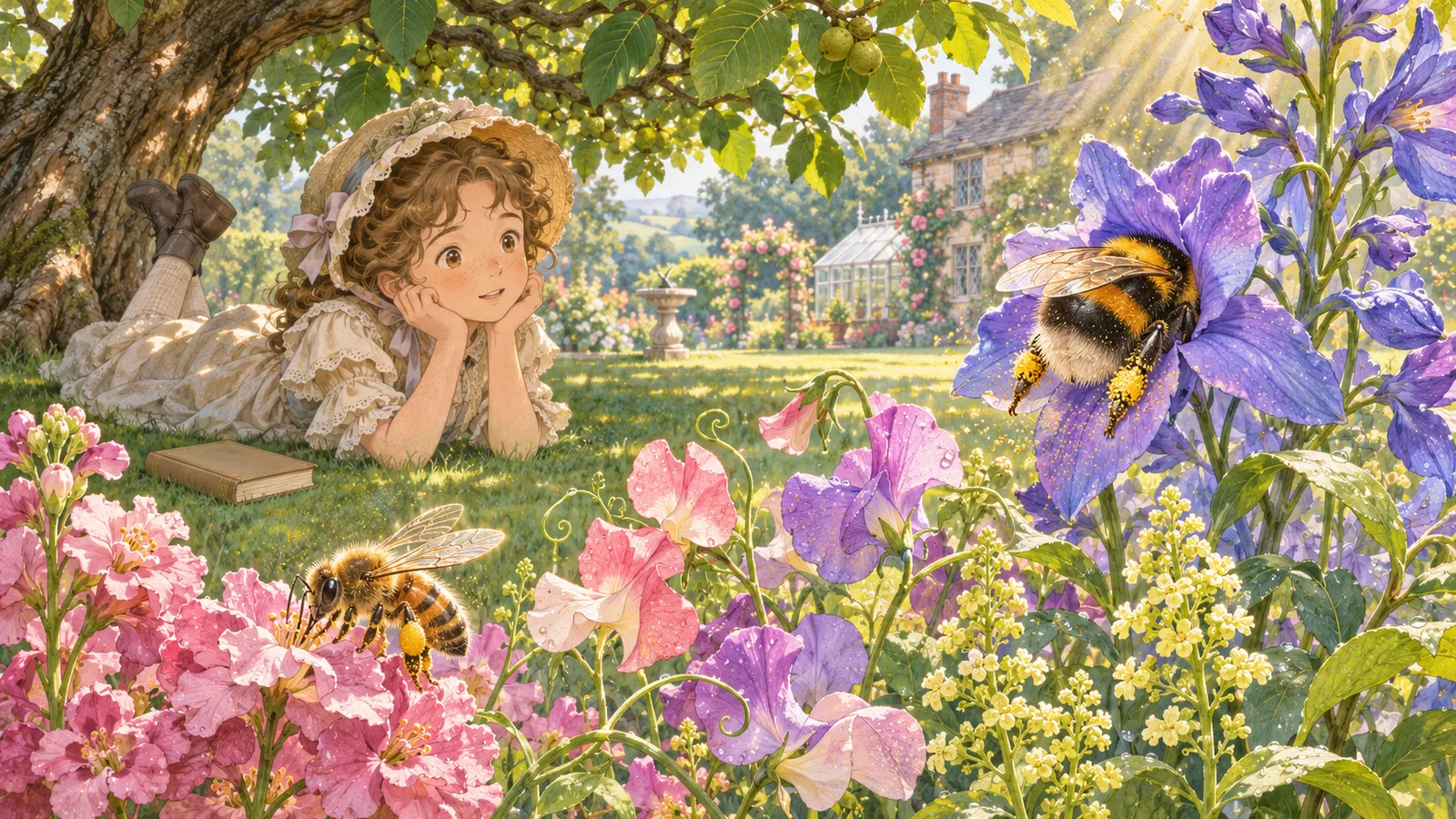
Whatever thoughts each one of you may have brought to the lecture to-day, I want you to throw them all aside and fancy yourself to be in a pretty country garden on a hot summer's morning.きょうの講義に、みなさんがそれぞれどんな考えを持ってきたとしても、それはみんなわきに置いて、暑い夏の朝に、きれいないなかの庭にいるところを思いうかべてください。 Perhaps you have been walking, or reading, or playing, but it is getting too hot now to do anything; and so you have chosen the shadiest nook under the old walnut-tree, close to the flower-bed on the lawn, and would almost like to go to sleep if it were not too early in the day.さっきまで散歩をしたり、本を読んだり、遊んだりしていたかもしれませんが、もう暑すぎて何をする気にもなりません。そこで、しばふの上の花だんのそば、古いクルミの木の下の、一番日かげになるすみっこをえらびました。まだ朝早くなければ、ついうとうとしてしまいそうです。
As you lie there thinking of nothing in particular, except how pleasant it is to be idle now and then, you notice a gentle buzzing close to you, and you see that on the flower-bed close by, several bees are working busily among the flowers.そこに横になって、ときどきのんびりするのはなんていい気持ちだろう、ということのほかは何も考えずにいると、すぐそばでブーンというやさしい音がして、近くの花だんで何びきかのハチが、花の間をいそがしくはたらいているのに気づきます。 They do not seem to mind the heat, nor to wish to rest; and they fly so lightly and look so happy over their work that it does not tire you to look at them.ハチたちは暑さも気にならないようすで、休みたいとも思っていないようです。とても軽やかに飛び、とても楽しそうに仕事をしているので、見ていてもちっともつかれません。
That great humble-bee takes it leisurely enough as she goes lumbering along, poking her head into the larkspurs, and remaining so long in each you might almost think she had fallen asleep.あの大きなマルハナバチは、ずいぶんのんびりしたものです。のっそりと進みながら、ヒエンソウの花に頭をつっこみ、1つ1つの花にあんまり長くいるので、ねむってしまったのかと思うほどです。 The brown hive-bee on the other hand, moves busily and quickly among the stocks, sweet peas, and mignonette.いっぽう、茶色のミツバチは、ストック、スイートピー、モクセイソウ(ミニョネット)の間を、いそがしく、すばやく動き回っています。 She is evidently out on active duty, and means to get all she can from each flower, so as to carry a good load back to the hive.このハチは、どう見ても仕事の最中で、たくさんの荷物を巣に持ち帰れるように、1つ1つの花からとれるだけとろうとしています。 In some blossoms she does not stay a moment, but draws her head back directly she has popped it in, as if to say "No honey there."ある花にはほんの一しゅんもとどまらず、頭をつっこんだとたんに引っこめます。まるで「ここにはみつがないわ」と言っているかのようです。 But over the full blossoms she lingers a little, and then scrambles out again with her drop of honey, and goes off to seek more in the next flower.でも、みつがいっぱいの花では少しゆっくりして、みつのしずくを持ってはい出し、次の花へもっとさがしに飛んでいきます。
Let us watch her a little more closely.もう少しよく見てみましょう。 There are plenty of different plants growing in the flower-bed, but, curiously enough, she does not go first to one kind and then to another; but keeps to one, perhaps the mignonette, the whole time till she flies away.花だんにはいろいろな植物がたくさん育っていますが、ふしぎなことに、ハチはある種類の花に行ったかと思うと別の種類に行く、ということはしません。飛び去るまでずっと、1つの種類、たとえばモクセイソウだけに通い続けるのです。 Rouse yourself up to follow her, and you will see she takes her way back to the hive.起き上がってあとをついていくと、ハチが巣への道をたどって帰っていくのがわかるでしょう。 She may perhaps stop to visit a stray plant of mignonette on her way, but no other flower will tempt her till she has taken her load home.帰り道に、ぽつんとさいているモクセイソウに立ちよることはあるかもしれませんが、荷物を家に運ぶまでは、ほかの花にはけっして心をひかれません。
Then when she comes back again she may perhaps go to another kind of flower, such as the sweet peas, for instance, and keep to them during the next journey, but it is more likely that she will be true to her old friend the mignonette for the whole day.そしてまたもどってきたとき、今度はたとえばスイートピーのような別の花に行って、次の旅のあいだはそればかりに通うこともあるでしょう。でも、たぶんその日はずっと、昔なじみの友だちであるモクセイソウに通い続けることのほうが多いでしょう。
We all know why she makes so many journeys between the garden and the hive, and that she is collecting drops of honey from each flower, and carrying it to be stored up in the honeycomb for winter's food.ハチが庭と巣の間を何度も行き来するわけは、だれでも知っています。1つ1つの花からみつのしずくを集め、冬の食べ物として巣板にたくわえるために運んでいるのです。 How she stores it, and how she also gathers pollen-dust for her bee-bread, we saw in the last lecture; to-day we will follow her in her work among the flowers, and see, while they are so useful to her, what she is doing for them in return.ハチがみつをどうたくわえるのか、またハチパン(花粉だんご)にする花粉をどう集めるのかは、前の講義で見ました。きょうは、花の間ではたらくハチについていき、花がハチにとってこれほど役に立つのに対して、ハチは花にどんなお返しをしているのかを見てみましょう。
We have already learnt from the life of a primrose that plants can make better and stronger seeds when they can get pollen-dust from another plant, than when they are obliged to use that which grows in the same flower; but I am sure you will be very much surprised to hear that the more we study flowers the more we find that their colours, their scent, and their curious shapes are all so many baits and traps set by nature to entice insects to come to the flowers, and carry this pollen-dust from one to the other.植物は、同じ花の中にできる花粉を使うしかないときよりも、ほかの株から花粉をもらえたときのほうが、よりよい、じょうぶな種をつくれることは、サクラソウの一生のお話でもう学びましたね。けれども、花を調べれば調べるほど、花の色も、においも、ふしぎな形も、虫を花へよびよせて、花から花へ花粉を運ばせるために自然がしかけた、たくさんのえさやわなだとわかってくる、と聞いたら、きっととてもおどろくことでしょう。
So far as we know, it is entirely for this purpose that the plants form honey in different parts of the flower, sometimes in little bags or glands, as in the petals of the buttercup flower, sometimes in clear drops, as in the tube of the honeysuckle.わたしたちが知るかぎり、植物が花のいろいろな所にみつをつくるのは、まったくこのためです。キンポウゲの花びらのように、小さなふくろやみつせん(みつを出す所)にためることもあれば、スイカズラのつつの中のように、すきとおったしずくにすることもあります。 This food they prepare for the insects, and then they have all sorts of contrivances to entice them to come and fetch it.植物はこの食べ物を虫のために用意し、それから虫に取りに来てもらうための、ありとあらゆるしかけを持っているのです。
You will remember that the plants of the coal had no bright or conspicuous flowers.石炭のもとになった大昔の植物には、明るい色の目立つ花がなかったことをおぼえているでしょう。 Now we can understand why this was, for there were no flying insects at that time to carry the pollen- dust from flower to flower, and therefore there was no need of coloured flowers to attract them.今ならそのわけがわかります。そのころはまだ、花から花へ花粉を運ぶ、空を飛ぶ虫がいなかったので、虫を引きよせる色のついた花はいらなかったのです。 But little by little, as flies, butterflies, moths and bees began to live in the world, flowers too began to appear, and plants hung out these gay- coloured signs, as much as to say, "Come to me, and I will give you honey if you will bring me pollen-dust in exchange, so that my seeds may grow healthy and strong."けれども、ハエやチョウ、ガ、ハチが少しずつこの世界に住むようになると、花もあらわれはじめました。植物は、はなやかな色のかんばんをかかげて、まるで「わたしのところへいらっしゃい。わたしの種が元気にじょうぶに育つように、花粉を運んでくれたら、お礼にみつをあげますよ」と言っているかのようです。
We cannot stop to inquire to-day how this all gradually came about, and how the flowers gradually put on gay colours and curious shapes to tempt the insects to visit them; but we will learn something about the way they attract them now, and how you may see it for yourselves if you keep your eyes open.きょうは、これがどのようにして少しずつ起こってきたのか、花がどのようにしてはなやかな色やふしぎな形を身につけ、虫をよぶようになったのかを調べる時間はありません。でも、花が今どのように虫を引きよせているのか、そして目を開いていれば、自分でもそれをどう見られるのかについて、少し学ぶことにしましょう。
For example, if you watch the different kinds of grasses, sedges and rushes, which have such tiny flowers that you can scarcely see them, you will find that no insects visit them.たとえば、いろいろな種類のイネ科の草やスゲやイグサ(ほとんど見えないほど小さな花をさかせます)を観察すると、虫がまったくおとずれないことがわかるでしょう。 Neither will you ever find bees buzzing round oak-trees, nut-trees, willows, elms or birches.また、カシ(オーク)、ハシバミ、ヤナギ、ニレ、カバノキのまわりで、ハチがブンブン飛んでいるのを見ることもけっしてないでしょう。 But on the pretty and sweet-smelling apple- blossoms, or the strongly scented lime-trees, you will find bees, wasps, and plenty of other insects.でも、きれいでいいにおいのリンゴの花や、強くかおるリンデン(セイヨウシナノキ)の木には、ミツバチやスズメバチ、そのほかたくさんの虫がいるでしょう。
The reason of this is that grasses, sedges, rushes, nut-trees, willow, and the others we have mentioned, have all of them a great deal of pollen-dust, and as the wind blows them to and fro, it wafts the dust from one flower to another, and so these plants do not want the insects, and it is not worth their while to give out honey, or to have gaudy or sweet-scented flowers to attract them.そのわけは、イネ科の草、スゲ、イグサ、ハシバミ、ヤナギなど、いま名前をあげた植物は、どれも花粉をたくさんつくり、風がゆらすと、花粉を花から花へ運んでくれるからです。だから、こうした植物には虫がいらないし、みつを出したり、虫を引きよせるはでな花やいいにおいの花をつけたりするねうちもないのです。
But wherever you see bright or conspicuous flowers you may be quite sure that the plants want the bees or some other winged insect to come and carry their pollen for them.でも、明るい色の目立つ花を見たら、その植物はハチやほかのはねのある虫に花粉を運びに来てほしいのだと、まずまちがいなく思ってよいのです。 Snowdrops hanging their white heads among their green leaves, crocuses with their violet and yellow flowers, the gaudy poppy, the large- flowered hollyhock or the sunflower, the flaunting dandelion, the pretty pink willow-herb, the clustered blossoms of the mustard and turnip flowers, the bright blue forget-me-not and the delicate little yellow trefoil, all these are visited by insects, which easily catch sight of them as they pass by and hasten to sip their honey.緑の葉の間に白い頭をたれるスノードロップ、むらさきや黄色の花をさかせるクロッカス、はでなケシ、大きな花のタチアオイやヒマワリ、よく目立つタンポポ、かわいいピンクのヤナギラン、むらがってさくカラシナやカブの花、あざやかな青のワスレナグサ、そして小さく優しい黄色のコメツブツメクサ。これらはみな虫がおとずれる花で、虫は通りがかりにすぐ見つけて、急いでみつをすいに来ます。
Sir John Lubbock has shown that bees are not only attracted by bright colours, but that they even know one colour from another.サー・ジョン・ラボックは、ハチが明るい色に引きよせられるだけでなく、色を見分けることさえできることを明らかにしました。 He put some honey on slips of glass with coloured papers under them, and when he had accustomed the bees to find the honey always on the blue glass, he washed this glass clean, and put the honey on the red glass instead.ラボックは、下に色紙をしいたガラスの板にみつをのせ、ハチがいつも青いガラスの上でみつを見つけるようにならしたあと、そのガラスをきれいに洗って、今度は赤いガラスの上にみつをのせました。 Now if the bees had followed only the smell of the honey, they would have flown to the red glass, but they did not.もしハチがみつのにおいだけをたよりにしていたなら、赤いガラスに飛んでいったはずですが、そうはしませんでした。 They went first to the blue glass, expecting to find the honey on the usual colour, and it was only when they were disappointed that they went off to the red.ハチはいつもの色にみつがあると思って、まず青いガラスに行き、がっかりしてはじめて、赤いガラスのほうに飛んでいったのです。
Is it not beautiful to think that the bright pleasant colours we love so much in flowers, are not only ornamental, but that they are useful and doing their part in keeping up healthy life in our world?わたしたちが花の中でとても気に入っている明るく楽しい色が、ただのかざりではなく、役に立っていて、この世界の健康な命をささえる役目をはたしていると思うと、すてきではありませんか。
Neither must we forget what sweet scents can do.いいにおいの力もわすれてはいけません。 Have you never noticed the delicious smell which comes from beds of mignonette, thyme, rosemary, mint, or sweet alyssum, from the small hidden bunches of laurustinus blossom, or from the tiny flowers of the privet?モクセイソウ、タイム、ローズマリー、ミント、スイートアリッサムの花だんや、目立たないところにさくトキワガマズミの花のふさ、イボタノキの小さな花から、すてきなにおいがしてくるのに、気づいたことはありませんか? These plants have found another way of attracting the insects; they have no need of bright colours, for their scent is quite as true and certain a guide.こうした植物は、虫を引きよせる別の方法を見つけたのです。明るい色はいりません。においが、色と同じくらいたしかな道しるべになるからです。 You will be surprised if you once begin to count them up, how many white and dull or dark- looking flowers are sweet-scented, while gaudy flowers, such as tulip, foxglove and hollyhock, have little or no scent.数えはじめてみるとおどろくでしょうが、白い花や、地味な色やこい色の花には、いいにおいのものがとても多く、いっぽう、チューリップやジギタリス、タチアオイのようなはでな花には、においがほとんどないか、まったくありません。 And then, just as in the world we find some people who have everything to attract others to them, beauty and gentleness, cleverness, kindliness, and loving sympathy, so we find some flowers, like the beautiful lily, the lovely rose, and the delicate hyacinth, which have colour and scent and graceful shapes all combined.そして、世の中には、美しさとやさしさ、かしこさ、親切さ、思いやりの心と、人を引きつけるものをすべて持っている人がいるように、花の中にも、美しいユリ、かわいらしいバラ、上品なヒヤシンスのように、色とにおいと優美な形をみんなかねそなえたものがあります。
But we are not yet nearly at an end of the contrivances of flowers to secure the visits of insects.でも、花が虫に来てもらうためのしかけは、まだまだこれだけではありません。 Have you not observed that different flowers open and close at different times?花によって、開いたりとじたりする時間がちがうことに気づいたことはありませんか? The daisy receives its name day's eye, because it opens at sunrise and closes at sunset, while the evening primrose (Aenothera biennis) and the night campion (Silene noctiflora) spread out their flowers just as the daisy is going to bed.デイジー(ヒナギク)には「デイズ・アイ(昼の目)」という名前がついています。日の出に開いて日の入りにとじるからです。いっぽう、マツヨイグサ(Aenothera biennis)や夜ざきのマンテマ(Silene noctiflora)は、ちょうどデイジーがねむりにつくころに花を開きます。