
 10分
 朗読 Ruth Golding
 原文そのまま

 PDFで印刷(A4 9まい)
Plants which only live one year, such as mignonette, the sweet pea, and the poppy, take in just enough food to supply their daily wants and to make the seeds we shall speak of presently.モクセイソウやスイートピーやケシのように1年しか生きない植物は、毎日必要な分と、これから話すたねを作る分だけの食べ物をとり入れます。 Then, as soon as their seeds are ripe their roots begin to shrivel, and water is no longer carried up.そして、たねが実るとすぐに根がしなびはじめ、水がもう上へ運ばれなくなります。 The green cells can no longer get food to digest, and they themselves are broken up by the sunbeams and turn yellow, and the plant dies.緑のさいぼうは、もう消化する食べ物を手に入れられなくなり、さいぼうそのものも日の光にこわされて黄色くなり、植物はかれてしまいます。
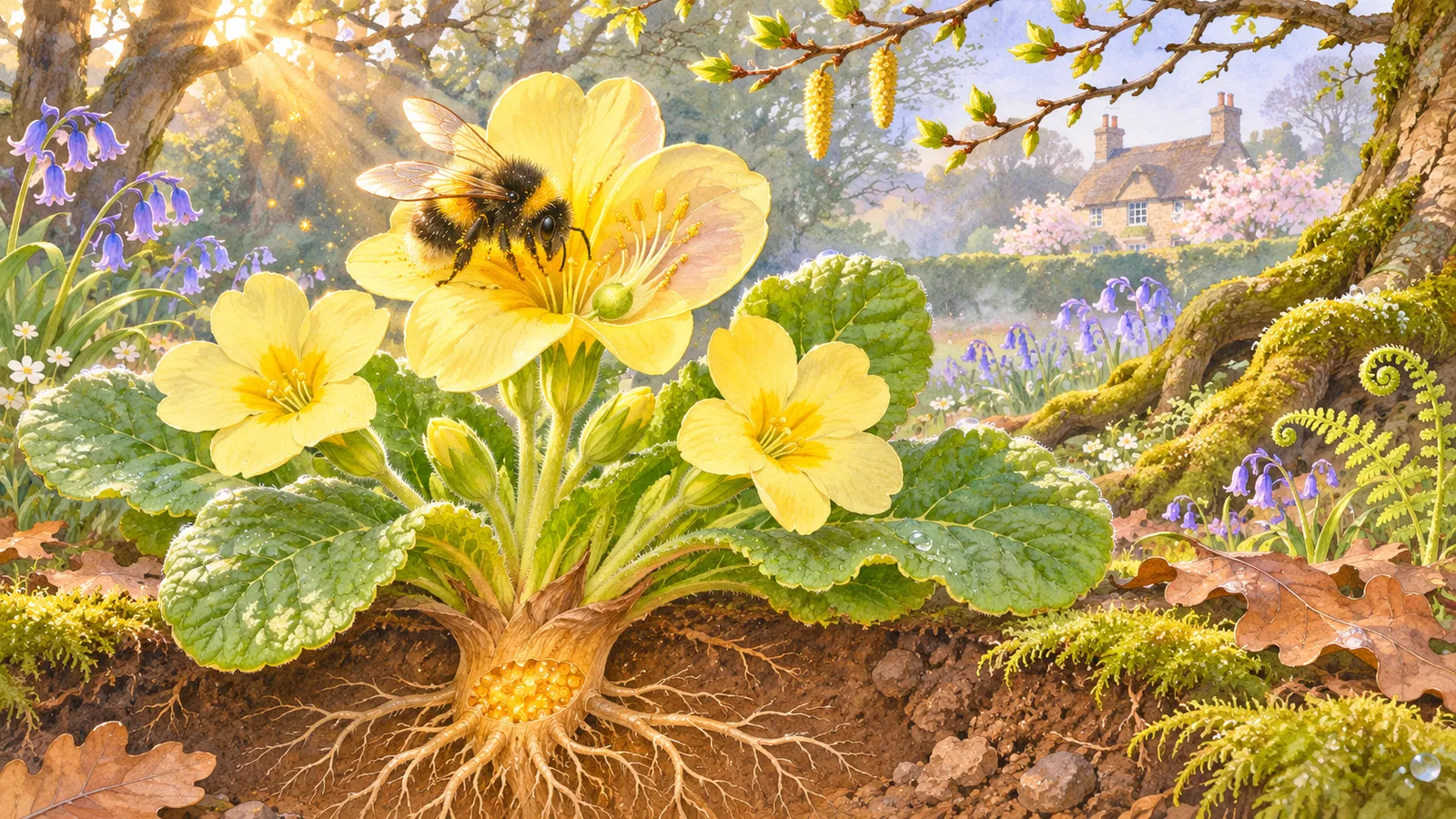
But many plants are more industrious than the stock and mignonette, and lay by store for another year, and our primrose is one of these.でも、ストックやモクセイソウよりもっとはたらき者で、次の年のためにたくわえをしておく植物もたくさんあります。サクラソウもその一つです。 Look at this thick solid mass below the primrose leaves, out of which the roots spring.サクラソウの葉の下にある、この太くてかたいかたまりを見てください。根はここから生えています。 (See the plant in the foreground of the heading of the lecture.)(このお話の最初の絵の、手前の草を見てください。) This is really the stem of the primrose hidden underground, and all the starch, albuminoids, &c., which the plant can spare as it grows, are sent down into this underground stem and stored up there, to lie quietly in the ground through the long winter, and then when the warm spring comes this stem begins to send out leaves for a new plant.これは、じつは地面の下にかくれたサクラソウのくきなのです。植物が育ちながら余らせることのできたでんぷんやアルブミノイドなどは、すべてこの地下のくきへ送られてたくわえられ、長い冬のあいだ地面の中で静かにねむります。そして、あたたかい春が来ると、このくきが新しい草のための葉を出しはじめるのです。
We have now seen how a plant springs up, feeds itself, grows, stores up food, withers, and dies; but we have said nothing yet about its beautiful flowers or how it forms its seeds.これで、植物が芽を出し、自分で栄養をとり、育ち、食べ物をたくわえ、しおれて、かれるまでを見てきました。でも、その美しい花のことや、どうやってたねを作るのかについては、まだ何も話していません。 If we look down close to the bottom of the leaves in a primrose root in spring-time, we shall always find three or four little green buds nestling in among the leaves, and day by day we may see the stalk of these buds lengthening till they reach up into the open sunshine, and then the flower opens and shows its beautiful pale- yellow crown.春に、サクラソウのかぶの葉のつけ根近くをのぞきこむと、かならず3つか4つの小さな緑のつぼみが、葉のあいだにうずもれるようにしてあるのが見つかります。日に日に、つぼみのじくがのびて、やがて明るい日なたまでとどくと、花が開いて、美しいうすい黄色の花かんむりを見せるのです。
We all know that seeds are formed in the flower, and that the seeds are necessary to grow into new plants.たねが花の中でできること、そして新しい草に育つにはたねが必要なことは、だれでも知っています。 But do we know the history of how they are formed, or what is the use of the different parts of the bud?でも、たねがどうやってできるのか、つぼみのいろいろな部分が何の役に立っているのかを、知っているでしょうか? Let us examine them all, and then I think you will agree with me that this is not the least wonderful part of the plant.全部を調べてみましょう。そうすれば、ここが植物の中でもけっしておとらずすばらしい部分だということに、きっと賛成してもらえると思います。
Remember that the seed is the one important thing and then notice how the flower protects it.たねこそが、たった1つの大切なものだということをおぼえておいて、花がそれをどうやって守っているかに注目してください。 First, look at the outside green covering, which we call the calyx.まず、外側の緑のおおいを見てください。これを「がく」とよびます。 See how closely it fits in the bud, so that no insects can creep in to gnaw the flower, nor any harm come to it from cold or blight.つぼみのとき、がくがどんなにぴったりと合わさっているか見てください。だから、虫がもぐりこんで花をかじることもできませんし、寒さや病気で花がいためられることもないのです。 Then, when the calyx opens, notice that the yellow leaves which form the crown or corolla, are each alternate with one of the calyx leaves, so that anything which got past the first covering would be stopped by the second.次に、がくが開いたら、花かんむり、つまり「花びら(かかん)」を作っている黄色い葉が、がくの葉と一つおきにたがいちがいに並んでいることに注目してください。こうして、1つ目のおおいを通りぬけたものがあっても、2つ目でくい止められるのです。 Lastly, when the delicate corolla has opened out, look at those curious yellow bags just at the top of the tube (b,2, Fig.最後に、やわらかな花びらが開いたら、管のちょうど上のところにある、あのふしぎな黄色いふくろを見てください(図 43).43の2のb)。 What is their use?これは何の役に立つのでしょう?
But I fancy I see two or three little questioning faces which seem to say, "I see no yellow bags at the top of the tube."でも、いくつかの小さな顔が、ふしぎそうに「管の上に黄色いふくろなんて見えません」と言っているように見えますね。 Well, I cannot tell whether you can or not in the specimen you have in your hand; for one of the most curious things about primrose flowers is, that some of them have these yellow bags at the top of the tube and some of them hidden down right in the middle.そうですね、あなたが手にしている花で見えるかどうかは、わたしにはわかりません。サクラソウの花のとてもふしぎなことの一つは、黄色いふくろが管の上にある花と、まん中のおく深くにかくれている花があることなのです。 But this I can tell you:those of you who have got no yellow bags at the top will have a round knob there (I a, Fig.でも、これは言えます。上に黄色いふくろがない人の花には、そこに丸いつまみのようなものがあり(図 43), and will find the yellow bags (b) buried in the tube.43の1のa)、黄色いふくろ(b)は管の中にうもれているのが見つかるでしょう。 Those, on the other hand, who have the yellow bags (2 b, Fig.反対に、黄色いふくろ(図 43) at the top will find the knob (a) half-way down the tube.43の2のb)が上にある人は、つまみ(a)が管のとちゅうにあるのが見つかるでしょう。
Now for the use of these yellow bags, which are called the anthers of the stamens, the stalk on which they grow being called the filament or thread.では、この黄色いふくろの役目についてです。これはおしべの「やく」とよばれ、やくがついているじくは「花糸(かし)」、つまり糸とよばれます。 If you can manage to split them open you will find that they have a yellow powder in them, called pollen, the same as the powder which sticks to your nose when you put it into a lily; and if you look with a magnifying glass at the little green knob in the centre of the flower, you will probably see some of this yellow dust sticking on it (A, Fig.うまく割って開くことができたら、中に黄色い粉が入っているのがわかるでしょう。これは花粉とよばれ、ユリの花に鼻を近づけたときに鼻につく粉と同じものです。そして、花のまん中にある小さな緑のつまみを虫めがねで見ると、たぶん、この黄色い粉がいくらかくっついているのが見えるでしょう(図 43).43のA)。 We will leave it there for a time, and examine the body called the pistil, to which the knob belongs.しばらくそれはそのままにしておいて、つまみがついている「めしべ」というものを調べましょう。 Pull off the yellow corolla (which will come off quite easily), and turn back the green leaves.黄色い花びらを引きぬき(とてもかんたんにとれます)、緑の葉を後ろへそらせてください。 You will then see that the knob stands on the top of a column, and at the bottom of this column there is a round ball (s v), which is a vessel for holding the seeds.すると、つまみが1本の柱の上に立っていて、その柱の下に丸い玉(s v)があるのがわかります。これは、たねを入れておく入れ物です。 In this diagram (A, Fig.この図(図 43) I have drawn the whole of this curious ball and column as if cut in half, so that we may see what is in it.43のA)では、中に何があるか見えるように、このふしぎな玉と柱の全体を、半分に切ったようにかいてあります。 In the middle of the ball, in a cluster, there are a number of round transparent little bodies, looking something like round green orange-cells full of juice.玉のまん中には、丸くてすき通った小さなものがたくさん集まっています。しるでいっぱいの、丸くて緑色のオレンジのさいぼうのように見えます。 They are really cells full of protoplasm, with one little dark spot in each of them, which by-and-by is to make our little plantlet that we found in the seed.これはじつは原形質でいっぱいのさいぼうで、一つ一つに小さな黒い点があります。これが、やがて、たねの中に見つけたあの小さな植物になるのです。
"These, then, are seeds," you will say.「じゃあ、これがたねなんですね」と言うでしょう。 Not yet; they are only ovules, or little bodies which may become seeds.まだです。これは「はいしゅ」、つまり、たねになるかもしれない小さなものにすぎません。 If they were left as they are they would all wither and die.このままにしておくと、どれもしなびて死んでしまいます。 But those little grains of pollen, which we saw sticking to the knob at the top, are coming down to help them.でも、上のつまみにくっついていた、あの小さな花粉のつぶが、助けにおりてくるのです。 As soon as these yellow grains touch the sticky knob or stigma, as it is called, they throw out tubes, which grow down the column until they reach the ovules.黄色いつぶがねばねばしたつまみ――「柱頭」とよばれます――にふれるとすぐ、つぶは管をのばし、その管が柱の中を下へのびていって、はいしゅに届きます。 In each one of these they find a tiny hole, and into this they creep, and then they pour into the ovule all the protoplasm from the pollen-grain which is sticking above, and this enables it to grow into a real seed, with a tiny plantlet inside.管は一つ一つのはいしゅに小さなあなを見つけてそこへもぐりこみ、上にくっついている花粉のつぶから、原形質をすっかりはいしゅの中へ注ぎこみます。これによって、はいしゅは、中に小さな植物をもつ本物のたねに育つことができるのです。
This is how the plant forms its seed to bring up new little ones next year, while the leaves and the roots are at work preparing the necessary food.こうして植物は、来年新しい子どもたちを育てるためのたねを作るのです。そのあいだ、葉と根は必要な食べ物を用意するためにはたらいています。 Think sometimes when you walk in the woods, how hard at work the little plants and big trees are, all around you.森を歩くときには、ときどき思い出してください。まわりじゅうで、小さな草や大きな木が、どんなにせっせとはたらいているかを。 You breathe in the nice fresh oxygen they have been throwing out, and little think that it is they who are making the country so fresh and pleasant, and that while they look as if they were doing nothing but enjoying the bright sunshine, they are really fulfilling their part in the world by the help of this sunshine; earning their food from the ground working it up; turning their leaves where they can best get light (and in this it is chiefly the violet sun-waves that help them), growing, even at night, by making new cells out of the food they have taken in the day; storing up for the winter; putting out their flowers and making their seeds, and all the while smiling so pleasantly in quiet nooks and sunny dells that it makes us glad to see them.わたしたちは、植物が出してきた気持ちのよい新しい酸素を吸っていますが、いなかをこんなにさわやかで心地よくしているのが植物だとは、ほとんど考えません。植物は明るい日の光を楽しんでいるだけで何もしていないように見えますが、じつはこの日の光の助けをかりて、世の中で自分の役目をはたしているのです。土から食べ物をかせいで作りかえ、光をいちばんよく受けられる向きに葉を向け(このとき、おもに助けてくれるのは、すみれ色の太陽の波です)、昼間とり入れた食べ物から新しいさいぼうを作って夜のあいだも育ち、冬にそなえてたくわえ、花をさかせてたねを作ります。そのあいだもずっと、静かな物かげや日当たりのよい谷間で、見ているわたしたちがうれしくなるほど、にこやかにほほえんでいるのです。
But why should the primroses have such golden crowns? plain green ones would protect the seed quite as well.でも、どうしてサクラソウはこんな金色の花かんむりをもっているのでしょう? ただの緑色のものでも、たねを同じようにしっかり守れるはずです。 Ah! now we come to a secret well worth knowing.ああ! いよいよ、知るねうちのあるひみつにやって来ました。 Look at the two primrose flowers, 1 and 2, Fig.図 43, p.43( 163, and tell me how you think the dust gets on to the top of the sticky knob or stigma.163ページ)の2つのサクラソウの花、1と2を見て、粉がどうやってねばねばしたつまみ、つまり柱頭の上にのるのか、考えてみてください。 No. 2 seems easy enough to explain, for it looks as if the pollen could fall down easily from the stamens on to the knob, but it cannot fall up, as it would have to do in No. 1.2番は説明がかんたんそうに見えます。花粉がおしべからつまみの上へ、かんたんに落ちられそうだからです。でも1番では、花粉は上へ向かって落ちなければならず、そんなことはできません。 Now the curious truth is, as Mr. Darwin has shown, that neither of these flowers can get the dust easily for themselves, but of the two No. 1 has the least difficulty.ところが、ふしぎなことに、ダーウィンさんが明らかにしたように、どちらの花も自分で粉をかんたんに手に入れることはできないのです。でも、2つのうちでは、1番のほうがまだむずかしくありません。
Look at a withered primrose, and see how it holds its head down, and after a little while the yellow crown falls off.しおれたサクラソウを見てください。頭を下にたれていて、しばらくすると黄色い花かんむりが落ちます。 It is just about as it is falling that the anthers or bags of stamens burst open, and then, in No. 1 (Fig.ちょうど落ちるころに、やく、つまりおしべのふくろがはじけて開きます。すると1番(図 44), they are dragged over the knob and some of the grains stick there.44)では、やくがつまみの上を引きずられて、つぶのいくつかがそこにくっつくのです。 But in the other form of primrose, No. 2, when the flower falls off, the stamens do not come near the knob, so it has no chance of getting any pollen; and while the primrose is upright the tube is so narrow that the dust does not easily fall.でも、もう1つの形のサクラソウ、2番では、花が落ちるとき、おしべはつまみの近くに来ないので、花粉を手に入れるチャンスがありません。それに、サクラソウがまっすぐ立っているあいだは、管がとてもせまいので、粉はかんたんには落ちないのです。 But, as I have said, neither kind gets it very easily, nor is it good for them if they do.でも、さっき言ったように、どちらの花も粉をかんたんには手に入れられませんし、たとえ手に入れても、花にとってよいことではないのです。 The seeds are much stronger and better if the dust or pollen of one flower is carried away and left on the knob or stigma of another flower; and the only way this can be done is by insects flying from one flower to another and carrying the dust on their legs and bodies.ある花の粉、つまり花粉が運ばれて、別の花のつまみ、つまり柱頭にのせられると、たねはずっと強く、よくなります。そして、それができるただ一つの方法は、虫が花から花へと飛びまわり、あしや体に粉をつけて運ぶことなのです。