 13分
 朗読 Patricia Oakley
 原文そのまま

 PDFで印刷(A4 9まい)
I HAVE promised to introduce you today to the fairy-land of science - a somewhat bold promise, seeing that most of you probably look upon science as a bundle of dry facts, while fairy- land is all that is beautiful, and full of poetry and imagination.きょうは、みなさんを科学のおとぎの国へご案内すると約束しました。これはかなり大たんな約束です。なぜなら、みなさんのほとんどは、たぶん科学を「味気ない事実のたば」だと思っているでしょうし、いっぽう、おとぎの国は美しいものばかりで、詩と想像に満ちているからです。 But I thoroughly believe myself, and hope to prove to you, that science is full of beautiful pictures, of real poetry, and of wonder-working fairies; and what is more, I promise you they shall be true fairies, whom you will love just as much when you are old and greyheaded as when you are young; for you will be able to call them up wherever you wander by land or by sea, through meadow or through wood, through water or through air; and though they themselves will always remain invisible, yet you will see their wonderful poet at work everywhere around you.でもわたしは、科学には美しい絵や、ほんものの詩や、ふしぎなわざを見せるようせいたちがいっぱいだと心から信じていますし、それをみなさんに証明したいと思っています。そのうえ、それはほんもののようせいだと約束します。若いときと同じように、年をとってしらがになってもずっと大好きでいられるようせいです。なぜなら、陸を行くときも海を行くときも、野原でも森でも、水の中でも空気の中でも、どこを歩いていても、そのようせいたちをよび出せるようになるからです。ようせいそのものはいつまでも目に見えませんが、そのすばらしい詩人のようなはたらきは、みなさんのまわりのいたる所で見られるでしょう。
Let us first see for a moment what kind of tales science has to tell, and how far they are equal to the old fairy tales we all know so well.まず少しのあいだ、科学がどんなお話を語ってくれるのか、そしてそれが、わたしたちがよく知っている昔のおとぎ話にどのくらい負けないのかを見てみましょう。 Who does not remember the tale of the "Sleeping Beauty in the Wood," and how under the spell of the angry fairy the maiden pricked herself with the spindle and slept a hundred years?「森のねむりひめ(いばらひめ)」のお話をおぼえていない人がいるでしょうか。おこったようせいのまほうにかかって、むすめが糸をつむぐつむで指をさし、100年のあいだねむってしまったお話です。 How the horses in the stall, the dogs in the court-yard, the doves on the roof, the cook who was boxing the scullery boy's ears in the kitchen, and the king and queen with all their courtiers in the hall remained spell-bound, while a thick hedge grew up all round the castle and all within was still as death.馬小屋の馬も、中庭の犬も、屋根の上のハトも、台所で皿あらいの少年の耳をぶとうとしていたコックも、広間で家来たちといっしょにいた王さまとおきさきさまも、みんなまほうにかけられて動かなくなり、そのあいだに城のまわりには厚い生けがきがおいしげって、中のものはすべて死んだように静まりかえっていました。 But when the hundred years had passed the valiant prince came, the thorny hedge opened before him bearing beautiful flowers; and he, entering the castle, reached the room where the princess lay, and with one sweet kiss raised her and all around her to life again.けれども100年がたつと、勇かんな王子がやってきました。とげのある生けがきは、美しい花をさかせながら王子の前に道をあけました。王子は城に入り、王女のねむっている部屋にたどりつくと、やさしいキスをひとつして、王女とまわりのすべてのものを生きかえらせたのです。
Can science bring any tale to match this?科学に、これにかなうお話がもち出せるでしょうか。
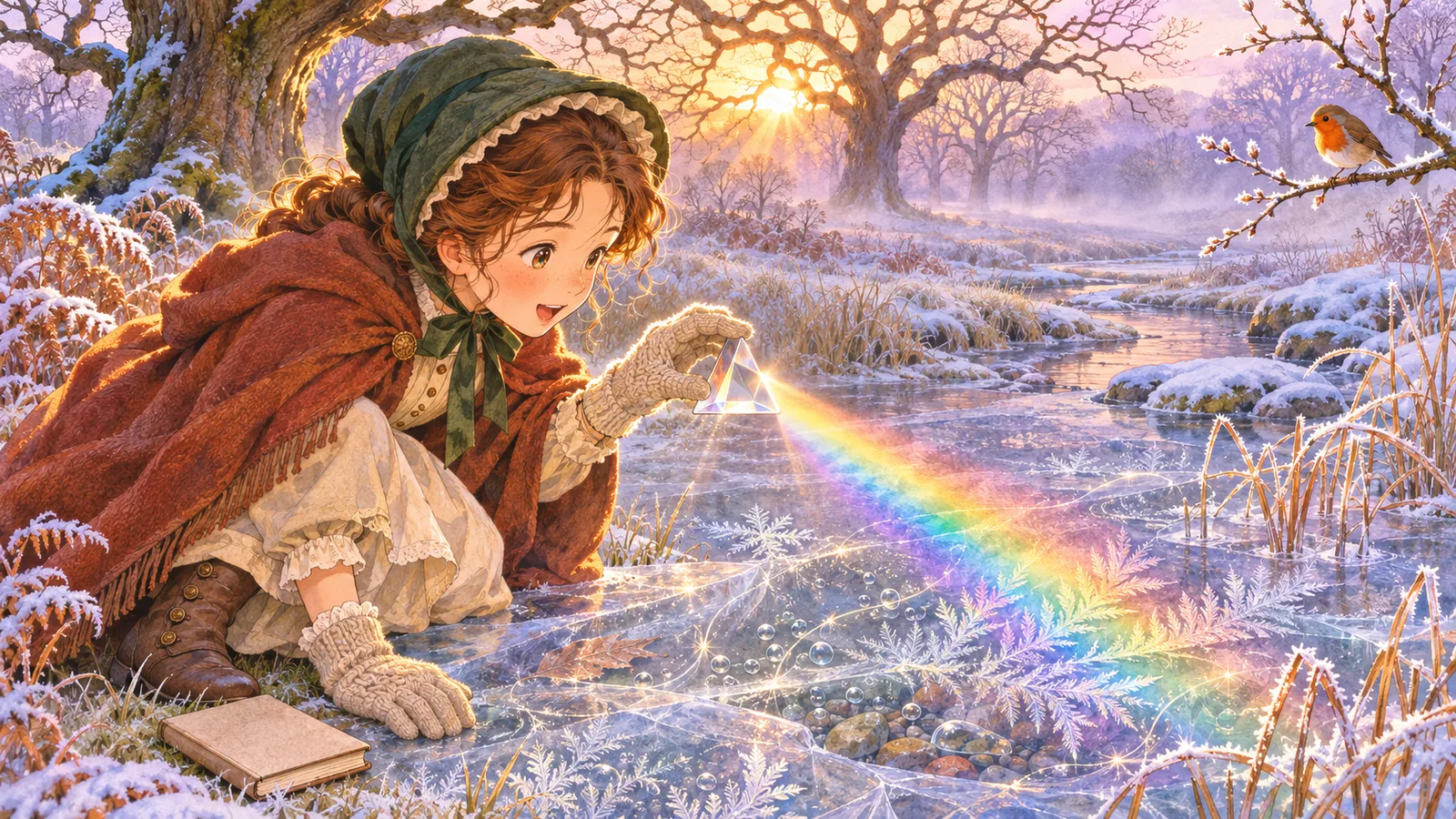
Tell me, is there anything in this world more busy and active than water, as it rushes along in the swift brook, or dashes over the stones, or spouts up in the fountain, or trickles down from the roof, or shakes itself into ripples on the surface of the pond as the wind blows over it?教えてください。この世の中に、水ほどいそがしく、元気に動きまわるものがあるでしょうか。流れの速い小川をかけていったり、石の上をはねたり、ふん水でふき上がったり、屋根からしたたり落ちたり、風がふきわたると池の水面をふるわせてさざ波を立てたりします。 But have you never seen this water spell-bound and motionless?でも、この水がまほうにかけられて、ぴくりとも動かなくなっているのを見たことはありませんか。 Look out of the window some cold frosty morning in winter, at the little brook which yesterday was flowing gently past the house, and see how still it lies, with the stones over which it was dashing now held tightly in its icy grasp.冬の寒い、しもの下りた朝に、窓の外を見てごらんなさい。きのうは家のそばをゆったり流れ、石の上をはねていた小川が、今はどんなにじっと横たわり、その石を氷の手でしっかりにぎりしめているか、見てください。 Notice the wind-ripples on the pond; they have become fixed and motionless.池の上の、風が立てたさざ波にも気をつけてごらんなさい。それはかたまって、動かなくなっています。 Look up at the roof of the house.家の屋根を見上げてごらんなさい。 There, instead of living doves merely charmed to sleep, we have running water caught in the very act of falling and turned into transparent icicles, decorating the eaves with a beautiful crystal fringe.そこには、まほうでねむらされただけの生きたハトのかわりに、落ちるまさにそのしゅんかんにつかまえられて、すきとおったつららになった流れる水があります。それが、のきを美しいすいしょうのふさかざりでかざっているのです。 On every tree and bush you will catch the water- drops napping, in the form of tiny crystals; while the fountain looks like a tree of glass with long down-hanging pointed leaves.どの木にもしげみにも、水のしずくが、小さな結しょうの形でいねむりしているのが見つかるでしょう。ふん水は、長くたれさがった先のとがった葉をつけたガラスの木のように見えます。 Even the damp of your own breath lies rigid and still on the window-pane frozen into delicate patterns like fern-leaves of ice.みなさん自身の息のしめりけでさえ、窓ガラスの上でこおって、氷のシダの葉のような細かいもようになって、かたく動かずにいます。
All this water was yesterday flowing busily, or falling drop by drop, or floating invisibly in the air; now it is all caught and spell-bound - by whom?この水はみな、きのうはいそがしく流れたり、ひとしずくずつ落ちたり、目に見えずに空気の中にただよったりしていました。それが今では、すっかりつかまえられて、まほうにかけられているのです――いったいだれに? By the enchantments of the frost-giant who holds it fast in his grip and will not let it go.しもの大男のまほうにです。大男は水をしっかりとつかんで、はなそうとしません。
But wait awhile, the deliverer is coming.でも、少し待ってください。助けてくれるものがやってきます。 In a few weeks or days, or it may be in a few hours, the brave sun will shine down; the dull-grey, leaden sky will melt before his, as the hedge gave way before the prince in the fairy tale, and when the sunbeam gently kisses the frozen water it will be set free.数週間か数日か、もしかすると数時間のうちに、勇かんなおひさまが照りつけるでしょう。おとぎ話で生けがきが王子の前に道をあけたように、どんよりした灰色の、なまり色の空はおひさまの前でとけていきます。そして日の光が、こおった水にやさしくキスをすると、水は自由になるのです。 Then the brook will flow rippling on again; the frost-drops will be shaken down from the trees, the icicles fall from the roof, the moisture trickle down the window-pane, and in the bright, warm sunshine all will be alive again.そうすると、小川はまたさらさらと流れはじめ、しものつぶは木々からふり落とされ、つららは屋根から落ち、しめりけは窓ガラスをしたたり落ち、明るくあたたかな日の光の中で、すべてがまた生き生きと動きだすのです。
Is not this a fairy tale of nature? and such as these it is which science tells.これは自然のおとぎ話ではないでしょうか。科学が語るのは、まさにこのようなお話なのです。
Again, who has not heard of Catskin, who came out of a hollow tree, bringing a walnut containing three beautiful dresses - the first glowing as the sun, the second pale and beautiful as the moon, the third spangled like the star-lit sky, and each so fine and delicate that all three could be packed into a walnut shell; and each one of these tiny structures is not the mere dress but the home of a living animal.また、ネコの皮(キャッツキン)のお話を聞いたことのない人がいるでしょうか。キャッツキンは木のうろから出てきて、3着の美しいドレスの入ったクルミを持ってきました――1着目はおひさまのようにかがやき、2着目は月のようにあわく美しく、3着目は星のかがやく夜空のようにきらきらしていて、どれもとても細かくてうすいので、3着ともクルミのからの中に入ってしまうほどでした。そして、この小さな小さなつくりのひとつひとつは、ただのドレスではなく、生きた動物のすみかなのです。 It is a tiny, tiny shell-palace made of the most delicate lacework, each pattern being more beautiful than the last; and what is more, the minute creature that lives in it has built it out of the foam of the sea, though he himself is nothing more than a drop of jelly.それは、いちばん細かいレースでできた、小さな小さな貝がらのきゅうでんで、どのもようも前のものよりもっと美しいのです。しかも、その中にすむとても小さな生き物は、自分はひとしずくのゼリーにすぎないのに、海のあわからこのきゅうでんをつくったのです。
Lastly, anyone who has read the 'Wonderful Travellers' must recollect the man whose sight was so keen that he could hit the eye of a fly sitting on a tree two miles away.最後に、『ふしぎな旅人たち』を読んだことのある人なら、目がとてもよくて、2マイル(約3キロメートル)もはなれた木にとまっているハエの目を射ぬくことができた男のことをおぼえているにちがいありません。 But tell me, can you see gas before it is lighted, even when it is coming out of the gas-jet close to your eyes?でも教えてください。ガスは、火をつける前に見えるでしょうか。目のすぐ近くでガス口から出ているときでさえ、見えるでしょうか。 Yet, if you learn to use that wonderful instrument the spectroscope, it will enable you to tell one kind of gas from another, even when they are both ninety-one millions of miles away on the face of the sun; nay more, it will read for you the nature of the different gases in the far distant stars, billions of miles away, and actually tell you whether you could find there any of the same metals which we have on the earth.それなのに、分光器(光を色ごとに分けて調べる器械)というすばらしい道具の使い方を学べば、ガスが2しゅるい、どちらも9100万マイルもかなたの太陽の表面にあっても、それを見分けることができるのです。いや、それどころか、何兆マイルもはなれた遠い星にあるいろいろなガスのせいしつまで読みとってくれて、わたしたちが地球の上でもっているのと同じ金属がそこにあるかどうかまで、ほんとうに教えてくれるのです。
We might find hundreds of such fairy tales in the domain of science, but these three will serve as examples, and we much pass on to make the acquaintance of the science-fairies themselves, and see if they are as real as our old friends.科学の世界には、このようなおとぎ話が何百も見つかるでしょうが、この三つでれいとしては十分です。さあ先へ進んで、科学のようせいたちそのものと知り合いになり、昔からのなかよしのようせいたちと同じくらいほんものかどうか見てみましょう。
Tell me, why do you love fairy-land? what is its charm?教えてください。みなさんはなぜおとぎの国が好きなのでしょう。そのみりょくは何でしょう。 Is it not that things happen so suddenly, so mysteriously, and without man having anything to do with it?それは、いろいろなことがとつぜんに、ふしぎに、人間が何も手を出さないのに起こるからではありませんか。 In fairy-land, flowers blow, houses spring up like Aladdin's palace in a single night, and people are carried hundreds of miles in an instant by the touch of a fairy wand.おとぎの国では、花がさき、アラジンのきゅうでんのように家がひと晩でにょきにょき立ち、ようせいのつえにさわられるだけで、人が一しゅんで何百マイルも運ばれます。
And then this land is not some distant country to which we can never hope to travel.それに、この国は、とても行けそうにない遠い国ではありません。 It is here in the midst of us, only our eyes must be opened or we cannot see it.わたしたちのまっただ中、ここにあるのです。ただ、目を開いてもらわなければ見えないのです。 Ariel and Puck did not live in some unknown region.エアリエルもパックも、どこか知らない所に住んでいたのではありません。 On the contrary, Ariel's song isそれどころか、エアリエルの歌はこうです。
The peasant falls asleep some evening in a wood and his eyes are opened by a fairy wand, so that he sees the little goblins and imps dancing around him on the green sward, sitting on mushrooms, or in the heads of the flowers, drinking out of acorn-cups, fighting with blades of grass, and riding on grasshoppers.ある晩、森の中でねむりこんだ農夫が、ようせいのつえで目を開いてもらうと、小さな小おにやいたずらようせいたちが、まわりの緑のしばふの上でおどっているのが見えます。キノコにすわったり、花の中にすわったり、ドングリのぼうしのコップで飲んだり、草の葉で戦ったり、バッタに乗ったりしているのです。
So, too, the gallant knight, riding to save some poor oppressed maiden, dashes across the foaming torrent; and just in the middle, as he is being swept away, his eyes are opened, and he sees fairy water-nymphs soothing his terrified horse and guiding him gently to the opposite shore.同じように、かわいそうな、いじめられているむすめを助けに馬を走らせる勇ましいきしが、あわだつ急流をかけわたろうとします。そしてちょうどまん中で、おし流されそうになったとき、目が開かれて、水のようせいたちがおびえた馬をなだめ、向こう岸へやさしくみちびいているのが見えるのです。 They are close at hand, these sprites, to the simple peasant or the gallant knight, or to anyone who has the gift of the fairies and can see them. but the man who scoffs at them, and does not believe in them or care for them, he never sees them.こうしたようせいたちは、すなおな農夫や勇ましいきしや、ようせいの才能をさずかってようせいを見ることのできる人には、すぐそばにいるのです。でも、ようせいをばかにして、信じもせず、気にもかけない人には、けっして見えません。 Only now and then they play him an ugly trick, leading him into some treacherous bog and leaving him to get out as he may.ただときどき、ようせいたちはそういう人にいやないたずらをして、あぶないぬまに引きこみ、自分でなんとかぬけ出すまでほうっておくのです。
Now, exactly all this which is true of the fairies of our childhood is true too of the fairies of science.さて、子どものころのおとぎ話のようせいについて言えるこのことは、そっくりそのまま、科学のようせいについても言えるのです。 There are forces around us, and among us, which I shall ask you to allow me to call fairies, and these are ten thousand times more wonderful, more magical, and more beautiful in their work, than those of the old fairy tales.わたしたちのまわりにも、わたしたちのあいだにも、いろいろな力(フォース)があります。それをようせいとよばせてください。そのはたらきは、昔のおとぎ話のようせいより1万倍もすばらしく、ふしぎで、美しいのです。 They, too, are invisible, and many people live and die without ever seeing them or caring to see them.このようせいたちも目に見えません。そして多くの人は、一度も見ることなく、見たいとも思わずに、一生を終えてしまいます。 These people go about with their eyes shut, either because they will not open them, or because no one has taught them how to see.そういう人たちは、目をつぶって歩きまわっています。目を開こうとしないか、それとも見方をだれも教えてくれなかったからです。 They fret and worry over their own little work and their own petty troubles, and do not know how to rest and refresh themselves, by letting the fairies open their eyes and show them the calm sweet picture of nature.そういう人たちは、自分の小さな仕事や自分のささいななやみごとにいらいらし、くよくよして、ようせいに目を開いてもらい、自然の静かでやさしいけしきを見せてもらって、心を休め、元気をとりもどすやり方を知らないのです。 They are like Peter Bell of whom Wordsworth wrote:-そういう人たちは、ワーズワースが書いたピーター・ベルのようです――