 19分
 朗読 Kathy Wright
 原文そのまま

 PDFで印刷(A4 15まい)
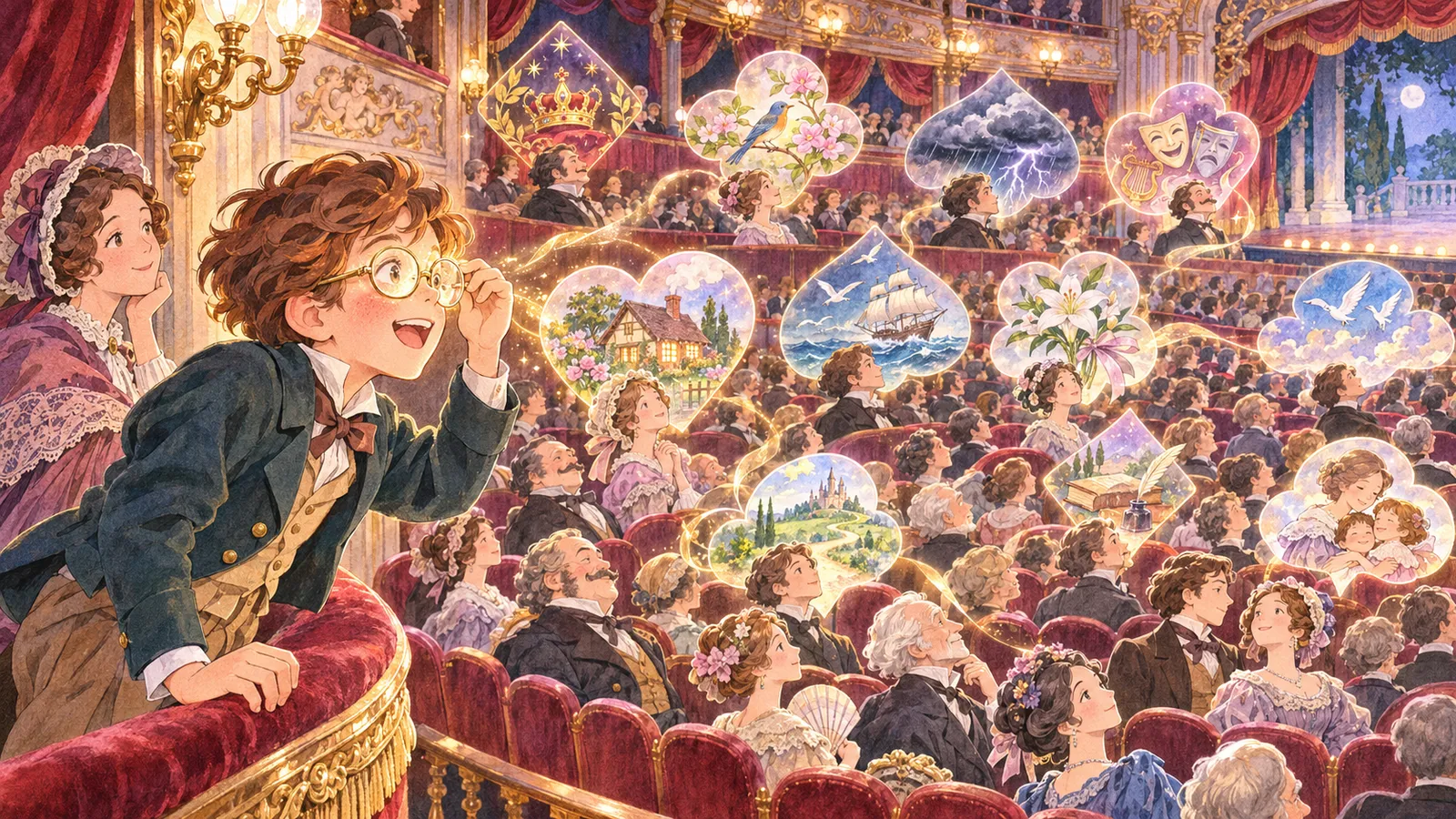
“A certain person had an aunt, who boasted of particular skill in fortune-telling with cards, and who was constantly being stormed by persons that wanted to have a peep into futurity.「ある人に、おばさんがいました。おばさんはトランプ占いがとくいだと自まんしていて、未来をちょっとのぞいてみたい人たちが、ひっきりなしにおしかけていました。 But she was full of mystery about her art, in which a certain pair of magic spectacles did her essential service.けれども、おばさんは自分のわざをひみつにしていました。そのわざには、ある魔法のめがねが、なくてはならない役目をはたしていたのです。 Her nephew, a merry boy, who was his aunt's darling, begged so long for these spectacles, that, at last, she lent him the treasure, after having informed him, with many exhortations, that in order to execute the interesting trick, he need only repair to some place where a great many persons were assembled; and then, from a higher position, whence he could overlook the crowd, pass the company in review before him through his spectacles.おばさんのおいは陽気な男の子で、おばさんのお気に入りでした。その子があまり長いことめがねを貸してとせがむので、とうとうおばさんは、その宝物を貸してやりました。そのとき、何度もいましめながら、こう教えました。このおもしろいわざをするには、人がおおぜい集まっている場所へ行き、人々を見わたせる高いところから、めがねごしに人々を一人ずつながめていけばよいのだ、と。 Immediately 'the inner man' of each individual would be displayed before him, like a game of cards, in which he unerringly might read what the future of every person presented was to be.すると、たちまち一人一人の『心の中』が、トランプのカードのように目の前にあらわれ、その人の未来がどうなるか、まちがいなく読みとれるというのです。 Well pleased the little magician hastened away to prove the powers of the spectacles in the theatre; no place seeming to him more fitted for such a trial.小さな魔法使いは大よろこびで、めがねの力をためしに劇場へかけつけました。こんなためしにこれほどぴったりの場所はないように思えたのです。 He begged permission of the worthy audience, and set his spectacles on his nose.男の子は、りっぱなお客さまたちにおゆるしをいただいて、めがねを鼻にかけました。 A motley phantasmagoria presents itself before him, which he describes in a few satirical touches, yet without expressing his opinion openly: he tells the people enough to set them all thinking and guessing; but in order to hurt nobody, he wraps his witty oracular judgments in a transparent veil, or rather in a lurid thundercloud, shooting forth bright sparks of wit, that they may fall in the powder-magazine of the expectant audience.”目の前には、色とりどりのまぼろしがあらわれます。男の子はそれを、ちょっぴり皮肉をこめて少しだけ語りますが、自分の意見ははっきりとは言いません。みんながあれこれ考えたり想像したりするには十分なことを話しますが、だれも傷つけないように、気のきいたお告げを、すけて見えるベールに――いえ、むしろ、ぶきみな雷雲に――つつむのです。その雲からは、気のきいた言葉の火花が飛び出し、待ちかまえているお客たちの火薬庫に落ちていくのです。」
The humorous poem was admirably recited, and the speaker much applauded.このゆかいな詩はみごとに朗読され、朗読した人は大かっさいを受けました。 Among the audience was the young man of the hospital, who seemed to have forgotten his adventure of the preceding night.お客の中には、あの病院の若者もいました。前の晩の冒険はすっかりわすれてしまったようでした。 He had on the Shoes; for as yet no lawful owner had appeared to claim them; and besides it was so very dirty out-of-doors, they were just the thing for him, he thought.若者はあの長ぐつをはいていました。まだ正式な持ち主があらわれていなかったし、それに外はとてもどろんこだったので、ちょうどいいと思ったのです。
The beginning of the poem he praised with great generosity: he even found the idea original and effective.若者は、詩のはじめの部分をとても気前よくほめました。考えも新しくて、効果的だとさえ思いました。 But that the end of it, like the Rhine, was very insignificant, proved, in his opinion, the author's want of invention; he was without genius, etc. This was an excellent opportunity to have said something clever.けれども、終わりの部分がライン川の河口のようにぱっとしないのは、作者に工夫が足りないしるしだ、作者には才能がない、などと思いました。気のきいたことを言うには、もってこいの機会でした。
Meanwhile he was haunted by the idea—he should like to possess such a pair of spectacles himself; then, perhaps, by using them circumspectly, one would be able to look into people's hearts, which, he thought, would be far more interesting than merely to see what was to happen next year; for that we should all know in proper time, but the other never.そのあいだも、若者はある考えにとりつかれていました――自分もそんなめがねがほしいものだ。そうすれば、用心して使えば、人の心の中をのぞけるかもしれない。それは、来年何が起こるかを知るよりずっとおもしろいだろう。来年のことは、そのときになればみんなわかるが、心の中はけっしてわからないのだから、と。
“I can now,” said he to himself, “fancy the whole row of ladies and gentlemen sitting there in the front row; if one could but see into their hearts—yes, that would be a revelation—a sort of bazar.「今、ここで」と若者はひとりごとを言いました。「いちばん前の列にすわっている紳士淑女の人たちを思いうかべることができる。あの人たちの心の中をのぞけたら――そう、それこそ大発見だ――まるでバザール(市場)みたいなものだろう。 In that lady yonder, so strangely dressed, I should find for certain a large milliner's shop; in that one the shop is empty, but it wants cleaning plain enough.あそこの、へんてこな服を着たご婦人の心には、きっと大きな帽子屋があるだろう。あちらのご婦人の店はからっぽだが、そうじが必要なのははっきりしている。 But there would also be some good stately shops among them.でも、中にはりっぱな店もあるだろう。 Alas!” sighed he, “I know one in which all is stately; but there sits already a spruce young shopman, which is the only thing that's amiss in the whole shop.ああ!」と若者はため息をつきました。「何もかもりっぱな店を一つ知っている。でも、そこにはもう、こぎれいな若い店員がすわっているんだ。店じゅうでまずいのはそれだけなんだがなあ。 All would be splendidly decked out, and we should hear, 'Walk in, gentlemen, pray walk in; here you will find all you please to want.'何もかもきらびやかにかざられていて、『いらっしゃいませ、どうぞお入りください。お望みのものは何でもございます』という声が聞こえるだろう。 Ah!ああ! I wish to Heaven I could walk in and take a trip right through the hearts of those present!”ここにいる人たちの心の中に入って、ずっと旅してまわれたらなあ!」
And behold! to the Shoes of Fortune this was the cue; the whole man shrunk together and a most uncommon journey through the hearts of the front row of spectators, now began.すると、どうでしょう! 幸運の長ぐつにとっては、これが合図でした。若者の体はすっかりちぢんで、いちばん前の列のお客たちの心の中を通る、なんともめずらしい旅がはじまったのです。 The first heart through which he came, was that of a middle-aged lady, but he instantly fancied himself in the room of the “Institution for the cure of the crooked and deformed,” where casts of mis-shapen limbs are displayed in naked reality on the wall.最初に通りぬけた心は、中年のご婦人の心でした。けれども若者はたちまち、「体のゆがみを治す病院」の一室にいるような気がしました。そこでは、ゆがんだ手足の石こうの型が、そのまま壁にならべてあるのです。 Yet there was this difference, in the institution the casts were taken at the entry of the patient; but here they were retained and guarded in the heart while the sound persons went away.けれども、ちがうところがありました。病院では、患者が入ってきたときに型を取るのですが、ここでは、本人たちが元気に帰っていったあとも、型は心の中にとっておかれ、大事にしまわれているのです。 They were, namely, casts of female friends, whose bodily or mental deformities were here most faithfully preserved.つまりそれは、このご婦人の女友だちの型で、その人たちの体や心の欠点が、ここにじつに忠実に残されていたのです。
With the snake-like writhings of an idea he glided into another female heart; but this seemed to him like a large holy fane. [*] The white dove of innocence fluttered over the altar.若者は、ヘビのように身をくねらせる考えのように、別のご婦人の心へすべりこみました。ここは大きな神聖な神殿のように思えました。むじゃきさをあらわす白いハトが、祭壇の上をはばたいていました。 How gladly would he have sunk upon his knees; but he must away to the next heart; yet he still heard the pealing tones of the organ, and he himself seemed to have become a newer and a better man; he felt unworthy to tread the neighboring sanctuary which a poor garret, with a sick bed-rid mother, revealed.若者はどんなにひざまずきたかったことでしょう。けれども次の心へ行かなければなりません。それでも、まだオルガンの鳴りひびく音が聞こえ、自分が新しい、よりよい人間になったような気がしました。となりの聖なる場所に足をふみ入れるのは、自分にはもったいないと感じました。そこは、病気でねたきりの母親がいる、まずしい屋根裏部屋でした。 But God's warm sun streamed through the open window; lovely roses nodded from the wooden flower-boxes on the roof, and two sky-blue birds sang rejoicingly, while the sick mother implored God's richest blessings on her pious daughter.けれども、神さまのあたたかいお日さまが開いた窓からさしこみ、屋根の上の木のプランターでは美しいバラがうなずき、空色の鳥が二羽、うれしそうに歌っていました。そして病気の母親は、信心深い娘に神さまのゆたかなおめぐみがありますようにと祈っていました。
He now crept on hands and feet through a butcher's shop; at least on every side, and above and below, there was nought but flesh.次に若者は、肉屋の店の中を四つんばいではっていきました。少なくとも、まわりじゅう、上も下も、肉ばかりでした。 It was the heart of a most respectable rich man, whose name is certain to be found in the Directory.それは、名簿にきっと名前がのっている、たいへんりっぱなお金持ちの紳士の心でした。
He was now in the heart of the wife of this worthy gentleman.次に若者がいたのは、このりっぱな紳士の奥さんの心の中でした。 It was an old, dilapidated, mouldering dovecot.それは古くてこわれかけ、くさりかけたハト小屋でした。 The husband's portrait was used as a weather-cock, which was connected in some way or other with the doors, and so they opened and shut of their own accord, whenever the stern old husband turned round.夫の肖像画が風見として使われていて、それが何かのしかけで戸とつながっていました。それで、きびしい年とった夫がくるりと向きを変えるたびに、戸がひとりでに開いたりしまったりするのでした。
Hereupon he wandered into a boudoir formed entirely of mirrors, like the one in Castle Rosenburg; but here the glasses magnified to an astonishing degree.それから若者は、全部が鏡でできた婦人の小部屋に迷いこみました。ローセンボー城にある部屋のようでしたが、ここの鏡はものをおどろくほど大きくうつしました。 On the floor, in the middle of the room, sat, like a Dalai-Lama, the insignificant “Self” of the person, quite confounded at his own greatness.部屋のまん中の床には、その人のちっぽけな「自分」が、ダライ・ラマのようにすわっていて、自分のえらさにすっかり目がくらんでいました。 He then imagined he had got into a needle-case full of pointed needles of every size.次に若者は、大小さまざまなとがった針がいっぱいつまった針箱の中に入りこんだような気がしました。
“This is certainly the heart of an old maid,” thought he.「これはきっと、気むずかしい年とった独身の女の人の心だな」と若者は思いました。 But he was mistaken.けれども、それはまちがいでした。 It was the heart of a young military man; a man, as people said, of talent and feeling.それは若い軍人の心でした。世間では、才能もあり心もこまやかな人だと言われている人でした。
In the greatest perplexity, he now came out of the last heart in the row; he was unable to put his thoughts in order, and fancied that his too lively imagination had run away with him.すっかりとまどって、若者はその列の最後の心から出てきました。考えをまとめることができず、想像力が強すぎて、つい暴走してしまったのだと思いました。
“Good Heavens!” sighed he.「ああ、どうしよう!」と若者はため息をつきました。 “I have surely a disposition to madness—'tis dreadfully hot here; my blood boils in my veins and my head is burning like a coal.”「わたしはきっと頭がおかしくなりかけているんだ――ここはおそろしく暑い。血が体の中でにえたぎり、頭が炭火のように燃えている。」 And he now remembered the important event of the evening before, how his head had got jammed in between the iron railings of the hospital.そして若者は、前の晩の大事件を思い出しました。病院の鉄の柵に頭がはさまってしまったことです。 “That's what it is, no doubt,” said he.「きっとあれのせいだ」と若者は言いました。 “I must do something in time: under such circumstances a Russian bath might do me good.「手おくれにならないうちに何とかしなくては。こういうときは、ロシアぶろがきくかもしれない。 I only wish I were already on the upper bank.” [*]もう、いちばん上の段にねそべっていられたらなあ。」
And so there he lay on the uppermost bank in the vapor-bath; but with all his clothes on, in his boots and galoshes, while the hot drops fell scalding from the ceiling on his face.するともう、若者は蒸しぶろのいちばん上の段にねそべっていました。けれども服を全部着たまま、ブーツも長ぐつもはいたままでした。天井からは熱いしずくが、やけどしそうなほど顔にぽたぽた落ちてきました。
“Holloa!” cried he, leaping down.「うわっ!」と若者はさけんで、とびおりました。 The bathing attendant, on his side, uttered a loud cry of astonishment when he beheld in the bath, a man completely dressed.ふろ番のほうも、服をすっかり着た男がふろ場にいるのを見て、びっくりして大声をあげました。
The other, however, retained sufficient presence of mind to whisper to him, “'Tis a bet, and I have won it!”けれども若者は、なんとか落ち着きをとりもどして、ふろ番にささやきました。「かけをしたんだ。わたしの勝ちさ!」 But the first thing he did as soon as he got home, was to have a large blister put on his chest and back to draw out his madness.けれども家に帰るとすぐ、若者がまずしたのは、頭のおかしさをすい出すために、胸と背中に大きな発泡こうをはってもらうことでした。
The next morning he had a sore chest and a bleeding back; and, excepting the fright, that was all that he had gained by the Shoes of Fortune.次の朝、胸はひりひりし、背中からは血が出ていました。こわい思いをしたことのほかには、それが幸運の長ぐつから得たもののすべてでした。
V. Metamorphosis of the Copying-Clerk五 書記の変身
The watchman, whom we have certainly not forgotten, thought meanwhile of the galoshes he had found and taken with him to the hospital; he now went to fetch them; and as neither the lieutenant, nor anybody else in the street, claimed them as his property, they were delivered over to the police-office.*わたしたちがわすれるはずもないあの番人は、そのあいだに、自分が見つけて病院へ持っていった長ぐつのことを思い出しました。番人は長ぐつを取りに行きましたが、中尉も、通りのほかのだれも、自分のものだと言わなかったので、長ぐつは警察署にとどけられました。※
*As on the continent, in all law and police practices nothing is verbal, but any circumstance, however trifling, is reduced to writing, the labor, as well as the number of papers that thus accumulate, is enormous.※ヨーロッパの大陸では、法律や警察の仕事はすべて口頭ではすまさず、どんなささいなことでも書類にするので、その手間も、たまっていく書類の数も、たいへんなものです。 In a police-office, consequently, we find copying-clerks among many other scribes of various denominations, of which, it seems, our hero was one.そのため警察署には、いろいろな名前の書き役のほかに、書類を書き写す書記がいるのです。わたしたちの主人公も、その一人だったようです。
“Why, I declare the Shoes look just like my own,” said one of the clerks, eying the newly-found treasure, whose hidden powers, even he, sharp as he was, was not able to discover.「おや、この長ぐつは、わたしのとそっくりだ」と書記の一人が、新しく見つかった宝物をながめながら言いました。そのかくれた力は、いくらかしこい書記でも見ぬけませんでした。 “One must have more than the eye of a shoemaker to know one pair from the other,” said he, soliloquizing; and putting, at the same time, the galoshes in search of an owner, beside his own in the corner.「どっちがどっちか見分けるには、くつ屋の目以上のものがいるな」と書記はひとりごとを言いました。そして持ち主をさがしている長ぐつを、すみにある自分の長ぐつのとなりにおきました。
“Here, sir!” said one of the men, who panting brought him a tremendous pile of papers.「こちらです、書記さん!」と男の一人が、ハアハア言いながら、ものすごい書類の山を持ってきました。
The copying-clerk turned round and spoke awhile with the man about the reports and legal documents in question; but when he had finished, and his eye fell again on the Shoes, he was unable to say whether those to the left or those to the right belonged to him.書記はふり向いて、しばらくその男と、報告書や法律の書類について話しました。けれども話がすんで、もう一度長ぐつに目をやったとき、左のと右のと、どちらが自分のものなのかわからなくなっていました。 “At all events it must be those which are wet,” thought he; but this time, in spite of his cleverness, he guessed quite wrong, for it was just those of Fortune which played as it were into his hands, or rather on his feet.「とにかく、ぬれているほうにちがいない」と書記は思いました。けれども今度ばかりは、かしこい書記もすっかり見当ちがいをしました。ぬれていたのは、ちょうど幸運の長ぐつのほうで、それがいわば書記の手に――いや、足に――うまくはまりこんだのです。 And why, I should like to know, are the police never to be wrong?それにしても、どうして警察はけっしてまちがえないことになっているのでしょうね。 So he put them on quickly, stuck his papers in his pocket, and took besides a few under his arm, intending to look them through at home to make the necessary notes.書記は急いで長ぐつをはき、書類をポケットにつっこみ、さらに何まいかをわきにかかえました。家でよく目を通して、必要な書きこみをするつもりだったのです。 It was noon; and the weather, that had threatened rain, began to clear up, while gaily dressed holiday folks filled the streets.お昼でした。雨になりそうだった天気も晴れはじめ、通りには晴れ着を着た休日の人々があふれていました。 “A little trip to Fredericksburg would do me no great harm,” thought he; “for I, poor beast of burden that I am, have so much to annoy me, that I don't know what a good appetite is.「フレデリクスベアまでちょっと出かけるのも悪くないな」と書記は思いました。「わたしはあわれな荷運びの馬のようなもので、いやなことがあまりに多いから、食欲がわくというのがどんなことかも、わからなくなっているんだ。 'Tis a bitter crust, alas! at which I am condemned to gnaw!”ああ、わたしがかじらされているのは、なんと苦いパンの皮だろう!」
Nobody could be more steady or quiet than this young man; we therefore wish him joy of the excursion with all our heart; and it will certainly be beneficial for a person who leads so sedentary a life.この若者ほどまじめでおとなしい人はいませんでした。ですから、わたしたちも心から、楽しい遠足になるようにと願います。いつもすわってばかりいる人には、きっと体によいでしょうから。 In the park he met a friend, one of our young poets, who told him that the following day he should set out on his long-intended tour.公園で書記は友だちに会いました。若い詩人の一人で、前から計画していた長い旅に、あした出発するのだと話しました。
“So you are going away again!” said the clerk.「じゃあ、また出かけるんだね!」と書記は言いました。 “You are a very free and happy being; we others are chained by the leg and held fast to our desk.”「きみはとても自由で幸せだな。わたしたちほかの者は、足をくさりでつながれて、机にしばりつけられているよ。」
“Yes; but it is a chain, friend, which ensures you the blessed bread of existence,” answered the poet.「そうだね。でもそれは、きみに生きるためのありがたいパンを約束してくれるくさりなんだよ」と詩人は答えました。 “You need feel no care for the coming morrow: when you are old, you receive a pension.”「あしたのことを心配しなくていいし、年をとれば年金ももらえる。」
“True,” said the clerk, shrugging his shoulders; “and yet you are the better off.「そのとおりだ」と書記は肩をすくめて言いました。「それでも、きみのほうがめぐまれているよ。 To sit at one's ease and poetise—that is a pleasure; everybody has something agreeable to say to you, and you are always your own master.のんびりすわって詩をつくる――それは楽しいことさ。みんながきみに気持ちのいいことを言ってくれるし、きみはいつだって自分の主人だ。 No, friend, you should but try what it is to sit from one year's end to the other occupied with and judging the most trivial matters.”いいや、きみも一度ためしてみるといい。一年じゅう、くる日もくる日も、つまらないことにかかりきりで、それを判断していなければならないというのがどんなものか。」
The poet shook his head, the copying-clerk did the same.詩人は首をふりました。書記も同じように首をふりました。 Each one kept to his own opinion, and so they separated.二人ともそれぞれ自分の考えをゆずらず、そのまま別れました。
“It's a strange race, those poets!” said the clerk, who was very fond of soliloquizing.「詩人というのは、ふしぎな人種だなあ!」と書記は言いました。書記はひとりごとが大好きだったのです。 “I should like some day, just for a trial, to take such nature upon me, and be a poet myself; I am very sure I should make no such miserable verses as the others.「いつか一度、ためしにそんなふうになって、自分が詩人になってみたいものだ。そうしたら、ほかの連中みたいなへたな詩は、ぜったいに作らないだろうな。 Today, methinks, is a most delicious day for a poet.今日は、詩人にとってはこの上なくすばらしい日だと思う。 Nature seems anew to celebrate her awakening into life.自然がまた新しく、目ざめて生き返ったのをお祝いしているようだ。 The air is so unusually clear, the clouds sail on so buoyantly, and from the green herbage a fragrance is exhaled that fills me with delight.空気はいつになくすみわたり、雲はふんわりとただよい、緑の草からは、わたしをうっとりさせるかおりが立ちのぼっている。 For many a year have I not felt as at this moment.”何年もの間、今のような気持ちになったことはなかった。」
We see already, by the foregoing effusion, that he is become a poet; to give further proof of it, however, would in most cases be insipid, for it is a most foolish notion to fancy a poet different from other men.今の言葉を聞いただけで、もう書記が詩人になったことがわかります。けれども、それ以上の証拠を見せるのは、たいていはつまらないことでしょう。詩人がほかの人とちがう人間だと思うのは、まったくばかげた考えなのですから。 Among the latter there may be far more poetical natures than many an acknowledged poet, when examined more closely, could boast of; the difference only is, that the poet possesses a better mental memory, on which account he is able to retain the feeling and the thought till they can be embodied by means of words; a faculty which the others do not possess.ふつうの人たちのなかにも、よく調べてみると、世に認められた多くの詩人よりずっと詩的な心を持った人がいるかもしれません。ちがいはただ、詩人のほうが心の記憶がよいことだけです。だから、気持ちや考えを、言葉で形にできるまでとどめておくことができるのです。ほかの人たちにはそれができません。 But the transition from a commonplace nature to one that is richly endowed, demands always a more or less breakneck leap over a certain abyss which yawns threateningly below; and thus must the sudden change with the clerk strike the reader.けれども、ありふれた心からゆたかな才能にめぐまれた心へと移りかわるには、いつも、下でぶきみに口をあけている深い谷を、多かれ少なかれ命がけでとびこえなければなりません。ですから、書記がとつぜん変わったことに、読者はおどろくにちがいありません。
“The sweet air!” continued he of the police-office, in his dreamy imaginings; “how it reminds me of the violets in the garden of my aunt Magdalena!「なんて気持ちのいい空気だろう!」と、警察署の書記は夢見心地で続けました。「マグダレーナおばさんの庭のスミレを思い出すなあ! Yes, then I was a little wild boy, who did not go to school very regularly.そうだ、あのころわたしは小さなわんぱく小僧で、学校もあまりきちんと行っていなかった。 O heavens! 'tis a long time since I have thought on those times.ああ、あのころのことを考えるのは、ずいぶん久しぶりだ。 The good old soul!やさしいおばさん! She lived behind the Exchange.おばさんは取引所のうらに住んでいた。 She always had a few twigs or green shoots in water—let the winter rage without as it might.外でどんなに冬があれくるっていても、おばさんはいつも小枝や緑の芽を水にさしていた。 The violets exhaled their sweet breath, whilst I pressed against the windowpanes covered with fantastic frost-work the copper coin I had heated on the stove, and so made peep-holes.スミレはあまいかおりをはなっていた。わたしは、ストーブであたためた銅貨を、ふしぎな霜のもようでおおわれた窓ガラスにおしつけて、のぞき穴をあけたものだ。 What splendid vistas were then opened to my view!そこからは、なんとすばらしいながめが見えたことだろう! What change—what magnificence!なんという移りかわり――なんというすばらしさ! Yonder in the canal lay the ships frozen up, and deserted by their whole crews, with a screaming crow for the sole occupant.向こうの運河には、こおりついた船がならんでいた。乗組員はみんないなくなって、カラスが一羽、ガアガア鳴いているだけだった。 But when the spring, with a gentle stirring motion, announced her arrival, a new and busy life arose; with songs and hurrahs the ice was sawn asunder, the ships were fresh tarred and rigged, that they might sail away to distant lands.けれども春がそっと動きだして、やって来たことを知らせると、新しいにぎやかな暮らしがはじまった。歌や「ばんざい」の声とともに氷がのこぎりで切りわけられ、船は遠い国へ出かけられるように、新しくタールをぬられ、帆や綱がととのえられた。 But I have remained here—must always remain here, sitting at my desk in the office, and patiently see other people fetch their passports to go abroad.でも、わたしはここに残ってきた――これからもずっとここに残って、役所の机にすわり、ほかの人たちが外国へ行くための旅券を受け取りに来るのを、じっとがまんして見ていなければならないのだ。 Such is my fate!それがわたしの運命なのだ! Alas!”—sighed he, and was again silent.ああ!」――書記はため息をつき、また口をつぐみました。 “Great Heaven!「ああ、どうしたことだ! What is come to me!わたしはどうしてしまったんだ! Never have I thought or felt like this before!こんなふうに考えたり感じたりしたことは、一度もなかったのに! It must be the summer air that affects me with feelings almost as disquieting as they are refreshing.”きっと夏の空気のせいだ。さわやかだけれど、同じくらい心をさわがせる気持ちになってしまう。」
He felt in his pocket for the papers.書記はポケットの書類をさぐりました。 “These police-reports will soon stem the torrent of my ideas, and effectually hinder any rebellious overflowing of the time-worn banks of official duties”; he said to himself consolingly, while his eye ran over the first page.「この警察の報告書を読めば、すぐに考えのあふれる流れもせきとめられて、古くなった役所の仕事の土手から、反抗的にあふれ出すこともしっかりおさえられるだろう」と書記は自分をなぐさめるように言い、最初のページに目を走らせました。 “DAME TIGBRITH, tragedy in five acts.”「『ティグブリット夫人』五幕の悲劇。」 “What is that?「これは何だ? And yet it is undeniably my own handwriting.でも、まちがいなく、わたしの字だ。 Have I written the tragedy?わたしがこの悲劇を書いたのか? Wonderful, very wonderful!—And this—what have I here?ふしぎだ、じつにふしぎだ!――それにこれは――これは何だ? 'INTRIGUE ON THE RAMPARTS; or THE DAY OF REPENTANCE: vaudeville with new songs to the most favorite airs.'『城壁の上のたくらみ、または後悔の日――大人気の曲に新しい歌詞をつけたボードビル』 The deuce!なんてことだ! Where did I get all this rubbish?こんながらくたを、いったいどこで手に入れたんだ? Some one must have slipped it slyly into my pocket for a joke.だれかがじょうだんで、こっそりわたしのポケットに入れたにちがいない。 There is too a letter to me; a crumpled letter and the seal broken.”わたしあての手紙もある。くしゃくしゃの手紙で、封が切ってある。」
Yes; it was not a very polite epistle from the manager of a theatre, in which both pieces were flatly refused.そうです。それは劇場の支配人からの、あまりていねいとはいえない手紙で、二つの作品はどちらもきっぱりことわられていました。
“Hem! hem!” said the clerk breathlessly, and quite exhausted he seated himself on a bank.「ふむ! ふむ!」と書記は息を切らして言い、すっかりくたびれて土手にこしをおろしました。 His thoughts were so elastic, his heart so tender; and involuntarily he picked one of the nearest flowers.書記の考えはとてもやわらかく、心はとてもやさしくなっていました。そして思わず、すぐそばの花を一輪つみました。 It is a simple daisy, just bursting out of the bud.それは、つぼみからちょうど開きかけた、ありふれたヒナギクでした。 What the botanist tells us after a number of imperfect lectures, the flower proclaimed in a minute.植物学者が何度も不十分な講義をしてやっと教えてくれることを、その花は一分で語ってくれました。 It related the mythus of its birth, told of the power of the sun-light that spread out its delicate leaves, and forced them to impregnate the air with their incense—and then he thought of the manifold struggles of life, which in like manner awaken the budding flowers of feeling in our bosom.花は、自分が生まれた神話を語り、日の光の力が、そのやわらかな花びらを広げさせ、あたりの空気にかおりをみたさせたことを話しました。――すると書記は、人生のさまざまなたたかいのことを思いました。そのたたかいも同じように、わたしたちの胸の中に、気持ちという花のつぼみを目ざめさせるのです。 Light and air contend with chivalric emulation for the love of the fair flower that bestowed her chief favors on the latter; full of longing she turned towards the light, and as soon as it vanished, rolled her tender leaves together and slept in the embraces of the air.光と空気は、騎士のようにきそいあって、美しい花の愛を勝ちとろうとしました。花は、いちばんの好意を空気のほうにあたえていました。花はあこがれて光のほうを向き、光が消えるとすぐに、やわらかな花びらをまるめて、空気にだかれてねむりました。 “It is the light which adorns me,” said the flower.「わたしをかざってくれるのは光よ」と花は言いました。
“But 'tis the air which enables thee to breathe,” said the poet's voice.「でも、あなたに息をさせてくれるのは空気ですよ」と詩人の声が言いました。