
 15分
 朗読 Schums
 原文そのまま

 PDFで印刷(A4 14まい)
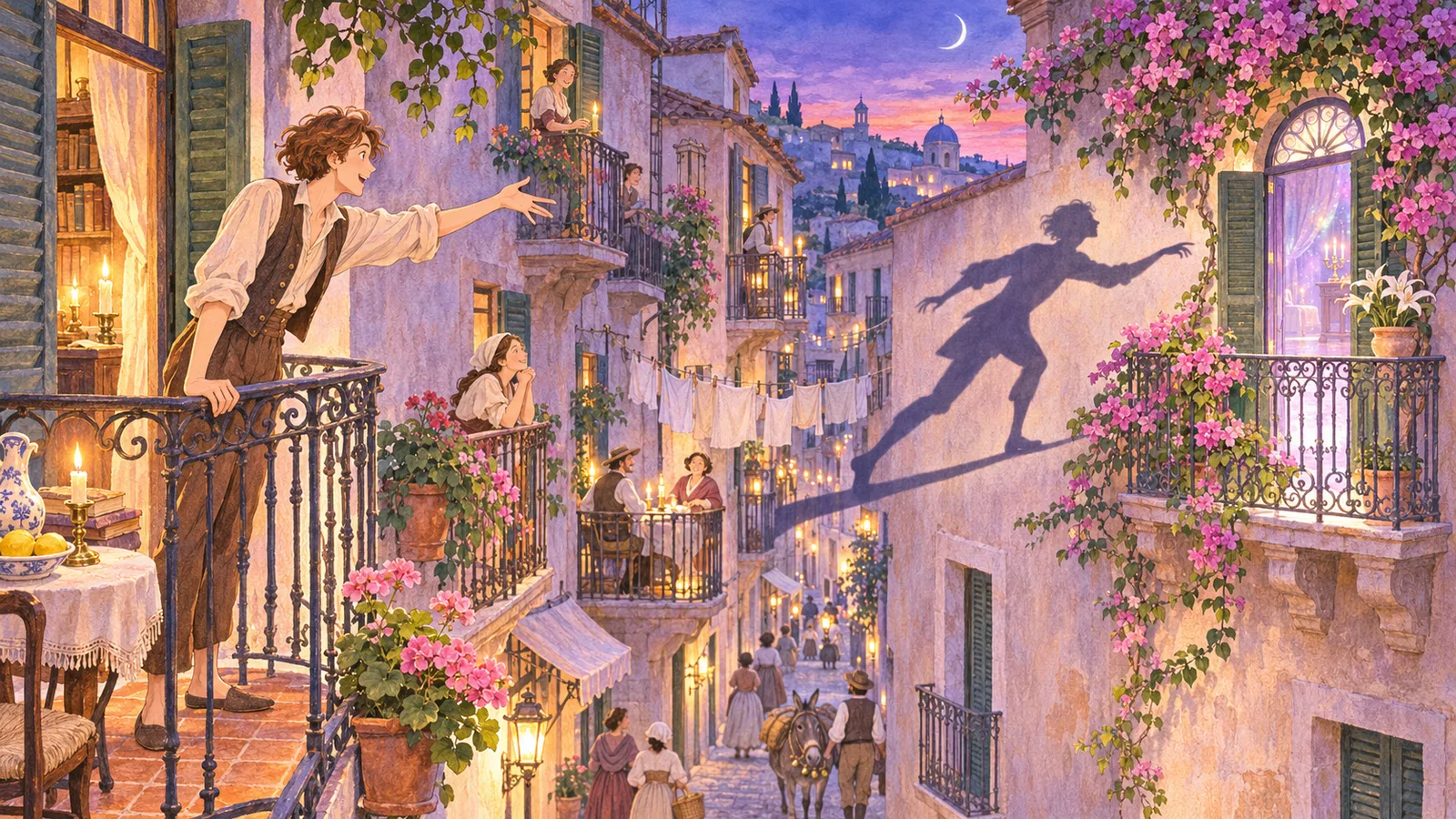
It is in the hot lands that the sun burns, sure enough! there the people become quite a mahogany brown, ay, and in the HOTTEST lands they are burnt to Negroes.暑い国では、お日さまがほんとうにじりじりと照りつけます!そこでは人びとはマホガニーのような茶色になり、いちばん暑い国では、まっ黒に日焼けしてしまいます。 But now it was only to the HOT lands that a learned man had come from the cold; there he thought that he could run about just as when at home, but he soon found out his mistake.けれども、寒い国からひとりの学者がやってきたのは、ただの「暑い国」でした。学者は、ここでも故郷にいるときと同じように走りまわれると思っていましたが、すぐにそれがまちがいだと気づきました。
He, and all sensible folks, were obliged to stay within doors—the window-shutters and doors were closed the whole day; it looked as if the whole house slept, or there was no one at home.学者も、かしこい人たちもみんな、家の中にいなければなりませんでした。よろい戸も戸も一日じゅうしめきってあって、まるで家じゅうがねむっているか、だれも家にいないかのようでした。
The narrow street with the high houses, was built so that the sunshine must fall there from morning till evening—it was really not to be borne.高い家にはさまれたせまい通りは、朝から晩まで日の光がさしこむように建てられていて、ほんとうにたえられないほどでした。
The learned man from the cold lands—he was a young man, and seemed to be a clever man—sat in a glowing oven; it took effect on him, he became quite meagre—even his shadow shrunk in, for the sun had also an effect on it.寒い国から来た学者は――若い人で、かしこそうな人でした――まるで燃えるかまどの中にすわっているようでした。暑さは学者にこたえて、すっかりやせてしまいました。影までちぢんでしまいました。お日さまは影にもききめがあったのです。 It was first towards evening when the sun was down, that they began to freshen up again.夕方になって日がしずんでから、ようやくみんな元気を取りもどしはじめるのでした。
In the warm lands every window has a balcony, and the people came out on all the balconies in the street—for one must have air, even if one be accustomed to be mahogany!* It was lively both up and down the street.暑い国では、どの窓にもバルコニーがついていて、人びとは通りじゅうのバルコニーに出てきました。たとえマホガニー色になれっこでも、空気はすわなくてはなりませんからね!* 通りはどこもかしこもにぎやかでした。 Tailors, and shoemakers, and all the folks, moved out into the street—chairs and tables were brought forth—and candles burnt—yes, above a thousand lights were burning—and the one talked and the other sung; and people walked and church-bells rang, and asses went along with a dingle-dingle-dong! for they too had bells on.仕立て屋もくつ屋も、だれもかれもが通りに出てきました。いすやテーブルが持ち出され、ろうそくがともされて――そう、千をこえるあかりがともり――ある人はおしゃべりし、ある人は歌いました。人びとは歩き、教会のかねが鳴り、ロバたちはチリンチリンドンと鳴らしながら通っていきました。ロバも鈴をつけていたのです。 The street boys were screaming and hooting, and shouting and shooting, with devils and detonating balls—and there came corpse bearers and hood wearers—for there were funerals with psalm and hymn—and then the din of carriages driving and company arriving: yes, it was, in truth, lively enough down in the street.通りの子どもたちはさけんだり、はやしたてたり、どなったり、ねずみ花火やかんしゃく玉を鳴らしたりしていました。ひつぎをかつぐ人やずきんをかぶった人もやってきました。賛美歌とともにお葬式があったのです。それから馬車が走り、お客が着く音でさわがしくなりました。ほんとうに、通りはとてもにぎやかでした。 Only in that single house, which stood opposite that in which the learned foreigner lived, it was quite still; and yet some one lived there, for there stood flowers in the balcony—they grew so well in the sun's heat! and that they could not do unless they were watered—and some one must water them—there must be somebody there.ただ一けん、学者の住む家の真向かいの家だけは、ひっそりと静まりかえっていました。それでも、だれかが住んでいるのです。バルコニーには花がおいてあって、日の暑さの中でとてもよく育っていました。水をやらなければそうは育たないはずですし、だれかが水をやっているにちがいありません――だれかがそこにいるはずです。 The door opposite was also opened late in the evening, but it was dark within, at least in the front room; further in there was heard the sound of music.向かいの戸も夜おそくには開きましたが、中は暗く、少なくとも表の部屋は暗いのでした。もっとおくのほうから、音楽が聞こえてきました。 The learned foreigner thought it quite marvellous, but now—it might be that he only imagined it—for he found everything marvellous out there, in the warm lands, if there had only been no sun.外国から来た学者は、それをとてもふしぎに思いました。でも――もしかすると、そう思いこんでいただけかもしれません。お日さまさえなければ、暑い国のものは何もかもふしぎに思えたのですから。 The stranger's landlord said that he didn't know who had taken the house opposite, one saw no person about, and as to the music, it appeared to him to be extremely tiresome.学者の家主は、向かいの家をだれが借りているのか知らないと言いました。人の姿を見かけたことはないし、音楽については、ひどくたいくつに思えるとのことでした。 “It is as if some one sat there, and practised a piece that he could not master—always the same piece.「まるでだれかがあそこにすわって、うまくひけない曲を練習しているみたいなんですよ――いつも同じ曲をね。 'I shall master it!' says he; but yet he cannot master it, however long he plays.”『ひけるようになってみせる!』と言うんですが、どんなに長くひいても、やっぱりひけないんです。」
* The word mahogany can be understood, in Danish, as having two meanings.*(注)マホガニーということばは、デンマーク語では二つの意味にとれます。 In general, it means the reddish-brown wood itself; but in jest, it signifies “excessively fine,” which arose from an anecdote of Nyboder, in Copenhagen, (the seamen's quarter.)ふつうは赤茶色の木そのものを意味しますが、じょうだんでは「とてもりっぱな、気どった」という意味になります。これはコペンハーゲンの船乗りの町ニューボーダーの、ある小話から来ています。 A sailor's wife, who was always proud and fine, in her way, came to her neighbor, and complained that she had got a splinter in her finger.いつも自分なりに気どってえらぶっている船乗りのおかみさんが、となりの家へ行って、指にとげがささったとこぼしました。 “What of?” asked the neighbor's wife.「何のとげ?」とおとなりのおかみさんがたずねました。 “It is a mahogany splinter,” said the other.「マホガニーのとげよ」ともうひとりは言いました。 “Mahogany!「マホガニーですって! It cannot be less with you!” exclaimed the woman—and thence the proverb, “It is so mahogany!”—(that is, so excessively fine)—is derived.あなたなら、それより安いものじゃすまないわよね!」とおかみさんはさけびました。それで「なんてマホガニーなこと!」(つまり、なんて気どっていること)ということわざができたのです。
One night the stranger awoke—he slept with the doors of the balcony open—the curtain before it was raised by the wind, and he thought that a strange lustre came from the opposite neighbor's house; all the flowers shone like flames, in the most beautiful colors, and in the midst of the flowers stood a slender, graceful maiden—it was as if she also shone; the light really hurt his eyes.ある夜、学者は目をさましました――バルコニーの戸を開けたままねていたのです――前にかかったカーテンが風でまくれあがり、向かいの家からふしぎな光がさしてくるように思えました。花という花がほのおのように、それは美しい色にかがやき、花のまん中に、ほっそりとした優雅なむすめが立っていました。むすめもかがやいているようで、その光に、ほんとうに目がいたくなるほどでした。 He now opened them quite wide—yes, he was quite awake; with one spring he was on the floor; he crept gently behind the curtain, but the maiden was gone; the flowers shone no longer, but there they stood, fresh and blooming as ever; the door was ajar, and, far within, the music sounded so soft and delightful, one could really melt away in sweet thoughts from it.学者は目を大きく見開きました――そう、すっかり目がさめていたのです。ひととびで床にとびおり、そっとカーテンのかげにしのびよりました。でも、むすめはもういませんでした。花はもうかがやいていませんでしたが、いつもと同じように、みずみずしくさきほこっていました。戸は少し開いていて、ずっとおくのほうから、音楽がとてもやわらかく、うっとりするようにひびいてきました。聞いていると、あまい思いの中にとけてしまいそうでした。 Yet it was like a piece of enchantment.それでも、まるで魔法のようでした。 And who lived there?いったい、だれが住んでいるのでしょう? Where was the actual entrance?ほんとうの入り口はどこなのでしょう? The whole of the ground-floor was a row of shops, and there people could not always be running through.一階はずらりと店がならんでいて、そこを人がいつも通りぬけるわけにはいきません。
One evening the stranger sat out on the balcony.ある晩、学者はバルコニーに出てすわっていました。 The light burnt in the room behind him; and thus it was quite natural that his shadow should fall on his opposite neighbor's wall.うしろの部屋にはあかりがともっていました。ですから、学者の影が向かいの家のかべにうつるのは、まったく自然なことでした。 Yes! there it sat, directly opposite, between the flowers on the balcony; and when the stranger moved, the shadow also moved: for that it always does.そうです!影は真向かいの、バルコニーの花のあいだにすわっていました。学者が動くと、影も動きました。影はいつもそうするものですから。
“I think my shadow is the only living thing one sees over there,” said the learned man.「向こうで見える生きているものといったら、わたしの影だけだな」と学者は言いました。 “See, how nicely it sits between the flowers.「ほら、花のあいだに、なんてうまくすわっているんだろう。 The door stands half-open: now the shadow should be cunning, and go into the room, look about, and then come and tell me what it had seen.戸は半分開いている。影がかしこく立ちまわって、部屋の中に入って、見まわしてから、何を見たかわたしに話しに来てくれるといいんだが。 Come, now!さあ、行け! Be useful, and do me a service,” said he, in jest.役に立って、ひとつ用をたしておくれ」と学者はじょうだんで言いました。 “Have the kindness to step in.「どうぞ、お入りください。 Now!さあ! Art thou going?” and then he nodded to the shadow, and the shadow nodded again.行くのかい?」そう言って学者が影にうなずくと、影もうなずき返しました。 “Well then, go!「よし、では行っておいで! But don't stay away.”でも、そのまま帰ってこないなんてことはないようにな。」
The stranger rose, and his shadow on the opposite neighbor's balcony rose also; the stranger turned round and the shadow also turned round.学者が立ち上がると、向かいのバルコニーの影も立ち上がりました。学者がふり向くと、影もふり向きました。 Yes! if anyone had paid particular attention to it, they would have seen, quite distinctly, that the shadow went in through the half-open balcony-door of their opposite neighbor, just as the stranger went into his own room, and let the long curtain fall down after him.そうです!もしだれかがよく気をつけて見ていたら、学者が自分の部屋に入って長いカーテンをおろしたのと同時に、影が向かいの家の半分開いたバルコニーの戸から中へ入っていくのが、はっきり見えたことでしょう。
Next morning, the learned man went out to drink coffee and read the newspapers.次の朝、学者はコーヒーを飲んで新聞を読みに出かけました。
“What is that?” said he, as he came out into the sunshine.「これはどうしたことだ?」と、日なたに出たとき学者は言いました。 “I have no shadow!「影がない! So then, it has actually gone last night, and not come again.それじゃあ、ほんとうにゆうべ出ていって、帰ってこなかったんだな。 It is really tiresome!”まったくこまったものだ!」
This annoyed him: not so much because the shadow was gone, but because he knew there was a story about a man without a shadow.* It was known to everybody at home, in the cold lands; and if the learned man now came there and told his story, they would say that he was imitating it, and that he had no need to do.学者はいらいらしました。影がいなくなったからというより、影をなくした男の物語があることを知っていたからです。* その話は、寒い国の故郷ではだれもが知っていました。ですから、学者が帰って自分の話をしたら、人びとはそのまねをしているのだと言うでしょう。そんなことをする必要はないのに。 He would, therefore, not talk about it at all; and that was wisely thought.そこで、学者はそのことはまったく話さないことにしました。それはかしこい考えでした。
*Peter Schlemihl, the shadowless man.*(注)ペーター・シュレミール、影をなくした男。
In the evening he went out again on the balcony.夕方、学者はまたバルコニーに出ました。 He had placed the light directly behind him, for he knew that the shadow would always have its master for a screen, but he could not entice it.あかりを自分のすぐうしろにおきました。影はいつも主人をついたてにするものだと知っていたからです。けれども、影をおびき出すことはできませんでした。 He made himself little; he made himself great: but no shadow came again.体を小さくしたり、大きくしたりしてみましたが、影はもどってきませんでした。 He said, “Hem! hem!” but it was of no use.「エヘン!エヘン!」と言ってみましたが、むだでした。
It was vexatious; but in the warm lands everything grows so quickly; and after the lapse of eight days he observed, to his great joy, that a new shadow came in the sunshine.しゃくにさわることでした。けれども、暑い国では何でもとても早く育ちます。八日たつと、学者は日なたで新しい影が出てきたのに気づいて、大喜びしました。 In the course of three weeks he had a very fair shadow, which, when he set out for his home in the northern lands, grew more and more in the journey, so that at last it was so long and so large, that it was more than sufficient.三週間のうちには、なかなかりっぱな影になりました。そして北の国の故郷へ向けて旅立つと、影は旅のあいだにどんどんのびて、しまいにはとても長く大きくなり、もう十分すぎるほどになりました。
The learned man then came home, and he wrote books about what was true in the world, and about what was good and what was beautiful; and there passed days and years—yes! many years passed away.学者は故郷に帰ってきて、世の中の真実について、また何が善で何が美しいかについて、本を書きました。そして日がたち、年がたちました――そう!何年も何年もすぎていきました。
One evening, as he was sitting in his room, there was a gentle knocking at the door.ある晩、学者が部屋にすわっていると、戸をそっとたたく音がしました。
“Come in!” said he; but no one came in; so he opened the door, and there stood before him such an extremely lean man, that he felt quite strange.「お入りなさい!」と学者は言いました。でも、だれも入ってきません。そこで戸を開けてみると、目の前に、ひどくやせた男が立っていたので、学者はなんだかへんな気持ちになりました。 As to the rest, the man was very finely dressed—he must be a gentleman.そのほかの点では、その男はとてもりっぱな身なりをしていました――紳士にちがいありません。
“Whom have I the honor of speaking?” asked the learned man.「どちらさまでしょうか?」と学者はたずねました。
“Yes!「ええ! I thought as much,” said the fine man.そうだろうと思っていましたよ」とりっぱな身なりの男は言いました。 “I thought you would not know me.「あなたはわたしがわからないだろうと思っていました。 I have got so much body.わたしはずいぶん体がついたんです。 I have even got flesh and clothes.肉も服も手に入れたんですよ。 You certainly never thought of seeing me so well off.わたしがこんなに羽ぶりがよくなっているなんて、きっと思いもしなかったでしょう。 Do you not know your old shadow?あなたの昔の影がわかりませんか? You certainly thought I should never more return.わたしがもう二度ともどってこないと、きっと思っていたでしょうね。 Things have gone on well with me since I was last with you.あなたのところをはなれてから、わたしはとてもうまくやってきました。 I have, in all respects, become very well off.どこから見ても、とても裕福になったんです。 Shall I purchase my freedom from service?お金をはらって、奉公から自由の身にしてもらいましょうか? If so, I can do it”; and then he rattled a whole bunch of valuable seals that hung to his watch, and he stuck his hand in the thick gold chain he wore around his neck—nay! how all his fingers glittered with diamond rings; and then all were pure gems.それなら、できますよ。」そう言って男は、時計にぶらさげた高価な印章のたばをジャラジャラ鳴らし、首にかけた太い金のくさりに手をつっこみました――おやまあ!指という指がダイヤモンドの指輪できらきら光っていました。しかも、どれもみな本物の宝石だったのです。
“Nay; I cannot recover from my surprise!” said the learned man.「いや、おどろいて口もきけない!」と学者は言いました。 “What is the meaning of all this?”「これはいったい、どういうことなんだね?」
“Something common, is it not,” said the shadow.「ありふれたことでしょう?」と影は言いました。 “But you yourself do not belong to the common order; and I, as you know well, have from a child followed in your footsteps.「でも、あなたご自身はありふれた方ではありません。それにわたしは、ごぞんじのように、子どものころからずっとあなたのあとについて歩いてきました。 As soon as you found I was capable to go out alone in the world, I went my own way.わたしがひとりで世の中に出ていけるとあなたが見きわめたとき、わたしは自分の道を進みました。 I am in the most brilliant circumstances, but there came a sort of desire over me to see you once more before you die; you will die, I suppose?わたしは今、このうえなくりっぱな身分なのですが、あなたが亡くなる前にもう一度お会いしたいという気持ちになったのです。あなたはいずれ亡くなるのでしょう? I also wished to see this land again—for you know we always love our native land.それに、この国をもう一度見たかったのです――だれだって、ふるさとは愛しいものですからね。 I know you have got another shadow again; have I anything to pay to it or you?あなたにはまた別の影ができたそうですね。わたしはその影か、あなたに、何かおはらいすべきものがありますか? If so, you will oblige me by saying what it is.”もしあるなら、どうぞおっしゃってください。」
“Nay, is it really thou?” said the learned man.「なんと、ほんとうにおまえなのか?」と学者は言いました。 “It is most remarkable: I never imagined that one's old shadow could come again as a man.”「じつにおどろいた。昔の影が人間になってもどってくるなんて、思ってもみなかったよ。」
“Tell me what I have to pay,” said the shadow; “for I don't like to be in any sort of debt.”「わたしがはらうべきものをおっしゃってください」と影は言いました。「わたしは、どんな借りがあるのもいやなのです。」
“How canst thou talk so?” said the learned man.「なんということを言うんだ?」と学者は言いました。 “What debt is there to talk about?「借りなんて、どこにあるんだね? Make thyself as free as anyone else.ほかのだれとも同じように、自由にしておくれ。 I am extremely glad to hear of thy good fortune: sit down, old friend, and tell me a little how it has gone with thee, and what thou hast seen at our opposite neighbor's there—in the warm lands.”おまえが幸せになったと聞いて、ほんとうにうれしいよ。さあすわって、古い友よ。おまえがどうしていたか、そして向かいの家で――あの暑い国で――何を見たのか、少し話しておくれ。」
“Yes, I will tell you all about it,” said the shadow, and sat down: “but then you must also promise me, that, wherever you may meet me, you will never say to anyone here in the town that I have been your shadow.「ええ、すっかりお話ししましょう」と影は言って、すわりました。「でも、そのかわりに約束してください。どこでわたしに会っても、この町のだれにも、わたしがあなたの影だったとは決して言わないと。 I intend to get betrothed, for I can provide for more than one family.”わたしは婚約するつもりなのです。家族ひとつ以上をやしなえるだけの財産がありますからね。」
“Be quite at thy ease about that,” said the learned man; “I shall not say to anyone who thou actually art: here is my hand—I promise it, and a man's bond is his word.”「そのことなら、まったく安心しておくれ」と学者は言いました。「おまえがほんとうは何者なのか、だれにも言わないよ。さあ、手をにぎろう――約束する。男の言葉は証文と同じだ。」
“A word is a shadow,” said the shadow, “and as such it must speak.”「言葉は影のようなものです」と影は言いました。「ですから、影として話さなくてはなりません。」
It was really quite astonishing how much of a man it was.それが、どれほど人間らしくなっていたかは、ほんとうにおどろくほどでした。 It was dressed entirely in black, and of the very finest cloth; it had patent leather boots, and a hat that could be folded together, so that it was bare crown and brim; not to speak of what we already know it had—seals, gold neck-chain, and diamond rings; yes, the shadow was well-dressed, and it was just that which made it quite a man.影は全身黒ずくめで、それも最高級の布でした。エナメルのくつをはき、たたむことのできる帽子をかぶっていて、たためば山とつばだけになるのでした。それに、もうわかっているもの――印章や金の首かざりのくさりやダイヤモンドの指輪――は言うまでもありません。そう、影はりっぱな身なりをしていて、まさにそのおかげで、すっかり人間らしく見えたのです。
“Now I shall tell you my adventures,” said the shadow; and then he sat, with the polished boots, as heavily as he could, on the arm of the learned man's new shadow, which lay like a poodle-dog at his feet.「では、わたしの冒険をお話ししましょう」と影は言いました。そして、ぴかぴかのくつをはいたまま、学者の新しい影のうでの上に、できるだけ重たくすわりました。新しい影は、むく犬のように学者の足もとにねそべっていたのです。 Now this was perhaps from arrogance; and the shadow on the ground kept itself so still and quiet, that it might hear all that passed: it wished to know how it could get free, and work its way up, so as to become its own master.これは、もしかするといばっていたからかもしれません。床の上の影は、話をみんな聞こうとして、じっと静かにしていました。どうすれば自由になり、出世して、自分が自分の主人になれるのか、知りたかったのです。
“Do you know who lived in our opposite neighbor's house?” said the shadow.「向かいの家にだれが住んでいたか、ごぞんじですか?」と影は言いました。 “It was the most charming of all beings, it was Poesy!「それは、この世でいちばんすばらしいもの、詩の女神だったのです! I was there for three weeks, and that has as much effect as if one had lived three thousand years, and read all that was composed and written; that is what I say, and it is right.わたしはそこに三週間いました。それは、三千年生きて、これまでに作られ書かれたものをすべて読んだのと同じくらいのききめがあるのです。わたしがそう言うのですから、まちがいありません。 I have seen everything and I know everything!”わたしは何もかも見て、何もかも知っているのです!」
“Poesy!” cried the learned man.「詩の女神!」と学者はさけびました。 “Yes, yes, she often dwells a recluse in large cities!「そうだ、そうだ、詩の女神はよく大都会に、世をはなれてひっそりと住んでいるものだ! Poesy!詩の女神! Yes, I have seen her—a single short moment, but sleep came into my eyes!そうだ、わたしも見たことがある――ほんの短いあいだだったが、ねむけが目にさしてきたのだ! She stood on the balcony and shone as the Aurora Borealis shines.女神はバルコニーに立って、オーロラのようにかがやいていた。 Go on, go on—thou wert on the balcony, and went through the doorway, and then—”さあ、続けておくれ、続けて――おまえはバルコニーにいて、戸口を通っていった、それから――」
“Then I was in the antechamber,” said the shadow.「それから、わたしは控えの間にいました」と影は言いました。 “You always sat and looked over to the antechamber.「あなたはいつも、すわって控えの間のほうをながめていましたね。 There was no light; there was a sort of twilight, but the one door stood open directly opposite the other through a long row of rooms and saloons, and there it was lighted up.あかりはありませんでした。うす明かりのようなものがあるだけでした。でも、ずらりとならんだ部屋や広間を通して、戸が次々と真向かいに開いていて、そのおくのほうは明るく照らされていました。 I should have been completely killed if I had gone over to the maiden; but I was circumspect, I took time to think, and that one must always do.”もし、むすめのところまで行っていたら、わたしはすっかりやられてしまったことでしょう。でも、わたしは用心深かったので、よく考えました。人はいつもそうしなくてはいけません。」
“And what didst thou then see?” asked the learned man.「それで、何を見たんだね?」と学者はたずねました。
“I saw everything, and I shall tell all to you: but—it is no pride on my part—as a free man, and with the knowledge I have, not to speak of my position in life, my excellent circumstances—I certainly wish that you would say YOU* to me!”「何もかも見ましたよ。すっかりお話しします。でも――けっして、いばっているわけではありませんが――自由の身として、わたしの持っている知識、それに世の中での身分やりっぱな暮らしぶりからいっても、わたしのことは『あなた』と呼んでいただきたいのです!」*
* It is the custom in Denmark for intimate acquaintances to use the second person singular, “Du,” (thou) when speaking to each other.*(注)デンマークでは、親しい知り合いどうしは、二人称単数の「ドゥ」(おまえ・きみ)を使って話します。 When a friendship is formed between men, they generally affirm it, when occasion offers, either in public or private, by drinking to each other and exclaiming, “thy health,” at the same time striking their glasses together.男の人どうしで友情を結ぶときは、たいてい機会があれば、人前でも二人だけでも、おたがいに乾杯して「きみの健康に」と言いながら、グラスを打ち合わせて、そのしるしとします。 This is called drinking “Duus”: they are then, “Duus Brodre,” (thou brothers) and ever afterwards use the pronoun “thou,” to each other, it being regarded as more familiar than “De,” (you).これを「ドゥース」を飲むといいます。そうすると二人は「ドゥース・ブレズレ」(きみと呼び合う兄弟)になり、それからはずっとおたがいに「きみ」という呼び方を使います。これは「ディ」(あなた)よりも親しい言い方とされているのです。 Father and mother, sister and brother say thou to one another—without regard to age or rank.父と母、姉妹と兄弟は、年や身分に関係なく、おたがいに「きみ」と言い合います。 Master and mistress say thou to their servants the superior to the inferior.主人やおくさまは、使用人に「おまえ」と言います。目上の人が目下の人に言うのです。 But servants and inferiors do not use the same term to their masters, or superiors—nor is it ever used when speaking to a stranger, or anyone with whom they are but slightly acquainted—they then say as in English—you.けれども、使用人や目下の人は、主人や目上の人にはこの言い方を使いません――知らない人や、少ししか知らない人に話すときにも決して使いません――そのときは英語と同じように「あなた」と言うのです。
“I beg your pardon,” said the learned man; “it is an old habit with me.「これは失礼」と学者は言いました。「昔からのくせでね。 YOU are perfectly right, and I shall remember it; but now you must tell me all YOU saw!”あなたの言うとおりです。おぼえておきましょう。でも、さあ、あなたが見たことをみんな話してください!」
“Everything!” said the shadow.「何もかもですよ!」と影は言いました。 “For I saw everything, and I know everything!”「なにしろ、わたしは何もかも見て、何もかも知っているのですから!」
“How did it look in the furthest saloon?” asked the learned man.「いちばんおくの広間は、どんなようすでしたか?」と学者はたずねました。 “Was it there as in the fresh woods?「みずみずしい森の中のようでしたか? Was it there as in a holy church?神聖な教会の中のようでしたか? Were the saloons like the starlit firmament when we stand on the high mountains?”広間は、高い山の上に立ってながめる星空のようでしたか?」
“Everything was there!” said the shadow.「何もかもありましたよ!」と影は言いました。 “I did not go quite in, I remained in the foremost room, in the twilight, but I stood there quite well; I saw everything, and I know everything!「わたしはすっかり中までは入らず、いちばん手前の部屋の、うす明かりの中にいました。でも、そこはとてもいい場所でした。わたしは何もかも見て、何もかも知っているのです! I have been in the antechamber at the court of Poesy.”わたしは、詩の女神の宮廷の控えの間にいたのですから。」
“But WHAT DID you see?「でも、何を見たのですか? Did all the gods of the olden times pass through the large saloons?昔の神々がみんな、大広間を通っていきましたか? Did the old heroes combat there?昔の英雄たちがそこで戦いましたか? Did sweet children play there, and relate their dreams?”かわいい子どもたちがそこで遊んで、夢の話をしていましたか?」