 ワークシート
 ぬりえ
 迷路
にじむ墨だけで山と村を!76歳の雪舟が弟子に贈った「卒業証書」。Mountains and a village in a few splashes of ink! Sesshū's 'diploma' for his student.
この作品のお話
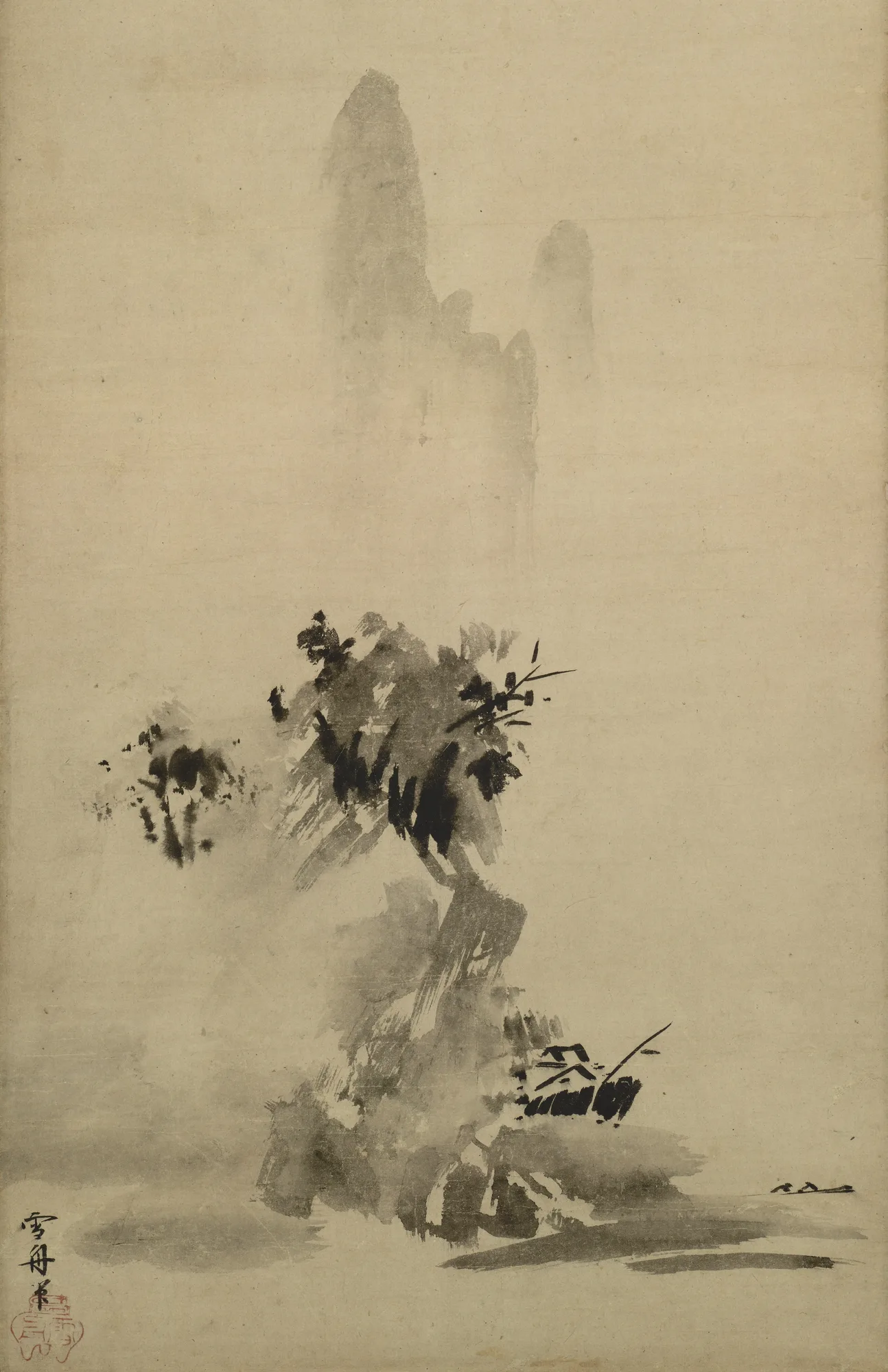
Story墨をたっぷりふくませた筆で、山や木、家をにじませるように描いた水墨画です。描いたのは室町時代の画僧・雪舟(せっしゅう)。1495年、76歳のときの作品で、国宝として東京国立博物館にあります。実物の掛け軸では、絵の上に長い文章と詩が書かれていますが、この画像は絵の部分だけです。
This ink painting shows mountains, trees and a house, painted with a brush full of ink so the shapes seem to blur. It is by Sesshū, a painter-monk of the Muromachi period. He made it in 1495, when he was 76. It is a National Treasure in the Tokyo National Museum. On the real scroll, long writings and poems sit above the painting, but this image shows only the painting.
上の文章は雪舟自身が書いたもので、弟子の宗淵(そうえん)が修行を終えて鎌倉の円覚寺に帰るとき、その証としてこの絵を贈ったことが記されています。雪舟は、中国の明にわたって学んだことや、日本では周文という画僧に学んだことなども書いています。絵は輪郭線をほとんど使わず、墨のこさとうすさだけで形を表しています。
Sesshū wrote the text above himself. It says he gave this painting to his student Sōen as proof of his training, when Sōen was going back to Engaku-ji temple in Kamakura. Sesshū also wrote that he had traveled to Ming China to study, and that in Japan he had learned from the painter-monk Shūbun. The painting uses almost no outlines. Shapes appear only through dark and light ink.
宗淵は鎌倉へ帰る途中で京都に立ちより、京都の名だたる寺の禅僧6人にたのんで、絵の上に詩を書いてもらいました。こうして一枚の絵が、師弟の物語と多くの人の言葉をのせた、特別な掛け軸になったのです。墨をにじませて形を生むこの描き方は、のちの日本の水墨画にも受けつがれていきました。
On his way back to Kamakura, Sōen stopped in Kyoto. He asked six Zen monks from Kyoto's great temples to write poems above the painting. In this way, one painting became a special scroll carrying the story of a teacher and student and the words of many people. This way of making shapes with spreading ink was passed on to later Japanese ink painters.
これは墨の絵です。はっきりした線はほとんどありません。山や木はやわらかく見えます。雪舟は76歳でした。この絵を弟子に贈りました。
This is an ink painting. There are almost no clear lines. The mountains and trees look soft. Sesshū was 76 years old. He gave this picture to his student.
英語のレベルは上の「やさしい/ふつう」で切りかえられます。
えっ!?な裏ネタ
Secrets「破墨」は、こさのちがう墨を重ねて形を表す技法のこと。ところがこの絵の描き方は、墨をそそぐように広げる「溌墨(はつぼく)」に近いとされます。雪舟の文の中に「破墨」という言葉があることから、この題名がついたと考えられています。
'Haboku,' or broken ink, means building shapes by layering inks of different darkness. But this painting is said to be closer to 'hatsuboku,' or splashed ink, where ink is spread as if poured. The title probably comes from the word 'haboku' in Sesshū's own text.
宗淵がたしかに雪舟のもとで学んだことを示すため、宗淵自身の願いで描かれました。いわば先生直筆の「卒業証書」です。雪舟は文の中で自分の年齢を76歳と書いており、描いた年と年齢がはっきりわかる、貴重な作品になっています。
Sōen asked for this painting to prove that he had truly studied with Sesshū. It is like a diploma written by the teacher himself. Sesshū wrote his age, 76, in the text, so we know exactly when and at what age he made it.
雪舟は文の中で、中国では李在(りざい)らの画家に学んだと書いています。ところが李在は、雪舟が中国に行くよりかなり前に亡くなっていたとする見方もあり、実際に会えたのかは分かっていません。「作品から学んだ」という意味だったのかもしれません。
Sesshū wrote that in China he learned from painters such as Li Zai. But some think Li Zai had died long before Sesshū arrived, so it is not clear that they ever met. Perhaps Sesshū meant that he learned from Li Zai's works.
まん中より下の右寄りに、三角の屋根と、ななめにのびる細い線が見えます。これは酒屋の目じるしの旗「酒旗(しゅき)」と考えられています。にじんだ墨の世界の中に、人のくらしがそっと描きこまれているのです。
Below the center, slightly to the right, you can see a triangle roof and a thin slanting line. The line is thought to be a flag that marked a wine shop. Inside this world of blurred ink, a small piece of daily life is quietly painted in.
ここを見て!
Look Closer1かすむ山Misty mountains
うすい墨だけで描かれた山。霧の中から、ぼんやりと姿を見せています。
Mountains painted only in pale ink. They appear softly out of the mist.
2こい墨の木々Trees in dark ink
こい墨をさっとおいて、木々の茂みを表しています。輪郭線はほとんどありません。
Quick touches of dark ink show a group of trees. There are almost no outlines.
3酒屋の旗と屋根A shop roof and flag
三角の屋根と、ななめの細い線。酒屋の目じるしの旗だと考えられています。
A triangle roof and a thin slanting line. It is thought to be the flag of a wine shop.
4小舟A small boat
水の上の小さな舟に、2人の人が乗っています。
Two people sit in a small boat on the water.
英語で名画を語ろう
Talk about Art in EnglishThe tall mountains are barely visible in the mist.
高い山々は、霧の中にかろうじて見えています。
💡 barely は「かろうじて・ほとんど〜ない」。うっすら見える物の説明に使えます。
英語で説明すると… Describe it
これは白黒の水墨画です。上のほうには、霧の中に高い灰色の山があります。まん中には、黒っぽい木々と小さな家があります。右下では、小さな舟が水にうかんでいます。
This is a black-and-white ink painting. At the top, there are tall gray mountains in the mist. In the middle, there are dark trees and a small house. At the bottom right, a tiny boat is floating on the water.
考えてみよう Think & Talk
- 雪舟はなぜ、こんなに少ない線で描いたのだと思いますか?Why do you think Sesshū used so few lines?
- 友だちに絵の「卒業証書」を贈るとしたら、何を描きますか?If you made a 'diploma' picture for a friend, what would you draw?
この作品の英単語
WordsSesshū painted this landscape only with ink.
雪舟はこの風景を墨だけで描きました。
The shapes of the trees blur into the paper.
木々の形が紙ににじんでいます。
The mountains look misty and far away.
山々は霧がかかって遠くに見えます。
Sesshū gave this painting to his disciple.
雪舟はこの絵を弟子に贈りました。
ミニクイズ
QuizQ. 雪舟はこの絵をだれのために描いた?Who did Sesshū paint this for?
修行を終えた弟子・宗淵に、その証として贈りました。
He gave it to his student Sōen as proof that his training was complete.
ウソ?ホント? この絵では、くっきりした輪郭線がたくさん使われている。This painting uses many sharp outlines.
輪郭線はほとんどなく、墨のこさとうすさで形を表しています。
There are almost no outlines. Shapes come from dark and light ink.
ウソ?ホント? 雪舟はこの絵を76歳のときに描いた。Sesshū painted this when he was 76.
雪舟自身が、文の中に76歳と書いています。
Sesshū wrote his age, 76, in his own text.
 画像の出典とライセンス / Image credit
- PDSesshu - Haboku-Sansui.jpg(Wikimedia Commons)
ライセンス:Public domain(パブリックドメイン)/作者・撮影者の表記:Sesshū Tōyō
この作品は、作者の死後長い年月がたち著作権の保護期間が終わった「パブリックドメイン」の作品です。画像は平面の作品を忠実に写したもので、新しい著作権は生じません(Wikimedia Commons の PD-Art の考え方)。 所蔵:東京国立博物館(Tokyo National Museum)。画像は表示のために縮小・WebP 形式に変換しています。