 ワークシート
 ぬりえ
 迷路
かがむ3人の女性に、パリの批評家たちがびくっとした!?Why did three women bending in a field make some Paris critics nervous?
 美術館アンテナ:この作品に会える展覧会
この作品のお話
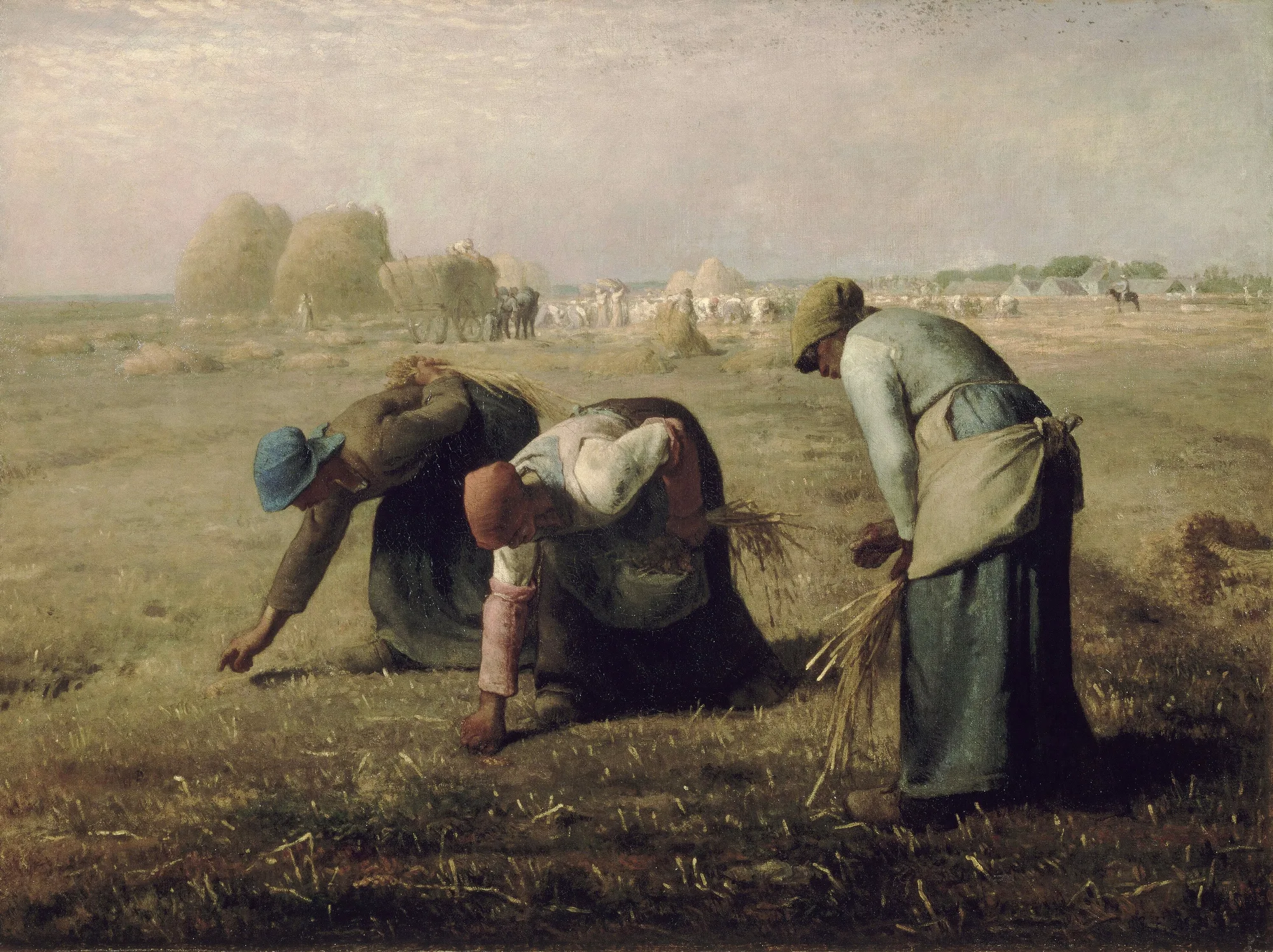
Story麦の刈り入れが終わった畑で、3人の女性が腰をかがめ、落ちた穂を一本ずつ拾っています。これが「落穂拾い」です。描いたのは、農民の暮らしを描きつづけたフランスの画家ミレー。1857年、パリ近郊のバルビゾン村で家族と暮らしていたころの作品で、今ではミレーの代表作です。
After the harvest, three women bend down in a field and pick up the leftover ears of wheat one by one. This is called gleaning. Jean-François Millet, a French painter of farm life, painted it in 1857 while he was living in the village of Barbizon, near Paris. It is now his best-known work.
落穂拾いは、貧しい人が収穫のあとに残った穂を拾ってよいという、昔からのならわしでした。奥には山積みの麦と荷車、馬に乗った見張りの人がいて、手前の3人の貧しさが際立ちます。ミレーは、ふつうなら神話や歴史に使う大きなサイズで、名もない農婦を堂々と描きました。
Gleaning was an old custom. Poor people were allowed to pick up what was left after the harvest. In the background, there are huge piles of wheat, a cart and a man on a horse watching. They make the three women look even poorer. Millet painted these nameless women on a large canvas, a size usually used for myths and history.
1857年のサロン(公式の展覧会)では、一部の批評家が、貧しい農民を大きく描いたこの作品を政治的に危険だと受け取りました。しかし後の時代には、働く人の尊さを描いた傑作として世界中で愛されるようになります。ゴッホもミレーを深く尊敬し、彼の作品を何枚も模写しました。
At the Salon of 1857, some critics saw this large picture of poor farm workers as politically dangerous. But later, it became loved around the world as a masterpiece that shows the dignity of work. Van Gogh deeply admired Millet and copied many of his works.
3人の女性が畑にいます。かがんで麦を拾っています。彼女たちは貧しいので、この食べ物が必要なのです。パリの批評家の中には、この絵をきらう人もいました。この絵をこわいと感じたのです!
Three women are in a field. They bend down and pick up wheat. They are poor, so they need this food. Some critics in Paris did not like this painting. They felt afraid of it!
英語のレベルは上の「やさしい/ふつう」で切りかえられます。
えっ!?な裏ネタ
Secretsある批評家は、この絵の後ろに「1793年の処刑台」が見えると書きました。フランス革命の恐怖政治のことです。かがむ3人の女性に、それほど不安を感じた人がいたのです。
One critic wrote that behind this painting he could see 'the scaffolds of 1793', meaning the Terror of the French Revolution. Three bending women made some people that nervous!
お金に困っていたミレーは、この絵を希望より安い値段で手放し、その安さを人に知られたくなかったそうです。最初の売値は資料によって2000フランとも3000フランともされます。ところが1889年の競売では、30万フランという高値がつきました。
Millet needed money, so he sold it for less than he wanted and tried to keep the low price secret. Sources give the first price as either 2,000 or 3,000 francs. But at an auction in 1889, it sold for 300,000 francs.
1889年に絵を買ったのは、シャンパン「ポメリー」の経営者ポメリー夫人でした。彼女の遺言によって、絵はルーヴル美術館に寄贈されます。今はオルセー美術館で見ることができます。
The buyer in 1889 was Madame Pommery, the head of the Pommery champagne company. Her will gave the painting to the Louvre. Today you can see it at the Musée d'Orsay.
フランスの映画監督アニエス・ヴァルダは、2000年にこの絵から始まるドキュメンタリー映画「落穂拾い」を作りました。任天堂の「どうぶつの森」シリーズでも、美術館にかざれる名画として登場します。
The French director Agnès Varda made a documentary in 2000 called 'The Gleaners and I', which starts from this painting. It also appears as an artwork you can donate in Nintendo's Animal Crossing series.
ここを見て!
Look Closer1穂を拾う手Hands picking up wheat
青い帽子の女性が、指先で一本の穂をつまもうとしています。地道な作業がつたわります。
The woman in the blue cap reaches for a single ear of wheat. We feel how slow and hard the work is.
2立ち上がりかけた女性The woman standing up
拾った穂を片手に束ねています。ずっとかがんでいるので、腰が痛そうです。
She holds a bundle of wheat in one hand. Bending all day must hurt her back.
3山積みの麦と荷車Haystacks and a cart
奥では麦がどっさり積まれています。手前の女性たちが拾うわずかな穂との差が大きいですね。
In the background, there are piles of wheat. Compare them with the few ears the women pick up.
4馬に乗った見張りThe man on a horse
右奥の小さな騎手は、畑の管理人だと考えられています。見張られているような緊張感があります。
The tiny rider on the right is probably the farm manager. It feels like the women are being watched.
英語で名画を語ろう
Talk about Art in EnglishThree women bend down to pick up the wheat.
3人の女性が、麦を拾おうと身をかがめています。
💡 bend は「曲げる」。bend down で体を前に曲げてかがむ動き。stand up と対で覚えよう。
英語で説明すると… Describe it
これは収穫後の畑を描いた絵です。手前には3人の女性がいます。彼女たちはかがんで麦を拾っています。奥には大きな麦の山と、たくさんの働く人たちがいます。
This painting shows a field after the harvest. In the foreground, there are three women. They are bending down and picking up wheat. In the background, there are big piles of wheat and many workers.
考えてみよう Think & Talk
- 上流の人々はなぜこの絵をこわがったのだと思いますか?Why do you think the rich people were afraid of this painting?
- ミレーはなぜ女性たちの顔をはっきり描かなかったのでしょう?Why did Millet not show the women's faces clearly?
この作品の英単語
WordsThe women came after the harvest.
女性たちは収穫のあとにやって来ました。
Poor people were allowed to glean the fields.
貧しい人々は畑で落ち穂を拾うことを許されていました。
They pick up the leftover wheat.
彼女たちは残った麦を拾います。
Millet showed the dignity of hard work.
ミレーはつらい仕事の尊さを描きました。
ミニクイズ
QuizQ. 「落穂拾い」とは、どんなこと?What is gleaning?
貧しい人が、刈り入れのあとに残った穂を拾ってよいというならわしでした。
It was a custom that let poor people collect what was left after the harvest.
ウソ?ホント? 発表されたとき、この絵は上流の人々に大人気だった。Rich people loved this painting when it was first shown.
一部の批評家に、政治的に危険な絵だと受け取られました。
Some critics saw it as politically dangerous.
ウソ?ホント? 絵の奥には、馬に乗った人が小さく描かれている。A small man on a horse is in the background.
右奥に、畑の管理人と考えられる騎手がいます。
On the right, far away, there is a rider who is probably the farm manager.
 画像の出典とライセンス / Image credit
- PDJean-François Millet - Gleaners - Google Art Project 2.jpg(Wikimedia Commons)
ライセンス:Public domain(パブリックドメイン)/作者・撮影者の表記:Jean-François Millet/提供元:Google Arts & Culture — GgHsT2RumWxbtw
この作品は、作者の死後長い年月がたち著作権の保護期間が終わった「パブリックドメイン」の作品です。画像は平面の作品を忠実に写したもので、新しい著作権は生じません(Wikimedia Commons の PD-Art の考え方)。 所蔵:オルセー美術館(Musée d'Orsay)。画像は表示のために縮小・WebP 形式に変換しています。