ushimitsu doki
the dead of night, around two in the morning, when spirits were said to appear
丑三つ時(うしみつどき)
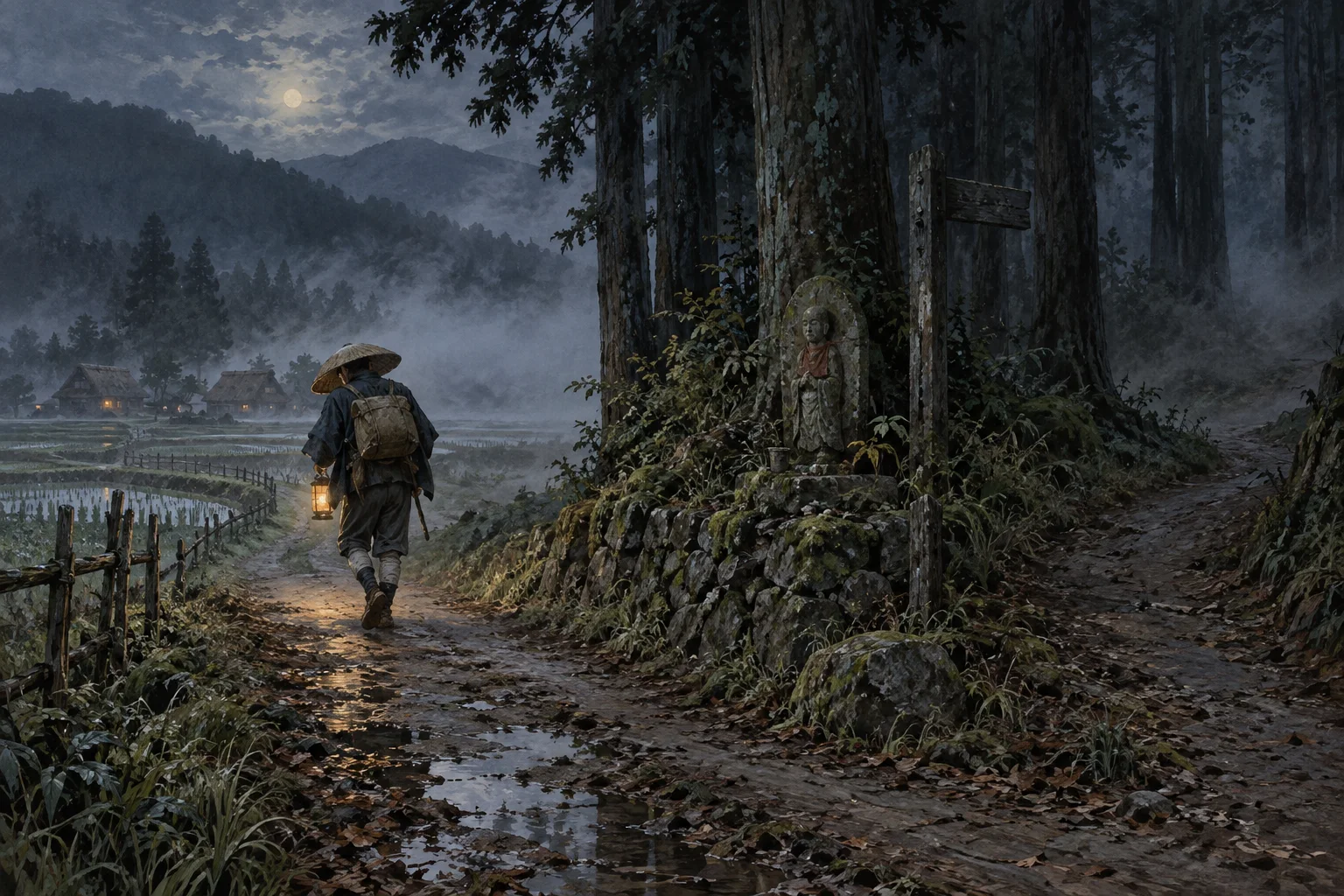
In one line
The shortest answer that works
Ushimitsu doki is the old name for around two in the morning, the hour of ghosts.
丑三つ時とは、午前2時ごろを指す古い時刻の呼び方で、幽霊の出る刻とされました。
In 30 seconds
The standard explanation
Before Western-style timekeeping, Japan divided the day into twelve parts named after the zodiac animals, each about two hours long and split into four quarters. The hour of the ox ran roughly from one to three in the morning, and its third quarter, ushimitsu, fell around two. In stories it is the time when ghosts appear and the boundary between worlds thins.
西洋式の時刻が入る前、日本は一日を十二支の名で十二に分け、それぞれおよそ二時間を四つに刻んでいました。丑の刻は午前1時から3時ごろで、その三つめ、丑三つがおよそ2時にあたります。物語では、幽霊が現れ、この世とあの世の境が薄くなる刻とされました。
As a short speech
A full paragraph you can read aloud
Ushimitsu doki is what Japanese people say for the dead of night, and the phrase carries a whole old system of time inside it. Before Western-style timekeeping, the day was divided into twelve periods named after the zodiac animals, each roughly two hours, and each of those into four quarters.
The hour of the ox covered about one to three in the morning, and its third quarter, ushimitsu, landed around two. That was considered the deepest point of the night, when, as the set phrase goes, even the grass and trees are asleep.
Ghost stories are set there, and so is a darker custom: a curse ritual in which someone nailed a straw figure to a sacred tree at that hour, which appears in kabuki and in horror films to this day. One thing worth adding is that the old hours were not fixed lengths. They stretched and shrank with the seasons, because daylight was divided into six parts whatever the time of year.
丑三つ時は、日本人が「真夜中」を言うときの言葉で、その中に昔の時刻の仕組みがまるごと入っています。西洋式の時刻が入る前、一日は十二支の名で十二に分けられ、それぞれおよそ二時間、さらに四つに刻まれていました。
丑の刻は午前1時から3時ごろにあたり、その三つめの丑三つが2時ごろです。ここが夜のいちばん深い底とされました。決まり文句で「草木も眠る丑三つ時」と言います。怪談の舞台はここですし、もっと暗い習俗の舞台でもあります。
この刻に藁人形を神木に打ちつける呪いで、歌舞伎にも、いまのホラー映画にも出てきます。付け加えておきたいのは、昔の一刻は長さが一定ではなかったことです。季節によって伸び縮みしました。昼を、時期にかかわらず六つに分けていたからです。
Questions people actually ask
And how to answer them.
Why the ox?
The twelve periods simply ran through the zodiac animals in order, starting with the rat around midnight. The ox came next, so it fell on the small hours. There is no meaning in the animal itself.
十二の刻は、真夜中ごろの子から順に十二支を当てただけです。次が丑なので、深夜にあたりました。動物そのものに意味はありません。
Were the hours the same length as ours?
No. Daylight was divided into six parts and night into six, so a summer daytime hour was long and a winter one short. Fixed-length hours came with the Western calendar in 1873.
違います。昼を六つ、夜を六つに分けたので、夏の昼の一刻は長く、冬は短くなりました。長さの決まった時刻になったのは、1873年に西洋の暦を採り入れてからです。
Do people still use the phrase?
As an expression, yes, in the same way English speakers say the witching hour. Nobody tells the time this way any more, but the phrase appears in novels, ghost stories and casual speech.
言い回しとしては使います。英語で the witching hour と言うのと同じです。この呼び方で時刻を言う人はもういませんが、小説や怪談、ふだんの会話には出てきます。
Phrases you can use
- Ushimitsu doki is around two in the morning.丑三つ時とは午前2時ごろのことです。
- The old day was divided by the zodiac animals.昔の一日は十二支で分けられていました。
- It's our equivalent of the witching hour.英語でいう the witching hour にあたります。
- The old hours changed length with the seasons.昔の一刻は、季節で長さが変わりました。
- Ghost stories are usually set at that hour.怪談は、たいていこの刻が舞台です。
Words you need
- the dead of night真夜中・深夜
- the zodiac animals十二支
- ghost story怪談
- curse呪い
- straw figure藁人形
Watch
From YouTubeBackground (Japanese)
江戸時代の時刻は不定時法で、日の出と日の入りを境に昼と夜をそれぞれ六等分したため、一刻の長さは季節によって変わった。丑の刻はおよそ午前1時から3時、これを四つに割った三つめが丑三つで、午前2時前後にあたる。「草木も眠る丑三つ時」は、怪談や芝居でおなじみの言い回しである。丑の刻参りは、この時刻に白装束で神木に藁人形を打ちつける呪いの作法として語られ、江戸期の書物にも記述がある。定時法に変わったのは明治6年(1873年)の改暦のときである。