nekomata
a cat said to grow a forked tail and supernatural powers after living unusually long
猫又(ねこまた)
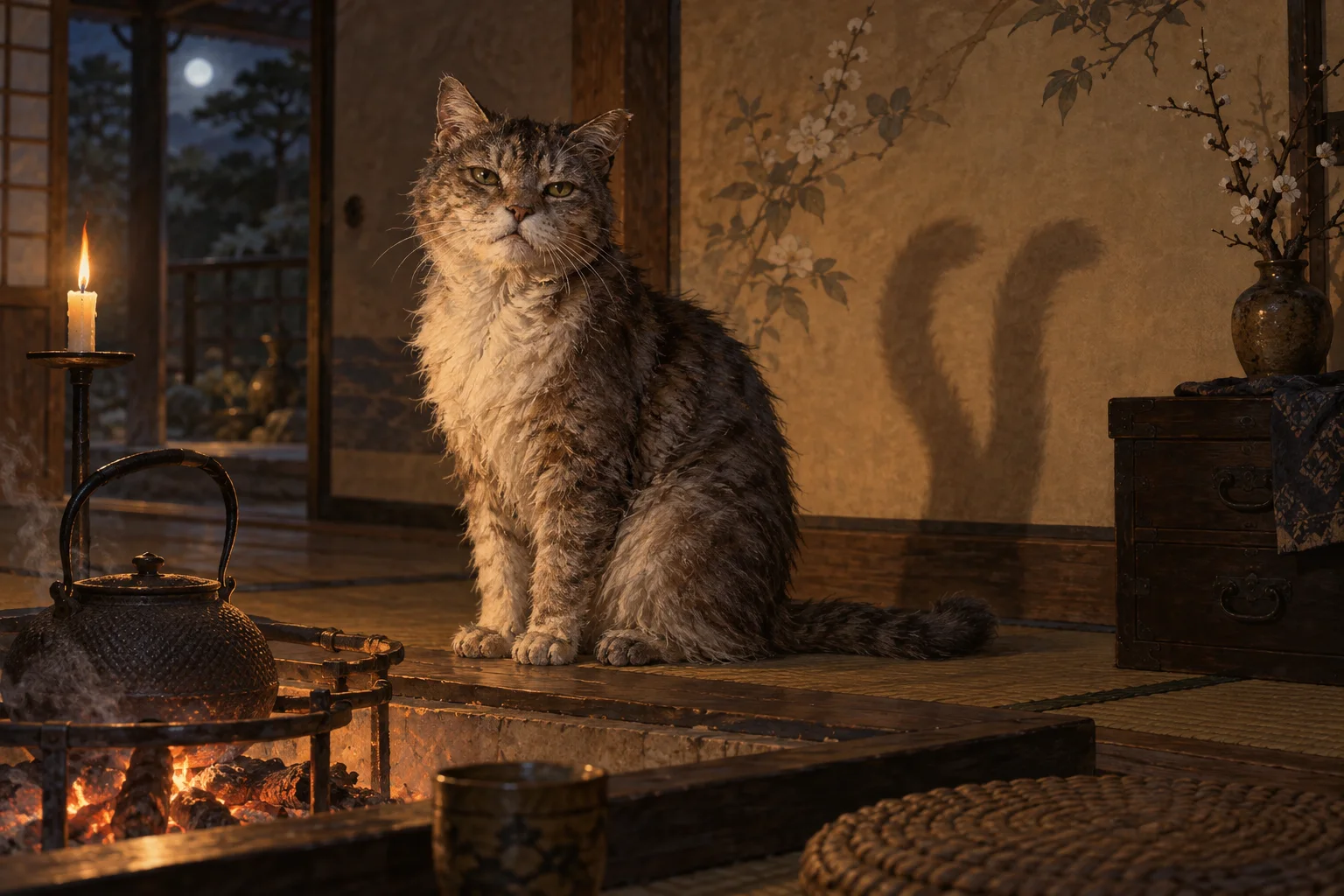
In one line
The shortest answer that works
A nekomata is a cat said to grow a split tail and strange powers in old age.
猫又とは、猫が長生きすると尾が二股に分かれ、不思議な力を得ると信じられてきた妖怪です。
In 30 seconds
The standard explanation
A nekomata is a cat said to transform into a yokai after living an unusually long life, growing a forked tail and gaining powers like speech, shapeshifting or control over the dead. The belief is old enough that a 13th-century diary already records a nekomata attacking people near Nara, though the now-familiar image of a cat with a split tail dancing on its hind legs mostly developed in Edo-period art and stories. It grew partly out of real unease about house cats: they moved silently, saw in the dark, and their eyes seemed to change shape, which made them easy to imagine as something not quite ordinary.
猫又とは、異様に長く生きた猫が化けるとされる妖怪で、尾が二股に分かれ、人の言葉を話したり、化けたり、死者を操ったりする力を得るといわれます。13世紀の日記にはすでに奈良で猫又が人を襲ったという記事があるほど古い言い伝えで、二股の尾で後ろ足だけで踊る、今なじみのある姿は、主に江戸時代の絵や物語で形作られたとされます。この信仰は、飼い猫への現実の不安からも生まれました。音もなく動き、暗闇でも目が見え、瞳の形が変わって見える猫は、ただの動物ではないと想像しやすかったのです。
As a short speech
A full paragraph you can read aloud
The nekomata is one of the oldest cat-related yokai in Japan, and it grew directly out of watching real cats behave in ways that felt slightly uncanny: moving without a sound, seeing well in the dark, and having pupils that seem to change shape with the light. Folk belief held that if a cat lived long enough, often said to be around ten or twenty years, it could transform, growing a second, forked tail and gaining powers such as human speech, shapeshifting into a person, or even raising the dead.
The earliest written mention is said to go back to the 13th century, describing a nekomata that attacked people near Nara, but the far more famous image, a cat standing on its hind legs with a split tail, dancing with a cloth on its head, mostly comes from Edo-period woodblock prints and storytelling collections. Old customs like docking a cat's tail or not keeping a cat for too many years are sometimes explained, half-jokingly today, as leftover caution against a cat becoming a nekomata.
猫又は日本でもっとも古い猫の妖怪の一つで、実際の猫の少し不気味に感じられる振る舞いを見た体験から直接生まれました。音もなく動き、暗がりでもよく見え、瞳孔が光の加減で形を変えるように見えることです。民間の言い伝えでは、猫が十分に長く生きると、よく十年か二十年ほどとされますが、化けることができ、二本目の分かれた尾を得て、人の言葉を話したり、人に化けたり、死者を蘇らせる力さえ得るといいます。
最も古い記述は13世紀にさかのぼるとされ、奈良で猫又が人を襲ったと記すものですが、手ぬぐいをかぶって後ろ足で立って踊る、二股の尾を持つ猫という今よく知られる姿は、主に江戸時代の浮世絵や物語集から来ています。猫の尾を短く切る風習や、猫を長く飼いすぎないという古い習慣は、今日では半ば冗談交じりに、猫又になることへの用心の名残として説明されることがあります。
Questions people actually ask
And how to answer them.
Is nekomata the same thing as bakeneko?
They overlap but aren't identical. Bakeneko is the broader category of any cat that has transformed or gained supernatural powers, while nekomata specifically refers to one with a split tail, often considered a more powerful, older form.
重なる部分はありますが、まったく同じではありません。ばけ猫は化けたり不思議な力を得たりした猫全般を指す広い言葉で、猫又はそのうち尾が二股に分かれた特定の型を指し、より力の強い、年経た姿とされることが多いです。
Why do some Japanese cats have naturally short or bent tails?
That is a real genetic trait common in Japanese bobtail cats, unrelated to nekomata folklore, though some people have jokingly connected the two over the years.
それはジャパニーズボブテイルという猫種に多い実際の遺伝的な特徴で、猫又の伝承とは関係ありません。ただ、両者を冗談交じりに結びつける人がいたのも事実です。
Do people in Japan today actually believe in nekomata?
Almost nobody treats it as literal fact, but the story remains popular in folklore, art and pop culture, and a few old customs around cats are still explained by reference to it, half-seriously.
文字通り信じている人はほとんどいませんが、この話は民話や絵画、ポップカルチャーで今も人気があり、猫にまつわるいくつかの古い習慣は、半ば冗談としてこの話で説明されることがあります。
Phrases you can use
- Legend says a cat that lives too long becomes a nekomata.長生きしすぎた猫は猫又になると言われています。
- Look, its tail almost looks split in two!見て、尻尾が二股に分かれてるみたい!
- That old custom is about avoiding a nekomata, supposedly.あの古い習慣は、猫又を避けるためだそうです。
- Nekomata shows up a lot in Edo-period woodblock prints.猫又は江戸時代の浮世絵によく登場します。
- Cats really do move eerily quietly, don't they?猫って本当に不気味なくらい静かに動きますよね。
Words you need
- yokai (supernatural creature)妖怪
- forked tail二股の尾
- to shapeshift化ける
- folk belief民間信仰
- woodblock print浮世絵
Watch
From YouTubeBackground (Japanese)
猫又についての記述は古く、13世紀の藤原定家の日記『明月記』にも、奈良で猫又が人を襲ったという記事が見えるとされる。猫が年を経て尾が二股に分かれ、化けたり死者を操ったりする力を得るという考えは、江戸時代に絵双紙や浮世絵を通じて広まり、後ろ足で立って踊る姿が定番となった。猫の尾を短く切る、猫を長く飼いすぎない、といった俗信は、猫又になるのを避けるためだったという説があるが、これらは地域や家庭によって伝わり方に差がある。