kamisama no kazoekata
why Japanese counts gods with the word for pillar
神様の数え方(かみさまのかぞえかた)
In one line
The shortest answer that works
Kamisama no kazoekata, or counting gods, is done with hashira, the Japanese word for pillar: one pillar, two pillars.
神様の数え方とは、神を「柱」で数える日本語の決まりで、一柱、二柱と数えます。
In 30 seconds
The standard explanation
Japanese counts different things with different words, and gods take hashira, meaning pillar. One god is hito-hashira. The usual explanation is that a pillar was understood as what connects earth and the world above, and that a kami descends into an upright object: a tree, a post, a pillar of a shrine.
日本語は物によって数え方が変わり、神は「柱」で数えます。一柱と書いて「ひとはしら」。説明としてよく言われるのは、柱が地と天をつなぐものと考えられたこと、そして神は立っているもの、木や柱に降りてくるとされたことです。
As a short speech
A full paragraph you can read aloud
Japanese has separate counters for different kinds of things: flat things, long things, animals, machines. Gods have their own, and it is hashira, the word for a pillar. You say hito-hashira for one god, futa-hashira for two. The reason takes you into how kami were imagined.
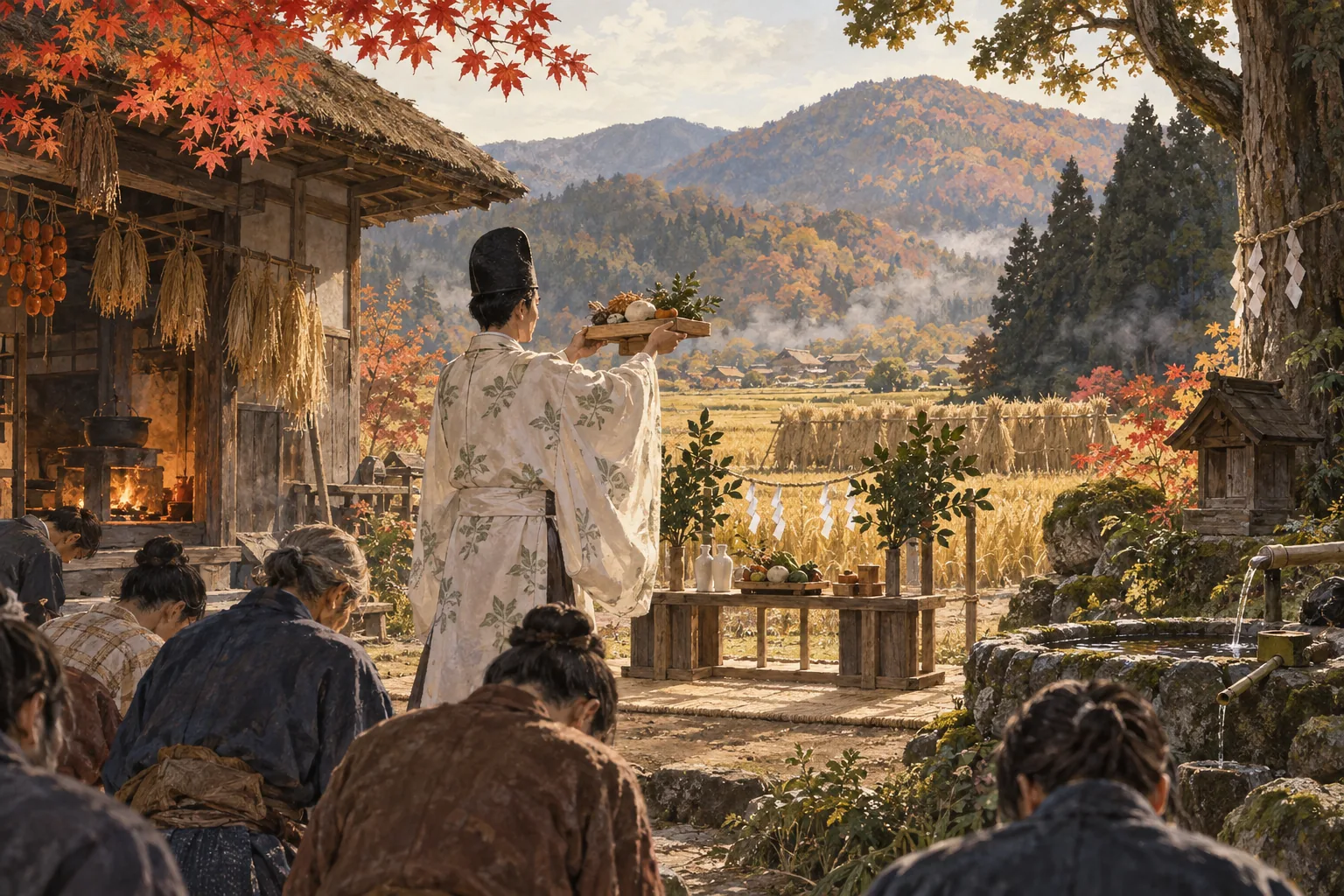
A kami is not thought of as living permanently in a statue; it descends, and what it descends into is typically something upright — an old tree marked with a rope, a post set up for a festival, the central pillar of a shrine. At Ise one of the most sacred things in the main sanctuary is a pillar under the floor that nobody sees.
On this view, counting gods by pillars is not a metaphor added later; it reflects the way the presence was understood. I like this example because it shows how much of a worldview can be preserved inside a piece of grammar that people use without thinking.
日本語には、ものの種類ごとに数え方があります。平たいもの、細長いもの、動物、機械。神にも専用のものがあり、それが「柱」です。一柱、二柱と数えます。理由をたどると、神がどう思い描かれてきたかに行き当たります。
神は像の中に住み続けるとは考えられていません。降りてくるのです。そして降りる先は、たいてい立っているもの。注連縄を張った老木、祭りのために立てた柱、社殿の中心の柱。伊勢では、正殿の床下にあって誰も見ない柱が、とりわけ神聖なものとされます。
この見方に立てば、神を柱で数えるのは、後から付けた比喩ではなく、その存在の捉え方がそのまま残っているのです。この例が好きなのは、人が考えもせずに使っている文法の中に、世界の見方がこれほど保存されていると分かるからです。
Questions people actually ask
And how to answer them.
Are there other unusual counters like this?
Many. Rabbits are counted with the counter for birds, squid and crabs with the one for cups, and long thin things from pencils to bananas to home runs all share one counter.
たくさんあります。うさぎは鳥と同じ「羽」、イカやカニは「杯」、鉛筆からバナナ、ホームランまで細長いものは「本」で数えます。
Why are rabbits counted as birds?
The usual story is that Buddhist rules discouraged eating four-legged animals, so rabbits were reclassified as birds to get around it. It is a popular explanation and there are other theories, including the shape of the ears.
よく語られるのは、仏教で四つ足を食べることが避けられたため、うさぎを鳥ということにした、という説です。広まった説明ですが、耳の形からという説など、ほかの説もあります。
Do Japanese people get counters wrong?
Often, for rare ones. Few people are sure how to count a drum or a folding screen without checking. Children learn the common ones early and the rest stay half-known for life.
珍しいものなら、しょっちゅう間違えます。太鼓や屏風の数え方を、調べずに言える人はまずいません。よく使うものは子どものうちに覚え、残りは一生あやふやなままです。
Phrases you can use
- Gods are counted with hashira, meaning pillar.神は「柱」で数えます。
- One god is hito-hashira.神一柱は「ひとはしら」と言います。
- A kami descends into something upright.神は立っているものに降りてきます。
- Japanese has a different counter for each kind of thing.日本語はものの種類ごとに数え方が違います。
- Even Japanese people look the rare ones up.珍しい数え方は、日本人でも調べます。
Words you need
- counter word助数詞
- pillar柱
- to descend (of a deity)降臨する
- sacred tree神木
- sacred rope注連縄
Watch
From YouTubeBackground (Japanese)
神を「柱」で数える理由については、柱が天と地をつなぐものと考えられたこと、神が依り代となる立ったものに降りるとされたことが挙げられる。伊勢神宮の正殿の床下には心御柱と呼ばれる柱があり、とりわけ神聖なものとされるが、一般には見ることができない。記紀神話にも、神を柱で数える表記が見える。なお人を柱で数えることはないが、「人柱」という語は、堤や城の完成を願って人を犠牲にしたという伝承を指す。