
英検準1級 二次面接 予想問題カード 6/30 ・ 🌱 環境・エネルギー
Sharing Cars in the Neighborhood
Sharing Cars in the Neighborhood
カードの最初の文One day, a man was talking with his neighbors at a community meeting.
- 1
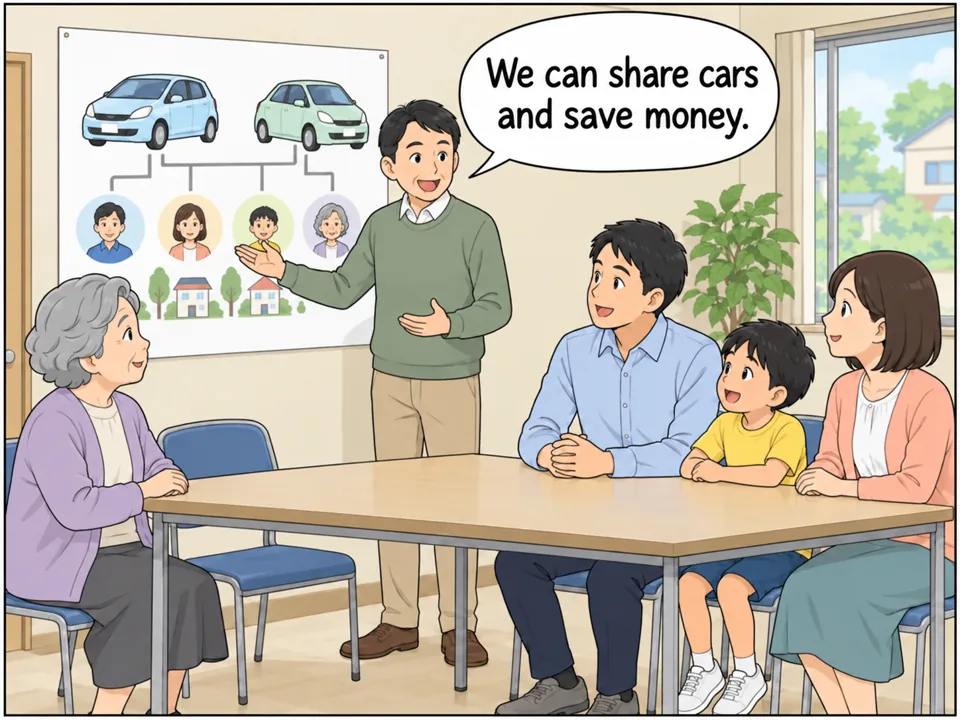
We can share cars and save money.
- A few weeks later2
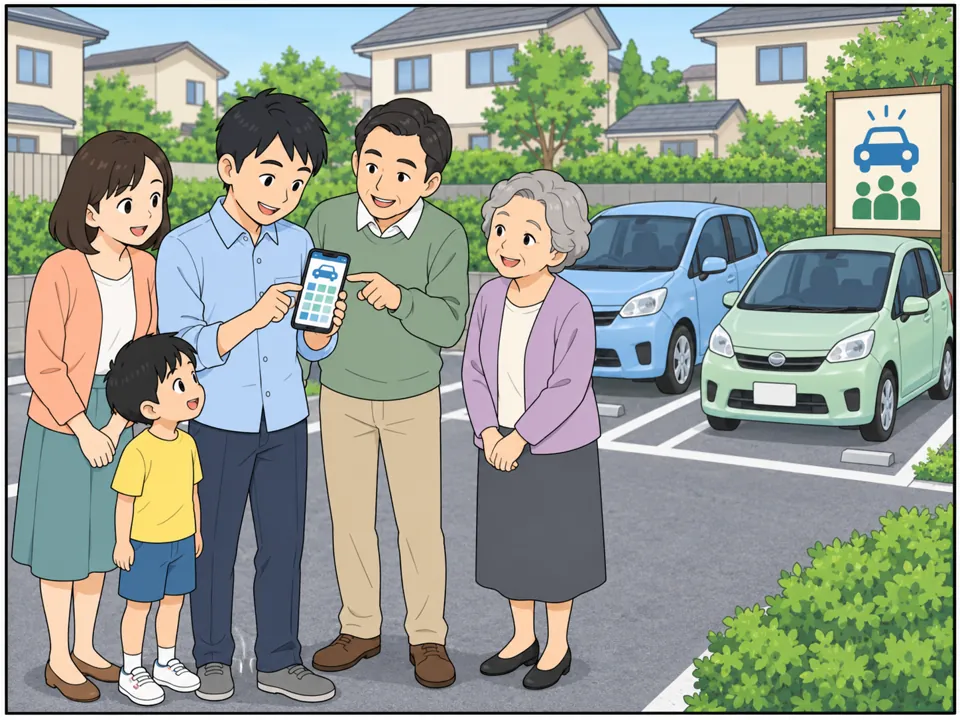
- The next month3
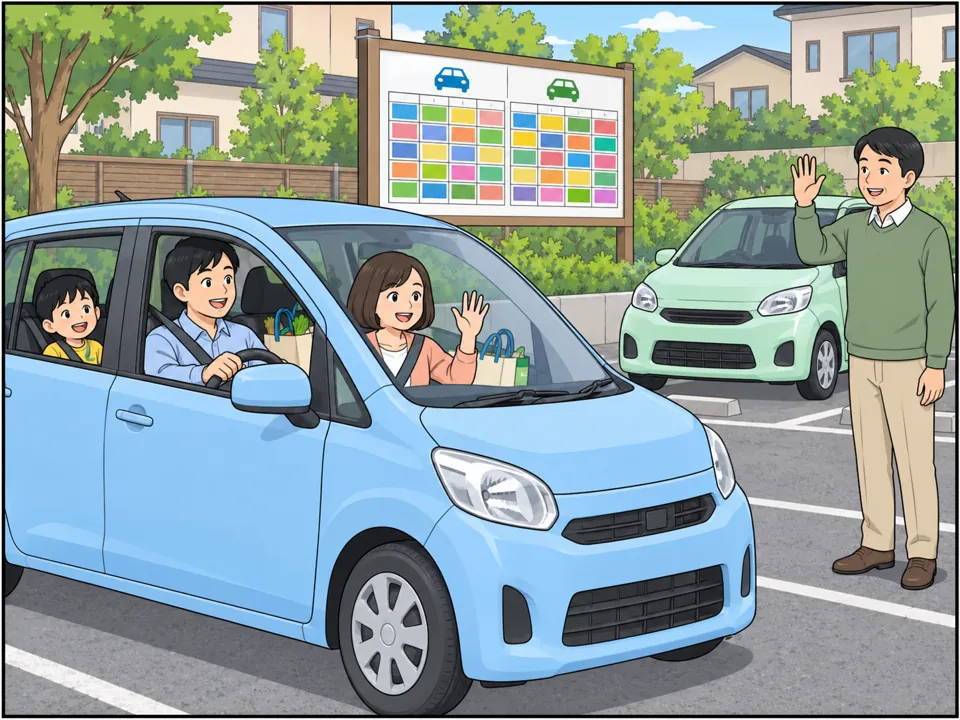
- Six months later4
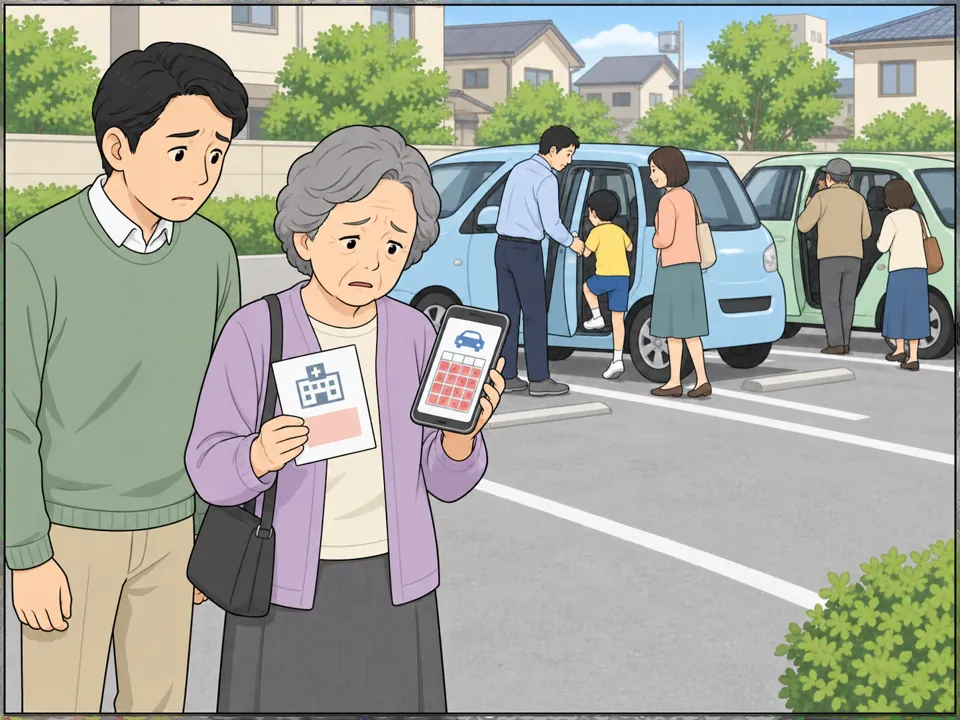
ナレーション(考える1分・話す2分)
1One day, a man was talking with his neighbors at a community meeting. He suggested that they start a car-sharing service in the neighborhood. He explained that it would help them save money and reduce traffic. 2A few weeks later, two shared cars were parked in a parking lot in the neighborhood. Residents could easily reserve them with a smartphone app, and the man showed his neighbors how to use it. 3The next month, the cars were being used by many residents. A young family drove one of them to go shopping, and they waved at the man. He was pleased that the service was so popular. 4Six months later, however, an elderly woman could not reserve a car to go to the hospital. The cars were always booked by the same few people. The man looked troubled when he saw her disappointed face.
ある日、男性が地域の集会で近所の人たちと話していました。彼は、地域でカーシェアリングを始めようと提案しました。お金の節約になり、交通量も減らせると説明しました。 数週間後、近所の駐車場に共有の車が2台とめられていました。住民はスマホのアプリで簡単に予約することができ、男性は近所の人たちにアプリの使い方を教えました。 翌月、車はたくさんの住民に使われていました。若い家族がその1台で買い物に出かけ、男性に手を振りました。男性はサービスがとても好評なことを喜びました。 ところが6か月後、高齢の女性が病院に行くための車を予約できませんでした。車はいつも同じ数人に予約されていたのです。男性は女性のがっかりした顔を見て、困った様子でした。
157語No.1 4コマ目の気持ち
No.1Please look at the fourth picture. If you were the man, what would you be thinking?
I'd be thinking, "I didn't expect a few people to use the cars so often. I should have made rules about how often each person can book them."
「数人があんなに頻繁に車を使うとは思わなかった。1人が予約できる回数のルールを作っておくべきだった」と考えていると思います。
I'd be thinking, "This service should help everyone in the neighborhood. I'll suggest giving priority to people who need to go to the hospital."
「このサービスは地域のみんなの役に立つべきだ。病院に行く必要がある人を優先しようと提案しよう」と考えていると思います。
No.2〜No.4(カードを裏返して)
No.2Do you think sharing services, such as car-sharing, will become more popular in Japan?
Yes, I think so. Owning a car is expensive because people have to pay for parking, insurance, and repairs. Many young people in cities only need a car once in a while, so sharing one makes more sense. Sharing services for bicycles and umbrellas are also increasing, which shows that people are getting used to sharing instead of owning.
はい、そう思います。車を持つと駐車場代や保険料、修理代を払わなければならないので、お金がかかります。都会の若者の多くはたまにしか車を必要としないので、共有する方が理にかなっています。自転車や傘のシェアサービスも増えていて、人々が「持つ」より「共有する」ことに慣れてきているのがわかります。
No.3Do you think people living in big cities need to own a car?
No, I don't think so. Big cities in Japan have excellent public transportation, so people can get almost anywhere by train or bus. Also, parking in cities is very expensive. When people need a car for a family trip or for carrying heavy things, they can simply rent one or use a car-sharing service.
いいえ、そうは思いません。日本の大都市は公共交通機関がとても充実しているので、電車やバスでほとんどどこへでも行けます。また、都会の駐車場代はとても高いです。家族旅行や重い物を運ぶために車が必要なときは、レンタカーやカーシェアリングを使えば済みます。
No.4Today, traffic jams are a serious problem in many large cities. Should the government do more to reduce traffic in large cities?
Yes, I think it should. Heavy traffic wastes people's time and causes air pollution. For example, the government could make more roads safe for cycling or charge drivers a fee to enter crowded city centers, as some European cities do. These measures would encourage people to use other ways of getting around.
はい、そうすべきだと思います。ひどい渋滞は人々の時間をむだにし、大気汚染の原因にもなります。例えば政府は、自転車で安全に走れる道路を増やしたり、ヨーロッパのいくつかの都市のように、混雑した中心部に入る車から料金を取ったりできます。こうした対策は、人々に車以外の移動手段を使うよう促すでしょう。