
英検準1級 二次面接 予想問題カード 28/30 ・ 🏘️ 社会・地域・高齢化
A Smartphone Class for Seniors
A Smartphone Class for Seniors
カードの最初の文One day, a high school girl was volunteering at a community center.
- 1
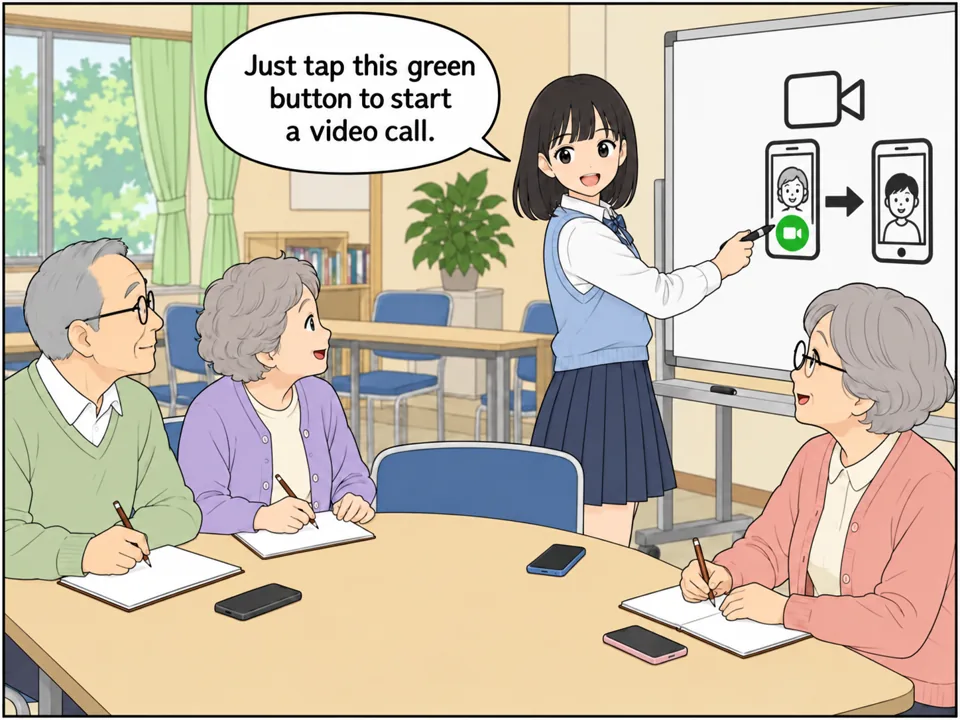
Just tap this green button to start a video call.
- A few weeks later2
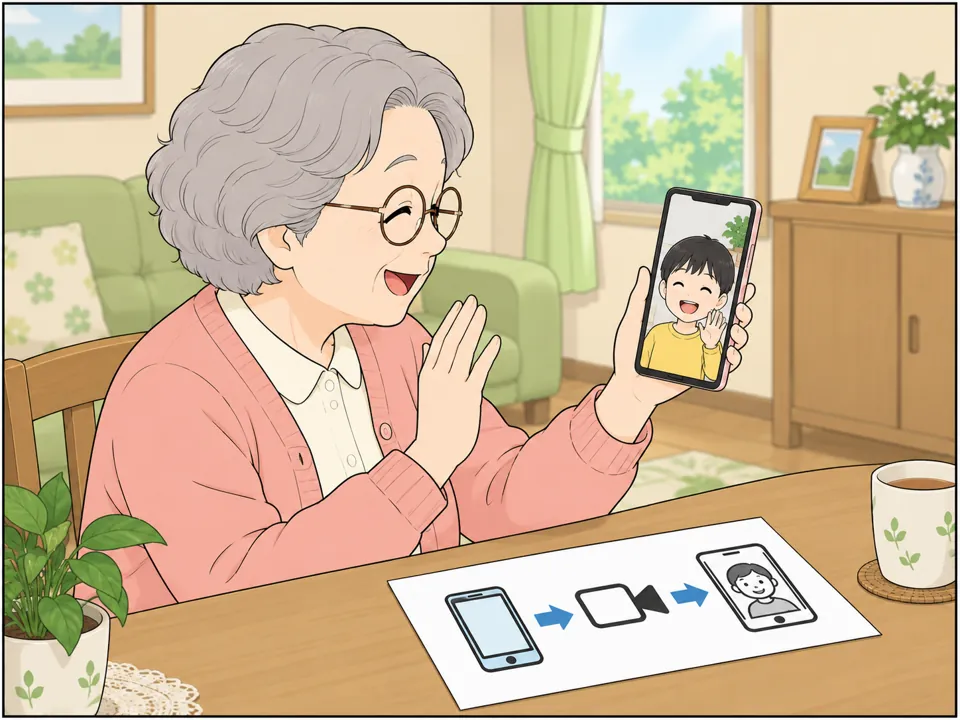
- A month later3
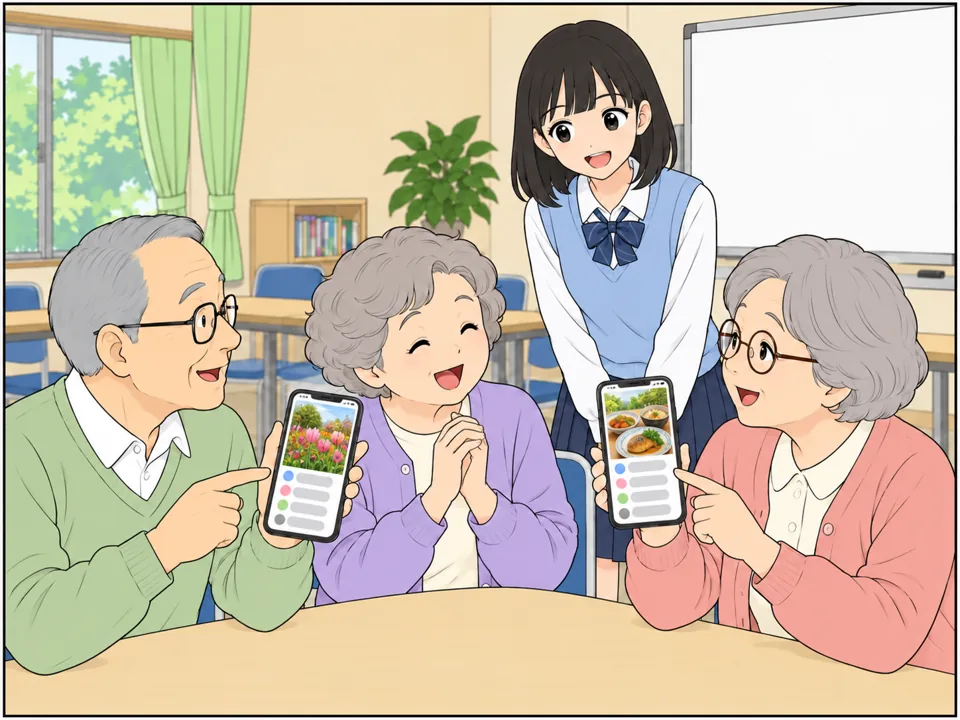
- A few months later4
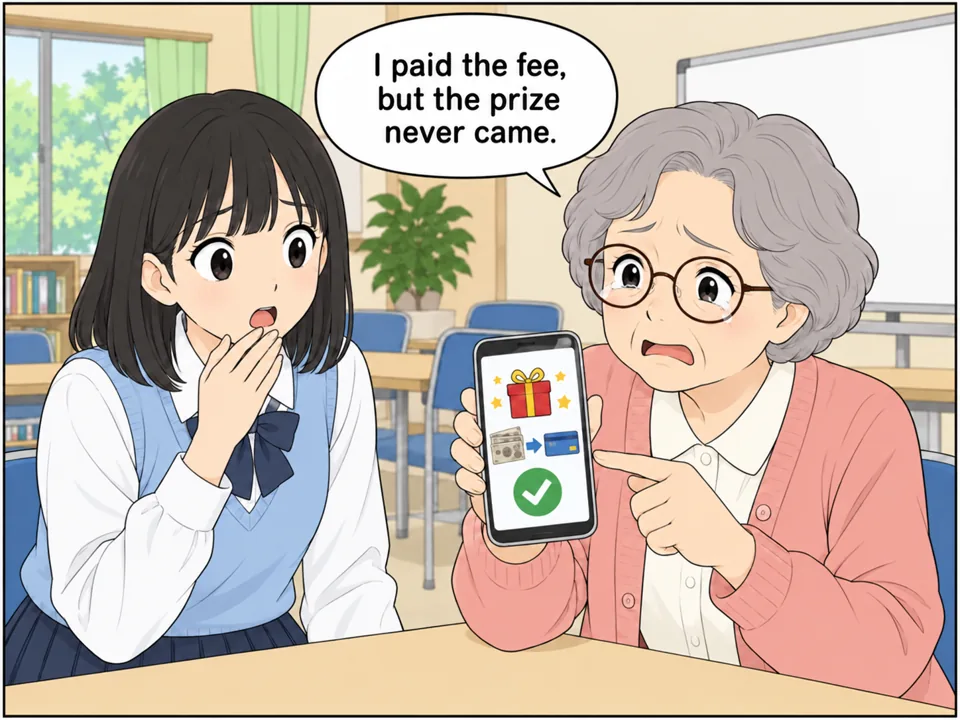
I paid the fee, but the prize never came.
ナレーション(考える1分・話す2分)
1One day, a high school girl was volunteering at a community center. She was teaching a group of elderly people how to use smartphones. She showed them how to make video calls. 2A few weeks later, an elderly woman was talking with her grandson on a video call. He lived far away, so she was very happy to see his face. 3A month later, the elderly people had started using social media. They were showing each other photos of their gardens and the dishes they had cooked, and they enjoyed reading the comments they received. The girl was glad that her class had been useful. 4A few months later, however, the elderly woman came to the girl looking very upset. She had received a message saying that she had won a prize, and she had paid a fee to get it. The girl realized that it was a scam and looked shocked.
ある日、高校生の女の子が公民館でボランティアをしていました。彼女は高齢者のグループにスマホの使い方を教えていました。ビデオ通話のかけ方を見せました。 数週間後、高齢の女性がビデオ通話で孫と話していました。孫は遠くに住んでいたので、彼女は孫の顔を見られてとてもうれしそうでした。 1か月後、高齢者たちはSNSを使い始めていました。彼らは庭や自分で作った料理の写真をお互いに見せ合い、もらったコメントを読んで楽しんでいました。女の子は自分の教室が役に立ってうれしく思いました。 ところが数か月後、その高齢の女性がとても動揺した様子で女の子のところに来ました。彼女は賞に当選したというメッセージを受け取り、それを受け取るために手数料を払ってしまっていました。女の子はそれが詐欺だと気づき、ショックを受けた様子でした。
164語No.1 4コマ目の気持ち
No.1Please look at the fourth picture. If you were the girl, what would you be thinking?
I'd be thinking, "I taught them how to use smartphones, but not how to stay safe online. I should have warned them about scams from the start."
「スマホの使い方は教えたけれど、ネットで安全に過ごす方法は教えなかった。最初から詐欺について注意しておくべきだった」と考えていると思います。
I'd be thinking, "We need to hold a class about online safety right away. I'll also help the woman contact the police and her bank."
「すぐにネットの安全についての教室を開かないといけない。女性が警察と銀行に連絡するのも手伝おう」と考えていると思います。
No.2〜No.4(カードを裏返して)
No.2Do you think it is a good idea for high school students to do volunteer work?
Yes, I think so. Volunteer work gives students a chance to meet people of different ages and learn skills that they cannot learn in the classroom. For example, students who teach elderly people how to use smartphones can improve their communication skills and patience. Such experiences also help students think about what kind of career they want in the future.
はい、そう思います。ボランティア活動は、生徒がさまざまな年代の人と出会い、教室では学べないスキルを身につける機会になります。例えば、高齢者にスマホの使い方を教える生徒は、コミュニケーション力や忍耐力を伸ばせます。こうした経験は、将来どんな仕事をしたいかを考えるのにも役立ちます。
No.3Do you think social media can help elderly people feel less lonely?
Yes, I think so. Many elderly people live alone or far from their children and grandchildren. Social media allows them to see photos of their family and exchange messages every day. For example, an elderly person can join an online group about gardening or cooking and make new friends with similar interests. This can make their lives more enjoyable.
はい、そう思います。多くの高齢者は一人で暮らしていたり、子どもや孫から遠く離れて住んでいたりします。SNSがあれば、家族の写真を見たり、毎日メッセージをやりとりしたりできます。例えば、ガーデニングや料理のオンライングループに参加して、同じ趣味を持つ新しい友達を作ることもできます。そうすれば生活がもっと楽しくなるでしょう。
No.4Today, people often discuss how different generations can understand each other better. Do you think there is a large gap between the values of young people and elderly people in Japan?
Yes, I think so. Young people and elderly people grew up in very different times, so they often have different ideas about work and family. For example, many elderly people believe that it is important to stay at one company for life, while young people often change jobs to find better opportunities. Spending more time together would help both groups understand each other.
はい、そう思います。若者と高齢者はまったく違う時代に育ったので、仕事や家族について違う考えを持っていることがよくあります。例えば、多くの高齢者は一つの会社に一生勤めることが大切だと考えていますが、若者はよりよい機会を求めてよく転職します。一緒に過ごす時間を増やせば、お互いを理解し合えるでしょう。