
英検準1級 二次面接 予想問題カード 25/30 ・ 🏥 健康・医療・スポーツ
A Step Challenge at Work
A Step Challenge at Work
カードの最初の文One day, a manager was announcing a new health program at her company.
- 1
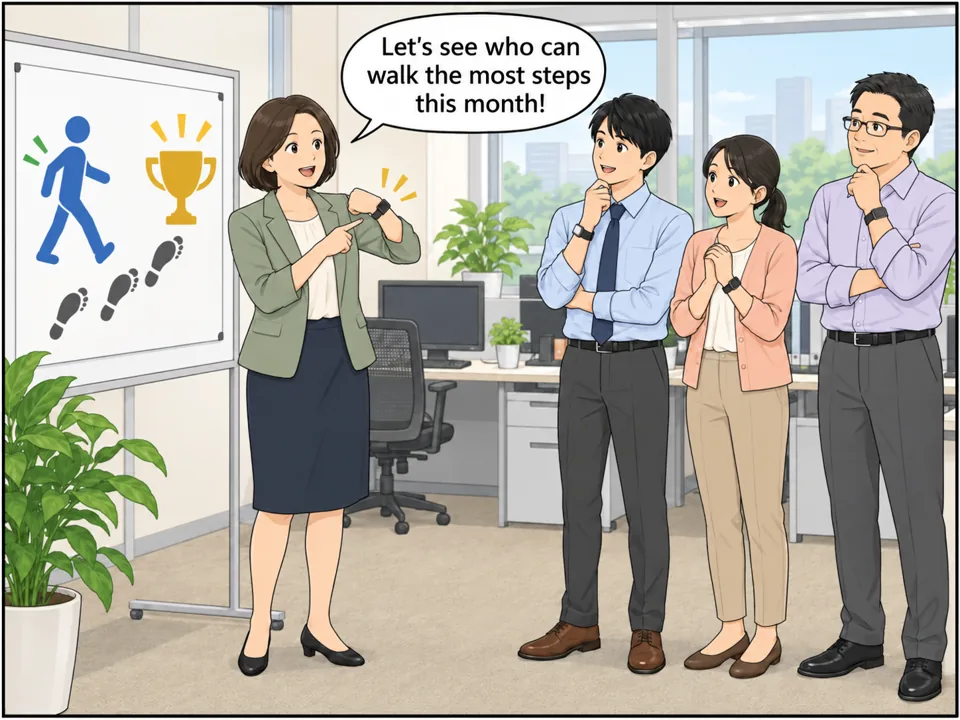
Let's see who can walk the most steps this month!
- The next day2
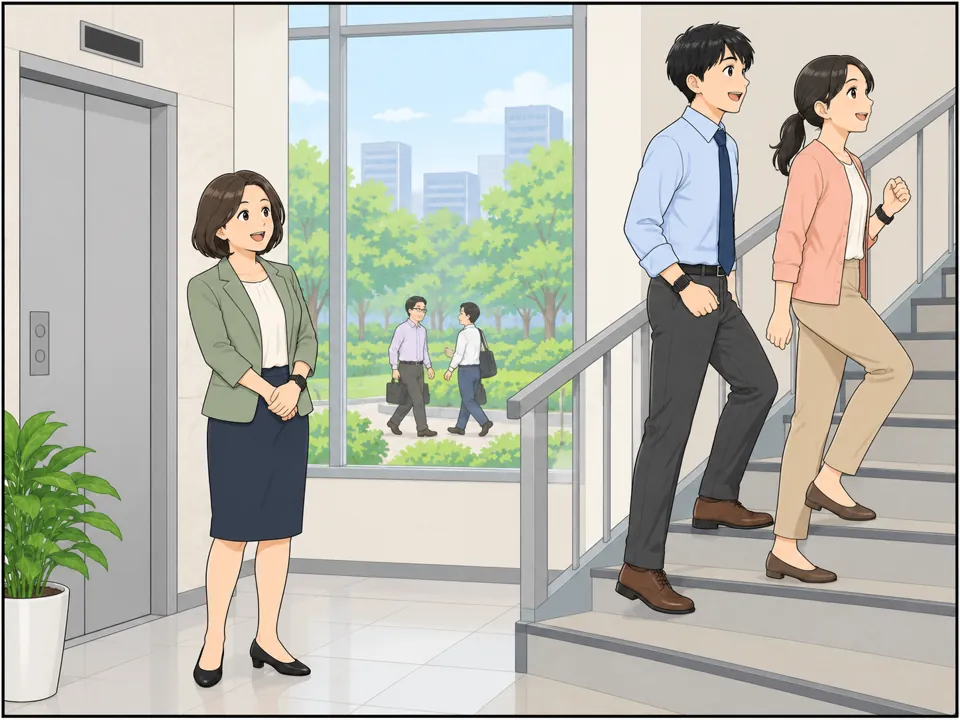
- Two weeks later3
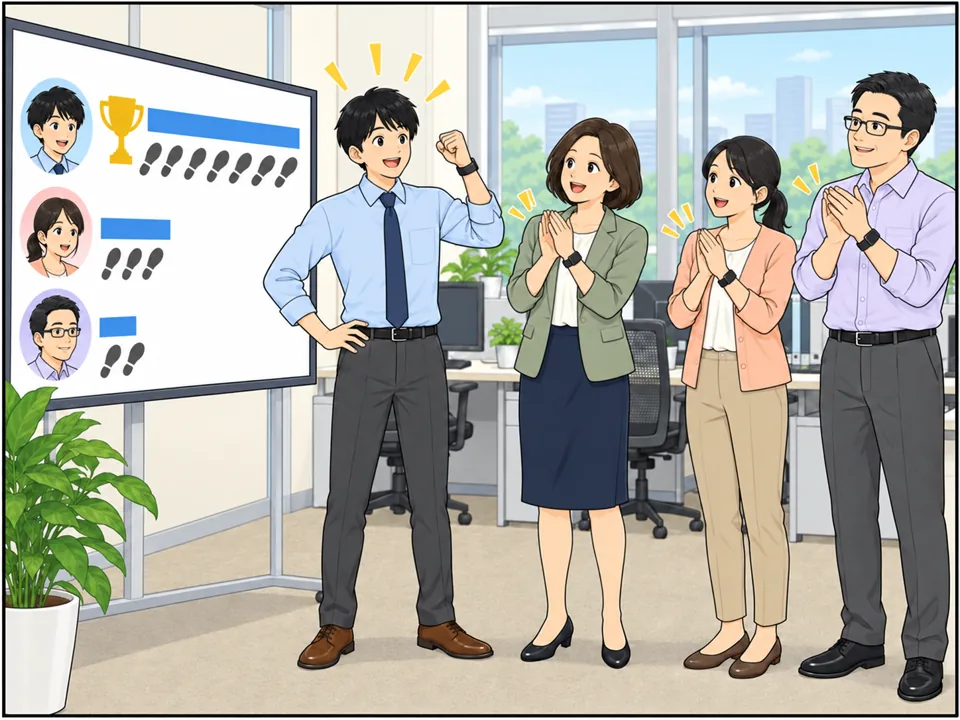
- At the end of the month4
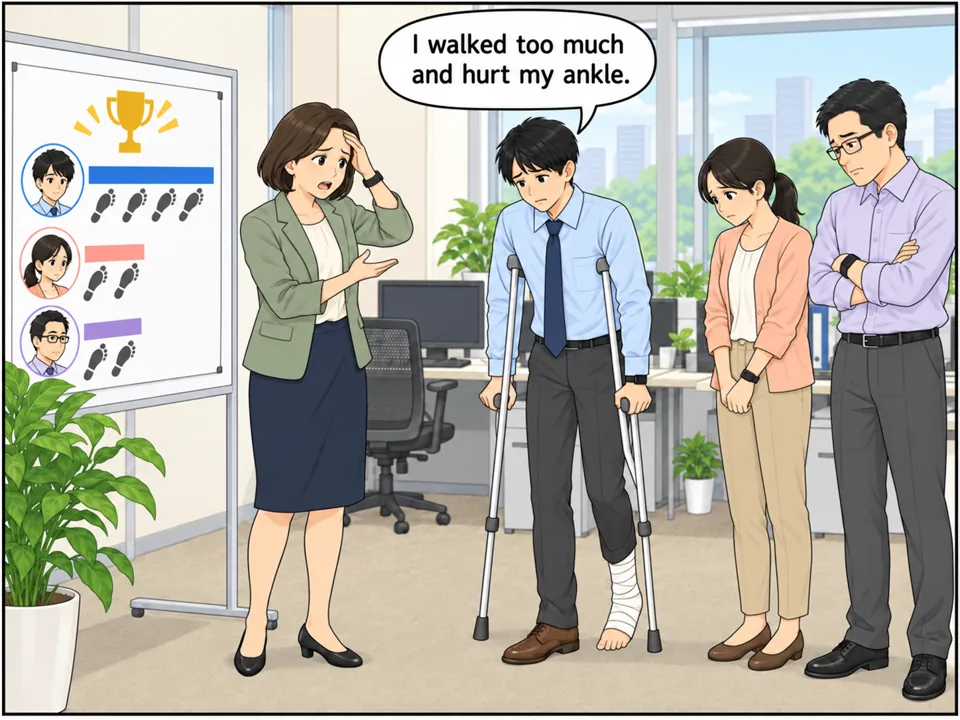
I walked too much and hurt my ankle.
ナレーション(考える1分・話す2分)
1One day, a manager was announcing a new health program at her company. She showed the employees a fitness tracker and explained that they would compete to see who could walk the most steps that month. She said that the winner would receive a prize. 2The next day, many employees were wearing fitness trackers and using the stairs instead of the elevator. Some of them were even walking in the park during their lunch break. 3Two weeks later, the manager showed a ranking of everyone's steps on a large screen. A young man was in first place with more than 30,000 steps a day, and his coworkers were impressed. 4At the end of the month, however, the young man came to work on crutches because he had hurt his ankle by walking too much. Other employees looked stressed because they were far behind in the ranking. The manager looked troubled as she realized that the competition had gone too far.
ある日、マネージャーが会社で新しい健康プログラムを発表していました。彼女は社員に活動量計を見せ、その月に誰がいちばん多く歩けるかを競うのだと説明しました。優勝者には賞品が出ると言いました。 翌日、多くの社員が活動量計をつけ、エレベーターの代わりに階段を使っていました。昼休みに公園を歩く社員までいました。 2週間後、マネージャーは全員の歩数のランキングを大きな画面に映しました。若い男性が1日3万歩以上で1位になっていて、同僚たちは感心していました。 ところが月末、その若い男性は歩きすぎて足首をけがし、松葉杖をついて出社しました。ほかの社員たちは、ランキングで大きく遅れているためにストレスを感じている様子でした。マネージャーは、競争が行き過ぎてしまったことに気づき、困った様子でした。
173語No.1 4コマ目の気持ち
No.1Please look at the fourth picture. If you were the manager, what would you be thinking?
I'd be thinking, "Turning exercise into a competition put too much pressure on everyone. I should have encouraged people to walk at their own pace."
「運動を競争にしたことで、みんなに重圧をかけすぎてしまった。自分のペースで歩くように勧めるべきだった」と考えていると思います。
I'd be thinking, "Next time, I'll set a reasonable goal that everyone can reach. That way, people can enjoy exercising without getting hurt."
「次は、誰でも達成できる無理のない目標を決めよう。そうすれば、けがをせずに運動を楽しめる」と考えていると思います。
No.2〜No.4(カードを裏返して)
No.2Do you think wearable devices help people stay healthy?
Yes, I think so. Devices like smartwatches show people how much they walk, how well they sleep and how fast their heart is beating. For example, if someone sees that they have walked only 2,000 steps by the evening, they may decide to go for a walk. This kind of information motivates people to change their daily habits.
はい、そう思います。スマートウォッチのような機器は、どれだけ歩いたか、どれだけよく眠れたか、心拍数がどれくらいかを教えてくれます。例えば、夕方までに2000歩しか歩いていないと分かれば、散歩に出ようと決めるかもしれません。こうした情報は、日々の習慣を変えるやる気につながります。
No.3Should companies reward employees for staying healthy?
Yes, I think they should. Healthy employees are less likely to take sick days, and they can work more productively. For example, a company could give points or small bonuses to employees who exercise regularly or quit smoking. Such rewards cost the company money, but they can reduce medical expenses and lost work time in the long run.
はい、そうすべきだと思います。健康な社員は病気で休むことが少なく、より効率よく働けます。例えば会社は、定期的に運動したり禁煙したりした社員にポイントや少額のボーナスを出すことができます。こうした報酬は会社にとって費用がかかりますが、長い目で見れば医療費や仕事の損失を減らせます。
No.4Today, medical costs in Japan are rising as the population ages. Should people who have unhealthy lifestyles pay more for medical care?
No, I don't think so. It is very difficult to decide whose illness is caused by their lifestyle, because genes and stress also affect people's health. For example, some people get diabetes even though they eat well and exercise. Instead of punishing people, the government should focus on education and regular health checks to prevent diseases.
いいえ、そうは思いません。遺伝やストレスも健康に影響するので、誰の病気が生活習慣のせいなのかを決めるのはとても難しいです。例えば、きちんと食べて運動していても糖尿病になる人がいます。人を罰するのではなく、政府は病気を防ぐための教育や定期的な健康診断に力を入れるべきです。