
英検準1級 二次面接 予想問題カード 20/30 ・ 🍙 食・農業
Meat-Free Mondays
Meat-Free Mondays
カードの最初の文One day, a nutritionist was making a suggestion at a junior high school teachers' meeting.
- 1
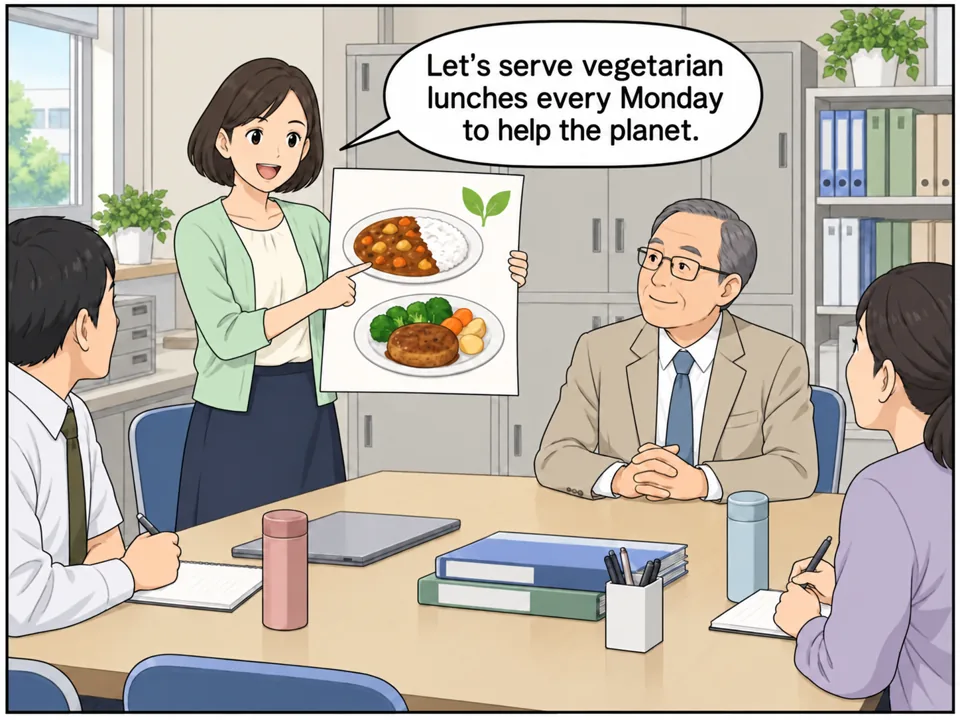
Let's serve vegetarian lunches every Monday to help the planet.
- The following Monday2

- A few weeks later3

- A few months later4
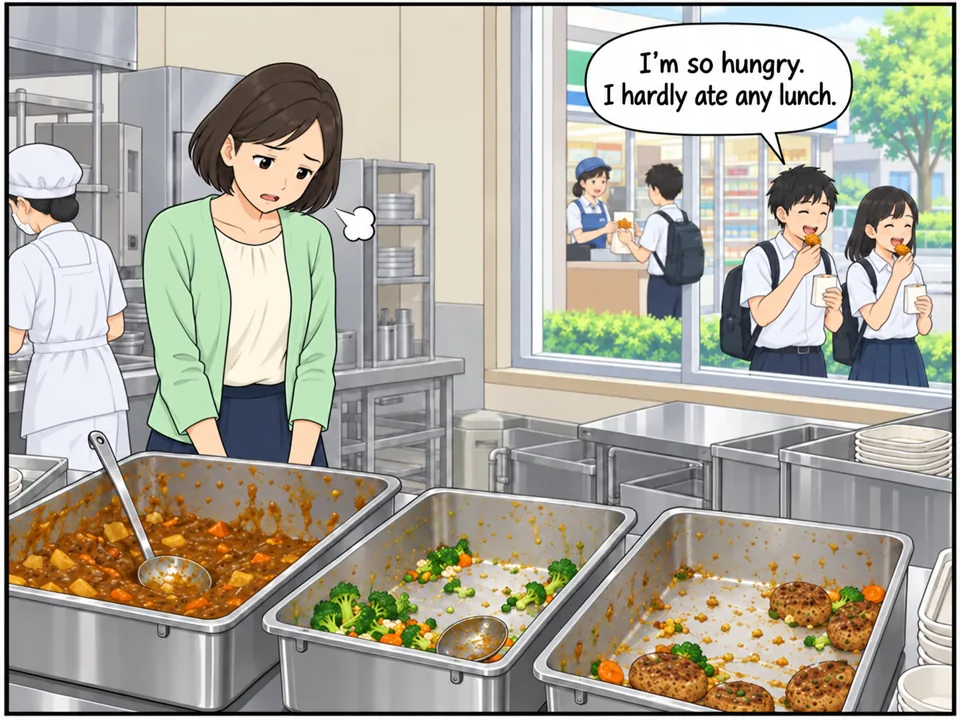
I'm so hungry. I hardly ate any lunch.
ナレーション(考える1分・話す2分)
1One day, a nutritionist was making a suggestion at a junior high school teachers' meeting. She suggested serving vegetarian lunches every Monday. She explained that eating less meat would be good for the environment and that students could learn about environmental problems through their meals. 2The following Monday, the students tried the new vegetarian dishes for the first time. Many of them enjoyed the vegetable curry and tofu hamburgers, and the nutritionist was happy to see them smiling. 3A few weeks later, a local newspaper reporter came to the school to interview the nutritionist and the principal. The newspaper praised the school for its eco-friendly lunches, and they were both very proud. 4A few months later, however, a lot of food was being left over every Monday. After school, some students were buying fried chicken at a convenience store, saying that they had hardly eaten any lunch. The nutritionist sighed in disappointment as she looked at the leftover food.
ある日、栄養士が中学校の職員会議で提案をしていました。彼女は、毎週月曜日にベジタリアン給食を出そうと提案しました。肉を食べる量を減らすことは環境に良く、生徒は食事を通して環境問題について学べると説明しました。 次の月曜日、生徒たちは初めて新しいベジタリアン料理を食べてみました。多くの生徒が野菜カレーや豆腐ハンバーグを楽しみ、栄養士は彼らの笑顔を見てうれしく思いました。 数週間後、地元の新聞記者が栄養士と校長を取材しに学校に来ました。新聞は環境に優しい給食について学校を高く評価し、2人ともとても誇らしく感じました。 ところが数か月後、毎週月曜日に多くの食べ物が残るようになっていました。放課後、何人かの生徒が、給食をほとんど食べなかったと言いながら、コンビニでから揚げを買っていました。栄養士は残った料理を見て、がっかりしてため息をつきました。
174語No.1 4コマ目の気持ち
No.1Please look at the fourth picture. If you were the nutritionist, what would you be thinking?
I'd be thinking, "Serving vegetarian food every week may have been too big a change for the students. I should have asked them what they wanted to eat."
「毎週ベジタリアン料理を出すのは、生徒にとって変化が大きすぎたのかもしれない。何を食べたいか生徒に聞くべきだった」と考えていると思います。
I'd be thinking, "I need to make vegetarian dishes that are tastier and more filling. Maybe the students can help me create new recipes."
「もっとおいしくて食べごたえのあるベジタリアン料理を作らないといけない。生徒に新しいレシピ作りを手伝ってもらうのもいいかもしれない」と考えていると思います。
No.2〜No.4(カードを裏返して)
No.2Do you think school lunches in Japan are healthy enough?
Yes, I think so. School lunches in Japan are planned by nutritionists, so they contain a good balance of vegetables, fish, meat and rice. For example, many schools serve traditional Japanese dishes made with seasonal ingredients. For some children, school lunch may be the most nutritious meal of the day, so it plays an important role in their health.
はい、そう思います。日本の給食は栄養士が献立を立てているので、野菜、魚、肉、ご飯がバランスよく入っています。例えば、多くの学校が旬の食材を使った伝統的な和食を出しています。子どもによっては給食が一日でいちばん栄養のある食事かもしれないので、健康に大切な役割を果たしています。
No.3Should restaurants in Japan offer more vegetarian dishes?
Yes, I think they should. The number of tourists visiting Japan is increasing, and some of them do not eat meat for religious or personal reasons. For example, it can be difficult for vegetarians to find a meal here, because many Japanese dishes contain fish stock. Offering more choices would help restaurants attract a wider range of customers.
はい、そうすべきだと思います。日本を訪れる観光客は増えていて、中には宗教や個人的な理由で肉を食べない人もいます。例えば、多くの和食には魚のだしが入っているので、ベジタリアンが日本で食事を見つけるのは難しいことがあります。選択肢を増やせば、飲食店はより幅広い客を呼び込めるでしょう。
No.4Today, people often discuss how food production affects the environment. Should food companies be required to show how much CO2 their products produce?
Yes, I think so. Many people want to protect the environment, but it is hard to know which products have a smaller impact. If labels showed the amount of CO2, shoppers could compare products easily. For example, they might choose chicken instead of beef, or vegetables grown nearby. This would also encourage companies to find cleaner ways to produce food.
はい、そう思います。環境を守りたい人は多いですが、どの商品の影響が小さいのかを知るのは難しいです。表示にCO2の量が示されていれば、買い物客は商品を簡単に比べられます。例えば、牛肉の代わりに鶏肉を、あるいは近くで育った野菜を選ぶかもしれません。そうすれば、企業もよりクリーンな方法で食品を作ろうとするでしょう。