
英検準1級 二次面接 予想問題カード 19/30 ・ 🏫 教育・学校
Lessons on Video
Lessons on Video
カードの最初の文One day, a high school teacher was talking to her class.
- 1
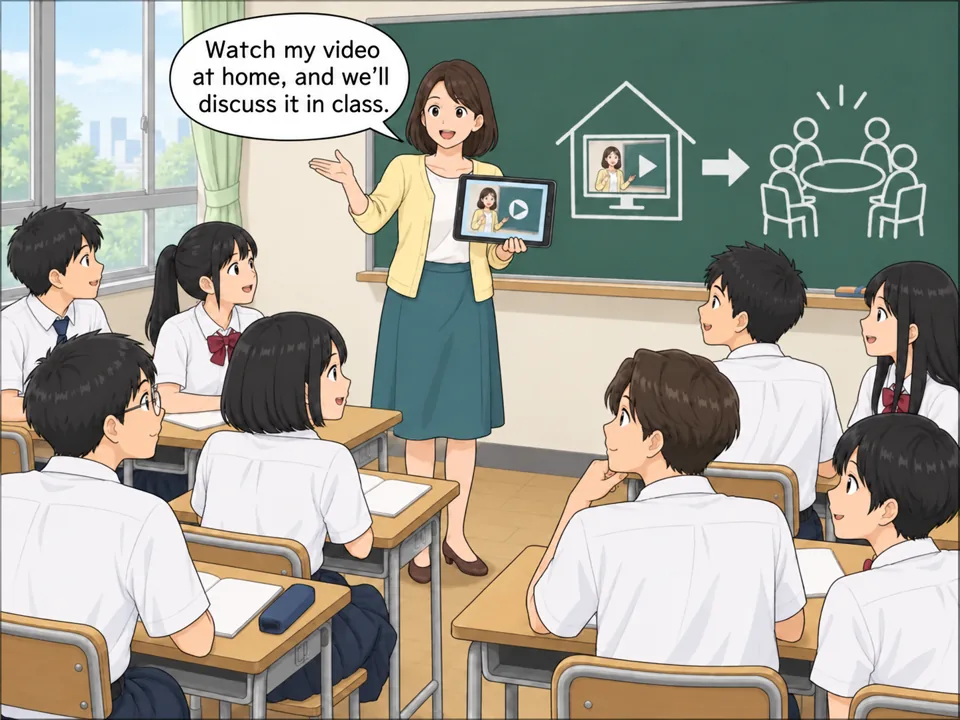
Watch my video at home, and we'll discuss it in class.
- That weekend2
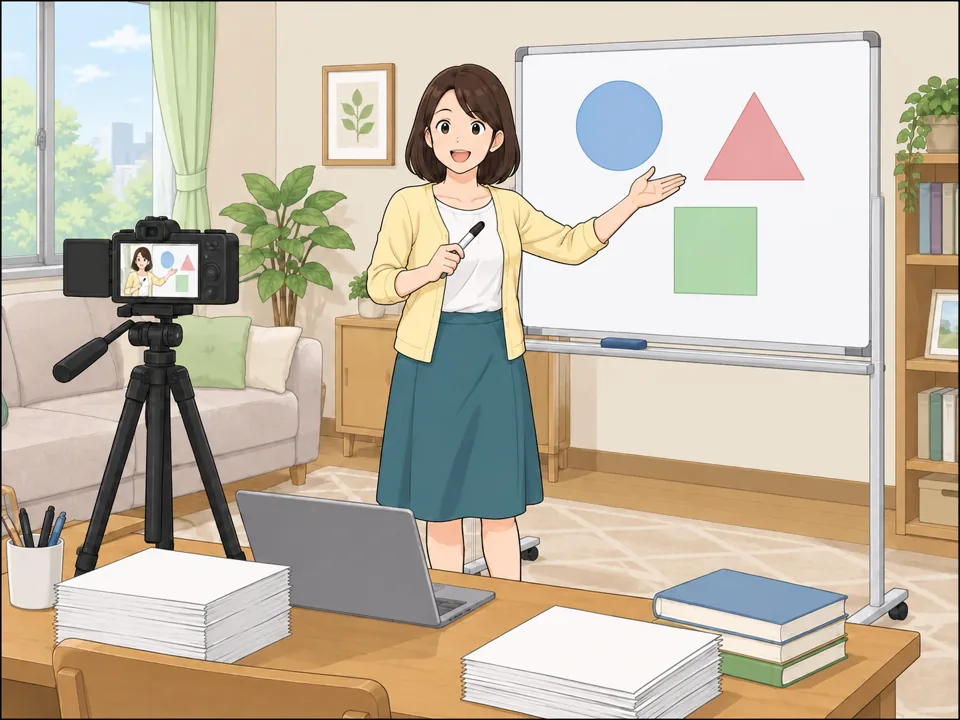
- The next week3
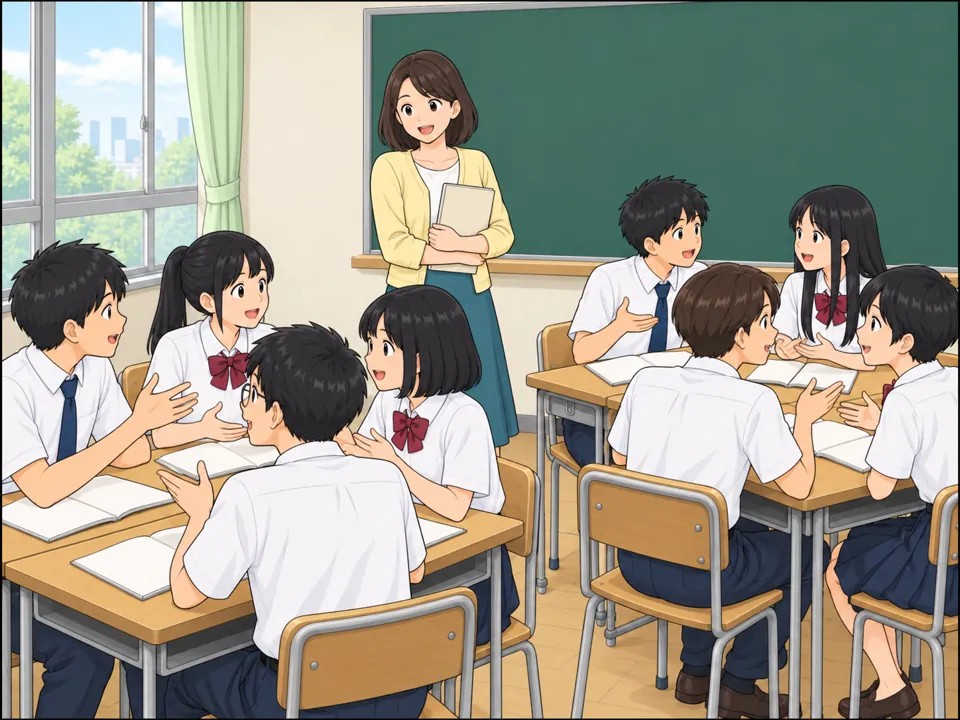
- A few weeks later4
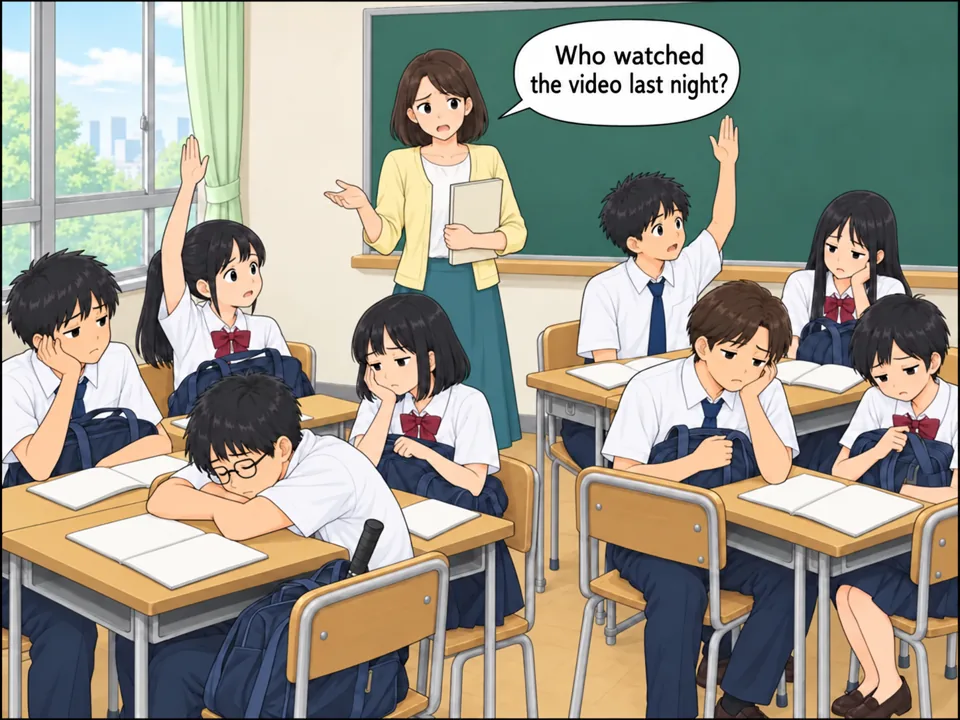
Who watched the video last night?
ナレーション(考える1分・話す2分)
1One day, a high school teacher was talking to her class. She told the students that she would put her lessons online as videos. She explained that they would watch the videos at home and discuss the topics in class. 2That weekend, the teacher spent many hours recording her lessons at home. She worked hard to make the videos easy to understand, and she was excited to try the new style. 3The next week, the students were having lively discussions in small groups. They shared their ideas actively because they had already learned the basics from the videos. The teacher was pleased that the new style was working well. 4A few weeks later, however, the teacher asked the class who had watched the latest video. Only two students raised their hands, and many others looked sleepy after their club activities. The group discussions were silent, and the teacher looked disappointed.
ある日、高校の先生がクラスの生徒たちに話をしていました。彼女は、授業を動画にしてネットに載せると伝えました。生徒は家で動画を見て、授業ではそのテーマについて話し合うのだと説明しました。 その週末、先生は何時間もかけて自宅で授業を録画しました。彼女は分かりやすい動画にしようと一生懸命取り組み、新しいやり方を試すのを楽しみにしていました。 翌週、生徒たちは少人数のグループで活発に話し合っていました。動画で基本をすでに学んでいたので、彼らは積極的に意見を出し合いました。先生は新しいやり方がうまくいっているので喜びました。 ところが数週間後、先生は最新の動画を見た人はいるかとクラスに尋ねました。手を挙げたのは2人だけで、ほかの多くの生徒は部活のあとで眠そうでした。グループ討論は静まり返り、先生はがっかりした様子でした。
161語No.1 4コマ目の気持ち
No.1Please look at the fourth picture. If you were the teacher, what would you be thinking?
I'd be thinking, "I didn't realize how busy my students are after school. I shouldn't have expected everyone to watch the videos every night."
「放課後の生徒がどれほど忙しいか分かっていなかった。全員が毎晩動画を見るなんて期待すべきではなかった」と考えていると思います。
I'd be thinking, "I should make the videos shorter so that students can watch them easily. I can also give them some time at the start of class to watch them."
「生徒が気軽に見られるように動画を短くしよう。授業の初めに動画を見る時間をとってもいい」と考えていると思います。
No.2〜No.4(カードを裏返して)
No.2Do you think students learn better by discussing ideas than by listening to a teacher?
Yes, I think so. When students discuss ideas, they have to think for themselves and explain their opinions clearly. For example, in a debate about environmental problems, students need to research the facts and respond to different views. This kind of active learning helps them remember information longer than just listening to a lecture.
はい、そう思います。考えを話し合うとき、生徒は自分で考え、自分の意見をはっきり説明しなければなりません。例えば、環境問題についてのディベートでは、生徒は事実を調べ、さまざまな意見に答える必要があります。このような主体的な学びは、講義を聞くだけよりも長く情報を覚えておくのに役立ちます。
No.3Should schools give students less homework?
Yes, I think they should. Many high school students are already very busy with club activities, part-time jobs and cram school. If they have too much homework, they may not get enough sleep and may find it hard to concentrate in class. Giving less but more meaningful homework would help students study more effectively.
はい、そうすべきだと思います。多くの高校生は、部活やアルバイト、塾ですでにとても忙しくしています。宿題が多すぎると、十分に眠れず、授業に集中できなくなるかもしれません。量を減らしてより意味のある宿題を出すほうが、生徒はより効果的に勉強できるでしょう。
No.4Today, people often discuss what kind of skills young people will need in the future. Do you think schools in Japan prepare students well for life after graduation?
No, I don't think so. Many schools in Japan focus mainly on preparing students for entrance exams, so students do not learn many practical skills. For example, many young people start living alone without knowing how to manage money, pay taxes or sign a rental contract. Schools should teach more of these life skills so that young people can live independently.
いいえ、そうは思いません。日本の多くの学校は主に入試の準備に力を入れているので、生徒は実用的なスキルをあまり学びません。例えば、お金の管理や税金の払い方、賃貸契約の結び方を知らないまま一人暮らしを始める若者は多いです。若者が自立して暮らせるように、学校はこうした生活のスキルをもっと教えるべきです。