
英検準1級 二次面接 予想問題カード 14/30 ・ 🏘️ 社会・地域・高齢化
A Neighborhood Disaster Drill
A Neighborhood Disaster Drill
カードの最初の文One day, a man was putting up a poster on a community notice board.
- 1
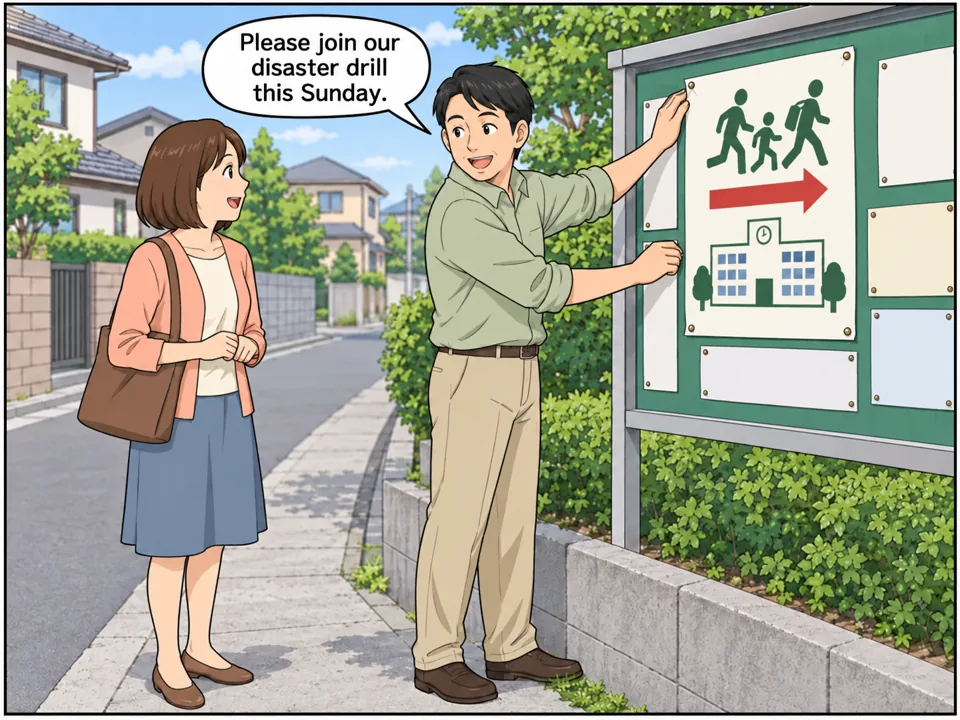
Please join our disaster drill this Sunday.
- That Sunday2
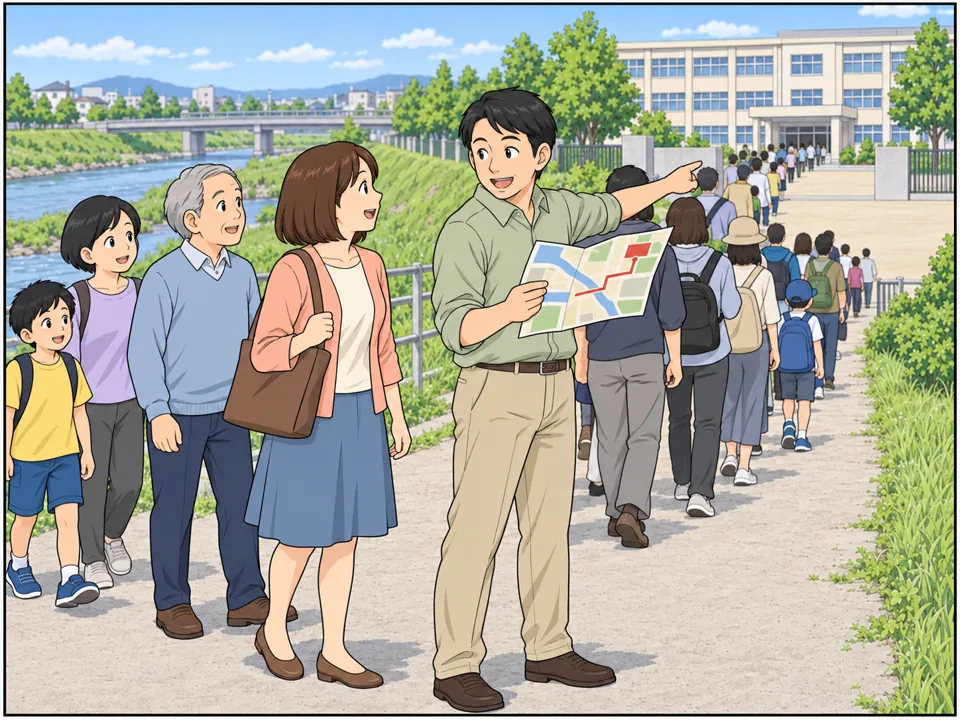
- Later that day3
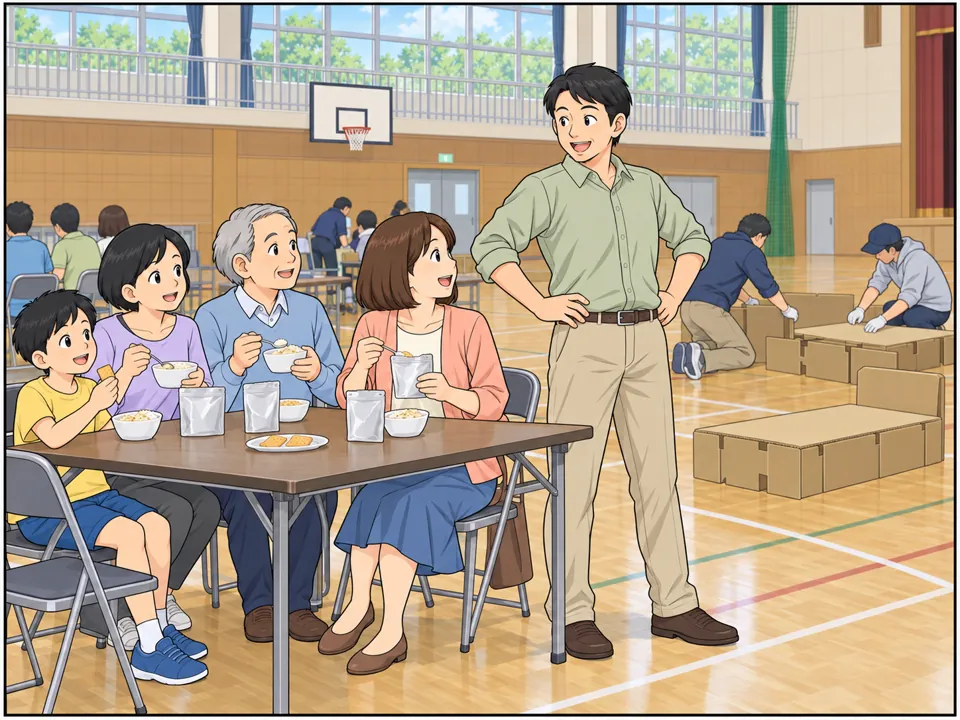
- A few months later4
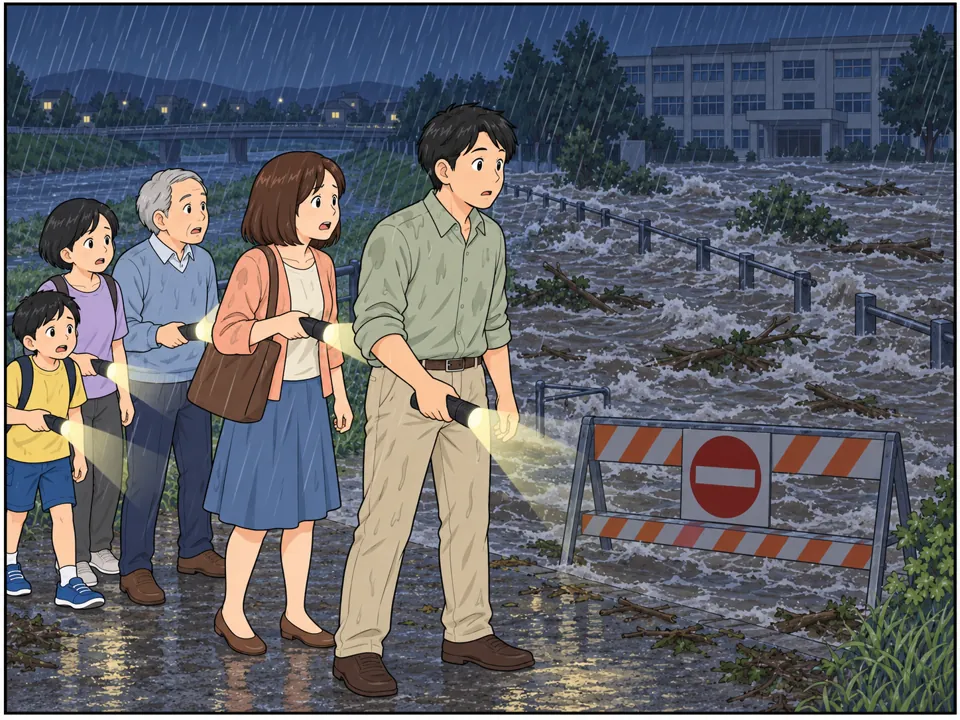
ナレーション(考える1分・話す2分)
1One day, a man was putting up a poster on a community notice board. It was about a disaster drill for the neighborhood. He asked a neighbor who was passing by to join the drill that Sunday. 2That Sunday, many residents took part in the drill. The man led them along a road by the river to the evacuation center at the local elementary school. It took them about 15 minutes to get there. 3Later that day, the residents tried emergency food together in the school gym. They also learned how to set up beds made of cardboard. Everyone said that the drill had been useful, and the man felt proud. 4A few months later, heavy rain hit the town at night. When the residents tried to go to the school, the road by the river was flooded. They did not know any other route, and the man stared at the water helplessly.
ある日、男性が町内の掲示板にポスターを貼っていました。それは地域の防災訓練についてのものでした。彼は通りかかった近所の人に、その日曜日の訓練に参加してほしいと頼みました。 その日曜日、多くの住民が訓練に参加しました。男性は、川沿いの道を通って地元の小学校にある避難所までみんなを案内しました。到着までは15分ほどかかりました。 その日のうちに、住民たちは学校の体育館で一緒に非常食を試食しました。段ボールでできたベッドの組み立て方も教わりました。みんなが訓練は役に立ったと言い、男性は誇らしく思いました。 数か月後、夜に激しい雨が町を襲いました。住民たちが学校に向かおうとすると、川沿いの道は水につかっていました。ほかの道を知らなかったので、男性はどうすることもできずに水を見つめていました。
167語No.1 4コマ目の気持ち
No.1Please look at the fourth picture. If you were the man, what would you be thinking?
I'd be thinking, "We only practiced one route during the daytime. I should have planned drills for different situations, like heavy rain at night."
「昼間に1つのルートしか練習していなかった。夜の大雨のような、いろいろな状況を想定した訓練を計画すべきだった」と考えていると思います。
I'd be thinking, "We have to find a safe way to the school right now. After this, I'll make a map that shows several evacuation routes for everyone."
「今すぐ学校までの安全な道を見つけないと。このあと、いくつもの避難ルートがわかる地図をみんなのために作ろう」と考えていると思います。
No.2〜No.4(カードを裏返して)
No.2Do you think people in Japan are well prepared for natural disasters?
Yes, I think so, to some extent. Japan has many earthquakes and typhoons, so people learn what to do through regular drills at school and work. Many families also keep emergency supplies, such as water and canned food, at home. However, some people still do not know where their local evacuation center is, so there is room for improvement.
はい、ある程度はそう思います。日本は地震や台風が多いので、人々は学校や職場での定期的な訓練を通して、何をすべきかを学んでいます。多くの家庭では、水や缶詰などの非常用品も家に備えています。ただ、地元の避難所の場所をまだ知らない人もいるので、改善の余地があります。
No.3Should companies be required to hold disaster drills for their employees?
Yes, I think they should. A disaster can happen while people are at work, and employees need to know how to evacuate safely. For example, in a large office building, workers must know which stairs to use and where to gather. Regular drills help people stay calm and act quickly in a real emergency.
はい、そうすべきだと思います。災害は仕事中に起こることもあり、社員は安全に避難する方法を知っておく必要があります。例えば、大きなオフィスビルでは、どの階段を使い、どこに集まるかを知っていなければなりません。定期的な訓練をしておけば、本当の緊急時にも落ち着いてすばやく行動できます。
No.4Today, people often discuss changes in local communities. Do you think people today have less contact with their neighbors than in the past?
Yes, I think so. In the past, neighbors often helped each other and joined local events together. Today, many people are busy with work and spend their free time online, so they rarely talk to the people living near them. This is a problem, because neighbors are often the first people who can help in an emergency.
はい、そう思います。昔は、近所の人同士がよく助け合い、地域の行事に一緒に参加していました。今は仕事で忙しく、自由な時間をネットで過ごす人が多いので、近くに住む人とほとんど話しません。緊急時に最初に助けてくれるのは近所の人であることが多いので、これは問題です。