
英検準1級 二次面接 予想問題カード 13/30 ・ 🎎 文化・伝統・娯楽
Virtual Reality at the Museum
Virtual Reality at the Museum
カードの最初の文One day, a museum director was having a meeting with her staff.
- 1
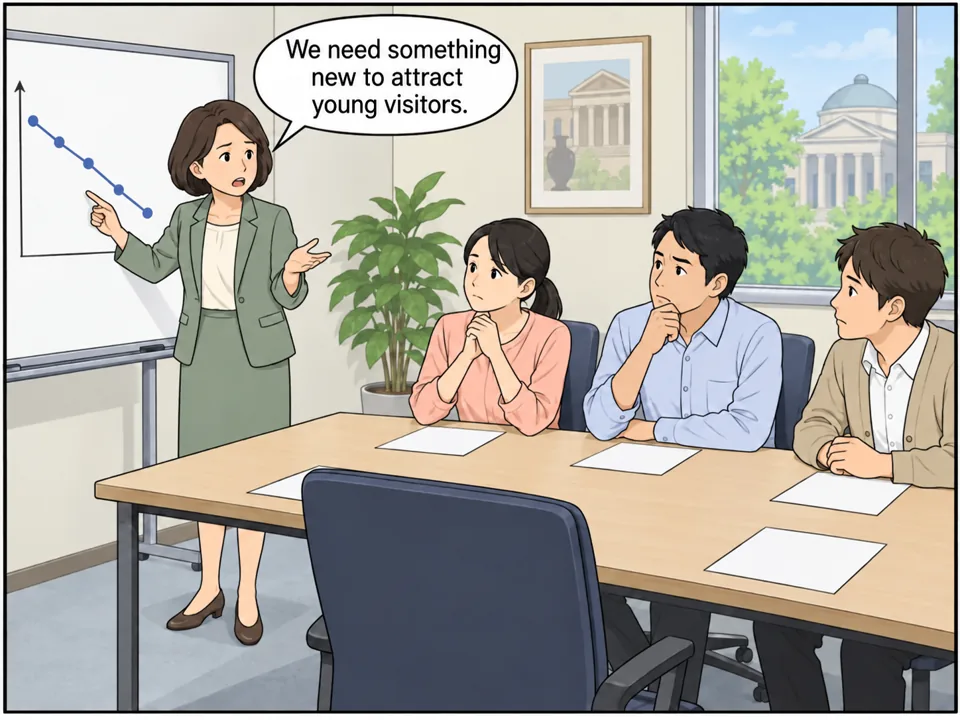
We need something new to attract young visitors.
- A few months later2
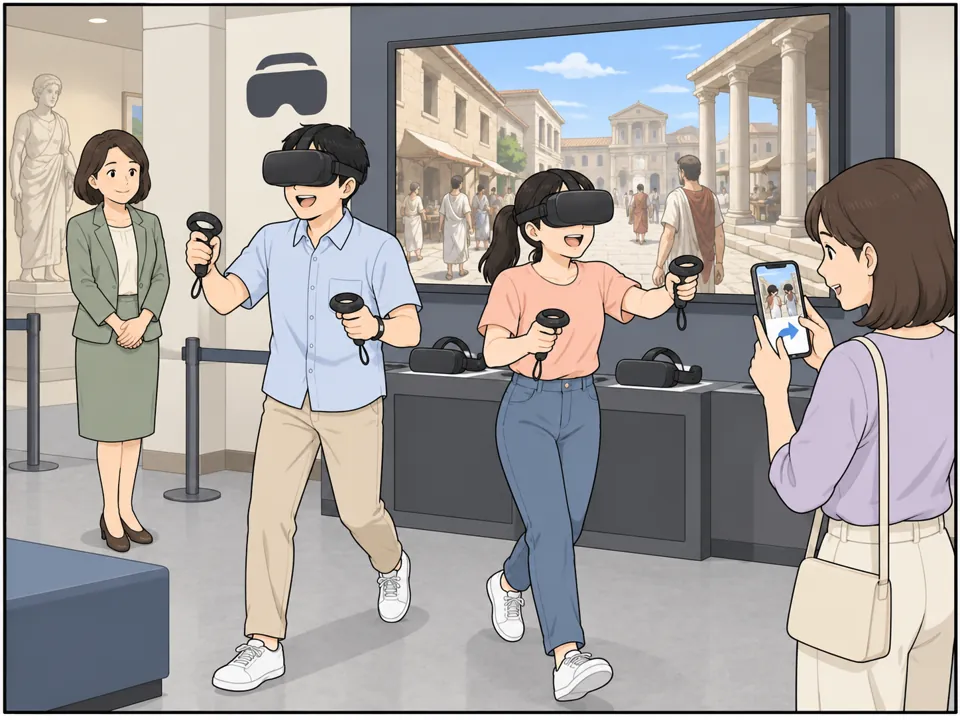
- The next month3
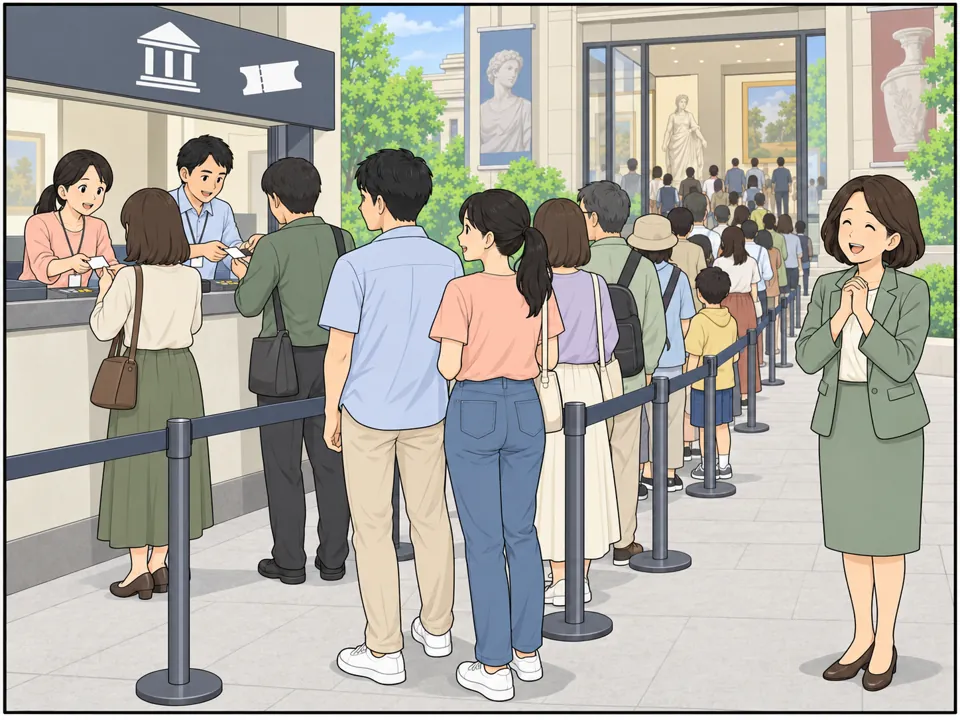
- Six months later4
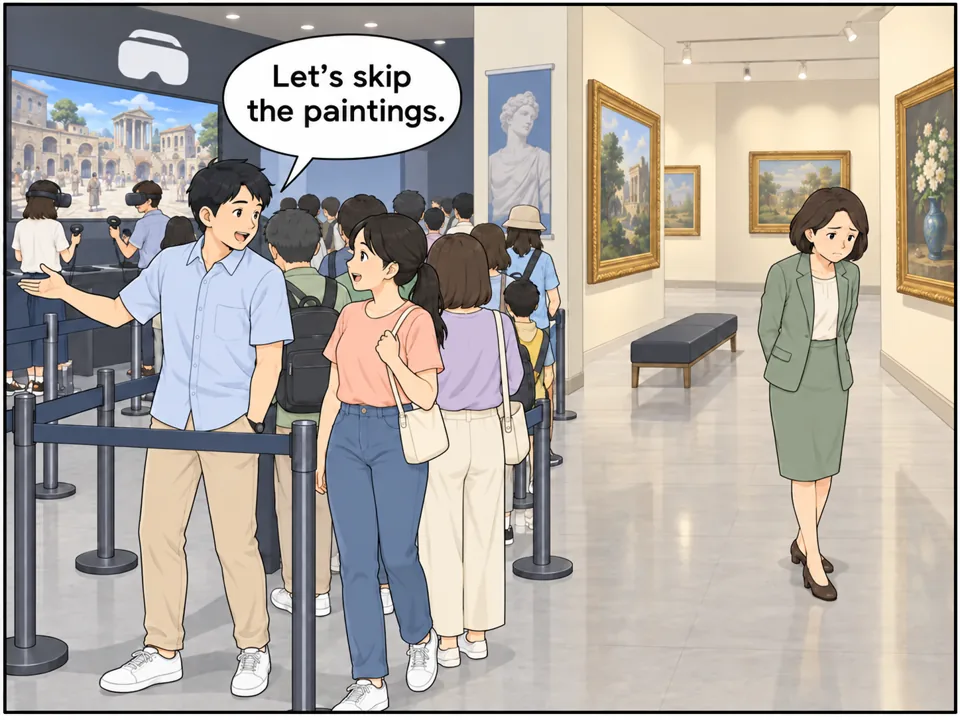
Let's skip the paintings.
ナレーション(考える1分・話す2分)
1One day, a museum director was having a meeting with her staff. She pointed at a graph showing that the number of visitors was decreasing. She said that they needed something new to attract young people. 2A few months later, the museum opened a new VR corner. Young visitors were wearing VR headsets and enjoying the experience of walking through an ancient city. Many of them shared photos of the experience on social media. 3The next month, there was a long line of people at the entrance. The ticket counter was busier than it had been for years, and the director looked delighted because the museum had become so popular again. 4Six months later, however, most visitors came only to try the VR corner. A young man told his friend that they should skip the paintings, and the exhibition rooms were almost empty. The director looked disappointed as she walked through them.
ある日、美術館の館長が職員たちと会議をしていました。彼女は、来館者数が減っていることを示すグラフを指さしました。そして、若い人を呼ぶために何か新しいものが必要だと言いました。 数か月後、美術館は新しいVRコーナーを開きました。若い来館者たちはVRゴーグルを着けて、古代の町を歩く体験を楽しんでいました。その多くが体験の写真をSNSで共有しました。 翌月、入口には長い行列ができていました。チケット売り場はここ何年もなかったほどの忙しさで、美術館がまた人気になったので、館長は大喜びでした。 ところが6か月後、ほとんどの来館者はVRコーナーを体験するためだけに来ていました。若い男性は友だちに絵は飛ばそうと言い、展示室はほとんど空っぽでした。館長は展示室を歩きながら、がっかりした様子でした。
164語No.1 4コマ目の気持ち
No.1Please look at the fourth picture. If you were the director, what would you be thinking?
I'd be thinking, "Our real artworks are the heart of this museum. I should have connected the VR experience to the actual exhibits."
「本物の作品こそがこの美術館の中心なのに。VR体験を実際の展示につなげるべきだった」と考えていると思います。
I'd be thinking, "At least more young people are coming to the museum now. I'll create a VR tour that leads visitors to the real paintings afterward."
「少なくとも、若い人が美術館に来るようにはなった。体験のあと本物の絵に案内するVRツアーを作ろう」と考えていると思います。
No.2〜No.4(カードを裏返して)
No.2Do you think virtual reality will change the way people learn?
Yes, I think so. Virtual reality allows students to experience things they cannot see in a normal classroom. For example, they can walk through ancient Rome in history class or travel inside the human body in science class. Such experiences make learning more exciting and help students remember information more easily.
はい、そう思います。VRを使えば、生徒はふつうの教室では見られないものを体験できます。例えば、歴史の授業で古代ローマを歩いたり、理科の授業で人の体の中を旅したりできます。こうした体験は学びをもっとわくわくするものにし、生徒が内容を覚えやすくなります。
No.3Should museums be free for students?
Yes, I think they should. Museums are important places for learning about history, art, and science, but ticket prices can be too expensive for young people. If entry were free, more students would visit museums regularly and develop an interest in culture. Some museums in Japan already let high school students in for free, which is a good example.
はい、そうすべきだと思います。博物館や美術館は歴史や芸術、科学を学ぶ大切な場所ですが、入場料が若い人には高すぎることがあります。入場が無料なら、もっと多くの学生が定期的に訪れ、文化に興味を持つようになるでしょう。日本にはすでに高校生を無料にしている館もあり、良い例です。
No.4Today, many traditional crafts and performing arts are in danger of disappearing. Do you think the government should spend more money to protect traditional culture?
Yes, I think so. In many traditional fields, there are not enough young people to carry on the skills. Government funding could help train successors and allow craftspeople to earn a stable income. Traditional culture is an important part of Japan's identity, and it also attracts many tourists from abroad.
はい、そう思います。多くの伝統的な分野で、技を受け継ぐ若い人が足りていません。政府の資金があれば後継者を育てたり、職人が安定した収入を得られるようにしたりできます。伝統文化は日本らしさの大切な一部であり、海外から多くの観光客を呼ぶ力もあります。