 10分
 朗読 Kara Shallenberg (1969-2023)
 原文そのまま

 PDFで印刷(A4 15まい)
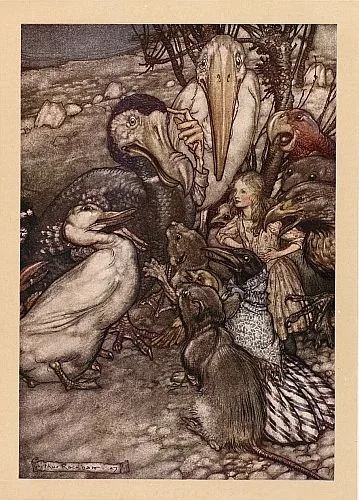
They were indeed a queer-looking party that assembled on the bank—the birds with draggled feathers, the animals with their fur clinging close to them, and all dripping wet, cross, and uncomfortable.岸に集まったのは、じつにへんてこなみなさんでした。鳥たちは羽をぐしょぐしょにたらし、けものたちは毛がぴったり体にはりついて、みんなびしょぬれで、きげんが悪く、気持ちの悪そうな顔をしていました。
The first question of course was, how to get dry again: they had a consultation about this, and after a few minutes it seemed quite natural to Alice to find herself talking familiarly with them, as if she had known them all her life.もちろん、まず問題になったのは、どうやって体をかわかすか、ということでした。みんなでそのことを相談しましたが、何分かたつと、アリスはまるで生まれたときからの知り合いのように、みんなと親しげに話しているのが、ごく自然なことに思えてきました。 Indeed, she had quite a long argument with the Lory, who at last turned sulky, and would only say, "I am older than you, and must know better;" and this Alice would not allow without knowing how old it was, and, as the Lory positively refused to tell its age, there was no more to be said.じっさい、アリスはインコと長い言い合いをしました。インコはしまいにすねてしまって、「わたしはきみより年上なんだから、きみよりものをよく知っているにきまっている」としか言わなくなりました。けれどもアリスは、インコが何さいなのか知らないうちは、それをみとめるわけにいきません。そしてインコが年を教えるのをきっぱりことわったので、それ以上言うことはなくなってしまいました。
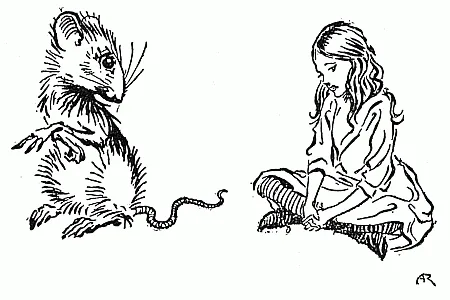
At last the Mouse, who seemed to be a person of authority among them, called out "Sit down, all of you, and listen to me!とうとう、みんなの中でえらい人らしいネズミが、大きな声で言いました。「みんな、すわって、ぼくの話を聞きたまえ! I'll soon make you dry enough!"すぐにすっかりかわかしてあげるから!」 They all sat down at once, in a large ring, with the Mouse in the middle.みんなはすぐに、ネズミをまん中にして大きな輪になってすわりました。 Alice kept her eyes anxiously fixed on it, for she felt sure she would catch a bad cold if she did not get dry very soon.アリスは心配そうにネズミをじっと見つめていました。早くかわかないと、きっとひどいかぜをひいてしまうと思ったからです。
"Ahem!" said the Mouse with an important air.「えへん!」とネズミはもったいぶって言いました。 "Are you all ready?「みんな、用意はいいかい? This is the driest thing I know.これは、ぼくの知っているなかで、いちばん『かわいた』(つまり、いちばん味気ない)話なんだ。 Silence all round, if you please!どうか、みなさん、おしずかに! 'William the Conqueror, whose cause was favoured by the pope, was soon submitted to by the English, who wanted leaders, and had been of late much accustomed to usurpation and conquest.『ローマ教皇の支持を受けたウィリアム征服王に、イングランドの人々はまもなく従った。人々は指導者を求めており、また近ごろは、王位の横取りや征服にすっかり慣れていたのである。 Edwin and Morcar, the earls of Mercia and Northumbria—'"マーシアとノーサンブリアの伯爵、エドウィンとモーカーは――』」
"Ugh!" said the Lory, with a shiver.「うへえ!」とインコが、ぶるっとふるえながら言いました。
"I beg your pardon!" said the Mouse, frowning, but very politely.「失礼!」とネズミは、顔をしかめながらも、とてもていねいに言いました。 "Did you speak?"「何かおっしゃいましたか?」
"Not I!" said the Lory hastily.「わたしじゃないよ!」とインコはあわてて言いました。
"I thought you did," said the Mouse, "—I proceed.「そうかと思いましたが」とネズミは言いました。「――では続けます。 'Edwin and Morcar, the earls of Mercia and Northumbria, declared for him: and even Stigand, the patriotic Archbishop of Canterbury, found it advisable—'"『マーシアとノーサンブリアの伯爵、エドウィンとモーカーは、ウィリアムの味方につくと宣言した。そして愛国者であるカンタベリー大司教のスティガンドでさえ、それが得策だと見いだして――』」
"Found what?" said the Duck.「何を見いだしたって?」とアヒルが言いました。
"Found it," the Mouse replied rather crossly: "of course you know what 'it' means."「それを、だよ」とネズミはややむっとして答えました。「『それ』が何のことかぐらい、わかるだろう。」
"I know what 'it' means well enough, when I find a thing," said the Duck; "it's generally a frog or a worm.「ぼくが何かを見つけたときの『それ』なら、よくわかっているさ」とアヒルは言いました。「たいていカエルかミミズだよ。 The question is, what did the archbishop find?"問題は、大司教が何を見つけたか、ってことさ。」
The Mouse did not notice this question, but hurriedly went on, "'—found it advisable to go with Edgar Atheling to meet William and offer him the crown.ネズミはこの質問には知らん顔をして、急いで続けました。「『――それが得策だと見いだして、エドガー・アセリングとともにウィリアムをむかえに行き、王冠をさし出した。 William's conduct at first was moderate.ウィリアムのふるまいは、はじめはおだやかであった。 But the insolence of his Normans—' How are you getting on now, my dear?" it continued, turning to Alice as it spoke.しかし、ノルマン人たちのごうまんさが――』ところで、きみ、今の具合はどうだい?」とネズミは、アリスの方を向いて言いました。
"As wet as ever," said Alice in a melancholy tone; "doesn't seem to dry me at all."「あいかわらずびしょぬれよ」とアリスはしょんぼりした声で言いました。「ちっともかわかないみたい。」
"In that case," said the Dodo solemnly, rising to its feet, "I move that the meeting adjourn, for the immediate adoption of more energetic remedies——"「それならば」とドードーがおごそかに立ち上がって言いました。「より効果的な対策をただちに採用するため、本会議の休会を動議します――」
"Speak English!" said the Eaglet.「ふつうの言葉で話してよ!」と子ワシが言いました。 "I don't know the meaning of half those long words, and, what's more, I don't believe you do either!"「そんな長ったらしい言葉、半分も意味がわからないよ。それに、きみだってわかってないんじゃないの!」 And the Eaglet bent down its head to hide a smile: some of the other birds tittered audibly.そう言うと、子ワシは頭を下げてにやにや笑いをかくしました。ほかの鳥たちの中には、聞こえるほどくすくす笑うものもいました。
"What I was going to say," said the Dodo in an offended tone, "was that the best thing to get us dry would be a Caucus-race."「わたしが言おうとしたのは」とドードーはむっとした声で言いました。「体をかわかすには、コーカス・レースがいちばんだ、ということです。」
"What is a Caucus-race?" said Alice; not that she much wanted to know, but the Dodo had paused as if it thought that somebody ought to speak, and no one else seemed inclined to say anything.「コーカス・レースって何?」とアリスは言いました。べつにそれほど知りたかったわけではありませんが、ドードーがだれかが何か言うべきだというように話を止めたのに、ほかのだれも何か言いそうになかったからです。
"Why," said the Dodo, "the best way to explain it is to do it."「なに」とドードーは言いました。「説明するには、やってみるのがいちばんだ。」 (And, as you might like to try the thing yourself some winter day, I will tell you how the Dodo managed it.)(それに、ある冬の日に、あなたも自分でやってみたくなるかもしれませんから、ドードーがどうやったのか、お話ししましょう。)
First it marked out a race-course, in a sort of circle, ("the exact shape doesn't matter," it said,) and then all the party were placed along the course, here and there.まずドードーは、円のような形のコースをかきました(「きちんとした形でなくてもかまわない」とドードーは言いました)。それから、みんながコースのあちこちにならびました。 There was no "One, two, three, and away," but they began running when they liked, and left off when they liked, so that it was not easy to know when the race was over.「位置について、よーい、ドン」はありません。みんな、走りたいときに走りだして、やめたいときにやめるので、レースがいつ終わったのか、なかなかわかりません。 However, when they had been running half an hour or so, and were quite dry again, the Dodo suddenly called "The race is over!" and they all crowded round it, panting, and asking "But who has won?"それでも、三十分ほど走って、すっかりかわいたころ、ドードーがとつぜん「レース終わり!」とさけびました。みんなはドードーのまわりにむらがって、はあはあ息をきらしながら、「でも、だれが勝ったの?」とたずねました。
This question the Dodo could not answer without a great deal of thought, and it stood for a long time with one finger pressed upon its forehead (the position in which you usually see Shakespeare, in the pictures of him), while the rest waited in silence.この質問には、ドードーもよくよく考えなければ答えられませんでした。ドードーは長いあいだ、ひたいに指を一本当てて立っていました(シェークスピアの絵でよく見るあのかっこうです)。そのあいだ、ほかのみんなはだまって待っていました。 At last the Dodo said "Everybody has won, and all must have prizes."とうとうドードーは言いました。「みんなが勝った。だから、みんな賞品をもらわなくてはならない。」
"But who is to give the prizes?" quite a chorus of voices asked.「でも、だれが賞品をくれるの?」とみんなが声をそろえてたずねました。
"Why, she, of course," said the Dodo, pointing to Alice with one finger; and the whole party at once crowded round her, calling out in a confused way, "Prizes!「それはもちろん、この子さ」とドードーは指を一本アリスに向けて言いました。するとみんなはいっせいにアリスのまわりにむらがって、てんでに「賞品! Prizes!"賞品!」とさけびました。
Alice had no idea what to do, and in despair she put her hand in her pocket, and pulled out a box of comfits (luckily the salt water had not got into it), and handed them round as prizes.アリスはどうしていいかわからず、こまりはててポケットに手を入れると、砂糖菓子の箱を取り出しました(運よく、塩水は中に入っていませんでした)。そしてそれを賞品としてみんなに配りました。 There was exactly one apiece all round.ちょうど一人に一つずつありました。