

 PDF をダウンロード
Let's Look at Art!
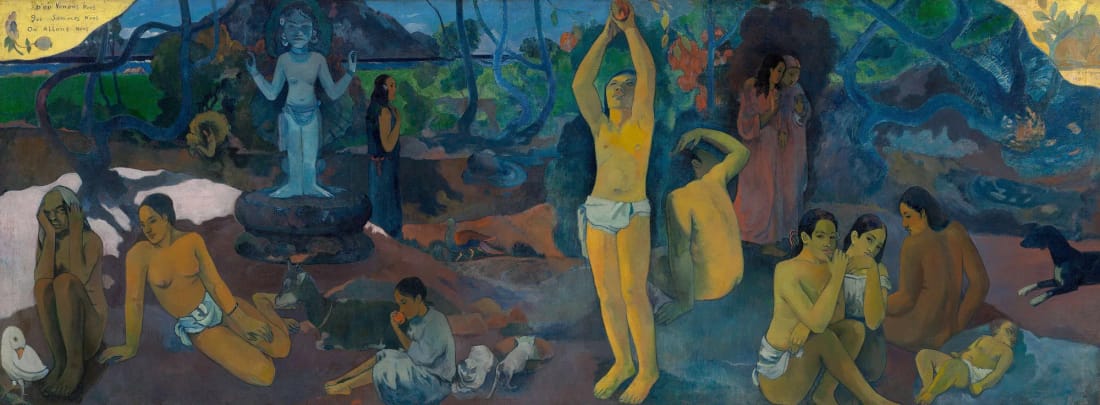
Title: Where Do We Come From? What Are We? Where Are We Going?
Artist: Paul Gauguin (1848–1903)
Year: 1897–1898
Medium: Oil on canvas
Museum: Museum of Fine Arts, Boston, Boston
1 Find it! 絵の中から見つけて、○でかこもう。
- ☐ The sleeping baby
- ☐ The figure reaching for fruit
- ☐ The blue idol
- ☐ The old woman
2 First look 最初に見たときの感想を書こう。
When I first saw this painting, I felt ______________ because ______________________.
Three colors I can see: ①__________ ②__________ ③__________
3 Words — Match them. 英語と日本語を線で結ぼう。
- statue ●
- wonder ●
- birth ●
- mysterious ●
- ● 誕生
- ● 〜だろうかと思う
- ● 像
- ● なぞめいた
Where Do We Come From? What Are We? Where Are We Going?
4 Fill in the blanks. 下の箱から選んで、( )に入れよう。形を変えるものもあります。
- A blue stands in the back.
- We all where we are going.
- The baby on the right means .
- The whole scene feels .
5 Read and answer — True or False? 英文を読んで、正しければ T、ちがえば F。
This is a very long painting. It is about 3.7 meters wide! Gauguin painted it on the island of Tahiti. You can read it from right to left. A baby is on the right, and an old woman is on the left. It shows the life of a person.
Gauguin painted this huge work, more than 3.7 meters wide, in Tahiti in the South Pacific in 1897–98. From a sleeping baby on the right, to a standing figure reaching for fruit in the middle, to an old woman on the left, it shows a human life from right to left. A blue idol with raised arms stands in the back. It is in the Museum of Fine Arts, Boston.
- This painting is often explained as a human life from right to left. T / F
- Gauguin hired many models and took years to paint it. T / F
6 Quiz — Choose the best answer. 正しいものを選ぼう。
Where did Gauguin paint this?
- Brittany
- Paris
- Tahiti
- Japan
Where Do We Come From? What Are We? Where Are We Going?
7 Put the words in order. 語を正しく並べかえて、文を書こう。
- right / painting / to / story / from / a / left / tells / This .
- a / is / painting / very / This / long .
8 Complete the description. 箱の語を(1)〜(4)に入れて、絵の説明を完成させよう。
This is a very long painting. On the right, a baby is sleeping on the (1). In the (2), a (3) figure is reaching for (4). On the left, there are an old woman and a blue idol.
9 Describe the painting in English. この絵を英語で説明しよう(3文以上)。
10 Think & Talk 考えて、ペアやグループで話し合おう。
How would you answer the three questions in the title?
Why do you think Gauguin did not use question marks?
11 My favorite part いちばん好きなところを英語で。
I like the ____________ because ____________________________.
Answers & Notes
1 Find it!
The sleeping baby=眠る赤ちゃん/The figure reaching for fruit=果物に手をのばす人物/The blue idol=青い偶像/The old woman=うずくまる老女
2 First look
自由に書けたら正解。I felt calm / surprised / happy … などの形容詞を使おう。
3 Words
1–c(statue=像) 2–b(wonder=〜だろうかと思う) 3–a(birth=誕生) 4–d(mysterious=なぞめいた)
4 Fill in the blanks
- statue A blue statue stands in the back.
奥に青い像が立っています。 - wonder We all wonder where we are going.
私たちはみな、自分がどこへ行くのだろうと考えます。 - birth The baby on the right means birth.
右の赤ちゃんは誕生を意味します。 - mysterious The whole scene feels mysterious.
場面全体がなぞめいて感じられます。
5 Read — T / F
【本文の訳】これはとても横長の絵です。幅はおよそ3.7メートルもあります!ゴーギャンはタヒチという島でこの絵を描きました。右から左へ読むことができます。右には赤ちゃん、左にはおばあさんがいます。人の一生を表しているのです。
【本文の訳】1897年から98年にかけて、南太平洋のタヒチでゴーギャンが描いた、横幅3.7メートルをこえる大作です。右はしで眠る赤ちゃんから、まん中で果物に手をのばす人物、左はしでうずくまる老女まで、人の一生が右から左へと描かれています。奥には両腕を上げた青い偶像が立っています。アメリカのボストン美術館にあります。
- T この絵は、右から左へ人の一生を描いていると説明されることが多い。
解説:右の赤ちゃんから左の老女へと、人生が進んでいきます。 - F ゴーギャンは何人ものモデルを雇い、何年もかけて描いた。
解説:手紙によると、モデルなしで1か月ほどで一気に描きました。
6 Quiz
C 問:ゴーギャンがこの絵を描いた場所は?
選択肢:A ブルターニュ/B パリ/C タヒチ/D 日本
解説:南太平洋のタヒチで、1897年から98年にかけて描きました。
7 Put the words in order
- This painting tells a story from right to left.
この絵は右から左へと物語を語っています。 - This is a very long painting.
これはとても横長の絵です。
💡 from right to left(右から左へ):絵や文字を読む向きの表現。日本の絵巻物も right to left。反対は left to right。
8 Complete the description
(1) ground (2) middle (3) standing (4) fruit
9 Describe(模範解答)
This is a very long painting. On the right, a baby is sleeping on the ground. In the middle, a standing figure is reaching for fruit. On the left, there are an old woman and a blue idol.
これはとても横長の絵です。右では、赤ちゃんが地面で眠っています。まん中では、立っている人物が果物に手をのばしています。左には、老女と青い偶像があります。
10 Think & Talk(問いの訳)
- How would you answer the three questions in the title?
題名の3つの問いに、あなたならどう答えますか? - Why do you think Gauguin did not use question marks?
ゴーギャンはなぜ、題名に「?」をつけなかったのだと思いますか?
正解のない問いです。理由をつけて話せたら◎。
Fun Fact(訳)
本当の題名に「?」はない! 左上にゴーギャンが書いた題名は「D'où Venons Nous / Que Sommes Nous / Où Allons Nous」。日本語や英語の題名では疑問符をつけることが多いのですが、ゴーギャン自身の書きこみには疑問符がありません。
