

 PDF をダウンロード
Let's Look at Art!
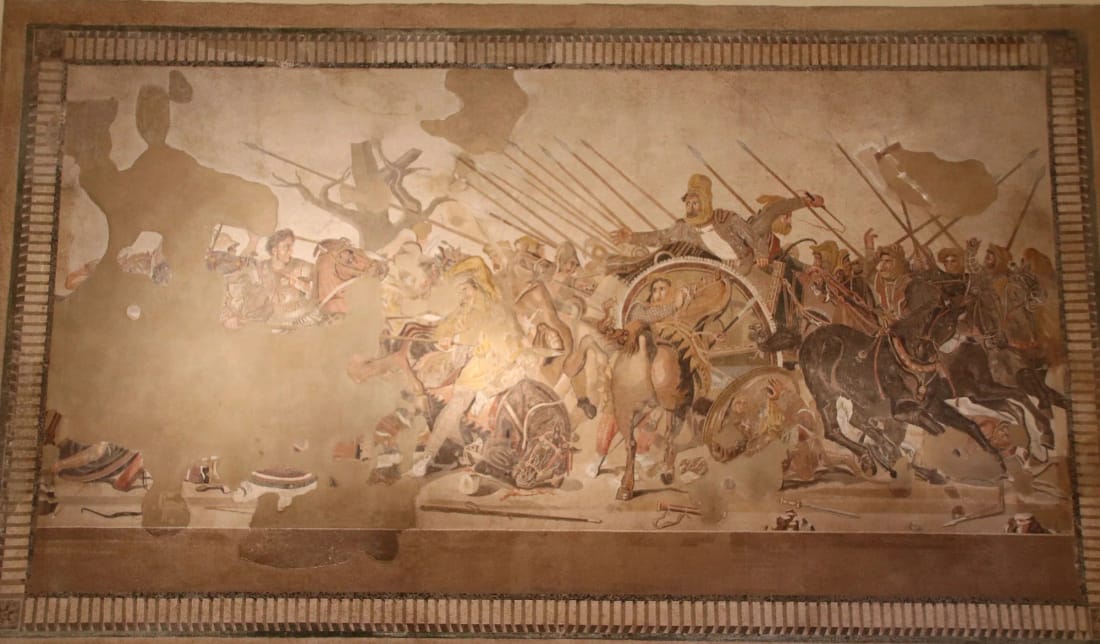
Title: The Alexander Mosaic
Artist: Unknown (Roman mosaic makers in Pompeii)
Year: c. 120–100 BC
Medium: Mosaic of small stone pieces
Museum: National Archaeological Museum of Naples, Naples
1 Find it! 絵の中から見つけて、○でかこもう。
- ☐ Alexander the Great
- ☐ Darius III, King of Persia
- ☐ Face in the shield
- ☐ Long spears
2 First look 最初に見たときの感想を書こう。
When I first saw this painting, I felt ______________ because ______________________.
Three colors I can see: ①__________ ②__________ ③__________
3 Words — Match them. 英語と日本語を線で結ぼう。
- battle ●
- charge ●
- chariot ●
- frightened ●
- ● 突進する
- ● おびえた
- ● 戦い
- ● (古代の)戦車
The Alexander Mosaic
4 Fill in the blanks. 下の箱から選んで、( )に入れよう。形を変えるものもあります。
- This mosaic shows a famous .
- Alexander toward the enemy.
- The king stands in his .
- Darius looks .
5 Read and answer — True or False? 英文を読んで、正しければ T、ちがえば F。
This is a big picture of a battle. It is made of very small stones. Alexander the Great rides a horse on the left. The King of Persia is on the right. He looks scared and wants to run away.
The young commander charging on horseback from the left is Alexander the Great of Macedon. On the right, Darius III, King of Persia, stretches out his hand from his chariot with a frightened face. It has long been said to show the Battle of Issus in 333 BC. It is a mosaic, made of small pieces of stone set into a floor, and it is more than five meters wide.
- This mosaic was found in a town buried by a volcano in AD 79. T / F
- This mosaic was made by a soldier who watched the battle. T / F
6 Quiz — Choose the best answer. 正しいものを選ぼう。
Where was this mosaic first?
- On a Greek temple roof
- On a floor of a house in Pompeii
- On a wall of the Persian palace
- On the sail of a Roman ship
The Alexander Mosaic
7 Put the words in order. 語を正しく並べかえて、文を書こう。
- Persian / the / Alexander / king / to / comes / face / face / with .
- scene / is / This / battle / busy / a .
8 Complete the description. 箱の語を(1)〜(4)に入れて、絵の説明を完成させよう。
This is a busy (1) scene. On the left, a (2) man is riding a (3) into the fight. On the right, a king is standing in a (4) and reaching out his hand. There are many soldiers, horses and long spears in the middle.
9 Describe the painting in English. この絵を英語で説明しよう(3文以上)。
10 Think & Talk 考えて、ペアやグループで話し合おう。
Why do you think the artist made the losing king so large and clear?
Would you like to have this picture on the floor of your house? Why or why not?
11 My favorite part いちばん好きなところを英語で。
I like the ____________ because ____________________________.
Answers & Notes
1 Find it!
Alexander the Great=アレクサンドロス大王/Darius III, King of Persia=ペルシャ王ダレイオス3世/Face in the shield=盾に映った顔/Long spears=空に向かう長い槍
2 First look
自由に書けたら正解。I felt calm / surprised / happy … などの形容詞を使おう。
3 Words
1–c(battle=戦い) 2–a(charge=突進する) 3–d(chariot=(古代の)戦車) 4–b(frightened=おびえた)
4 Fill in the blanks
- battle This mosaic shows a famous battle.
このモザイクは有名な戦いを表しています。 - charges Alexander charges toward the enemy.
アレクサンドロスは敵に向かって突進します。 - chariot The king stands in his chariot.
王は戦車に乗っています。 - frightened Darius looks frightened.
ダレイオスはおびえているように見えます。
5 Read — T / F
【本文の訳】これは戦いの大きな絵です。とても小さな石でできています。アレクサンドロス大王が左で馬に乗っています。ペルシャ王は右にいます。こわそうな顔で、にげようとしています。
【本文の訳】左から馬で突進してくる若い武将が、マケドニアのアレクサンドロス大王。右の戦車の上で、おびえた顔で手をのばしているのがペルシャ王ダレイオス3世です。紀元前333年のイッソスの戦いを表したものと伝えられてきました。小さな石のかけらを床に敷きつめた「モザイク」で、大きさは横5メートルをこえます。
- T このモザイクは、紀元79年の火山の噴火で灰にうもれた町から見つかった。
解説:ヴェスヴィオ火山の噴火でうもれたポンペイで、1831年に見つかりました。 - F このモザイクは、戦いを見ていた兵士がその場で作った。
解説:戦いから200年以上あとに、ギリシャの絵をもとに作られたと考えられています。
6 Quiz
B 問:このモザイクは、もともとどこにあった?
選択肢:A ギリシャの神殿の屋根/B ポンペイの家の床/C ペルシャ王の宮殿の壁/D ローマの船の帆
解説:ポンペイの「ファウヌスの家」の床にありました。
7 Put the words in order
- Alexander comes face to face with the Persian king.
アレクサンドロスはペルシャ王と真正面から向き合います。 - This is a busy battle scene.
これはこみあった戦いの場面です。
💡 come face to face with(〜と真正面から向き合う):face to face は「顔と顔をつきあわせて」。対決や出会いの場面にぴったりです。
8 Complete the description
(1) battle (2) young (3) horse (4) chariot
9 Describe(模範解答)
This is a busy battle scene. On the left, a young man is riding a horse into the fight. On the right, a king is standing in a chariot and reaching out his hand. There are many soldiers, horses and long spears in the middle.
これはこみあった戦いの場面です。左では、若い男が馬に乗って戦いに飛びこんでいます。右では、王が戦車に乗って手をのばしています。まん中には、たくさんの兵士と馬、長い槍があります。
10 Think & Talk(問いの訳)
- Why do you think the artist made the losing king so large and clear?
作者はなぜ、負けている王をこんなに大きくはっきりと表したのだと思いますか? - Would you like to have this picture on the floor of your house? Why or why not?
この絵が自分の家の床にあったらうれしいですか?それはなぜですか?
正解のない問いです。理由をつけて話せたら◎。
Fun Fact(訳)
石のかけらの数、100万個以上!? このモザイクに使われた石のかけらは、約150万個と見つもられています(400万個をこえるという計算もあります)。1つ1つは数ミリほどの大きさ。それを床の上に1つずつはめこんでいったのです。
