

 PDF をダウンロード
Buddhist Sculpture
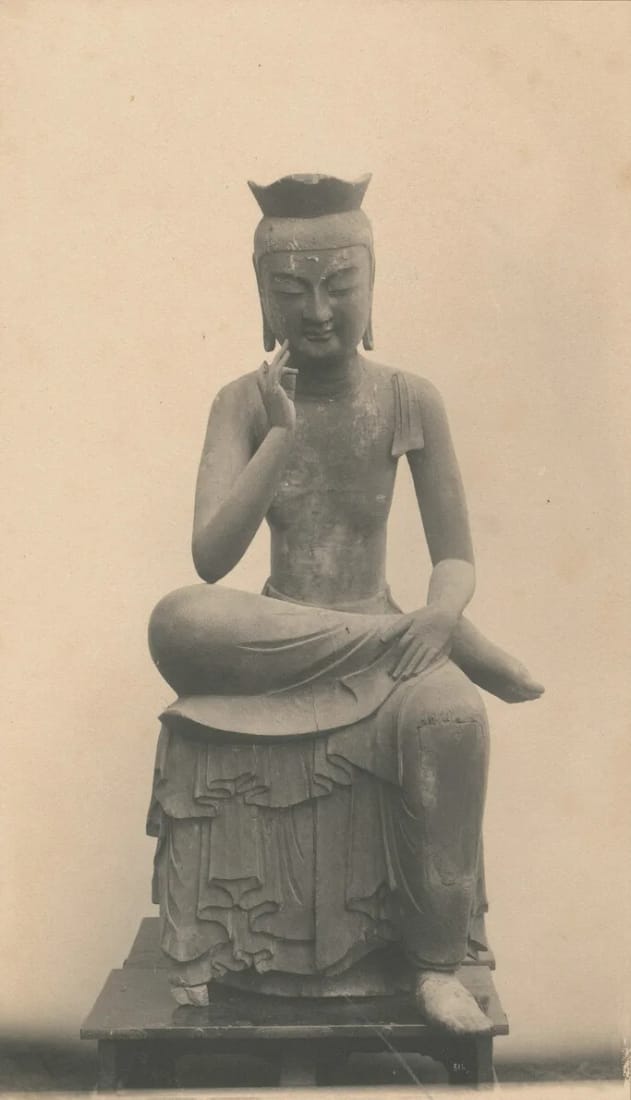
Unknown, 7th century (photo: 1888–89)
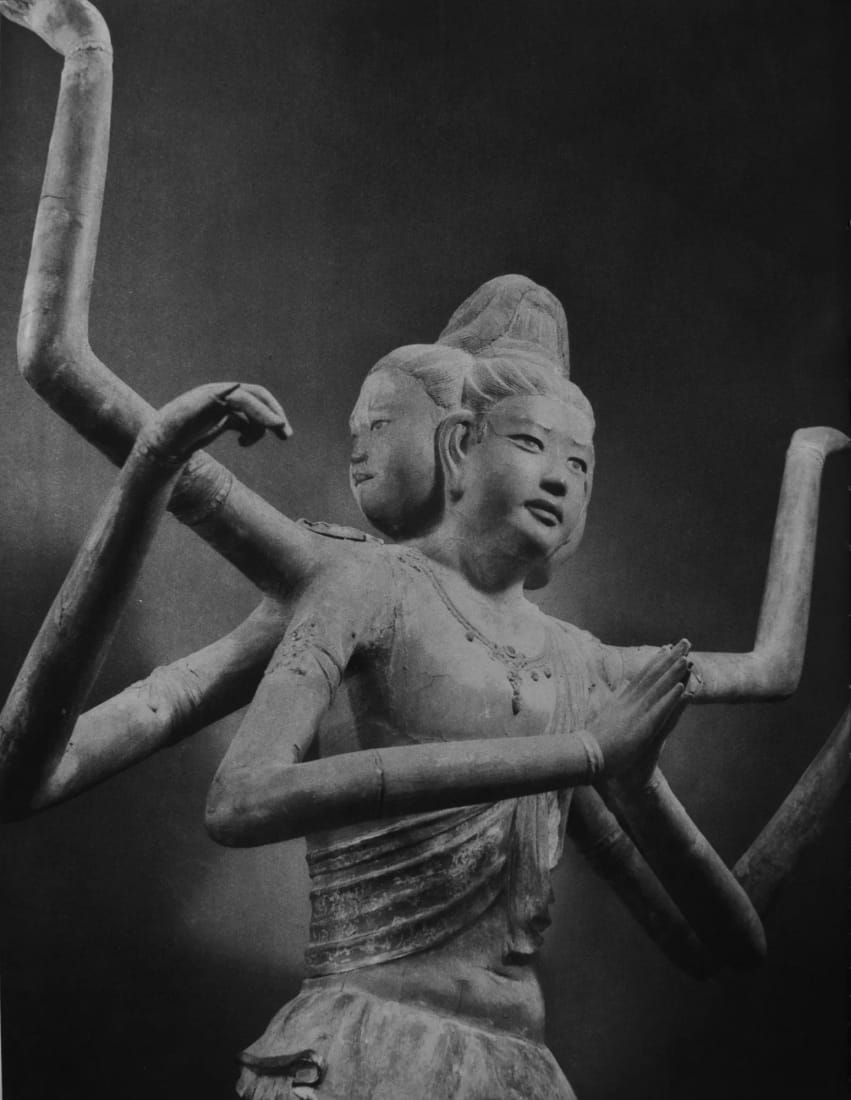
Unknown, 734
1 How to spot it 2つの絵で見つけたら ✓ をつけよう。
| A | B | |
|---|---|---|
| A raised bump on the head and rows of curls mean a Buddha who has reached enlightenment. | ☐ | ☐ |
| A quiet, slight smile is typical of Asuka-period statues. | ☐ | ☐ |
| Bulging muscles and angry, staring eyes belong to guardian gods. | ☐ | ☐ |
| Crystal eyes that shine as if alive, common in the Kamakura period. | ☐ | ☐ |
| Wood, bronze and lacquer each give a very different surface. | ☐ | ☐ |
2 Read 英文を読もう。
When Buddhism came to Japan from the Korean Peninsula in the 6th century, people began making Buddhist statues. Statues of the Asuka period often have a faint smile, called an 'archaic smile'. The Miroku Bodhisattva at Kōryū-ji in Kyoto sits with a finger lightly touching its cheek, thinking about how to save people.
Write one thing you learned:
Buddhist Sculpture
3 Art words — Match them. 英語と日本語を線で結ぼう。
- bodhisattva ●
- dry lacquer ●
- crystal eyes ●
- joined-block technique ●
- ● 寄木造
- ● 乾漆造
- ● 菩薩
- ● 玉眼
4 Quiz
According to records, how long did it take to make the guardian statues of Tōdai-ji?
- 69 days
- 3 days
- 3 years
- 30 years
5 Quiz
How many faces does the Ashura statue at Kōfuku-ji have?
- One
- Two
- Three
- Six
6 Which do you like better, A or B? Why? AとB、どちらが好き?理由も英語で。
I like ____ better because ________________________________.
Answers & Notes
1 How to spot it(訳)
- A raised bump on the head and rows of curls mean a Buddha who has reached enlightenment.
頭の上が盛り上がり、うずまきの髪がならぶのは如来(悟りを開いた仏)。 - A quiet, slight smile is typical of Asuka-period statues.
口もとがわずかに上がった静かな微笑みは、飛鳥時代の仏像の特徴。 - Bulging muscles and angry, staring eyes belong to guardian gods.
筋肉がもりもりで目をむいて怒っているのは、仏を守る神さま。 - Crystal eyes that shine as if alive, common in the Kamakura period.
目に水晶がはめこまれ、生きているように光っている(鎌倉時代に多い)。 - Wood, bronze and lacquer each give a very different surface.
木・銅・漆など、材料によって表面の感じがまったくちがう。
A:弥勒菩薩半跏思惟像(宝冠弥勒) B:阿修羅像
2 Read(訳)
6世紀、仏教が朝鮮半島から日本へ伝わると、仏の姿を表す「仏像」が作られるようになりました。飛鳥時代の仏像は、口もとをわずかに上げた「アルカイック・スマイル」とよばれる微笑みが特徴です。京都・広隆寺の弥勒菩薩半跏思惟像は、指をそっとほおにそえて、人々をどう救おうかと考えているすがたです。
3 Art words
1–c(bodhisattva=菩薩:悟りを目指しながら、人々を救う仏。かざりを身につけた姿が多い。)
2–b(dry lacquer=乾漆造:麻布を漆で貼り重ねて作る技法。軽くてなめらか。阿修羅像がこの方法。)
3–d(crystal eyes=玉眼:仏像の目の内側から水晶をはめこむ技法。目がうるんで見える。)
4–a(joined-block technique=寄木造:いくつもの木を組み合わせて像を作る方法。大きな像を分担して作れる。)
4 Quiz
A 問:東大寺南大門の金剛力士像は、何日で完成したと記録されている?
選択肢:A 69日/B 3日/C 3年/D 30年
解説:高さ8メートルをこえる2体を、慶派の仏師たちが分担してわずか69日で作り上げました。
5 Quiz
C 問:興福寺の阿修羅像の顔の数は?
選択肢:A 1つ/B 2つ/C 3つ/D 6つ
解説:3つの顔と6本の腕をもっています。
Fun Fact(訳)
仁王像のおなかの中から、運慶の名前が! 1988年から始まった解体修理で、金剛力士像の体の中から、運慶や快慶たちの名前が書かれた文書などが見つかりました。800年近くたって、作った人たちの記録が確かめられたのです。
