The Morning Genius: Mozart’s Secret to Endless Creativity
Wolfgang Amadeus Mozart is known as one of the greatest composers in history. He wrote more than 600 pieces before he died at the young age of 35. Many people wonder how he could create so much beautiful music in such a short life. The answer may be found in his daily routine and his love for hard work.
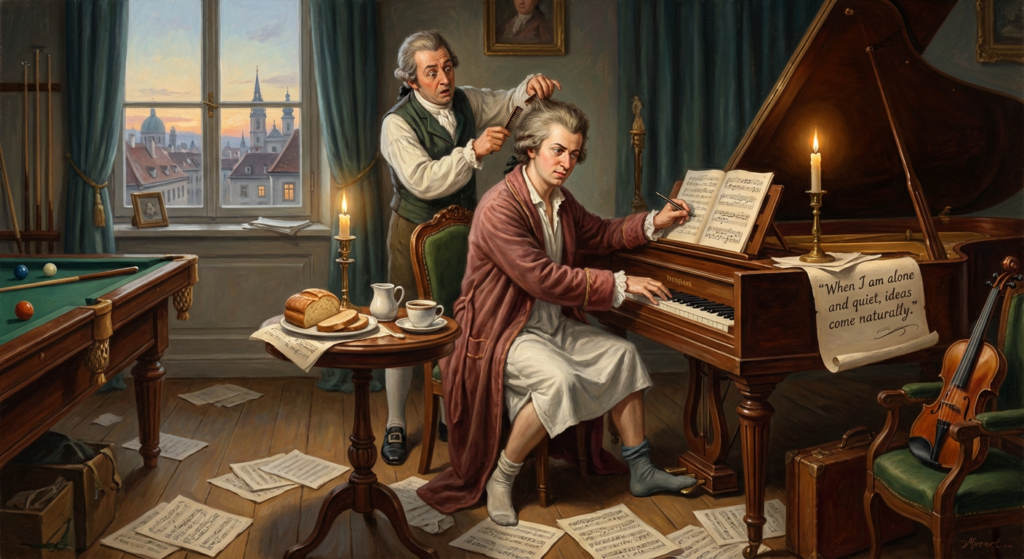
Mozart often woke up before sunrise. He said that new melodies came to him during the night, so he liked to write them down early in the morning. Sometimes, he even stopped dressing when an idea came and ran to the piano. One story says his barber was still fixing his hair when Mozart suddenly began playing!
After a simple breakfast of bread and coffee, he worked on his music for several hours. Then he taught lessons, met friends, or played billiards. But no matter what he did, his mind was always full of musical thoughts.
In the evening, he often composed again, sometimes until midnight. Even though he was often sick and did not have much money, his passion never disappeared.
Mozart once said, “When I am alone and quiet, ideas come naturally.” His words show how deeply he loved his art. His life may have been short, but his music continues to inspire the world. (214 words)
<音読用音声>
<Important Words>
★ composer:作曲家 — a person who writes music(音楽を作る人)
★ routine:日課 — the regular way someone lives each day(毎日の決まった行動)
★ sunrise:日の出 — the time when the sun comes up in the morning(朝日がのぼる時)
★ melody:メロディー — a pleasant series of musical sounds(音の流れ、旋律)
★ lesson:レッスン — a period of teaching or learning(学びや教えの時間)
★ billiards:ビリヤード — a game played on a table with balls and a stick(玉を打つテーブルゲーム)
★ passion:情熱 — a very strong love or enthusiasm(強い熱意)
★ inspire:刺激を与える — to make someone feel creative or motivated(やる気や創造力を与える)
★ naturally:自然に — without trying or force(自然な形で)
★ continue:続く — to keep going or not stop(止まらず続く)
<日本語訳>朝の天才:モーツァルトの尽きない創造力の秘密
ヴォルフガング・アマデウス・モーツァルトは、歴史上最も偉大な作曲家の一人として知られています。彼はわずか35歳で亡くなるまでに600曲以上を作りました。どうしてそんなに多くの美しい音楽を短い人生で生み出せたのでしょうか。その答えは、彼の日課と努力への愛にあります。
モーツァルトはよく夜明け前に起きました。夜のあいだに新しいメロディーが浮かぶことが多く、朝のうちにそれを書き留めるのが好きだったのです。ときには着替えの途中でも、アイデアが浮かぶとピアノへ走っていったそうです。理容師が髪を整えている途中に演奏を始めたという話もあります。
パンとコーヒーの軽い朝食のあと、数時間は作曲に集中しました。その後はレッスンをしたり、友人と会ったり、ビリヤードを楽しんだりしました。でもどんな時も、頭の中では音楽が鳴っていたのです。
夜になると、再び作曲を始め、時には真夜中まで続けました。病気がちでお金も少なかったのに、情熱は決して消えませんでした。
モーツァルトは「静かに一人でいると、自然に音楽が浮かんでくる」と言いました。その言葉は、彼の芸術への深い愛を表しています。短い人生でも、彼の音楽は今も世界を励まし続けています。
【原田英語コラム】「朝の時間」は創造のゴールデンタイム
モーツァルトのように、朝の静けさを使って考えごとをする人は多くいます。朝は頭がすっきりしており、外からの音も少ないため、集中しやすいのです。
最近の研究でも、朝に短い創作時間を持つ人は、1日の気分が安定しやすいといわれます。たとえば10分だけでも、音楽を聴いたり、日記を書いたり、絵を描いたりすることで、脳が「自由に考えるモード」に切り替わります。
モーツァルトのように、思いついたことをすぐ行動に移す――それが創造力を伸ばす第一歩です。小さな習慣が、大きな成果を生み出します。