Japan’s Unique Diary Culture: Why Japanese People Love Writing Diaries
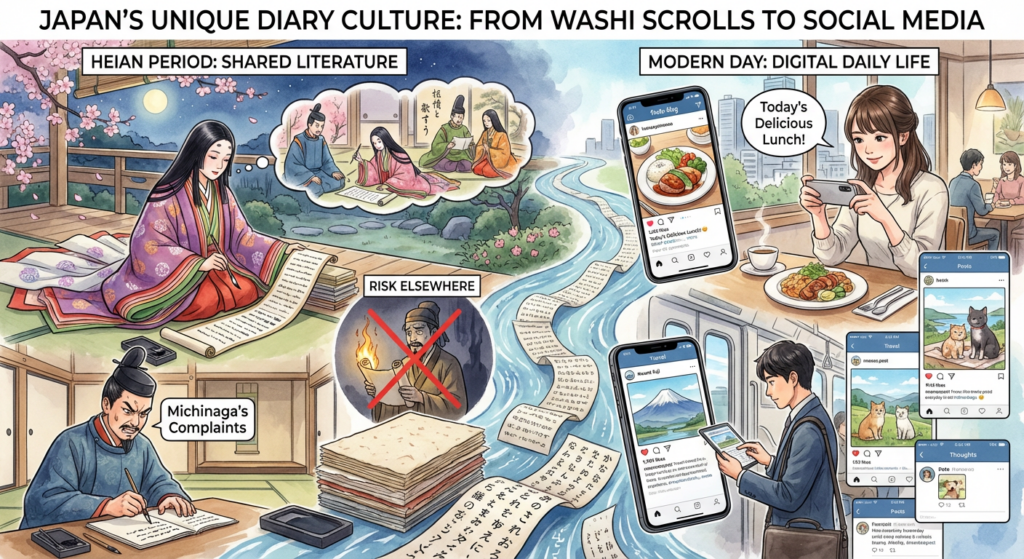
Japanese people have a special love for writing diaries. This is different from many other countries. In Japan, diaries are not just personal notes. They are often like literature that people read and enjoy. For example, long ago, in the Heian period, famous writers like Murasaki Shikibu wrote “The Diary of Lady Murasaki.” It tells about court life, love, and daily feelings. Another one is “The Diary of Izumi Shikibu,” which shares stories of romance. These old diaries were meant to be shared, not hidden.
Why is this unique? In some places like ancient China, people might write diaries, but they often did not keep them. There was a risk—if you wrote bad things about powerful people, your family could get in trouble later. So, many diaries were lost or not saved. But in Japan, it was safe. People could write freely about their lives, even if it included secrets or complaints. For instance, in “The Diary of Fujiwara no Michinaga,” he wrote about being angry when no one came to a meeting at work.
Today, this tradition continues. Japanese people still write diaries, now with photos on social media or apps. They share travel stories, food, or daily fun. Experts say Japan’s diary culture comes from using special paper like washi, which lasts a long time, and a habit of writing in kana script, which made it easy for women to express themselves.
This makes Japan’s diary habit special worldwide. It shows how writing about everyday life can become art. It is fun to think about—maybe you can start your own diary today! (248 words)
<音読用音声>
<Important Words>
★ diary:日記 — a book where you write about your daily life(毎日の生活を記す本)
★ literature:文学 — books and writings that are beautiful or important(美しくて大事な本や書き物)
★ court:宮廷 — the place where kings, queens, or nobles live(王様や貴族が住む場所)
★ romance:恋愛 — stories about love(恋の話)
★ unique:独特な — different and special(違っていて特別な)
★ risk:リスク — danger or chance of trouble(危険やトラブルの可能性)
★ complaint:不満 — saying you are unhappy about something(不満を言うこと)
★ tradition:伝統 — old customs that continue(古くから続く習慣)
★ script:文字 — a way of writing letters(文字の書き方)
★ express:表現する — to show your feelings or ideas(気持ちや考えを示す)
<日本語訳>日本の独特な日記文化:なぜ日本人が日記を愛するのか
日本人は日記を書くのが特別に好きです。これは多くの他の国とは違います。日本では、日記はただの個人的なメモじゃありません。しばしば文学のように、人々が読み楽しむものです。例えば、平安時代に、紫式部のような有名な作家が『紫式部日記』を執筆しました。それは宮廷の生活、恋愛、そして毎日の感情について語っています。もう一つの例が『和泉式部日記』で、恋愛の物語を共有しています。これらの古い日記は、隠すものではなく、共有されることを前提としていました。
なぜこれが独特なのでしょうか? 古代中国のような場所では、人々は日記を書いていたかもしれませんが、しばしば保存されませんでした。リスクがあったのです—権力者について悪いことを書くと、後になって家族がトラブルに巻き込まれる可能性があったからです。だから、多くの日記が失われたり保存されなかったりしました。でも日本では、安全でした。人々は自由に自分の生活について書けました。たとえ秘密や不満が含まれていても。例えば、『御堂関白記』では、藤原道長が仕事の会議に誰も来なかったことに怒りを書いています。
今でもこの伝統は続いています。日本人は今、日記をソーシャルメディアやアプリで写真付きで書いています。旅行の話、食べ物、毎日の楽しみを共有します。専門家によると、日本の日記文化は、和紙のような長持ちする特別な紙を使っていたこと、そして女性が自分を表現しやすかった仮名文字の習慣から来ているそうです。
これが日本の日記習慣を世界的に特別なものにしています。日常の生活を書くことが芸術になることを示しています。面白いですね—もしかしたらあなたも今日から日記を始めてみてはいかがでしょうか。
【原田英語コラム】世界の日記文化の違い
日本の日記文学は公開を前提としたものが多くてユニークですが、世界各国にも日記の面白い習慣があります。
① アメリカ:ジャーナリングのブーム
アメリカでは「ジャーナリング」が人気で、感謝の気持ちや目標を毎日書く。SNSでシェアする人も多く、自己啓発の本がたくさん出ています。
② イギリス:有名人の日記出版
イギリスではサミュエル・ペピスの日記が有名で、17世紀のロンドン生活を詳しく記しています。今も政治家や作家の日記が本になって売れますが、プライベートなものは隠す文化です。
③ フランス:内省の日記
フランス人は哲学的な日記を好み、パスカルやサルトルが内面的な思索を記しました。文学として読まれるけど、日本のように宮廷のゴシップを公開するのは珍しいです。
④ インド:家族の日記共有
インドでは家族で日記を回し読みする習慣があり、結婚や祭りの記録を残します。でも政治的なものは危険で、中国同様に残りにくいそうです。
どの国も、日記は文化を映す鏡ですね。日本のように「文学として楽しむ」スタイルは、世界が羨ましがるポイントかもしれません!