

 PDF をダウンロード
Let's Look at Art!
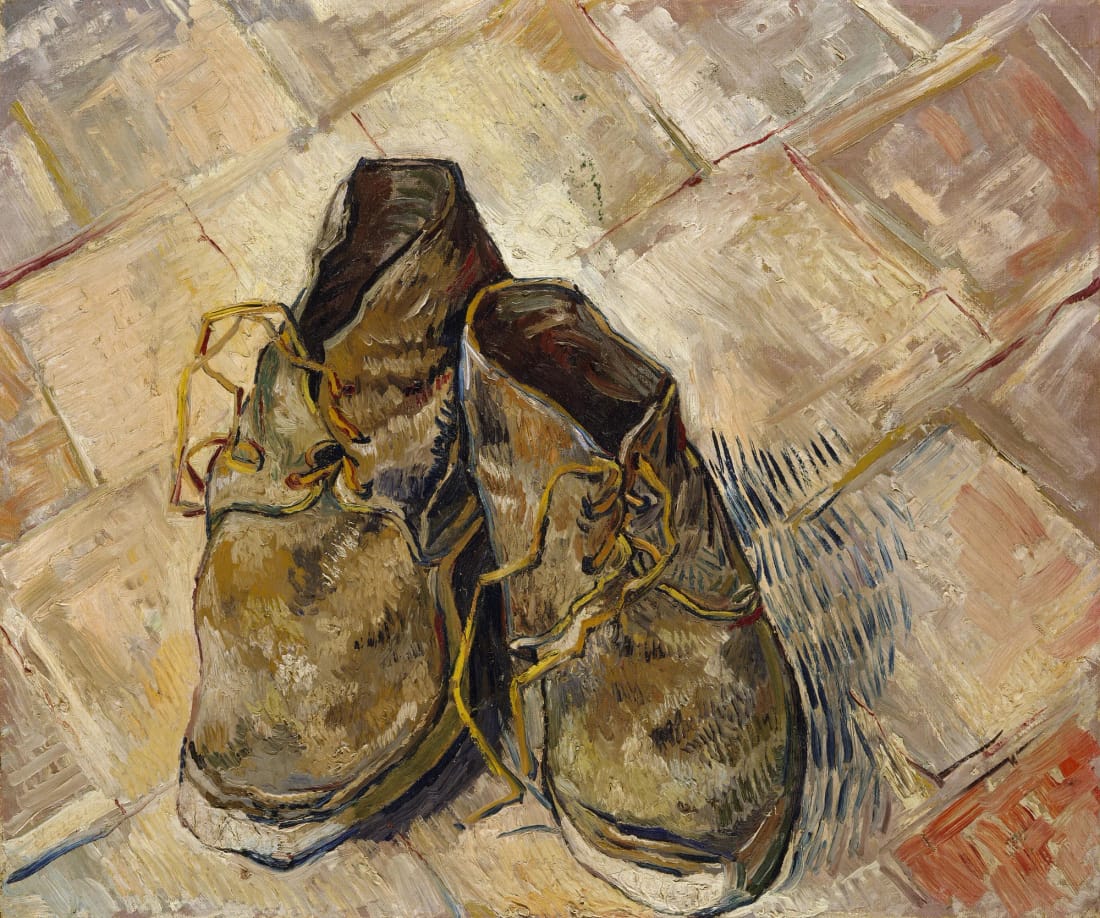
Title: Shoes
Artist: Vincent van Gogh (1853–1890)
Year: 1888
Medium: Oil on canvas
Museum: The Metropolitan Museum of Art, New York
1 Find it! 絵の中から見つけて、○でかこもう。
- ☐ Loose laces
- ☐ A worn-out shoe
- ☐ A blue shadow
- ☐ The red tile floor
2 First look 最初に見たときの感想を書こう。
When I first saw this painting, I felt ______________ because ______________________.
Three colors I can see: ①__________ ②__________ ③__________
3 Words — Match them. 英語と日本語を線で結ぼう。
- lace ●
- leather ●
- belong ●
- muddy ●
- ● 靴ひも
- ● 泥だらけの
- ● 革
- ● (~の)ものである
Shoes
4 Fill in the blanks. 下の箱から選んで、( )に入れよう。形を変えるものもあります。
- One is untied.
- The shoes are made of .
- Nobody knows who the shoes to.
- He walked in the rain until his shoes were .
5 Read and answer — True or False? 英文を読んで、正しければ T、ちがえば F。
This is a pair of old shoes. They are on a red tile floor. The laces are loose. Who wore them? Nobody knows! Maybe a farmer, maybe Van Gogh.
A pair of worn leather shoes stands on a reddish tile floor. Van Gogh painted it in 1888, probably in his studio in the Yellow House in Arles, in the south of France. The tiles in the background are the same as the floor of the Yellow House. It is now in the Metropolitan Museum of Art in New York.
- No one knows for sure who owned these shoes. T / F
- Van Gogh painted new shoes he saw in a shop. T / F
6 Quiz — Choose the best answer. 正しいものを選ぼう。
What did the floor tiles suggest?
- It was painted in a shoe shop
- It was painted in the Yellow House
- It was a church floor
- It was painted on a street
Shoes
7 Put the words in order. 語を正しく並べかえて、文を書こう。
- worn / many / shoes / are / The / out / walks / long / after .
- is / a / of / of / pair / This / old / shoes / life / a / still .
8 Complete the description. 箱の語を(1)〜(4)に入れて、絵の説明を完成させよう。
This is a still life of a pair of old shoes. They are on a (1) with reddish tiles. The shoes are brown and the laces are (2). There are blue (3) next to the (4) like a shadow.
9 Describe the painting in English. この絵を英語で説明しよう(3文以上)。
10 Think & Talk 考えて、ペアやグループで話し合おう。
Who do you think wore these shoes? Where did they walk?
Can a picture of an everyday object be great art? Why?
11 My favorite part いちばん好きなところを英語で。
I like the ____________ because ____________________________.
Answers & Notes
1 Find it!
Loose laces=ほどけた靴ひも/A worn-out shoe=くたびれた靴/A blue shadow=青い影/The red tile floor=赤いタイルの床
2 First look
自由に書けたら正解。I felt calm / surprised / happy … などの形容詞を使おう。
3 Words
1–a(lace=靴ひも) 2–c(leather=革) 3–d(belong=(~の)ものである) 4–b(muddy=泥だらけの)
4 Fill in the blanks
- lace One lace is untied.
靴ひもが1本ほどけています。 - leather The shoes are made of leather.
その靴は革でできています。 - belonged Nobody knows who the shoes belonged to.
この靴がだれのものだったか、だれも知りません。 - muddy He walked in the rain until his shoes were muddy.
彼は靴が泥だらけになるまで雨の中を歩きました。
5 Read — T / F
【本文の訳】これは古い靴一足です。赤いタイルの床に置かれています。ひもはほどけています。だれがはいていたの?だれにもわかりません!農家の人かも、ゴッホかも。
【本文の訳】赤茶色のタイルの床に、はき古した革の靴が一足置かれています。描いたのはゴッホ。1888年、南フランスのアルルで暮らした「黄色い家」のアトリエで描いたと考えられています。背景のタイルは、黄色い家の床とそっくり同じものです。今はニューヨークのメトロポリタン美術館にあります。
- T この靴の持ち主は、はっきりわかっていない。
解説:農夫エスカリエのものか、ゴッホ自身のものか、説が分かれています。 - F ゴッホは、お店に並んだ新品の靴を見てこの絵を描いた。
解説:描かれているのは、はき古した古い靴です。
6 Quiz
B 問:床のタイルから考えられたことは?
選択肢:A 靴屋の店先で描かれた/B 黄色い家のアトリエで描かれた/C 教会の床だった/D 外の道で描かれた
解説:タイルがアルルの黄色い家の床と同じだったからです。
7 Put the words in order
- The shoes are worn out after many long walks.
何度も長い道を歩いて、靴はすっかりはき古されています。 - This is a still life of a pair of old shoes.
これは古い靴一足の静物画です。
💡 worn out(はき古した・使い古した):worn out は「使い古した」。人に使うと「くたくたに疲れた」の意味に。
8 Complete the description
(1) floor (2) loose (3) lines (4) shoes
9 Describe(模範解答)
This is a still life of a pair of old shoes. They are on a floor with reddish tiles. The shoes are brown and the laces are loose. There are blue lines next to the shoes like a shadow.
これは古い靴一足の静物画です。赤茶色のタイルの床に置かれています。靴は茶色で、ひもはほどけています。靴の横には、影のような青い線があります。
10 Think & Talk(問いの訳)
- Who do you think wore these shoes? Where did they walk?
この靴はだれがはいていたと思いますか?どこを歩いたのでしょう? - Can a picture of an everyday object be great art? Why?
身近な物を描いた絵も、すばらしい芸術になると思いますか?それはなぜ?
正解のない問いです。理由をつけて話せたら◎。
Fun Fact(訳)
哲学者と美術史家の「靴論争」 ドイツの哲学者ハイデガーは、ゴッホの描いた靴を「農婦の靴」として論じました。これに美術史家シャピロが「あれはゴッホ自身の靴だ」と反論し、有名な論争になりました。話題になったのは、パリ時代の別の靴の絵だと考えられています。
